Salkantay Trek to Machu Picchu: What to Expect on the 4 Day Hike


We have always had a constant fascination for the incredible architectural achievements of lost ancient civilizations. Machu Picchu, located in Peru, has been widely recognized as one of the most impressive architectural marvels of the ancient world. It showcases sophisticated engineering techniques, including precisely cut megalithic stones that fit together seamlessly, that even to this day cannot be properly explained. Moreover, this hidden citadel was built on the steep terraced mountainside, with perfect alignment to the astronomical solstices. So when we heard about the 4 day Salkantay Trek leading to Machu Picchu, we knew this would be a life-changing experience!
To help you decide if this trek is right for you, we have written this guide describing all the important details of the trek, what you should expect over the 4 days, answering the most frequently asked questions, and reviewing the overall experience.
Spoiler alert: this was one of the most life-changing hikes we’ve ever done!
Read on below!


4 Day Salkantay Trek: Quick Summary
🥇 Salkantay Trek Tour we did and loved: Salkantay Trekking (or can book here)
Number of days: Between 2-5 days, but most popular is the 4 day Salkantay Trek
Distance: 69km
Max altitude: 4,630m / 15,190 ft (Salkantay Pass)
Starting altitude: 2040m / 6693 ft
Average hiking hours per day: 6-7 hours
Accommodations: Sky camp and huts
Difficulty: Moderate to challenging
Highlights: Seeing the stunning Humantay Lake, learn about the spiritual traditions, hike on the Andes, Explore Machu Picchu
🧳 Day Trip Option: can do Day Trip to Humantay Lake and then Day Trip to Machu Picchu
Is the Salkantay Trek Worth it
If you are planning a trip to Machu Picchu, you are probably asking yourself the same question we did.
What is the best way to experience it and is the trek worth it?
Do you take the train straight to Aguas Calientes? Do the Classic Inca Trail? Or tackle the Salkantay Trek instead?
After doing it ourselves, we can confidently say the Salkantay Trek is absolutely worth it. In fact, it is still one of the most incredible hikes we have ever done and one you cannot miss during your trip to Peru. And that is not something we say lightly.
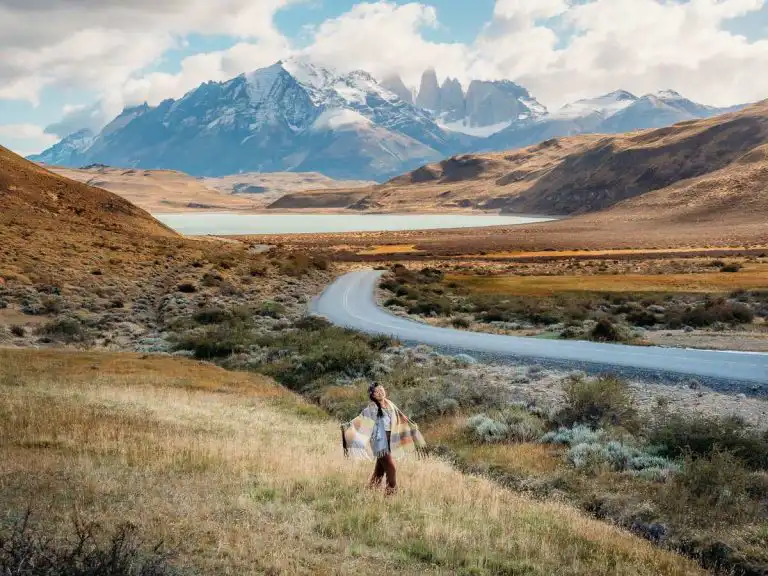
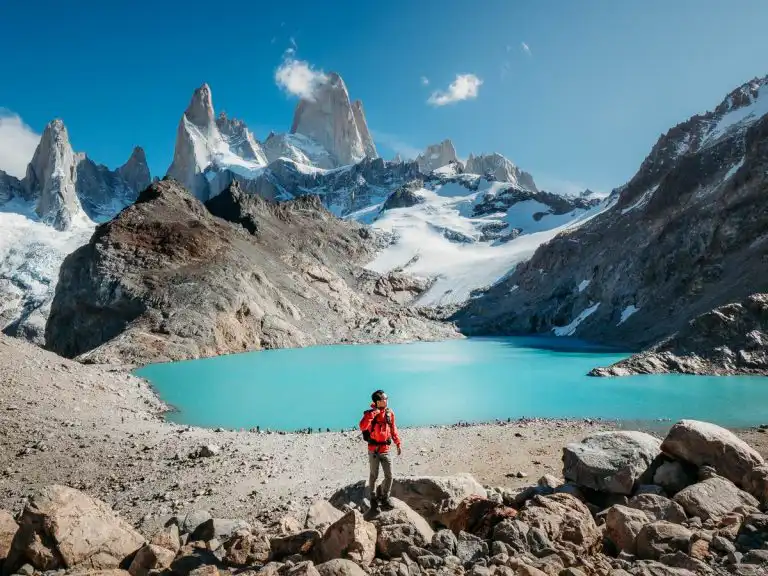
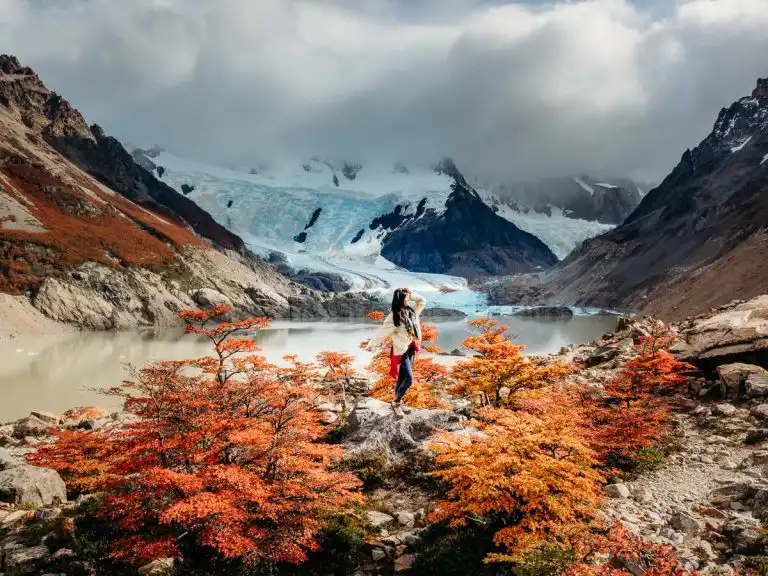
Having hiked all over the world, the Salkantay Trail combines the dramatic mountains of the Dolomites, fascinating ancient ruins like the Mayan ruins of Tikal, glacial lagoons reminiscent of Patagonia, all in just 3-4 days.


Add in the depth of Andean culture, spiritual traditions, and centuries of history woven into the trail, and it becomes more than just a hike. It becomes almost a pilgrimage. We gained a deeper understanding of Pachamama (mother earth), participated in ritual offerings of coca leaves to the mountain gods, and spent the night gazing at the night sky of limitless galaxies. These are all experiences you would otherwise miss if you simply took the train straight to Machu Picchu.
A Multi-day Trek like this was one of the travel experiences that changed the way we see the natural world and ourselves. We included it in our list of six travel experiences we think everyone should have at least once in their life.
Is the Salkantay Trek Difficult
Before planning on doing the Salkantay Trek to Machu Picchu, it is important to consider the level of difficulty. Considering the trek lasts for 4-5 days, reaches high altitudes of 4600metres, and involves hiking 6-11 hours per day, we would consider this hike moderate to challenging.
As a point of reference, we have done several multi-day hikes in the past, including a 12 day Everest Base Camp Trek, 2 day Volcano Trek in Guatemala, and several day treks in the Dolomites, and would consider the hike challenging due to the high-altitude and long trekking distances.
Altitude Sickness during the Hike
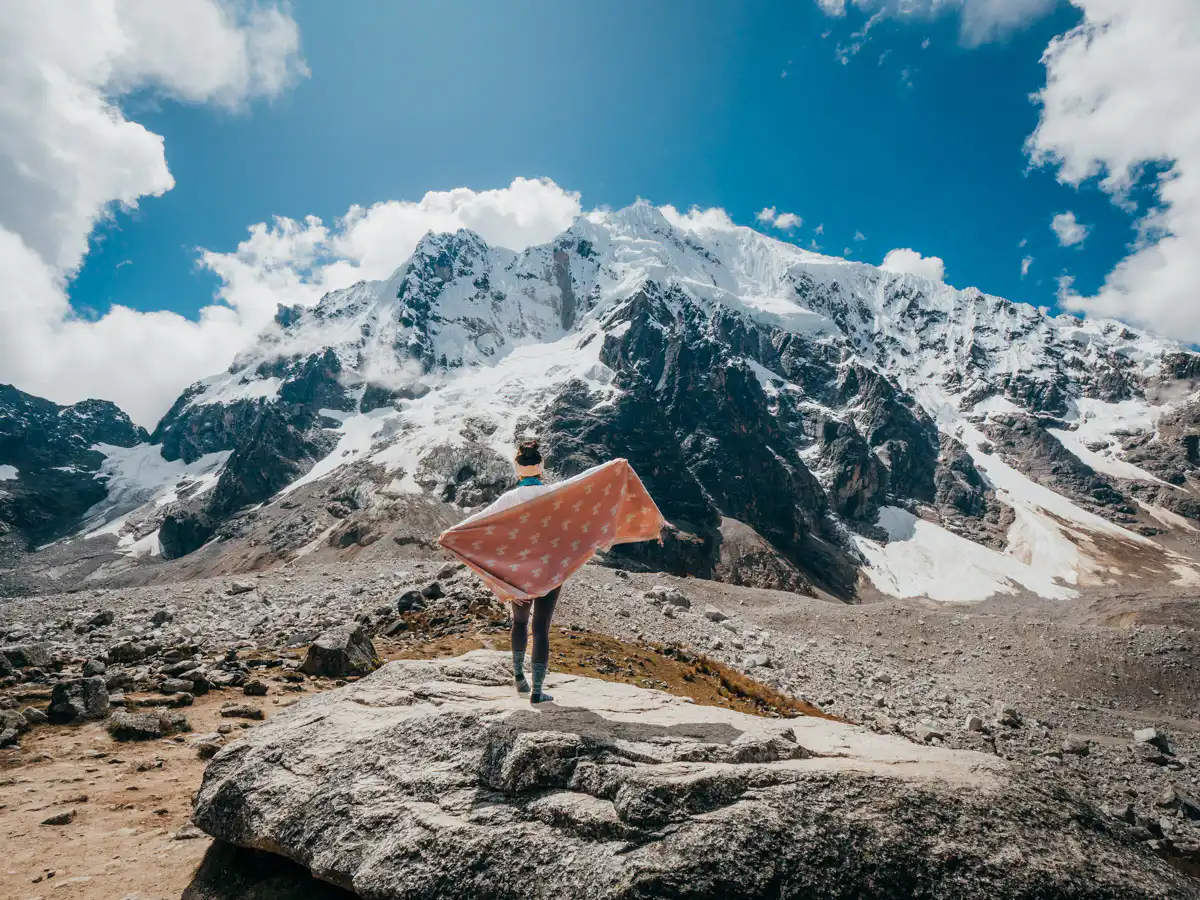
Altitude sickness is something you should never underestimate. Once you begin hiking above 3,000 meters, the risk becomes real. Common symptoms include dizziness, nausea, vomiting, headaches, and extreme fatigue.
Considering the highest point of the trek reaches approximately 4,630 meters at Salkantay Pass on day two, proper acclimatization in Cusco beforehand is essential. Your body’s reaction to altitude has little to do with your fitness level and it varies from person to person and can affect even very active travelers.
One member of our hiking group began feeling sick on the first day and struggled throughout much of the trek. Although she ultimately pushed through and completed it, that is not always the safest decision. If severe altitude sickness symptoms develop, the recommended course of action is to descend and discontinue the hike.
Physical Effort during the Trek
The altitude alone makes every physical task feel significantly harder. At around 4,630 meters near the Salkantay Pass, you are effectively getting only about 60% of the oxygen you would at sea level. And you definitely feel it.
On top of that, each day involves hiking anywhere from 10 to 27 kilometers, often taking between 6 to 11 hours over the course of four consecutive days. Combined with the elevation gain and thinner air, this makes the trek physically demanding and requires solid endurance.
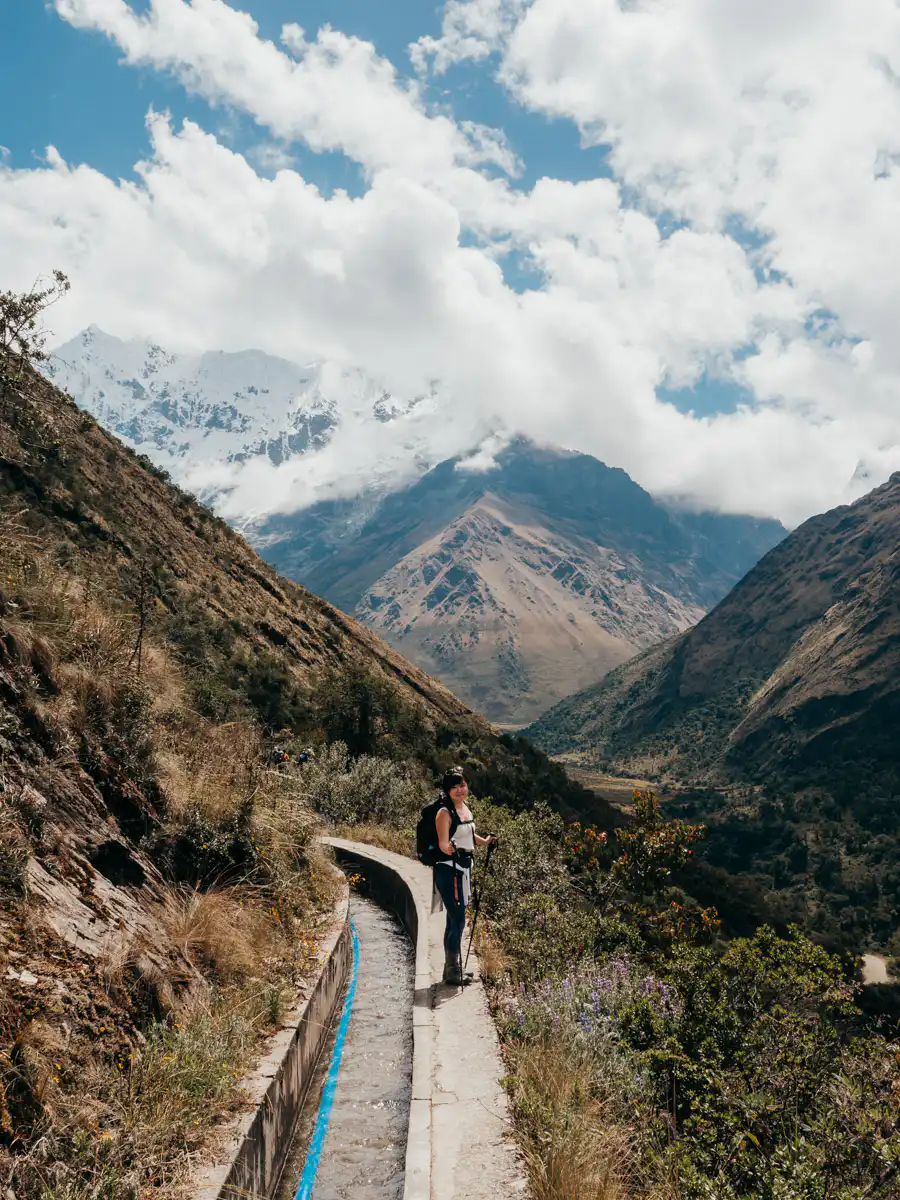

Can Beginners do the Salkantay Trek
In short, this is not a beginner friendly hike.
The combination of high altitude, long hiking days, and significant elevation gain makes the Salkantay Trek physically demanding. Even experienced hikers like us felt the effects of climbing to over 4,600 meters while covering 10 to 20 plus kilometers per day.
If you are new to hiking or have never completed a multi day trek before, this trail may feel overwhelming. Instead, consider doing a day trip to Humantay Lake, which is one of the most stunning highlights of the route, and then visiting Machu Picchu separately by train.
This way, you still experience some of the most memorable scenery without committing to several consecutive days of high altitude hiking.
How long is the Salkantay trail
The Salkantay Trek ranges from 2 to 5 days, with 4 to 5 days being the most common option. Here is a breakdown of each itinerary length so you can choose what fits your schedule best.
2 Day Salkantay Trek
The two day version allows you to visit Laguna Humantay, sleep at the famous Sky Camp, and hike over the Salkantay Pass, but it does not continue all the way to Machu Picchu. This is essentially a shortened version of the trek (day 1 and part of day 2 on the classic Salkantay Trail), with a portion done by vehicle so you can focus on the most dramatic mountain and lagoon highlights.
If you are short on time and more interested in Peru’s raw alpine scenery than the final stretch to Machu Picchu, this condensed trek is still absolutely worth it.
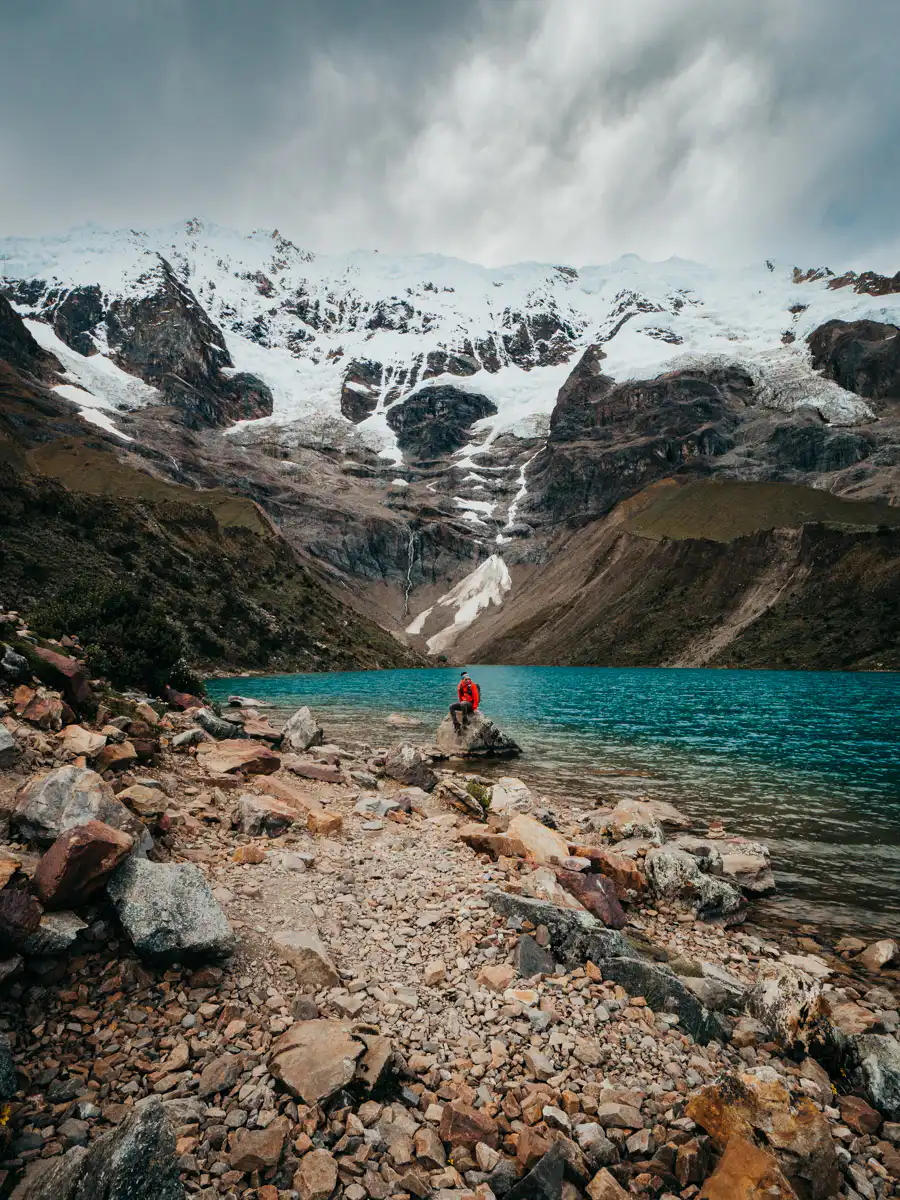
4 Day Salkantay Trek
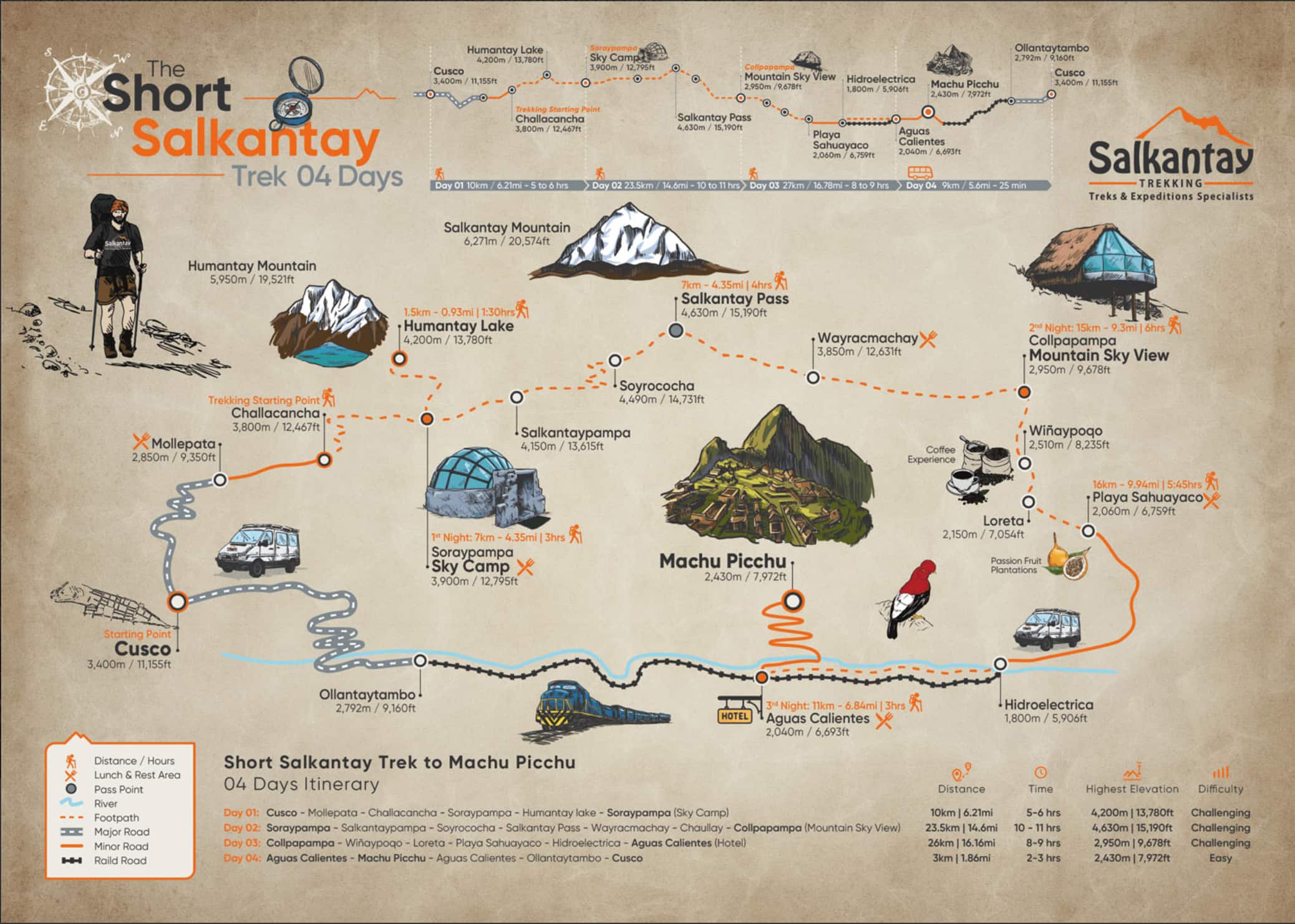
This is the trek that we did and would highly recommend. The 4 day version, which is their best seller tour, allows you to see everything of the 2 day trek, then down into the mysterious cloud forest where you’ll spend a night at the Mountain Sky View Camp, visit the coffee plantation at Winaypoqo, then take a bus to reach the train tracks of the Hidroelectrica station that leads to Aguas Calientes. You will spend your final night here in a comfortable town, resting up before the early morning journey to Machu Picchu.
We believe this is the most well rounded option, with a comfortable pace that makes it ideal for most travelers coming to Peru.
5 Day Salkantay Trek
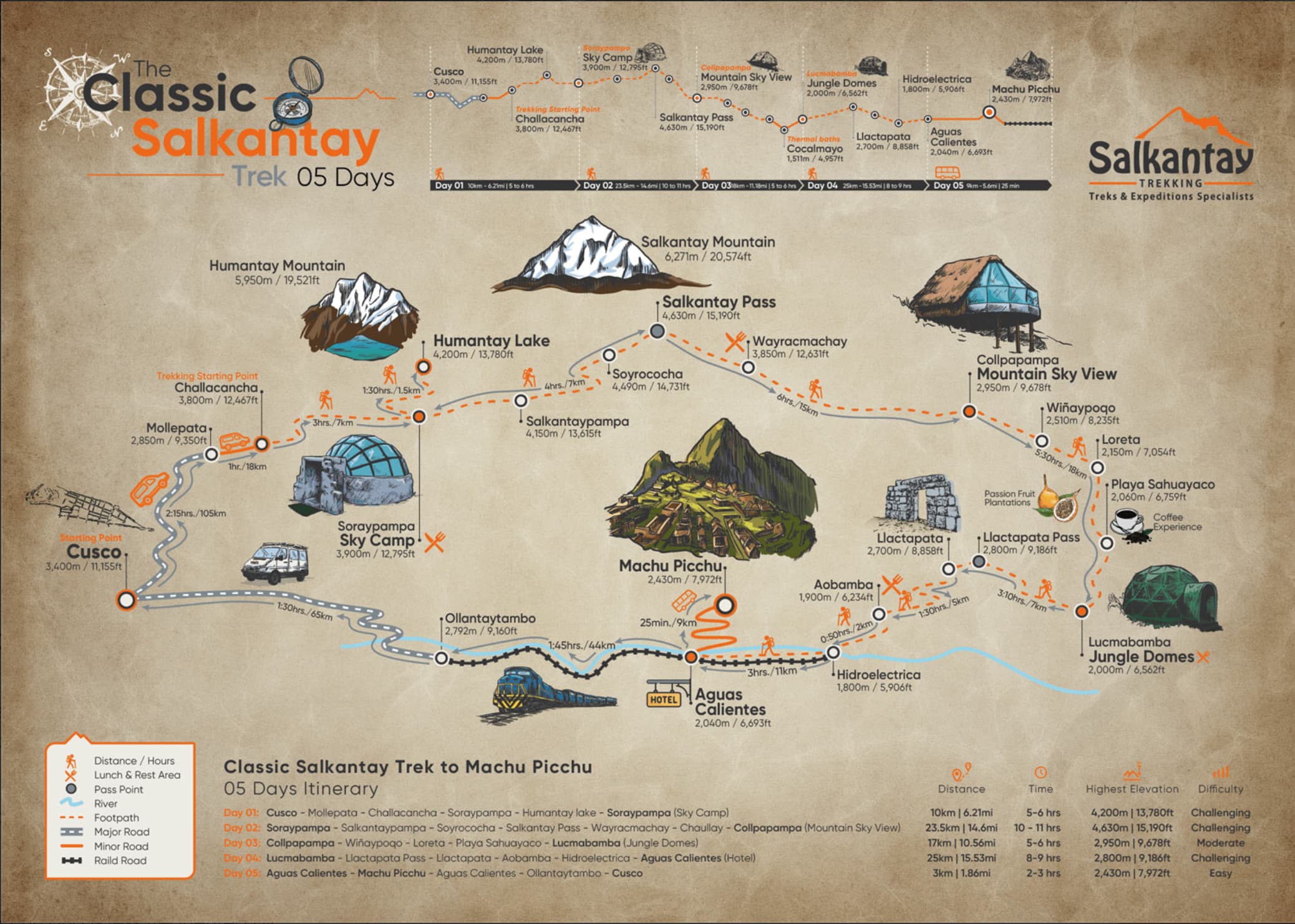
The 5 day version is similar to the 4 day version, except you will not be taking the bus shortcut, and instead you will walk through the forest trail to see additional Incan ruins including Llactapata. Take this route if you have the extra time, and want to see additional Inca ruins along the trail.
Keep in mind that every tour company structures their days and routes slightly differently. The sample itineraries above reflects the company we chose, and since we had such a great experience with them, we would absolutely recommend booking through them!
Salkantay Trek Itinerary: What to Expect Each Day
We did our Salkantay Trek with the company Salkantay Trekking and had an absolutely amazing time!
Below, we break down what each day looks like, including the standout highlights, hiking distances, key challenges, and where you will be staying each night.
Keep in mind that each touring company will differ in how they plan their days as well as the accommodations. Nevertheless, these key attractions are nearly always incorporated into the itineraries.
Day 1: Laguna Humantay and Sleeping under the Stars
Day 01: Total Distance 10Km | Hiking Duration 5-6 Hours
Your first day on the Salkantay Trek begins with an early departure from Cusco and a scenic drive to the trailhead at Challacancha, sitting at 3,800 meters above sea level. From here, you will start your gradual ascent toward Soraypampa at 3,900 meters, home to the stunning Sky Camp where you’ll be spending the night.

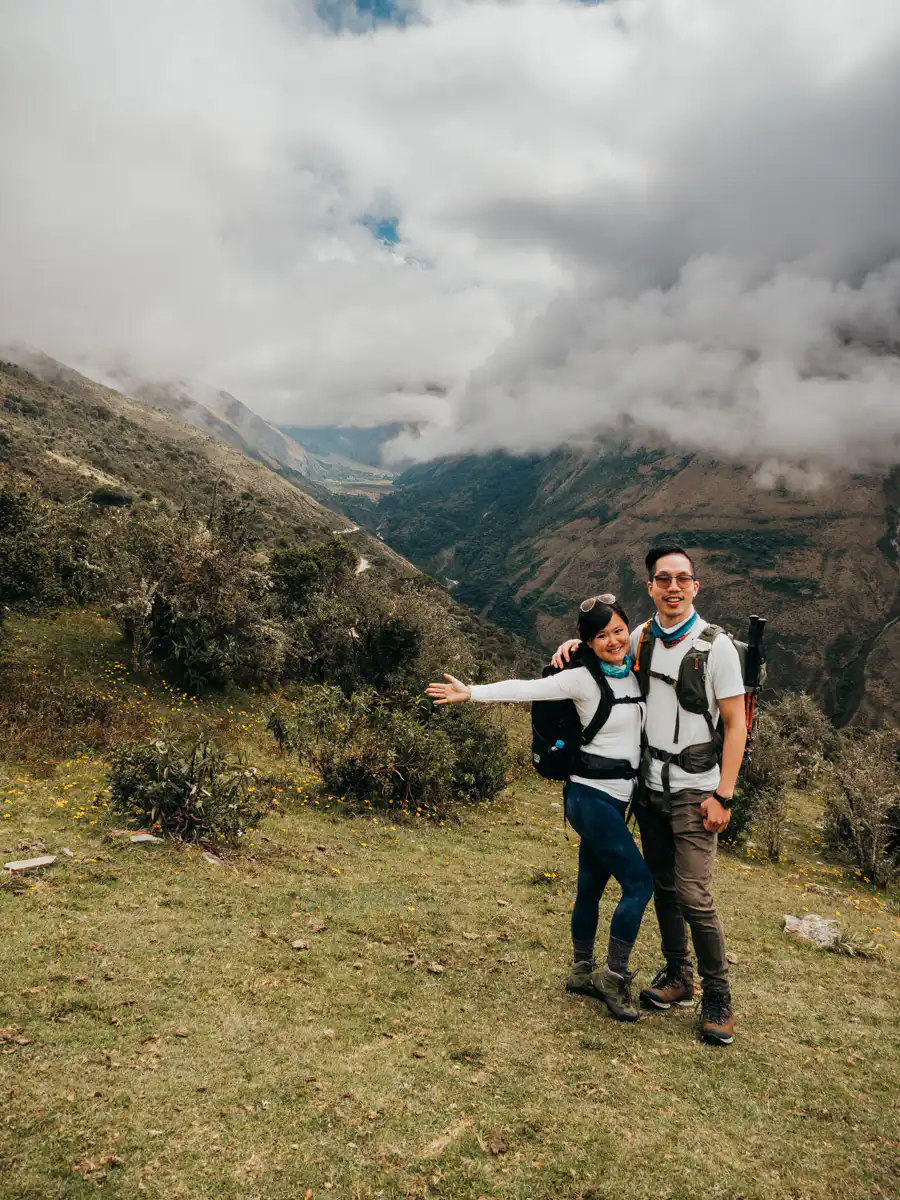
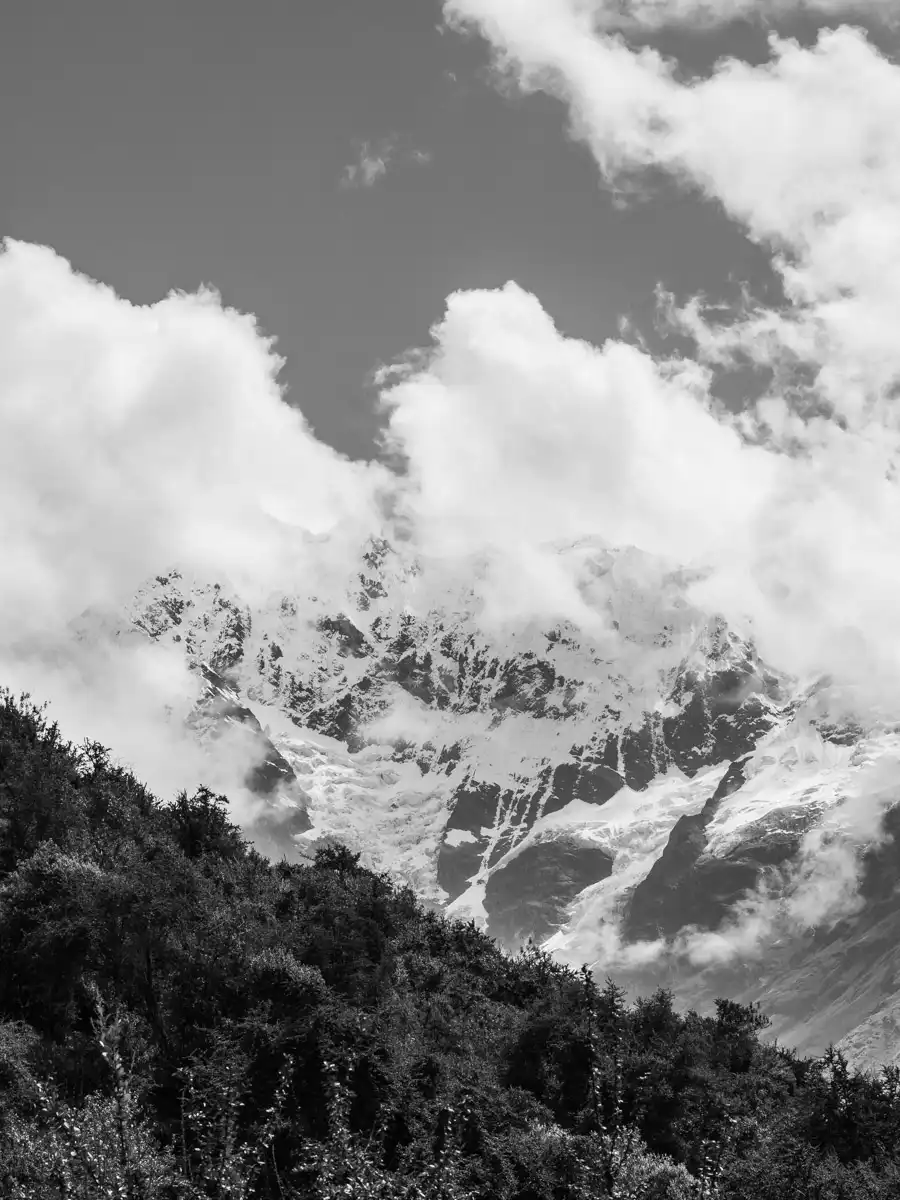
After settling in and enjoying a well earned lunch, you will have the option to hike up to Laguna Humantay. It is technically optional, but in our opinion, it is absolutely unmissable.
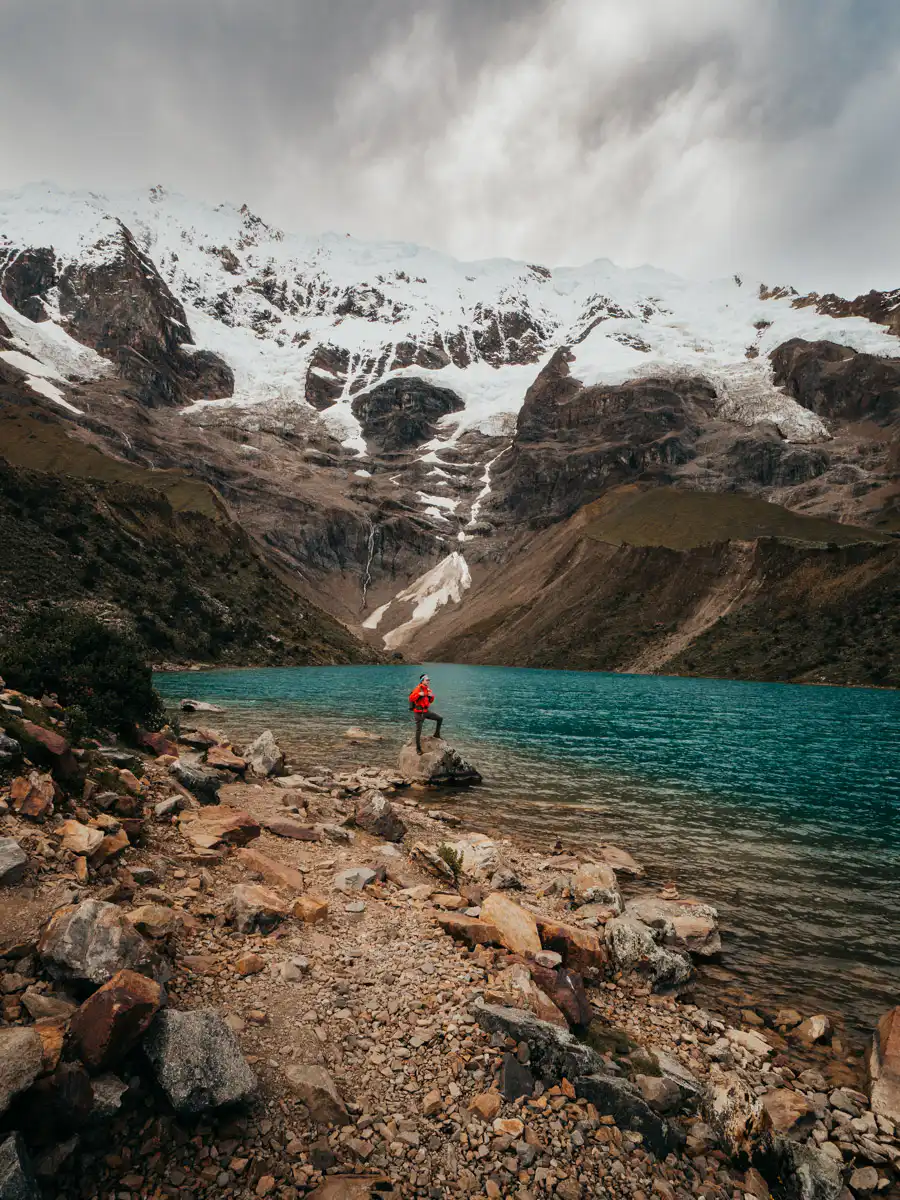
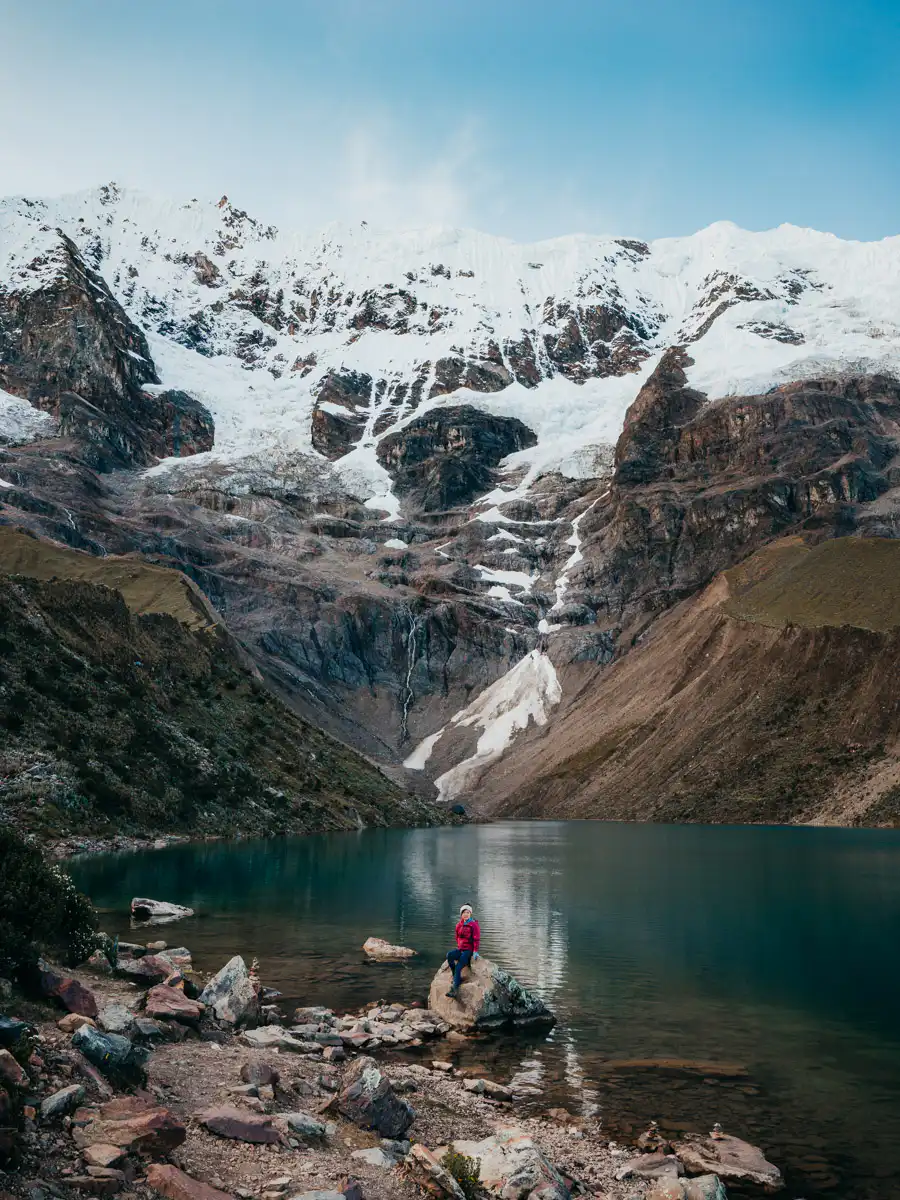
The 1.5 km climb is short but steep, and you will definitely feel the altitude. However, the reward at the top is extraordinary. At Laguna Humantay, you will get to see the stunning turquoise lake framed by towering, snow capped peaks. It is easily one of the most breathtaking landscapes we have ever witnessed and one of the most spectacular views of the entire trek.
Laguna Humantay (4200m)
At an altitude of 4200m, Laguna Humantay is a stunning glacial lake nestled high in the Andes mountain range. Surrounded by the towering peaks of Humantay Mountain, the lake’s turquoise waters create one of the most breathtaking visual spectacles.
Not only is this scene utterly captivating, but it also holds a spiritual significance to the Andean people. In fact, shamans embark on pilgrimages every year to arrive at this laguna, believing that the mountains and lakes are imbued with sacred and spiritual energies.
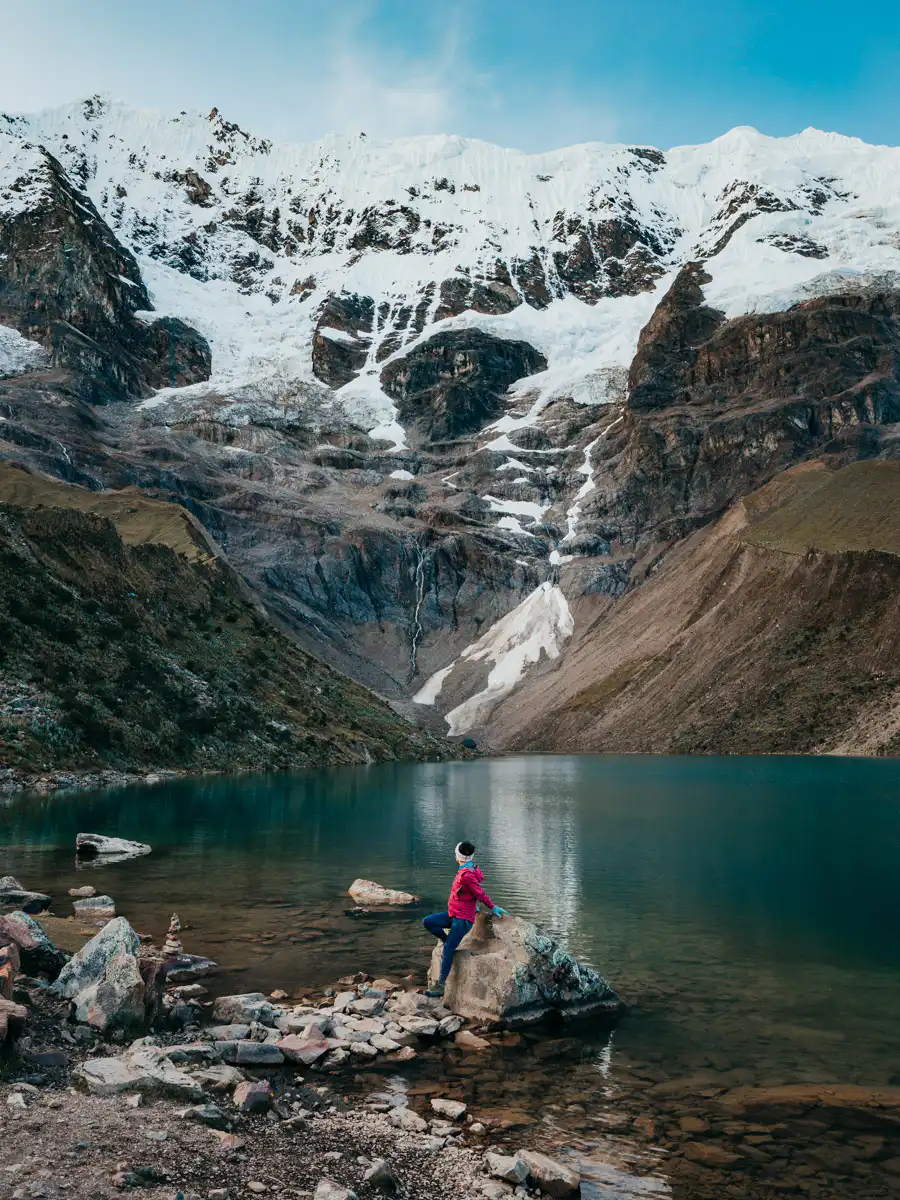

Words cannot truly describe the experience of being there. Whether it is the extraordinary natural beauty, or maybe the area is truly filled with some magical energy, being there left an inedible mark on us.
After spending about an hour soaking in the views at the lake, you will then descend back down to Sky Camp, where you will settle in for the night.
Sleeping in the Sky Camp glass domes (3900m)
One of the reasons why we chose to do the Salkantay Trail as opposed to the Classic Inca Trail was the opportunity to spend a night at the Sky Camp. Perched high in the mountain ranges, the Sky Camp features multiple transparent glass domes where you can spend the night marvelling at the celestial night sky. From here, the entire Milky Way and sky full of stars unfold before you, even visible to the naked eye.

At about 9-10pm, all the lights of the campsite shut down, giving you the perfect opportunity to enjoy stargazing. During our stay, our dome was fogging up so we didn’t get as clear of a view but the moment we stepped outside, we were absolutely blown away by just how many stars and galaxies we could see with our naked eye!
We then headed over to a rooftop platform above the central hall where we could get an elevated view of the entire campsite with the mountain range in the background. This was the first time we’ve ever seen the entire Milky Way so clearly and is a moment we will always remember.
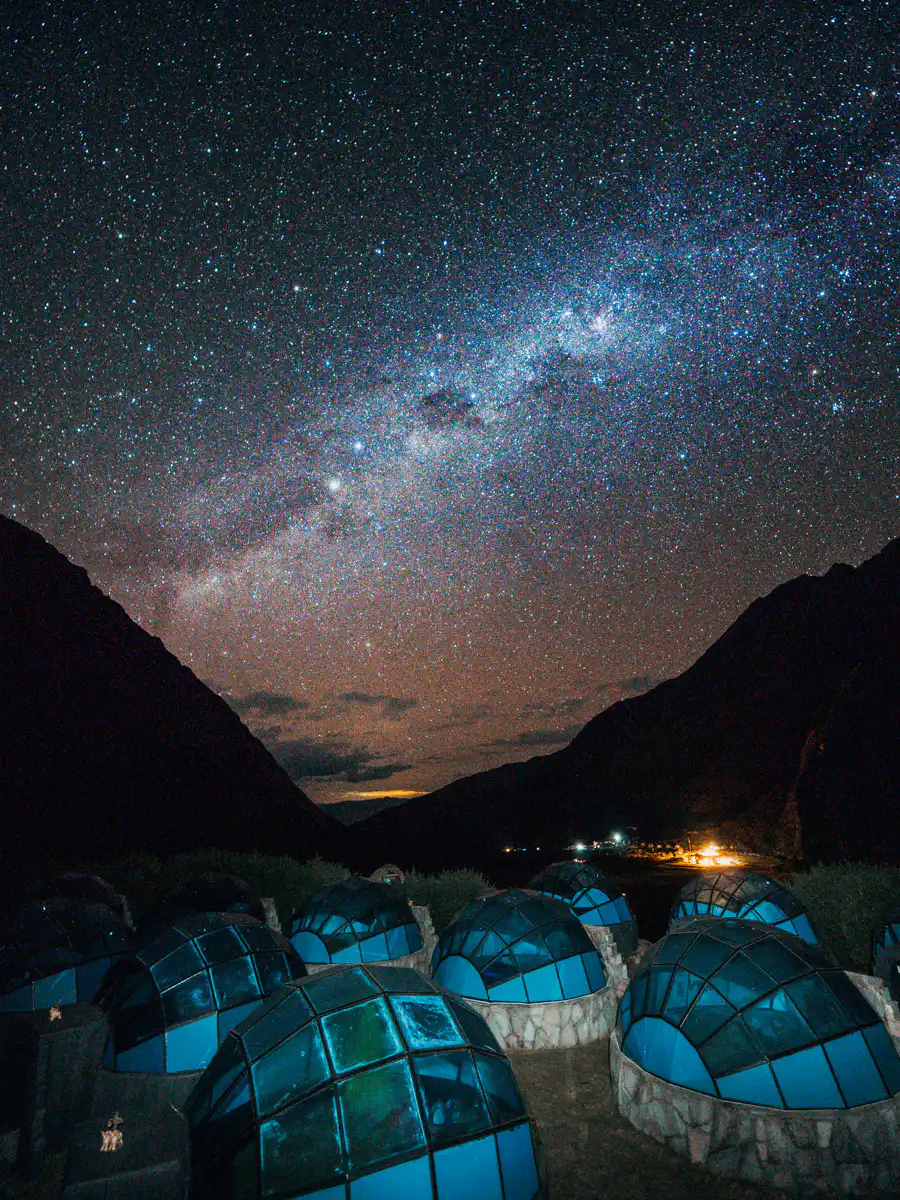
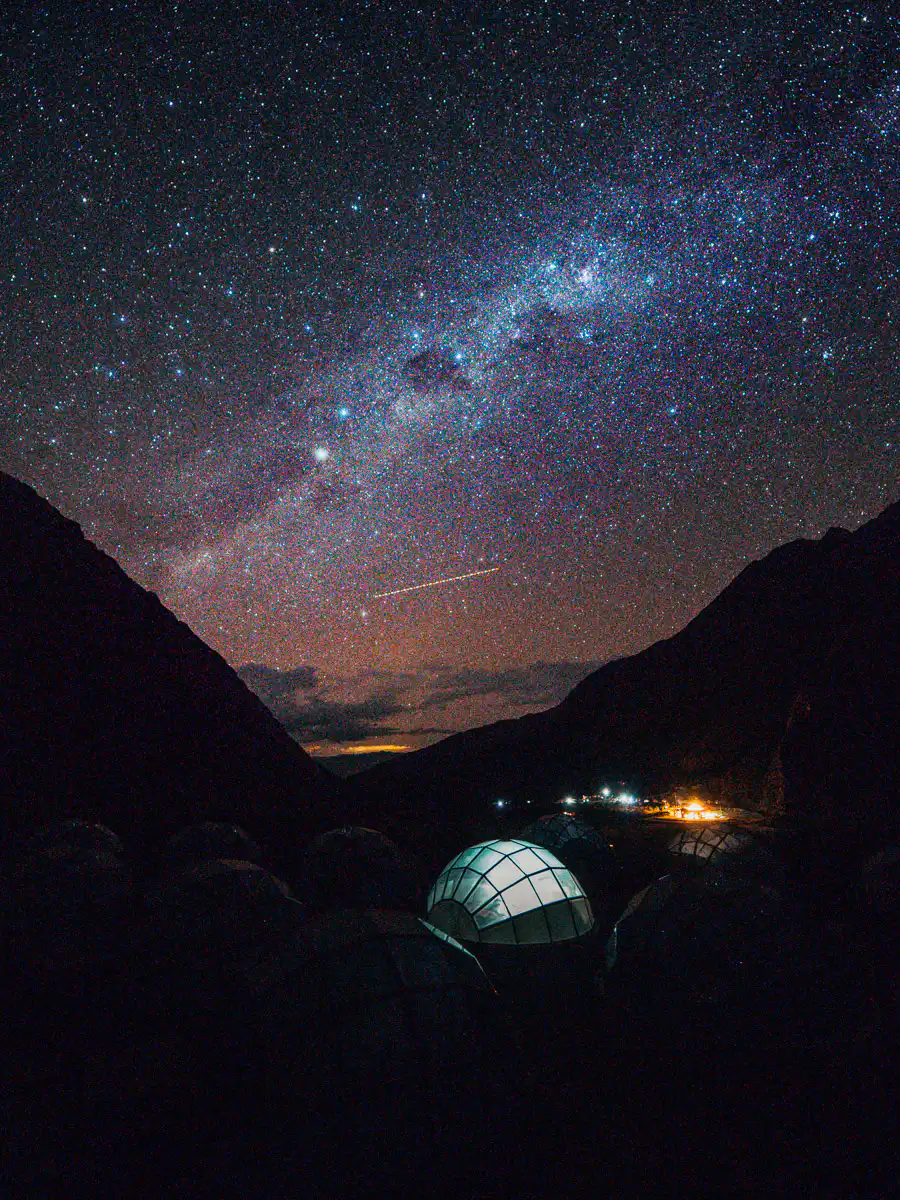
Check out our first attempt at doing star photography! Even now, after traveling through 45 countries around the world, the Milky Way we saw here remains one of the most unforgettable views we have ever experienced, right up there with stargazing in the Atacama Desert, Namibia, and the mountains of Kyrgyzstan.
Day 2: Salkantay Pass and cloud Forest
Day 2: Hiking Distance 23.5km | Hiking Duration 10-11 Hours
Salkantay Pass (4630m)
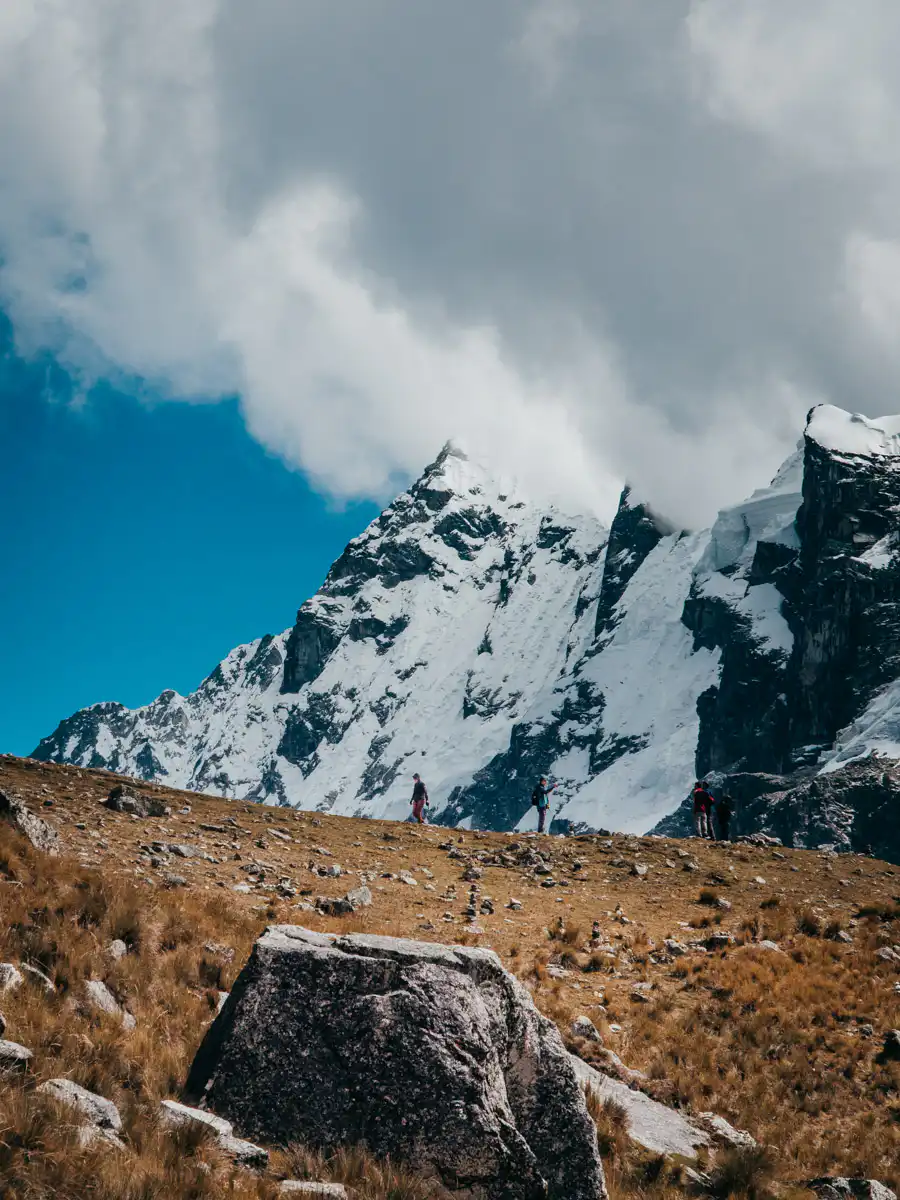
The second day of the Salkantay Trek is the longest and most demanding, with roughly 10 hours of hiking and a climb to a maximum altitude of 4,630 meters at Salkantay Pass. It is widely considered the toughest day of the trek.
You will tackle what is famously known as the Gringo Killer, a steep, relentless series of switchbacks that zigzag up the mountainside and test both your legs and your lungs. It is easily one of the most challenging sections of the entire hike.
However, once you reach the top, you will get one of the most breathtaking views of Salkantay Mountain.
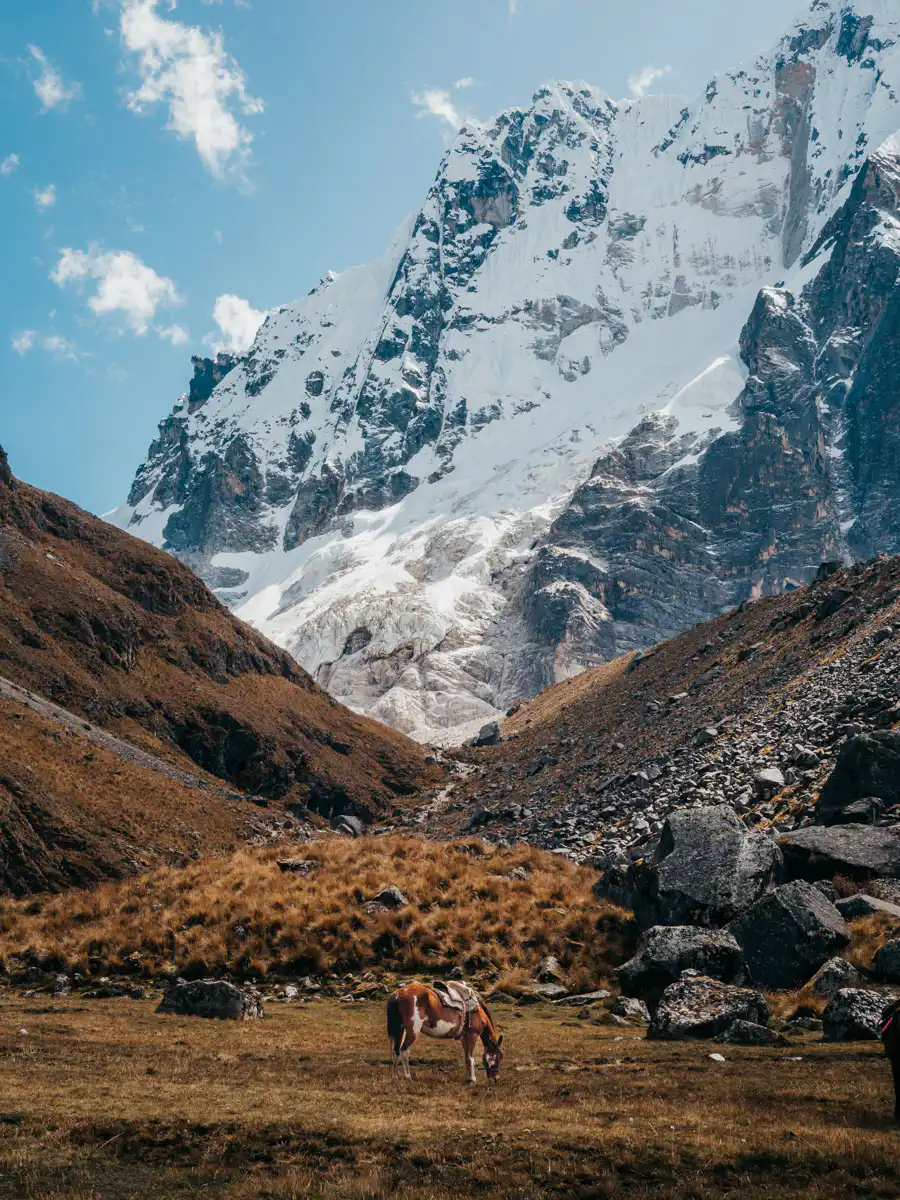
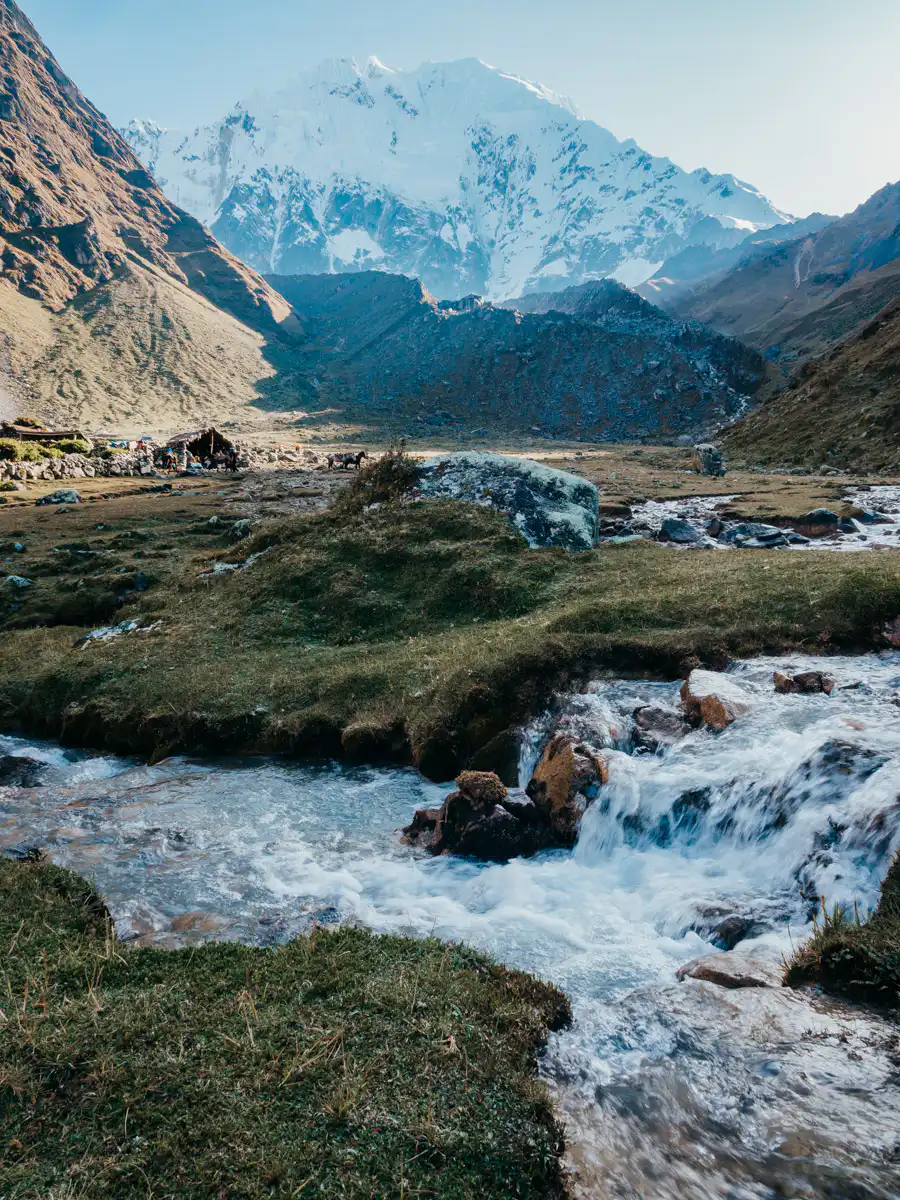

Our guide explained to us that the mountains are considered Apus, or mountain spirits, that house sacred deities. So whenever the locals pass through here, they will make a Coca Leaf offering on the rocks to thank them for blessing their safe passage.
Here, we were encouraged by our guide to practice the same ceremony. We each individually found a quiet spot on the slope, aligned the coca leaves pointing towards the mountain, and closed our eyes.

We were instructed to speak to the spiritual energy about whatever was in our hearts. At that moment, we truly felt a connection with the nature and mountains all around us. This experience not only highlighted the utter beauty of the Andean mountain range, but allowed us to embrace the spiritual and cultural beliefs of the people.
Descending into the Cloudforest (2950m)
After crossing the Salkantay Pass, it is technically all downhill from here. But that does not necessarily mean it gets easier. Descending long, steep slopes can be just as punishing, especially on your knees and leg muscles.
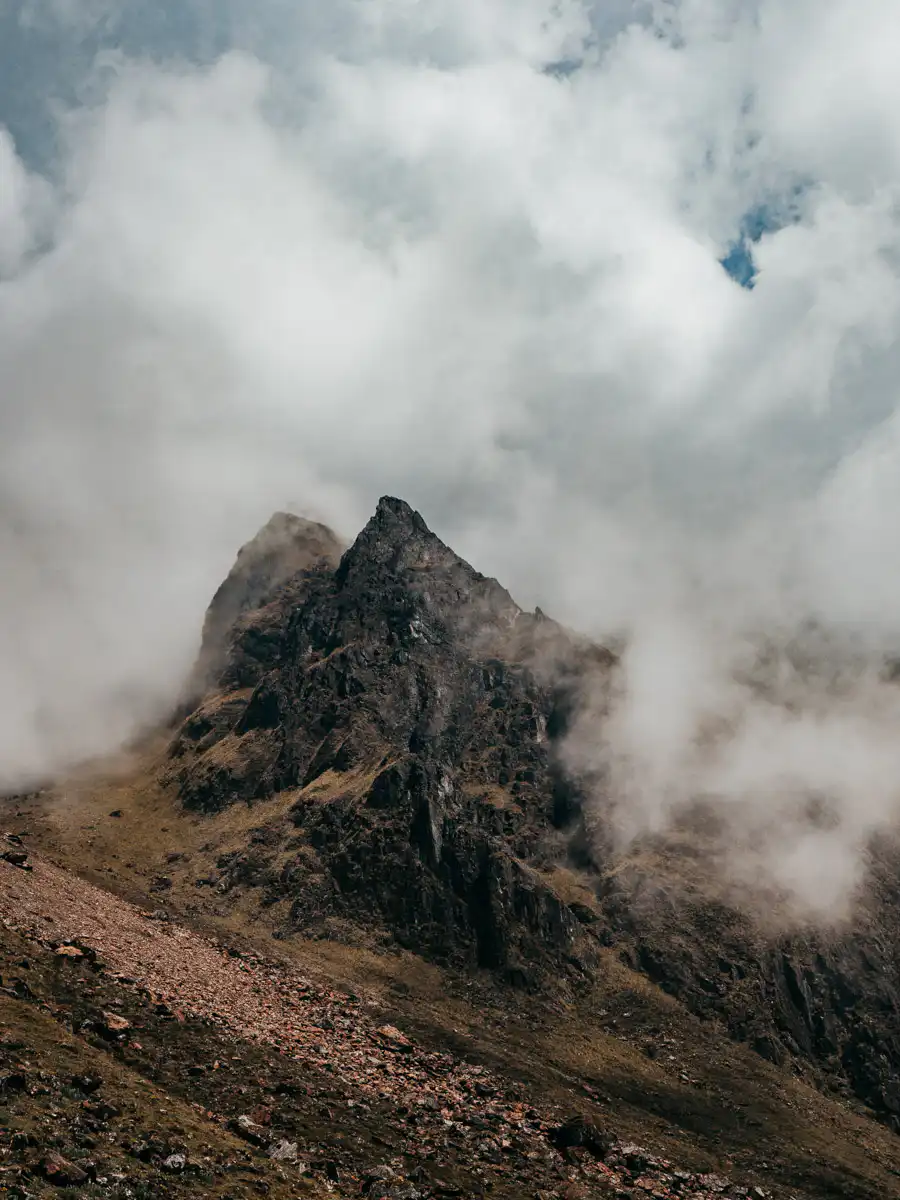
The good news is that as you lose elevation, breathing becomes noticeably easier and the air grows warmer. The dramatic glacial peaks of the first day slowly fade behind you, replaced by lush green valleys and misty cloud forest. Low hanging clouds drift through the trees, giving this section of the trail a quieter, almost mysterious atmosphere.
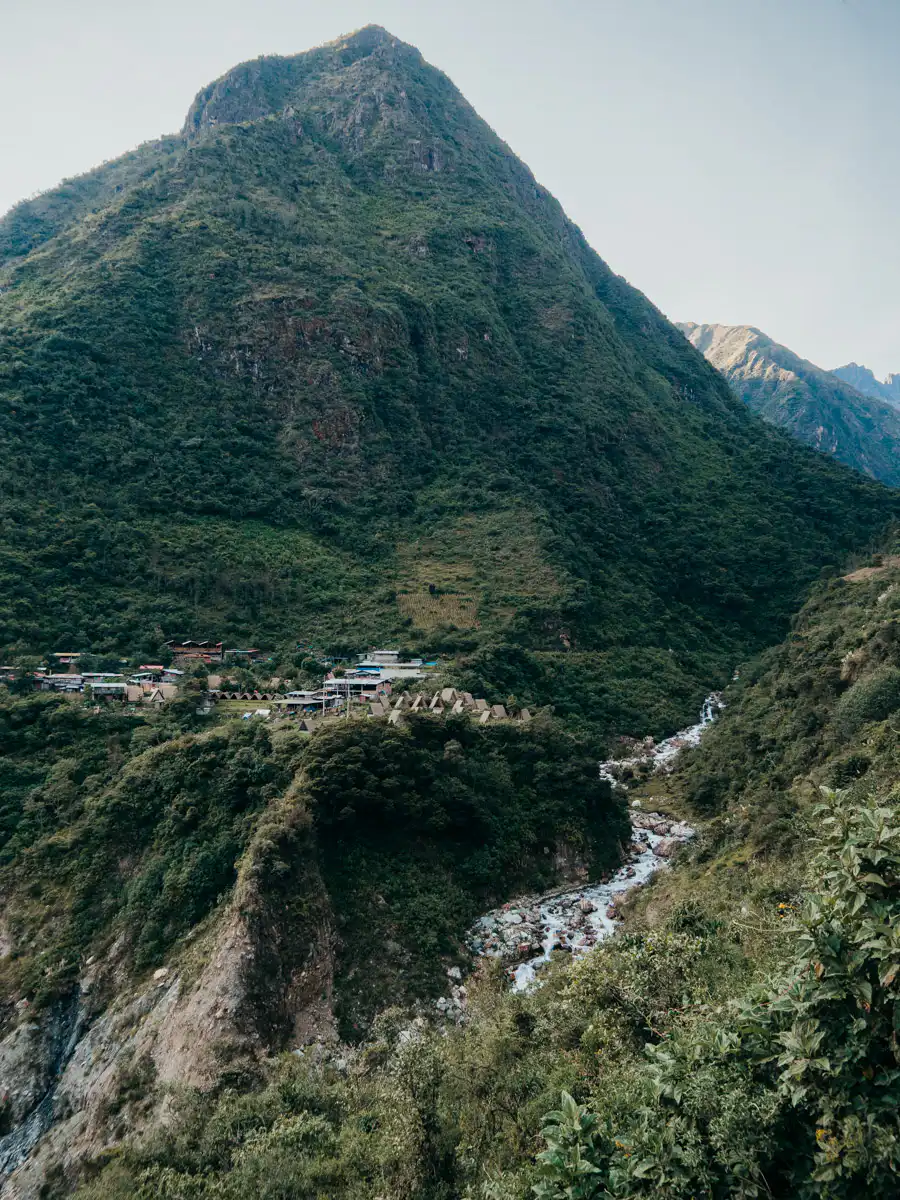
Once you arrive at your camp in Collpapampa, you will settle in for another incredible night at the Mountain Sky View Camp (2950m).
Day 3: Reaching Aguas Calientes
Day 3: Hiking Distance 27km | Hiking Duration 8-9 Hours
Admittedly, day three is not the most thrilling section of the trek. You will leave the cloud forest behind and transfer by vehicle to the Hidroelectrica station. From there, you will walk alongside the famous railway tracks that lead into Aguas Calientes, the gateway town to Machu Picchu. Despite the total distance of 27km, it should take around 8 hours of hiking since you are mostly going downhill!
After a few days on the trail, arriving in town feels like a small luxury. We were genuinely ecstatic to check into a modern hotel with hot showers and honestly felt like a million dollars afterward.
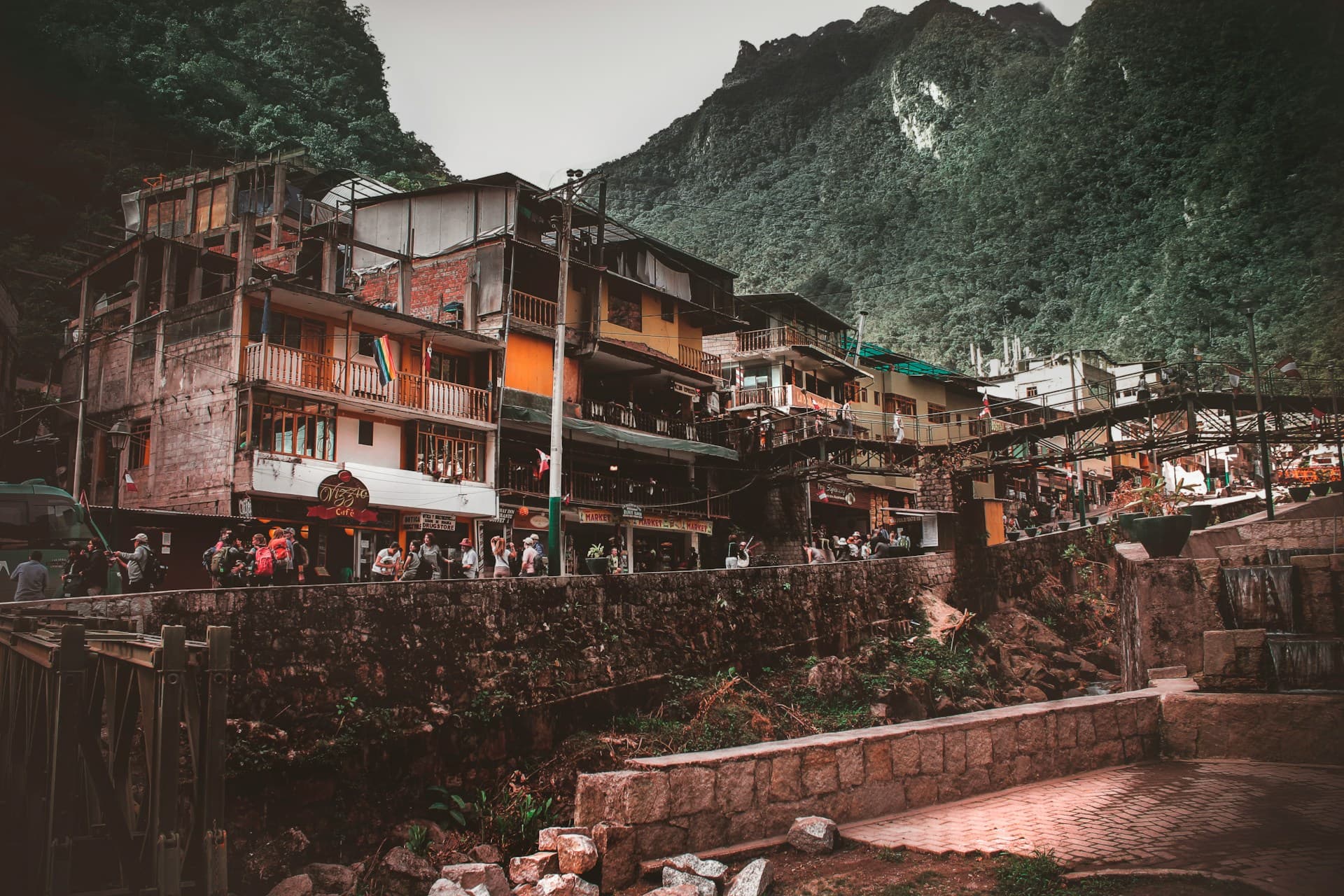
Aguas Calientes itself is not particularly charming, as it is largely built around tourism. With that said, it serves its purpose. We enjoyed one final dinner with the group before heading to bed early, ready for the pre dawn start to Machu Picchu the next morning!
day 4: Machu Picchu
Day 4: Hiking Distance 9km | Hiking Duration 2-3 Hours (or 5-6 hours if doing additional Mountain)
Finally, the day you have been waiting for arrives. Machu Picchu!
You will wake up before dawn and make your way to the shuttle station, where lines begin forming quickly for the ride up to the entrance gates. Getting up early is absolutely worth it, both to avoid the longest queues and to experience the magic of the morning light.
Machu Picchu (2430m)
After four days of hiking through mountains, cloud forest, and high alpine passes, you will finally stand before Machu Picchu, one of the Seven Wonders of the World.
Perched high in the Andes, this ancient Incan citadel is celebrated for its extraordinary stonework, historical significance, and the enduring mystery surrounding its construction. Seeing it in person, after earning it step by step on the trail, makes the moment even more powerful.

The site is perched at an altitude of 2400m and was built on terraced slopes that were incredibly difficult to reach. To this day, historians do not understand how the city was built and how these intricately carved megalithic stones were brought there.
Each stone structure exhibits such meticulous craftsmanship that the stones seamlessly interlock, leaving no room even for a razor blade to fit through. On top of that, some of the temples hold spiritual significance and were built with perfect alignment to coincide with specific solstices and astrological events.

Standing within the citadel of Machu Picchu, you can’t help but wonder how such a complex city was constructed, in such a remote location, and with such engineering precision.

When we came back down from climbing Machu Picchu Mountain, we were fortunate to have had the opportunity to see the entire citadel from the perfect vantage point. Having spoken with one of the local guards, we were permitted to enter a temporarily closed off section. From here, we found ourselves alone to fully admire the awe-inspiring magnificence that is Machu Picchu.
Additional Excursion: Huayna Picchu/Machu Picchu Mountain
The final highlight of our journey was hiking up the iconic Machu Picchu Mountain to see the entire citadel from above. From the summit, the sweeping views over the ruins and surrounding peaks are absolutely unforgettable and really give you a sense of scale of just how remote Machu Picchu is.
If you are interested in adding this extra climb to your visit, be sure to let your trekking company know when booking. Permits are limited and need to be reserved well in advance.

This 2-3 hour hike brings you 600m above Machu Picchu offering a full panoramic view of the entire archeological site and surrounding mountain peaks. It is from here that you truly grasp just how isolated the citadel was and how challenging it must have been to transport the construction stones there.

It is also for this reason that the Spanish conquistadors were unable to find Machu Picchu, leaving it hidden and preserved from European colonial influence for centuries.
Climbing up either Huayna Picchu or Machu Picchu mountain will give you an entirely new appreciation of the site and its architectural marvel.


The only drawback of doing this optional trek is that it will cut down 2-3 hours of time which could have been spent exploring the citadel itself. For us, we felt like it was worthwhile but at the same time, we wish we had more time in the citadel to marvel at the details.
Return to Cuzco
After exploring Machu Picchu, you will return by bus to Aguas Calientes for a quick lunch before hopping onto the train that will bring you back to Ollantaytambo, where you’ll connect with the final bus to bring you to Cuzco. At this point, you will be exhausted from 4 days of hiking but absolutely filled to the brim with unforgettable memories.
Do you need a Tour for the Salkantay Trail
Technically, it is possible to hike the Salkantay Trail independently, but whether you should is another question entirely. While you can purchase your Machu Picchu tickets on your own, coordinating all the logistics along the way can quickly become complicated.
You would need to arrange transportation from Cusco to Challacancha, book your accommodations each night, manage food and water supplies, and navigate the challenges of hiking at high altitude without support. On day three, you would also need to organize transport to the Hidroelectrica station, followed by the multiple steps required to return to Cusco at the end of the trek.

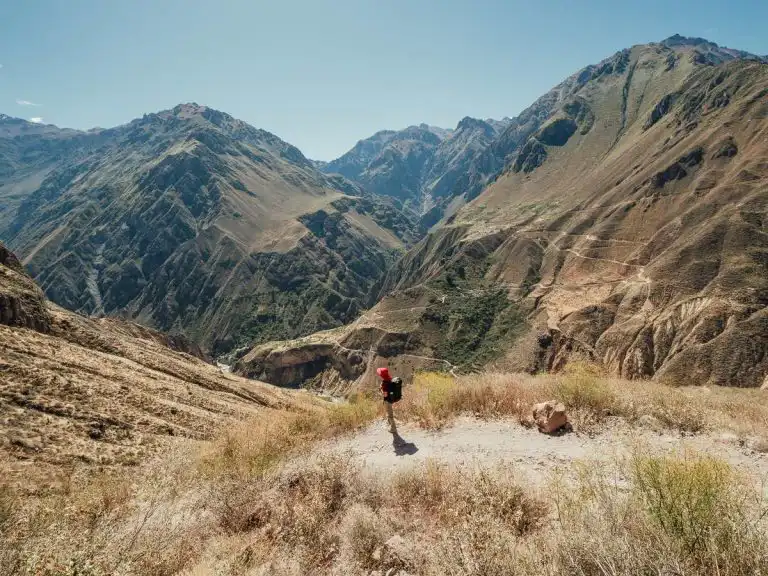
We usually love hiking independently, like we did at Colca Canyon, but this is one situation where we were genuinely glad to join a tour.
Additionally, going on a tour meant that we could learn so much from our guide, about the spiritual traditions there, the history of Peru, as well as have the mental support needed to get past the ‘Gringo Killer’. The Salkantay Trek isn’t just a hike with views, to us, it felt like a cultural pilgrimage back in time.
Salkantay Trek cost
The cost of doing the Salkantay Trek will depend on several factors including how many days, what type of accommodation, and what are the inclusions. For the typical 4 or 5 day itinerary, the cost of the tour ranges generally between 620-800USD per person (budget tours cost around 400 USD, Mid-range around 600 USD, and Luxury around 800-1000 USD)
We would recommend not going with the cheapest companies since we met some travelers who did and they had a poor experience where not enough food was provided and they slept only in uncomfortable tents.
Make sure to evaluate these important factors when considering the tour agency and factoring in additional costs:
- How many people are in the group (some groups are max 12, whereas some are max 20. Ours was a group of 9 people)
- Will you sleep at the Sky camp (definitely worth doing!)
- Level of hotel accommodation in Aguas Calientes
- Is the Laguna Humantay entrance fee included
- Are sleeping bags included (they normally cost 20$ to rent)
- Are porters included
- Are all the meals included and the quality of meals
- Is the entrance fee to Huayna Picchu or Machu Picchu Mountain included (it usually is not, and costs between 40-55 USD)
- Are you taking the train or a bus to return at the end of your trek
Best Salkantay Trek Tour
Several companies offer the 4 or 5 day Salkantay Trek tour and we would recommend booking it ahead of time. The reason for this is that you need to make sure you reserve your permit to go to Machu Picchu. Also the number of permits to Huayna Picchu/Machu Picchu Mountain are limited.
Although it is possible to just show up in Cusco and find a cheaper tour company, there is no guarantee about their quality. Also, sometimes they are simply outsourcing it and putting you in another group. This is a once-in-a-lifetime opportunity and we believe it is worth spending just a bit extra to guarantee a positive experience!

The Tour We Did and Would Recommend
For us, we ended up booking with Salkantay Trekking and absolutely loved our experience. Their 4 day Salkantay Trek cost around 620 USD per person, and from start to finish the communication was clear, the organization was seamless, and the guides were professional and accommodating to our specific needs.
Our group consisted of nine travelers, and the package included Sky Camp accommodation, all entrance fees, equipment, porters, meals, and the train ride back after the trek. We were also able to add Machu Picchu Mountain for a reasonable price.
What truly made the experience even more special though, was the incredible food and our guide Franz, who shared so much insight into Andean history and culture along the way.
🥇 Book your 4 day Salkantay Trek with Salkantay Trekking, the company we used and loved! You can book directly on their website or through Viator.
Salkantay Trail Vs. Inca Trail
The Inca trail to Machu Picchu is the most popular trek in Latin America and is one of the most recognized treks in the world. If, however, you are like us and also want to seek an alternative and more off-the-beaten-path route, then make sure to consider The Salkantay Trail.
Each trail provides unique highlights and allows you to experience the landscapes of Peru differently.
So you might be wondering which trail to choose during your trip to Peru. We have compiled this table comparing some of the most important elements you should consider.
 Salkantay Trail
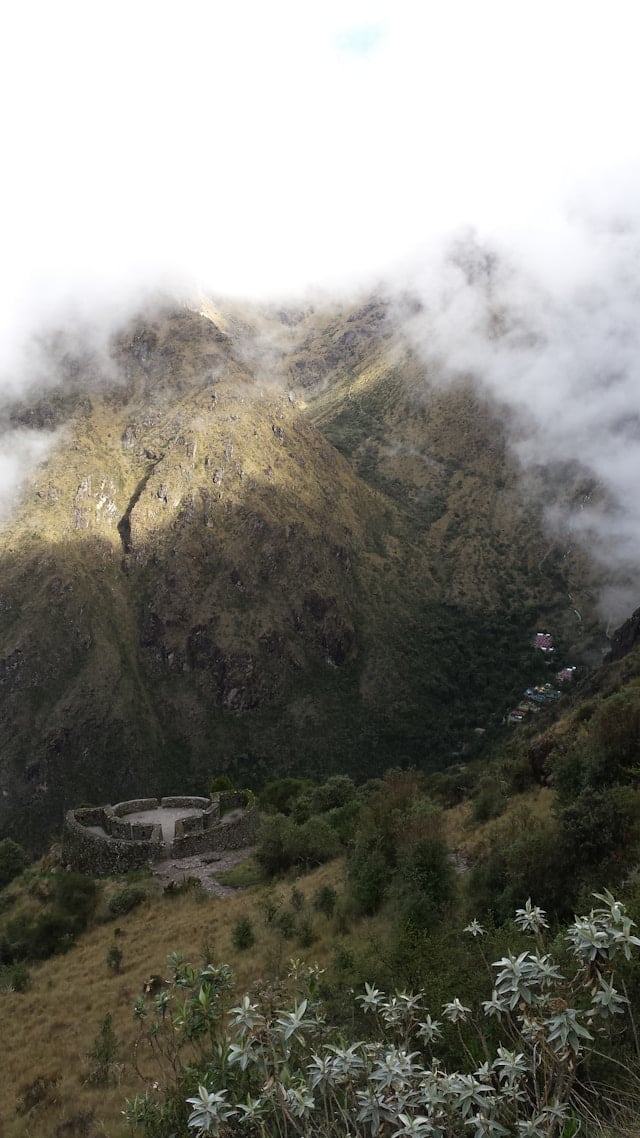 Inca Trail
Comparison: Salkantay Trek Vs. Inca Trail
| Feature | Salkantay Trek | Inca Trail |
|---|---|---|
| From – To | Connects Cusco to Machu Picchu | Connects Cusco to Machu Picchu |
| Difficulty | Moderate to challenging | Moderate |
| Number of days | Typically 4 or 5 days | Typically 2 or 4 days |
| Altitude | Higher maximum altitude (4,630 meters) | Lower maximum altitude (4,215 meters) |
| Scenery | More wild landscapes focusing on high mountain ranges, valleys, and cloud forest | Well preserved Incan-stone pathways, lower mountain ranges, wild forests, more cultural sites |
| Trail Length | Typically longer (between 62-78 km) | Typically around 45km |
| Highest Point | Salkantay Pass (4,630 meters) | Dead Woman’s Pass (4,215 meters) |
| Permits | Generally more available and flexible | Limited permits, must be booked in advance |
| Crowds | Fewer crowds, more remote experience | Limited number of hikers allowed per day, one of the most popular trails in Peru |
| Camping vs. Lodges | More luxurious: Sky camp glass domes, mountain huts | Generally camping in pitched tents |
| Best Time to Go | May to September during the dry season | May to September during the dry season |
| Cultural Sites | Limited historical sites, more focused on epic mountain ranges and wild natural beauty | Numerous Incan ruins along the trail, tons of historical and religious sites/ruins |
| Accessibility | More accessible, less popular and easier to get permits | Requires advanced booking and permits |
Ultimately, the choice of which trek to do will depend on your primary interests, physical level, and preference of trail popularity.

Who is the Inca Trail and Salkantay Trail for
Overall, we would recommend the Inca Trail for those who want to focus more on historical ruins, following the ancient Incan route, and prefer a slightly shorter and easier hike (45km). The Inca trail is a sacred route and was believed to have been used by the Monarch and emperor for religious pilgrimages.
The Salkantay Trail would be for those who want to see Machu Picchu, but prefer a focus on venturing high up into the wild mountain ranges of the Andes. Although there are fewer Incan ruins, climbing high up to 4630m on the Salkantay Pass allows you to experience a spiritual connection with Pachamama. I would also give Salkantay Trail a bonus point for the experience of sleeping in a glass dome under the stars.
Best time to do the Salkantay Trek
The ideal months to do the Salkantay Trek is from April to June, and then September to October.
During these periods, there is minimal chance of rain and the temperatures are comfortable. It is important to know that Machu Picchu is located amongst the cloud forest. Therefore there is always the risk that the entire view and city can be fully covered by the clouds.
When we went in May, we enjoyed perfect views of Machu Picchu. However the group that went the day before us didn’t get to admire the full view due to cloud coverage.
July and August are peak season which means high visitor numbers and crowds at Machu Picchu.
This post is part of our series about Peru. If you want to learn more about Peru, planning your trip, and some of the best experiences there, check out the guides below:
Important Tips for Salkantay Trail
Do you Need to Book your Tour in Advance
Yes, we highly recommend it.
While it is possible to find cheaper options by waiting until you arrive in Cusco, booking in advance allows you to secure a highly rated company and, more equally important, guarantee your Machu Picchu entry tickets, including permits for Machu Picchu Mountain or Huayna Picchu if you plan to hike them.
Leaving it until the last minute may save a small amount of money, but it can also create unnecessary stress and limit your options, especially during peak season.
Acclimatization
Make sure to plan for 2-3 acclimatization days before starting the Salkantay or Inca Trail trek. Considering that Cusco sits at an altitude of 3400metres, simply walking around Cusco will be an excellent way to get your body used to the altitude. On the 2-3 days prior to your hike, make sure to go for walks around the town.Maybe also try do some day trips to Moray or Maras to help your cardiovascular system acclimatize.
Coca leafs
The locals chew and drink Coca leaves to improve oxygen absorption in your body. You can try these remedies to help your body acclimatize. For us, we noticed a significant improvement.
Equipment at Machu Picchu
You are not allowed to bring tripods, selfie sticks, walking sticks, drones, heeled shoes, or alcoholic beverages into Machu PIcchu. Your guide will surely remind you of this the night before entering but we wanted to inform you ahead of time so you can plan accordingly.
Optional mountains
If you will be doing the optional Huyna Picchu or Machu Picchu Mountain trek, make sure to purchase your tickets far in advance as they do tend to sell out. Also, you will be assigned a specific time to start the mountain trek so make sure to plan accordingly. There is a counter at the entrance and they will check to see if you are respecting your entry time.
To enter Huayna Picchu or Machu Picchu mountain, you are required to exit the entire Machu Picchu site and re-enter through the ticketing booth. This is because they do not allow you to backtrack through the site. Make sure to keep this in mind when calculating how much time you need to get to the mountain entrance. We had to sprint through the site in order to make our time since the site was quite large and there was a lineup at the entrance.
Required guide
It is mandatory to have a guide when visiting Machu Picchu. This means if you do attempt to do the Salkantay Trek independently, you will still need to hire a guide to visit Machu Picchu.
Time management at Machu Picchu
If you choose to hike Huayna Picchu or Machu Picchu Mountain, keep in mind that it will take away a significant portion of your time exploring the main Machu Picchu citadel.
Huayna Picchu typically takes around three hours to complete, while Machu Picchu Mountain takes closer to four hours. During our visit, we opted for Machu Picchu Mountain and had to carefully plan our timing, as entry slots are strict and limited.
If you decide to add one of these climbs, be sure to factor in the designated entry time and allow yourself enough time to reach the correct entrance gate without feeling rushed. We did not manage it well and practically had to sprint through the Machu Picchu site to reach the entrance in time.
Summary: 4 day salkantay trek to Machu Picchu
Embarking on the Salkantay Trek was definitely one of the best experiences we had during our Peru trip. We learned so much about the Inca and Andean people, their history, and had the rare chance to witness some of Peru’s most incredible landscapes. Seldom have we experienced a hike that encapsulates such a multitude of positive elements in a single journey of 4 to 5 days! And if you have more time in Peru, we recommend also heading to Arequipa where you’ll find one of the deepest canyon hikes in the world, Colca canyon!
Thinking of doing other epic hikes? Check out our Volcano hike in Guatemala, red/rose valley hike in Cappadocia, or epic national park hikes in Utah.
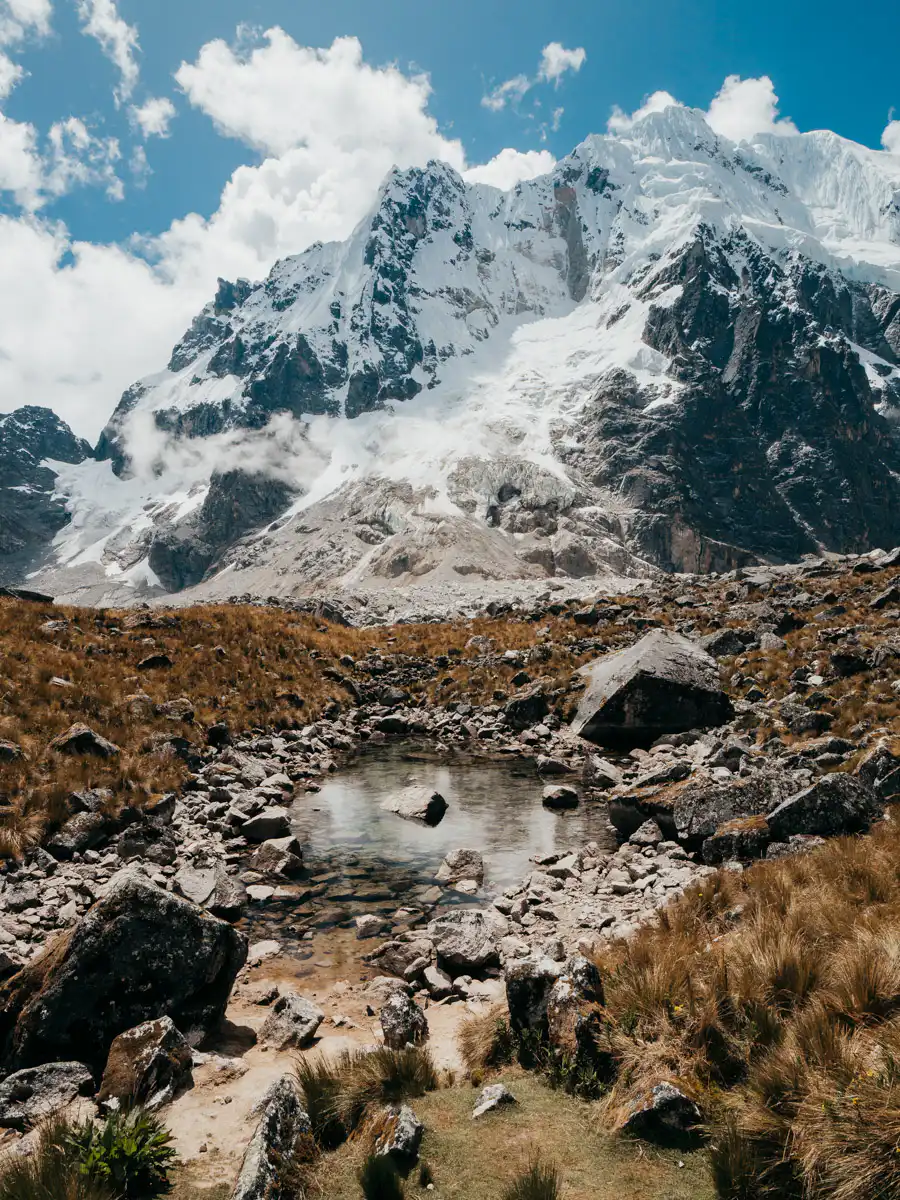
Looking for more travel inspiration?
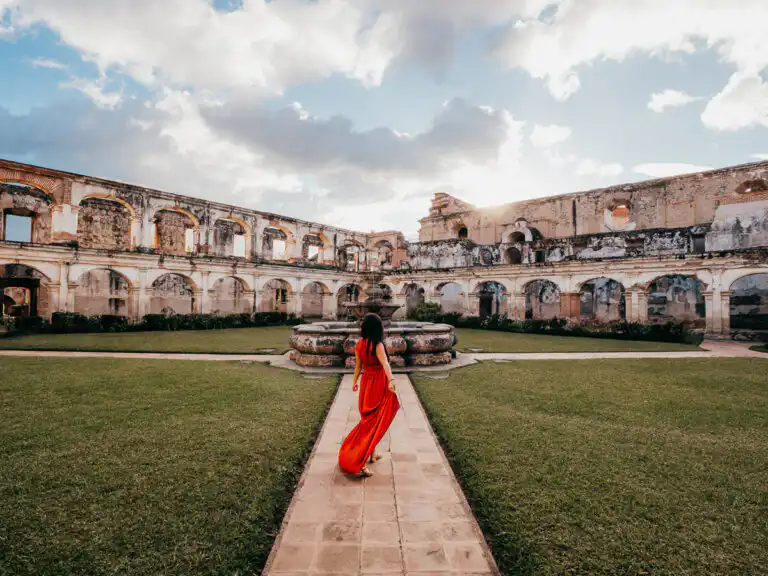
Incredible volcanoes and ancient Mayan civilizations: Tikal and Antigua in Guatemala.
Planning the ultimate Vietnam itinerary and exploring the remote north on the Ha Giang Loop.
Exploring ancient cave dwellings and riding hot air balloons in Cappadocia
Exploring and sailing on the Turkish Coast
Hiking in one of the US’s best national parks and road tripping through Utah