Namibia Packing List: What to Pack for a Self Drive Safari and Camping Trip


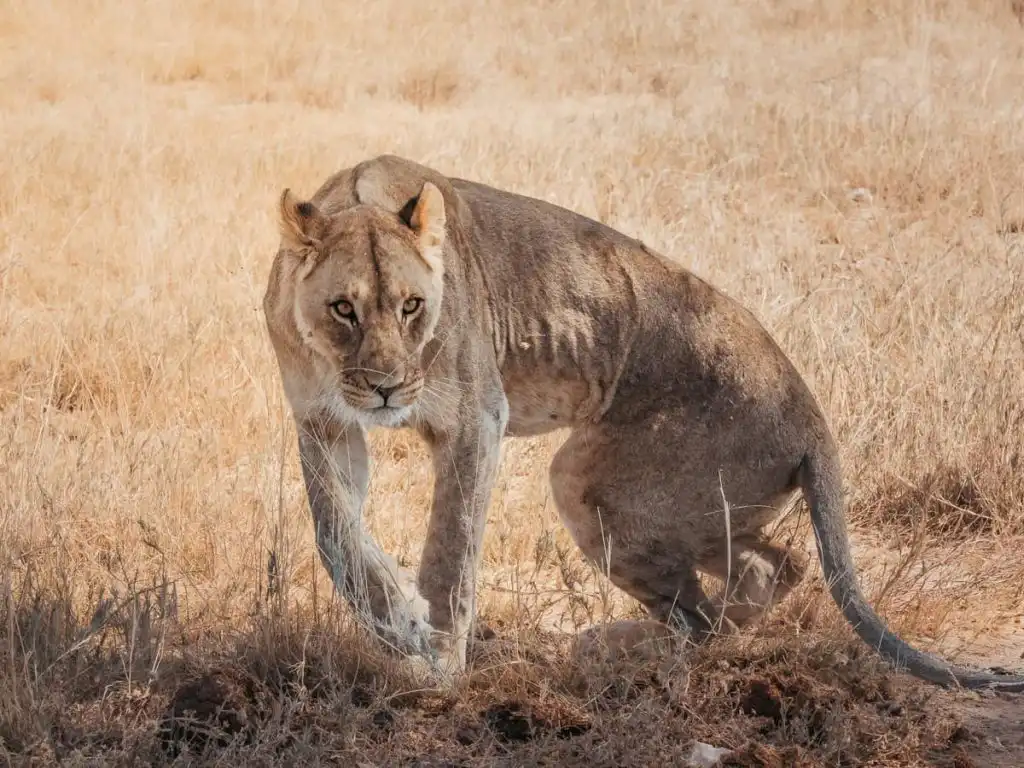
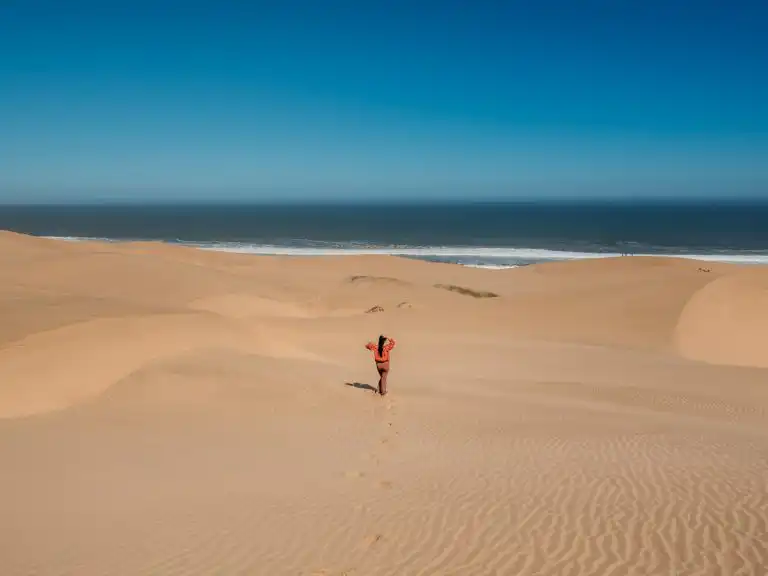
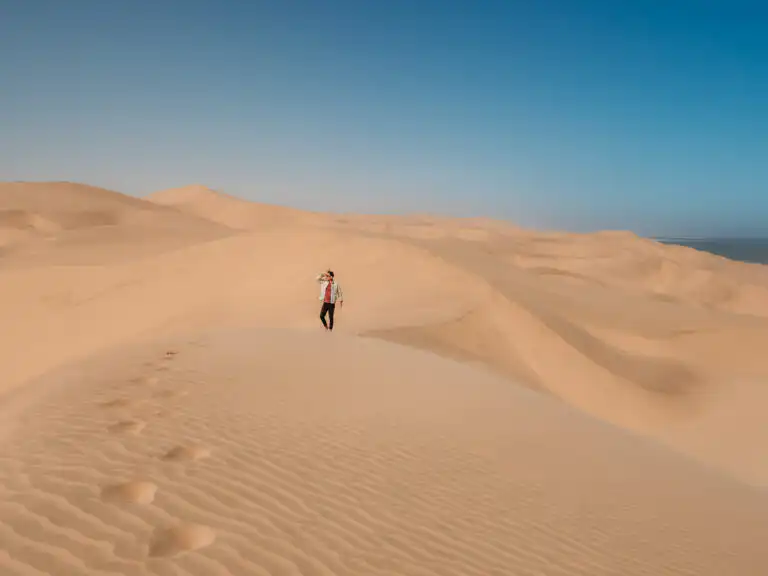
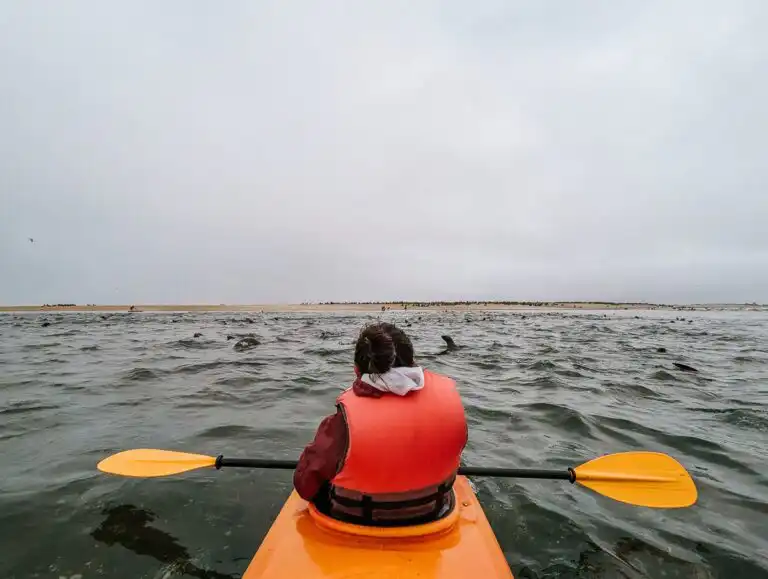
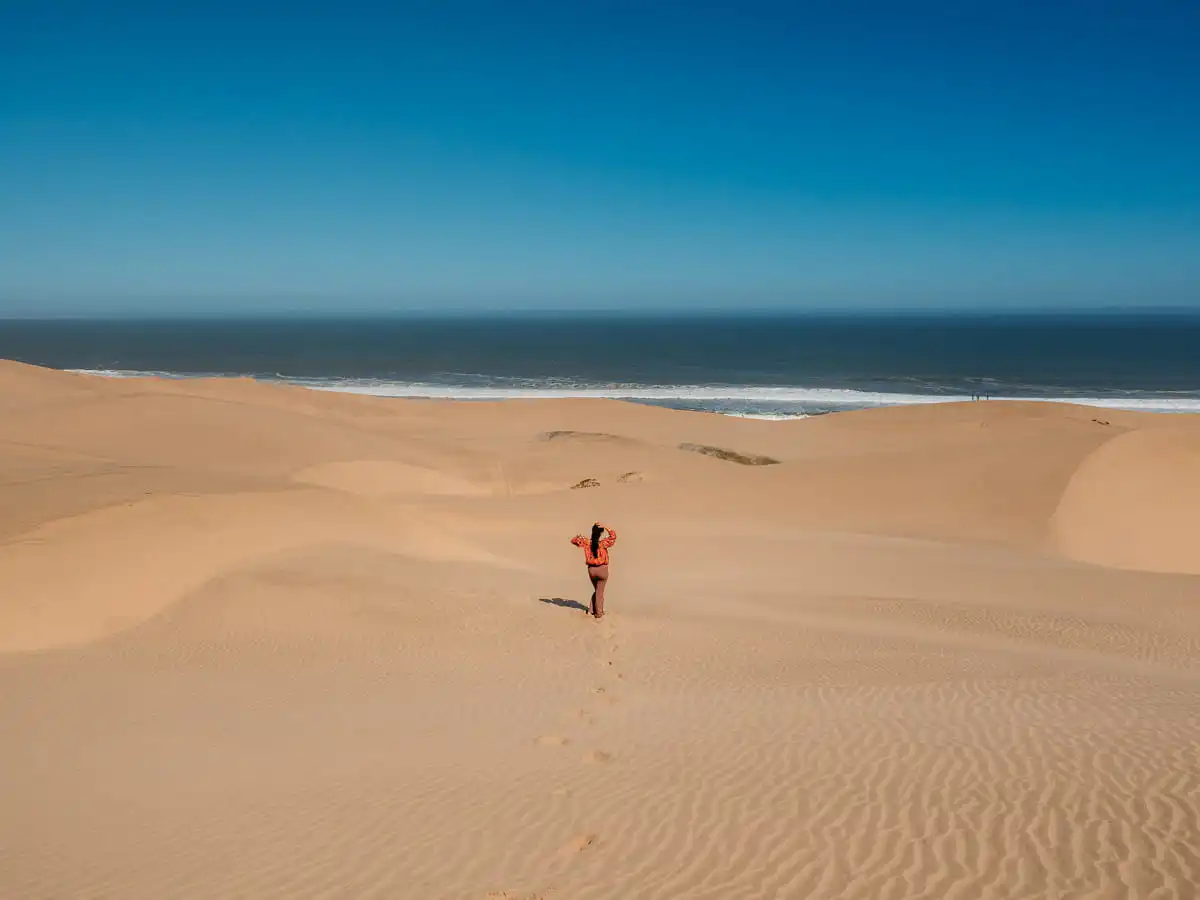
There aren’t many countries we’ve visited that pack so many different experiences into one destination: One moment you’re climbing massive sand dunes at Sandwich Harbour, the next you’re exploring the desert, then kayaking alongside seals on the coast, and later heading out on a safari game drive to spot wildlife.
With such a wide range of unforgettable activities in Namibia, packing properly can actually be a bit challenging. Each environment comes with different conditions, so having the right clothing and gear makes a big difference.
After spending more than two weeks exploring Namibia ourselves, we created this Namibia packing list for self drive safaris and camping trips to help you prepare for your trip. Along the way, we’ll share exactly what you should bring, what we wish we had packed, and a few things we brought but barely used.
And rather than simply writing out a list of items, we’ve structured this guide around explaining the specific conditions you’ll encounter. That way, you’ll understand exactly what your gear needs to handle and can pack with confidence for your Namibia adventure!
Why Packing for Namibia Is Different
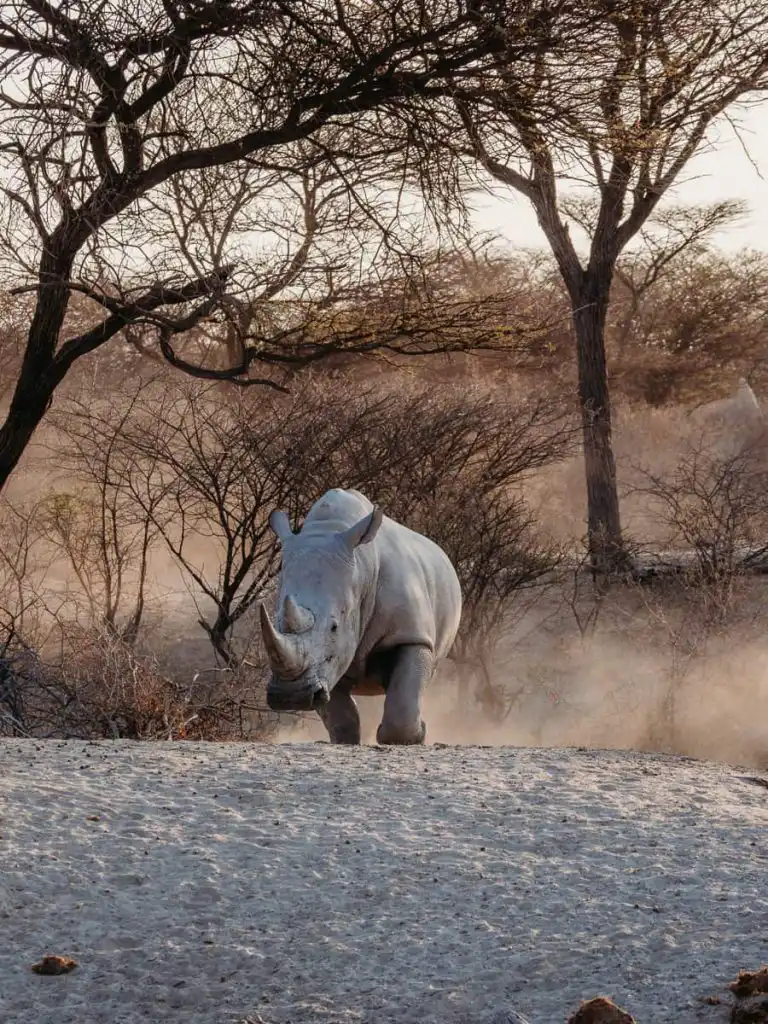
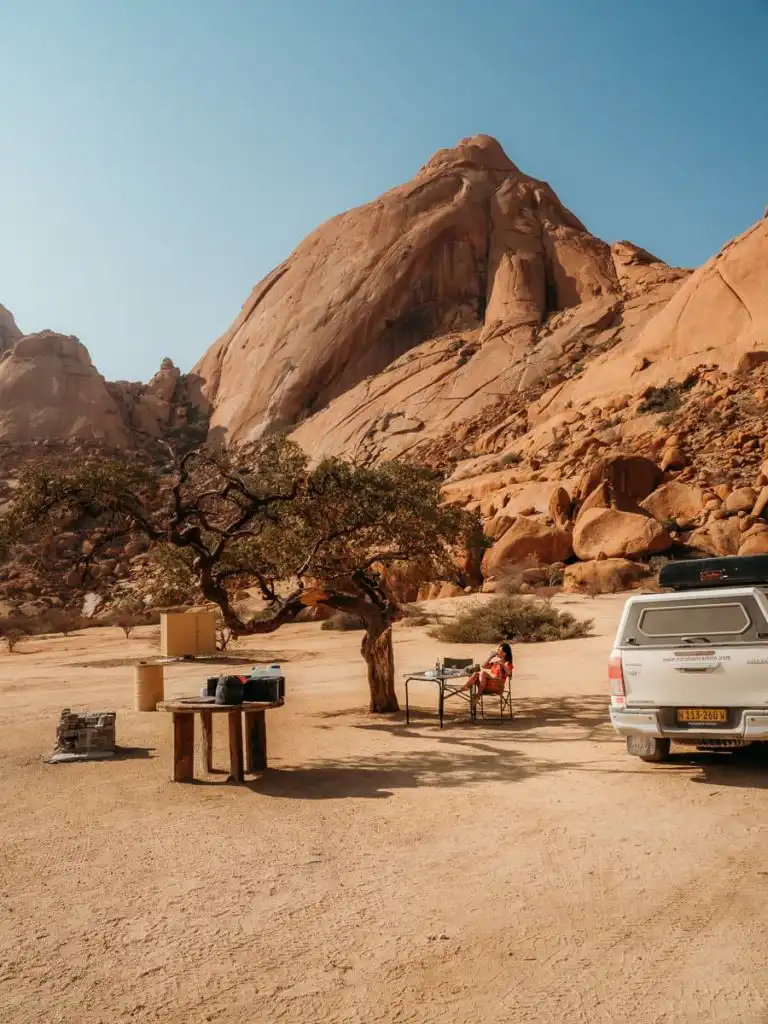
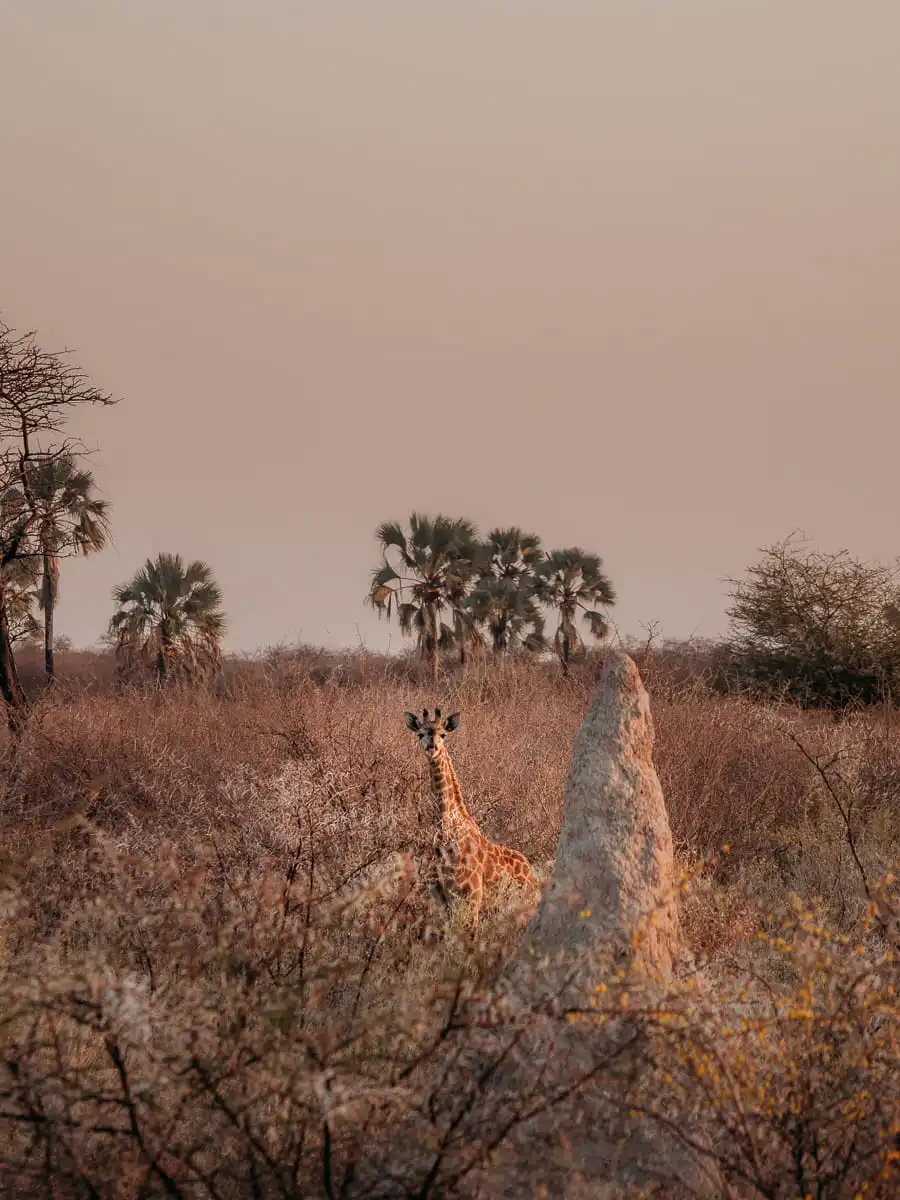
Packing for Namibia can be surprisingly tricky, mainly because of how many completely different environments you’ll experience in one trip. One moment you’re heading out on cold early morning game drives in Etosha National Park, the next you’re climbing towering sand dunes in Sossusvlei, and somewhere in between you need to also be prepared for camping in the wilderness.
Because of this variety, packing for Namibia isn’t as straightforward process. To help you prepare, we’ve highlighted the three main conditions you’ll want to pack for which makes packing for Namibia quite different from most other destinations.
1) Desert Climate and Huge Temperature Swings
In Namibia, you’ll be facing harsh desert climate and huge temperature swings. During the day, the desert sun can push temperatures up to 40°C, while at night it can drop close to freezing. Since many travelers explore Namibia by camping, you often won’t have the comfort of climate controlled accommodations, which makes packing the right clothing essential. Even for us, despite mixing in a few hotel stays, we still experienced challenging conditions like the cold, humid coastal weather in Swakopmund.
In short, you’ll need to be prepared for hot desert days, chilly nights, and occasional damp, cold coastal weather all in one trip.
2) Dusty and Sand everywhere
While traveling through Namibia, one thing you’ll quickly realize is that dust and sand get absolutely everywhere, and we mean everywhere. Honestly, we’ve never experienced another destination where our clothes, bags, and gear got this dusty/sandy.
Even if you store your belongings in the trunk of your SUV, fine desert dust still finds its way in. Between opening doors frequently and the need for airflow and ventilation while driving, it’s almost impossible to keep everything completely dust free.
Because of this, it’s worth packing clothes that are easy to shake clean and don’t cling to dust. It’s also a good idea to have a system for storing your clothing and gear to keep them as protected as possible from the sand. (We’ll share exactly how we did this later in the guide.)
3) Safari Game Drives
Ok, You don’t need to go full Indiana Jones with a perfectly curated safari outfit (despite what you may see on Instagram), but having the right clothing still makes a big difference.
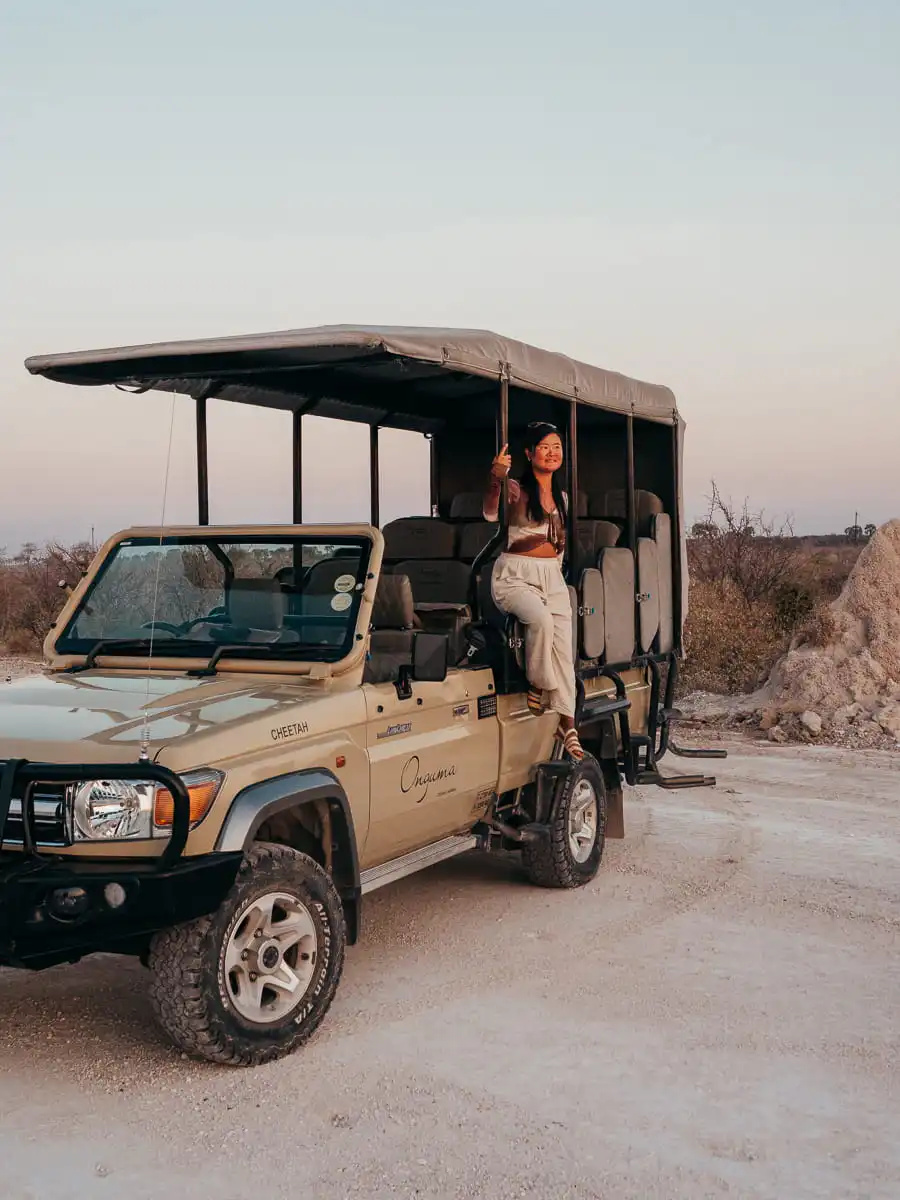
First, game drives in places like Etosha National Park usually happen early in the morning or at sunset, often in open air vehicles. That means you’ll be dealing with constant wind and surprisingly cold temperatures, especially before the sun fully rises. So having a windproof jacket and a few warm layers will make those early starts much more comfortable.
It’s also best to avoid bright or flashy colours. Instead, stick to neutral, nature tones like khaki, brown, or green, which are better suited for wildlife viewing and help you blend into the environment a bit more. We’ll provide more details below.
🧳☑️ Download: Complete Namibia Packing Checklist
If you want an easy checklist to follow while packing, we created a free downloadable Namibia packing list that you can print or save on your phone – It includes:
- Clothing for desert conditions
- Safari gear (essential clothing and photography gear)
- Road trip essentials (everything you need for your car ride and not getting lost)
- Camping equipment
- Photography gear specific for your Safari in Etosha
- Things most travelers forget (we forgot several of them!)
What Clothes to Pack for Namibia
Since everyone has access to a different wardrobe at home, we won’t focus on listing very specific clothing items. Instead, we’ll guide you on the types of clothing to bring and the functions they should serve to help you prepare for your trip to Namibia. How much you pack will also depend on your travel style and the length of your trip.
Lightweight Clothing for Hot Days
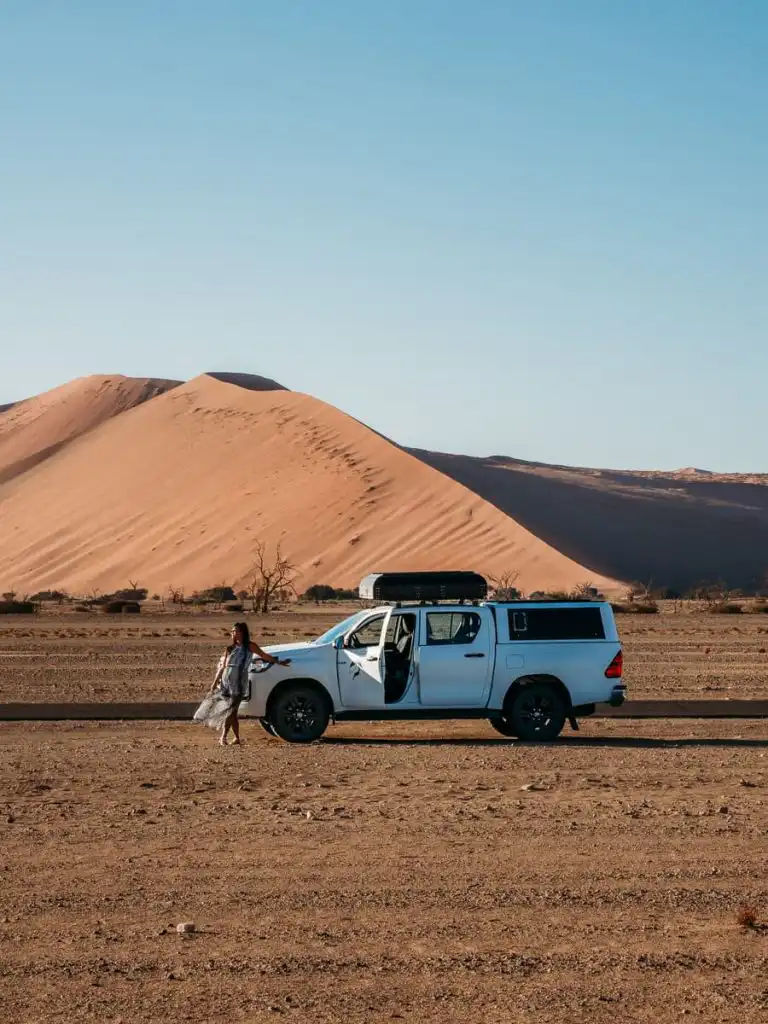
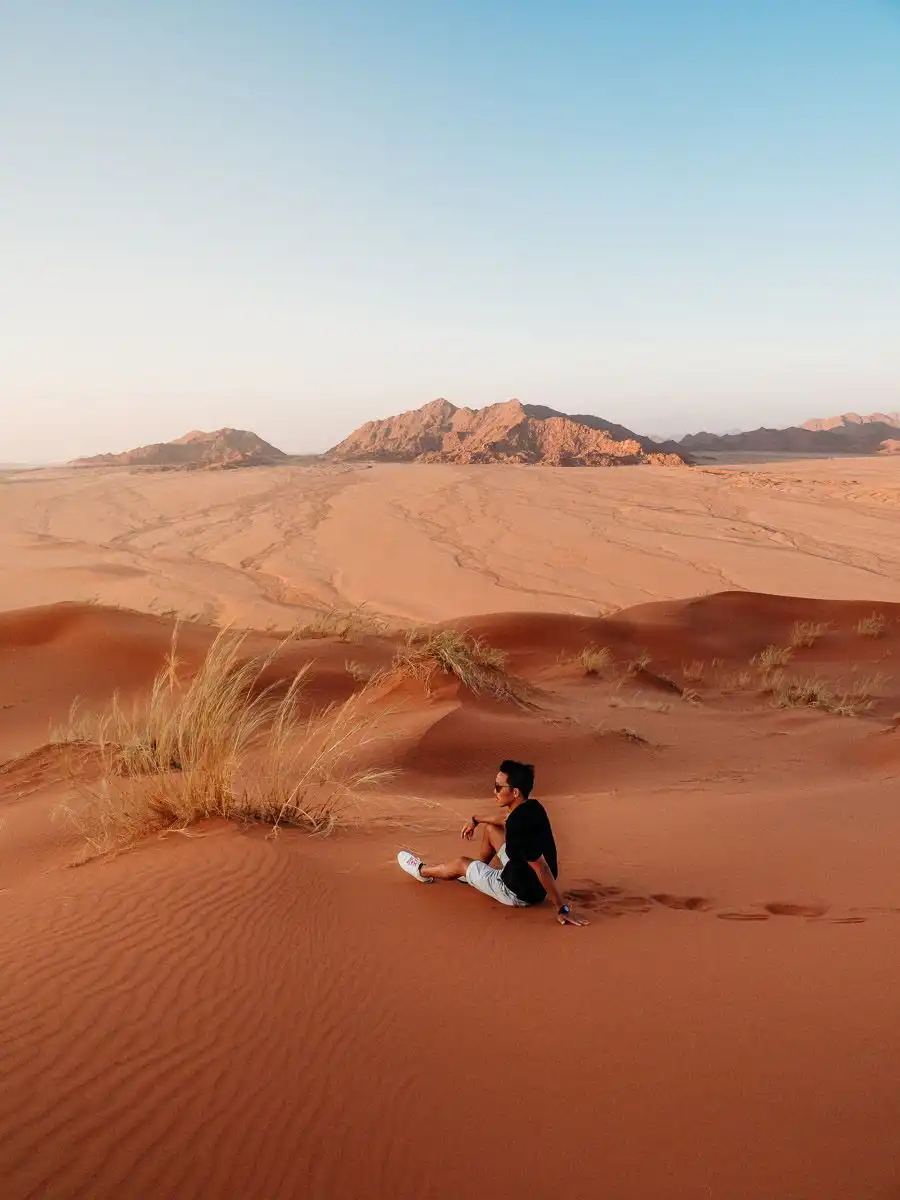
Bring lightweight t-shirts and shorts to prepare for the harsh hot days. They should ideally also be easy to brush the sand and dust off of since you’ll be climbing quite a few sand dunes.
Don’t worry about bringing too many of them either since you’ll most likely be wearing a similar base outfit most of the days in the sand dunes. And then you’ll have a separate outfit that you’ll repeat on all your safari days, and just layer on extra for warmth and insulation.
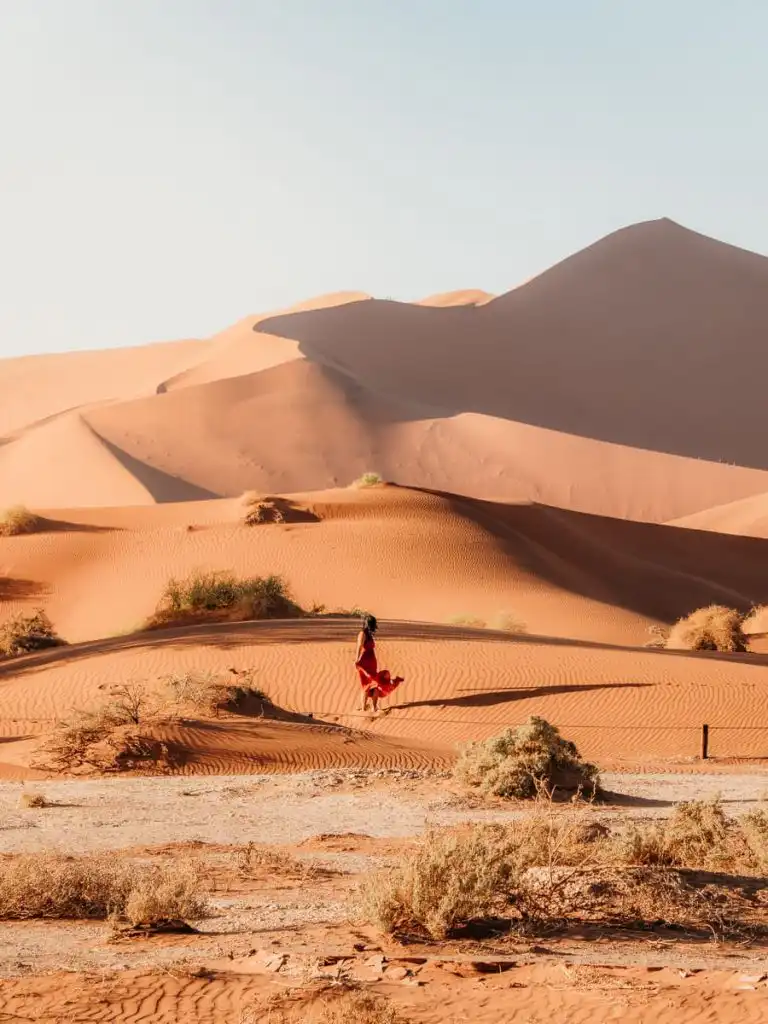
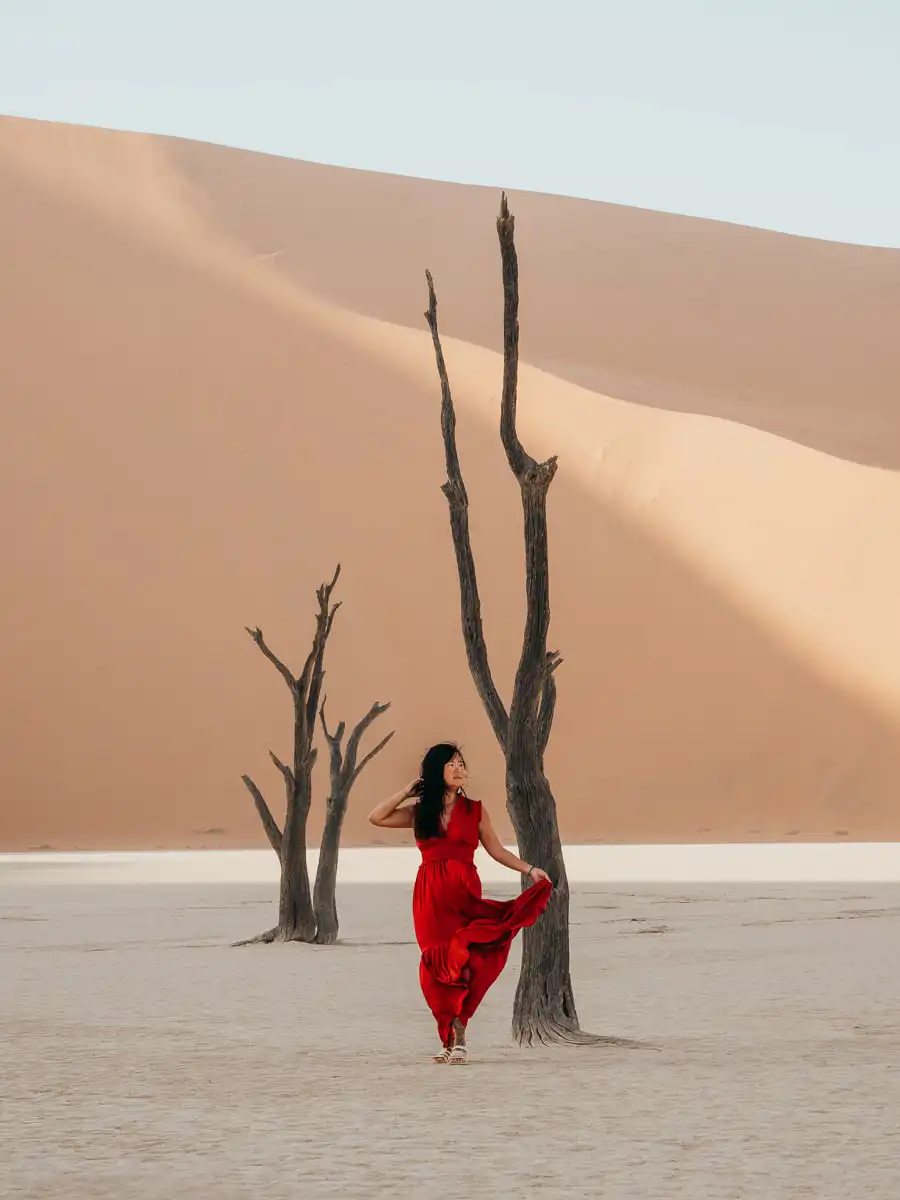
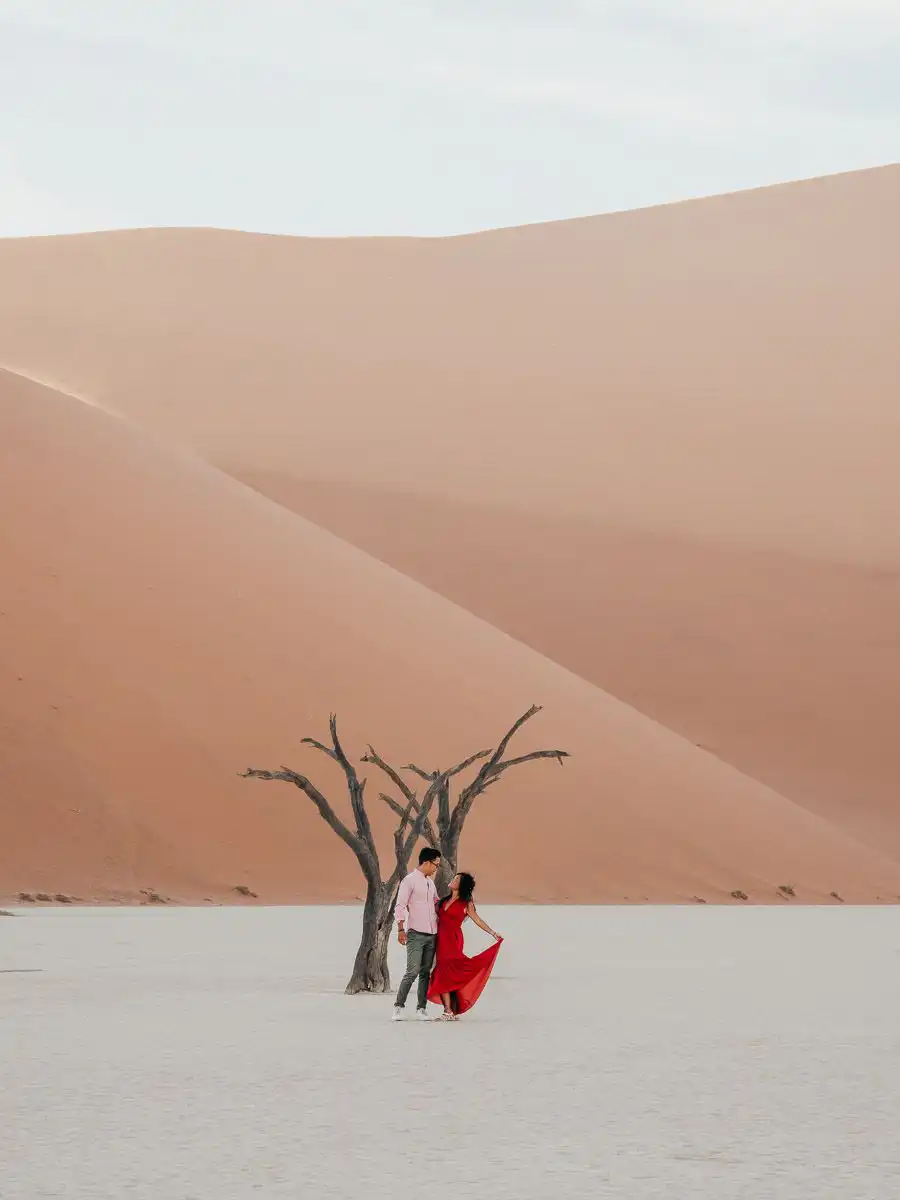
No fancy/cute dresses and outfits needed unless (like us), you want to take some nice couple shots at Deadvlei!
Warm Layers for Cold Desert Nights and Morning game drives
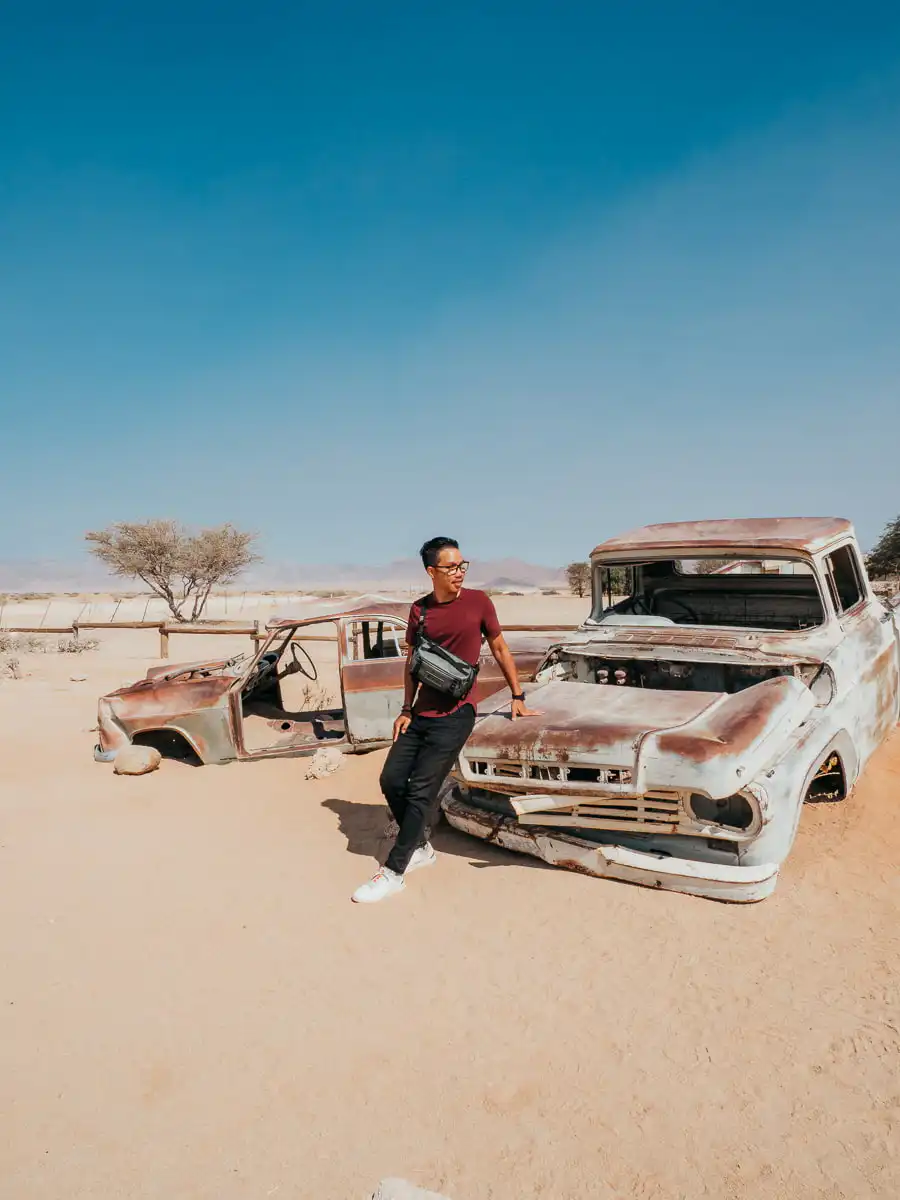
Make sure to bring some warm layers for the cold nights and morning game drives. We personally brought a shearling fleece by Eddie Bauer and a Patagonia puffer jacket for the top, and had a pair of long pants for the game drives and nights. The shearling fleece sweater is not ideal for all the sand conditions but we wanted something more stylish than the puffer for our photos so we brought it.
Comfortable Shoes and sandals for Exploring
You will not need to do any intense hiking so leave the big hiking boots at home. Instead, you’ll be completely fine with a pair of running shoes and sandals. The sandals will be very practical for walking around the campsite and climbing up the dunes, whereas the running shoes is good for the game drives and bush walks.
Swimwear for the amazing pools at the lodges
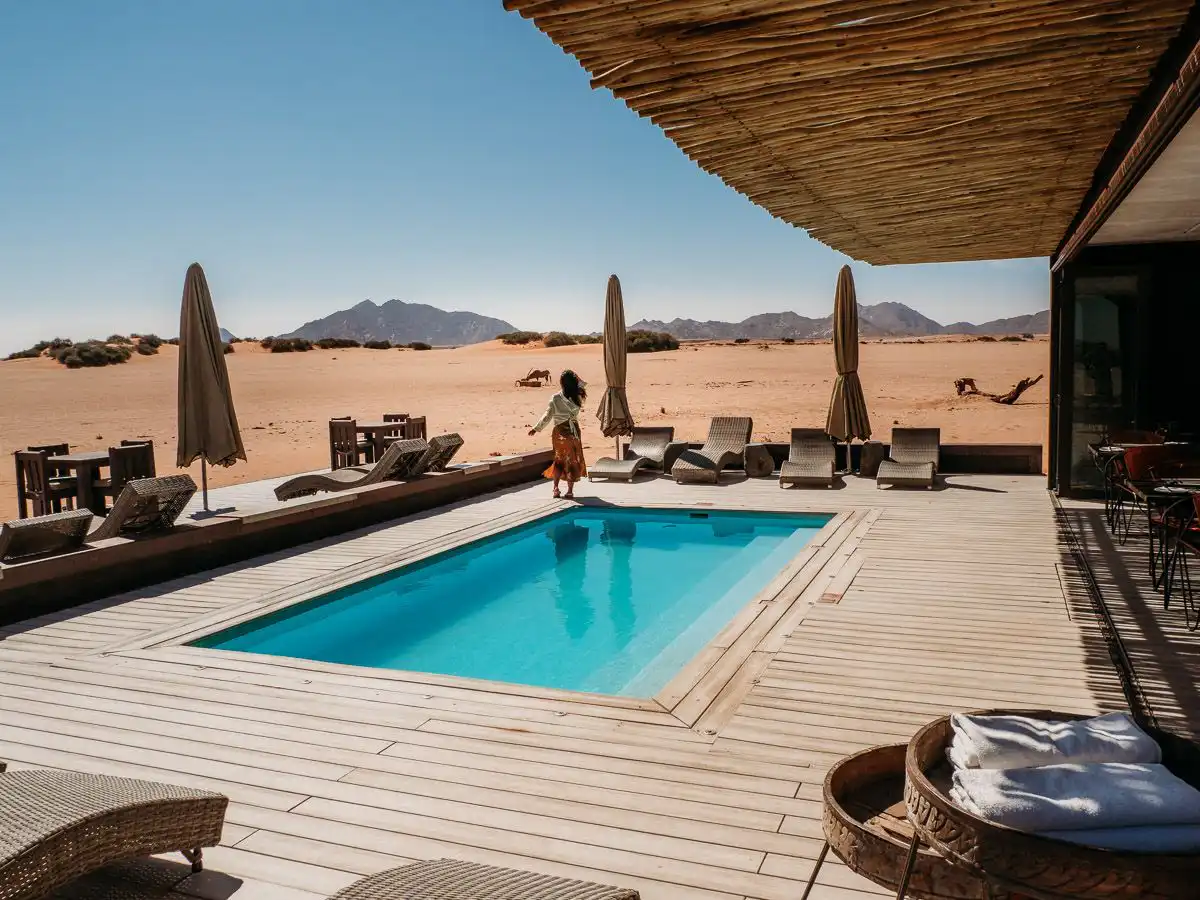
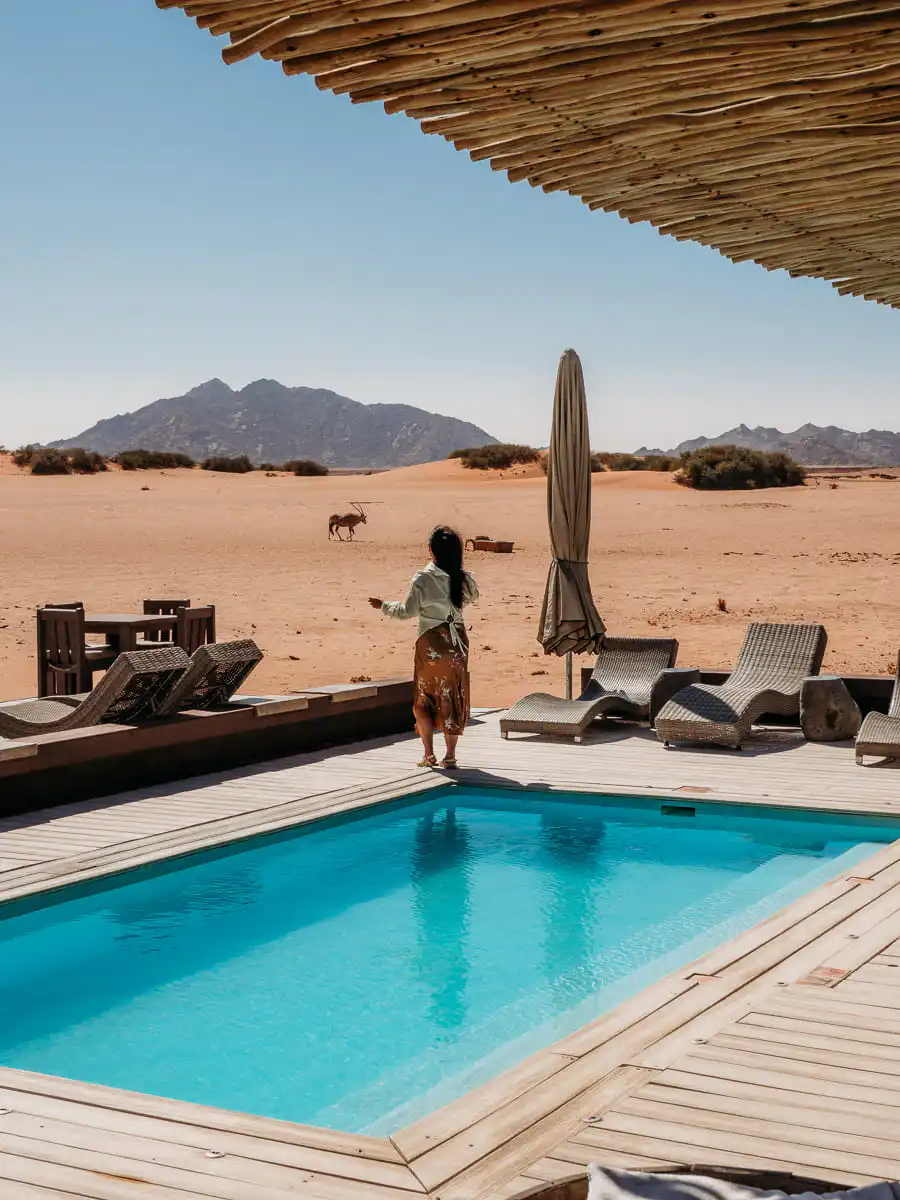
Yes we are in the desert, but make sure to bring your swimwear. We were surprised by how beautiful the swimming pools are at the lodges in Sossusvlei and the private game lodges in and around Etosha, and diving in was the perfect way to cool off from the harsh mid-day heat!
What to Pack for your Etosha Safari in Namibia
This section we’ll cover the clothing and gear you’ll need focused on experiencing the safaris in Etosha National Park.
Binoculars for Wildlife Spotting
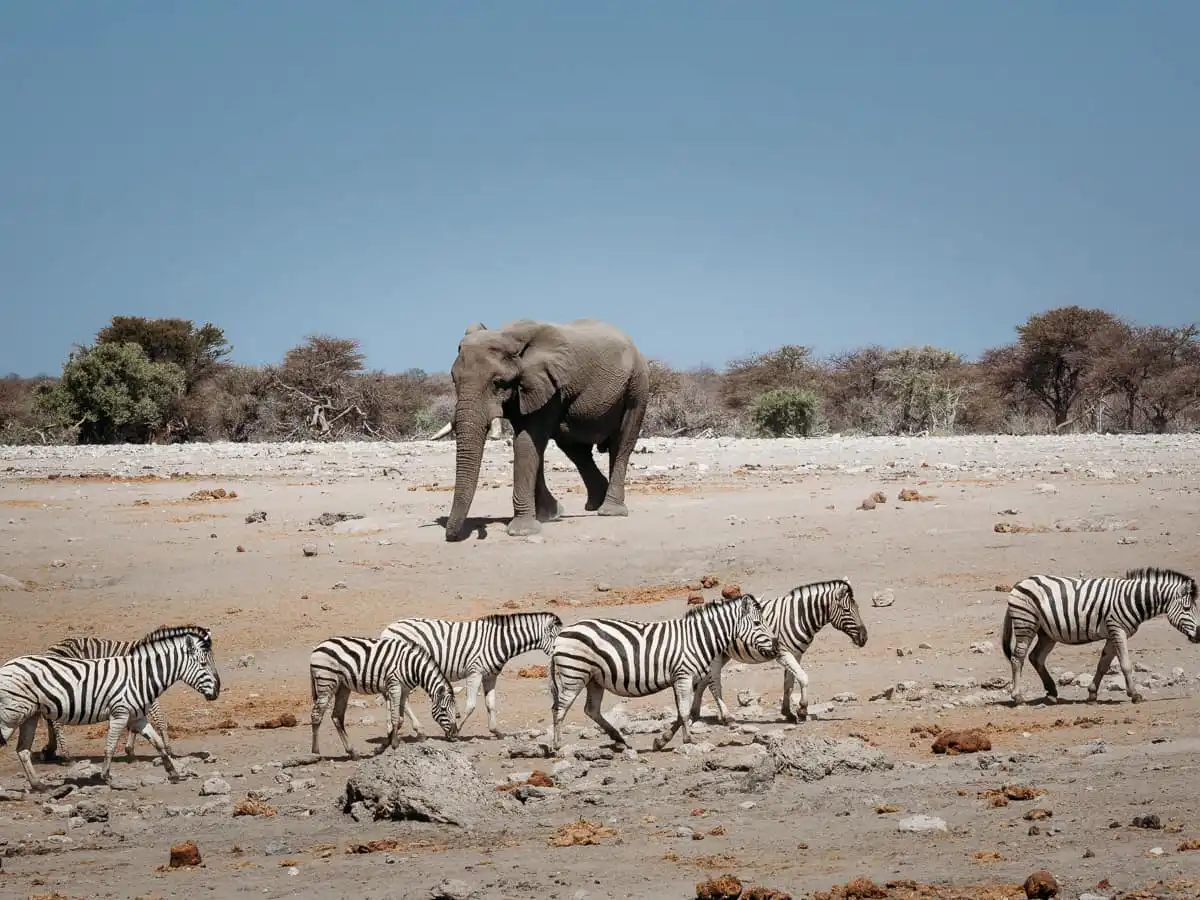
This is a big one for safaris and we were not properly prepared. Fortunately, we had a good camera zoom lense (equivalent of full-frame 200mm) which was able to double as our binocular. But to our surprise, many times during the game drives, the animals are quite far or hidden in the distant bushes.
Having binoculars (or a good zoom lens) will really enhance your experience to better see the animals. The plains of Etosha are dramatically vast, and you are required to stick to the main roads, so oftentimes the animals are at quite a distance away.
Sometimes, if you join a guided game drive, the guide may provide a single pair of binoculars for the vehicle to share among passengers. But if you’re self driving like we did in Etosha National Park, having your own pair of binoculars is definitely worth it.
They are relatively inexpensive, usually around $35 to $50, and can greatly enhance your safari experience by helping you spot wildlife that would otherwise be difficult to see from a distance. Make sure to get one with a strong magnification like this affordable High Powered Compact Binoculars.
Camera with Zoom Lens
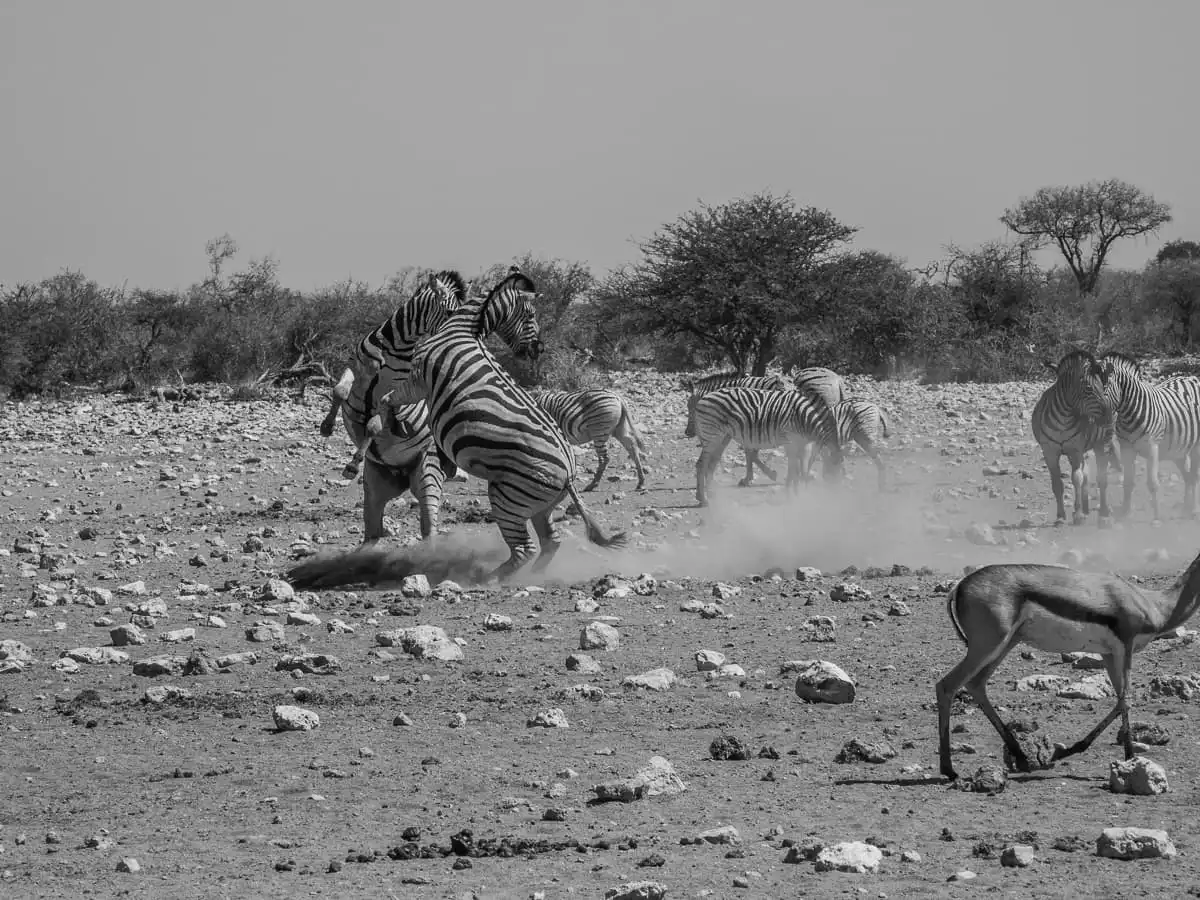
When you see those stunning safari wildlife photos on Instagram, the animals often look incredibly close and perfectly clear, so it’s easy to assume you’ll be just a few meters away from them during your safari. Of course, there are times where you may be lucky and the animals approach near the vehicle, but many times they remain at a large distance.
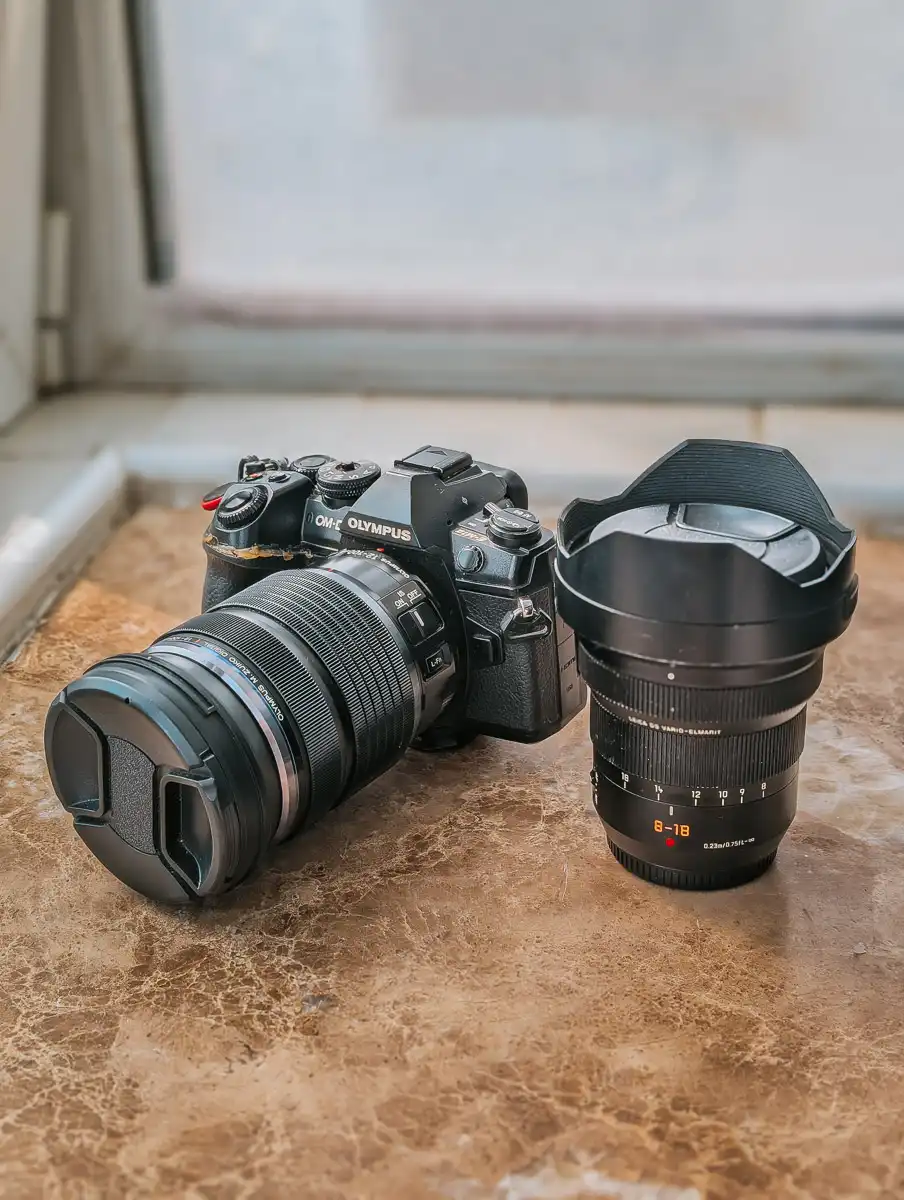
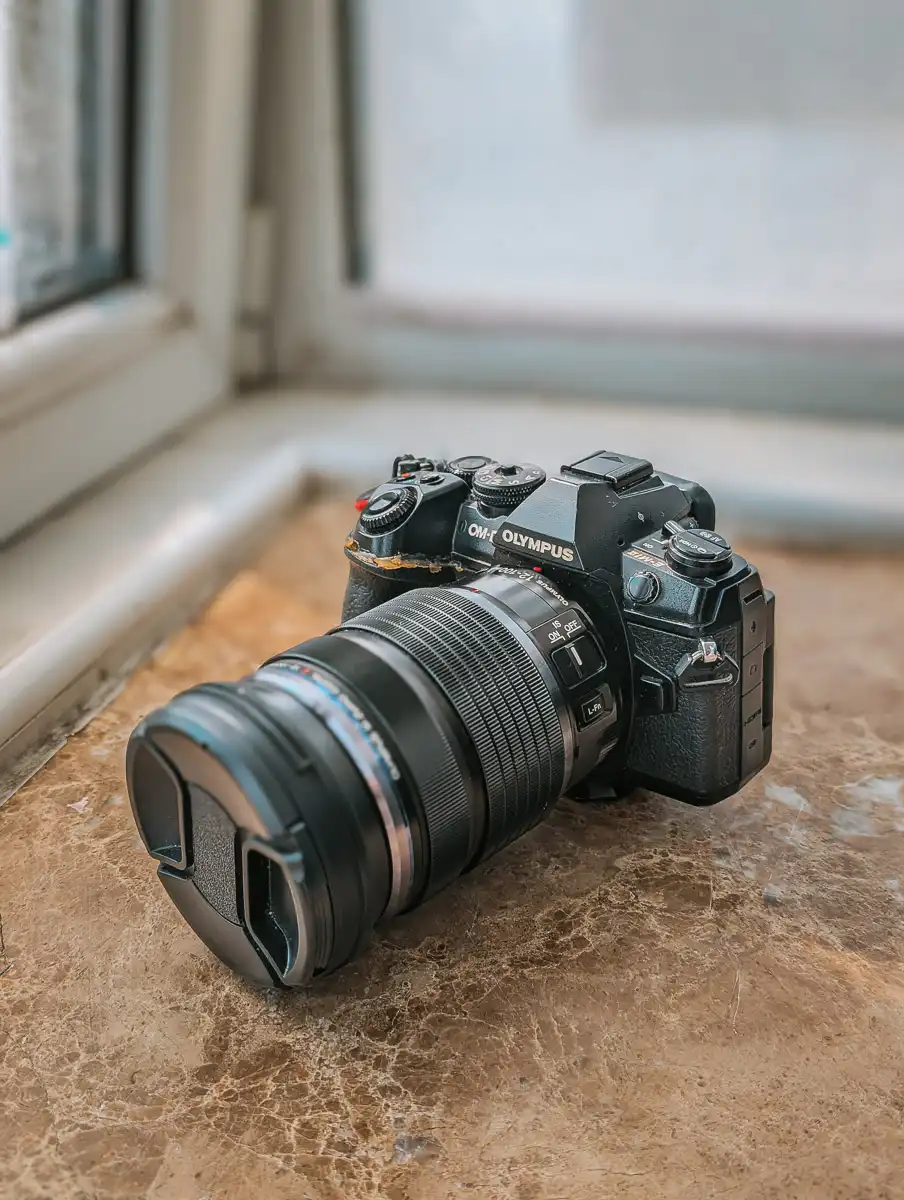
For this reason, make sure to bring a camera with a good zoom lens (ideally > 200mm in full-frame equivalent). To give you an idea, we shoot with the Olympus EM1 Mark II (Micro four thirds) and mostly used our Olympus 12-100 F4 zoom lens. This was perfect since it’s maximum reach is 200mm equivalent, but at the same time we can zoom out to 24mm equivalent for when the animals do approach the vehicle.
In many cases, a cellphone will not be able to capture comparable animal photography shots. Although nowadays with pro-level phones like Iphone 16 or 17 pro that have native zoom lenses reaching above 5x, the results are surprisingly good!
A Small Backpack for Game Drives / Camera sling
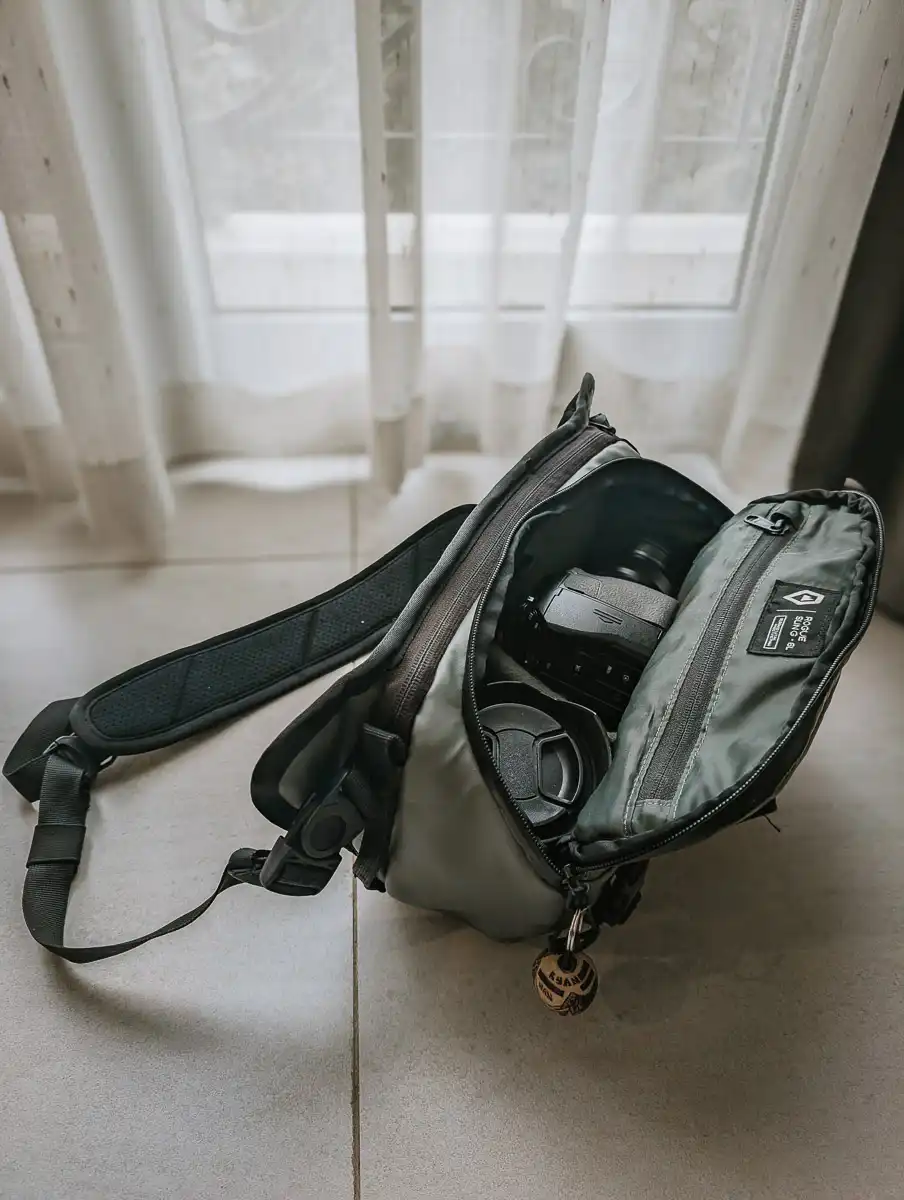
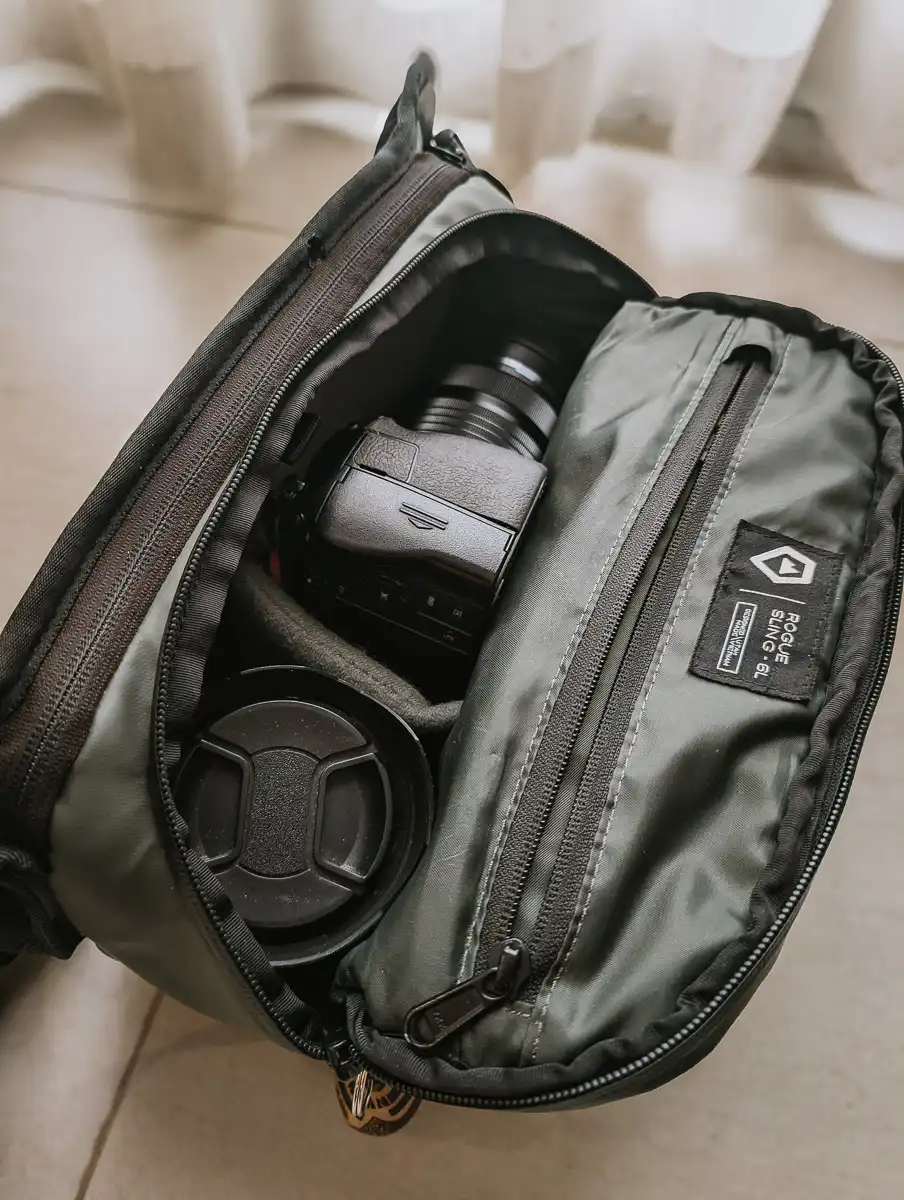
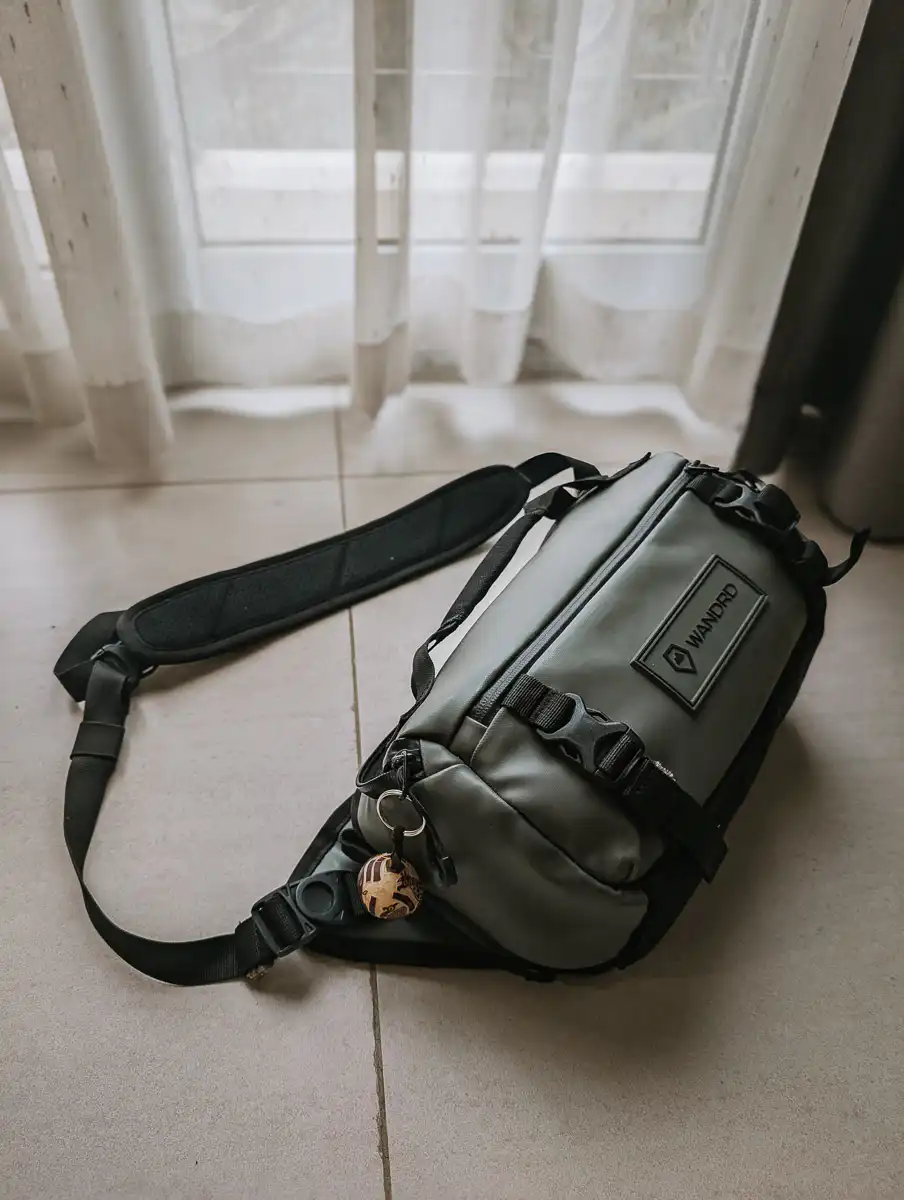
We brought our favourite WANDRD 5L Sling which was a life-saver for the safari game drives. It perfectly fits my camera, an additional lens, my sunglasses, cleaning cloth for the lens, and other little essentials like cash.
Having a small sling/backpack helped protect my gear during the bumpy game drives, and made sure it did not take too much space in the game vehicle. It was also super easy to put my camera away and take it out quickly which is crucial for getting the best animal photography shots.
Extra SD cards for your photos
Between wildlife photography in Etosha and stargazing photography in places like Spitzkoppe, you’ll likely take far more photos than expected. This is especially the case when taking shots of the animals.
You never know when they’ll appear, how long they’ll stay, and what behaviours they will have so you’ll tend to take a ton more photos than needed. This is even worse when you want to shoot in burst mode to catch the perfect frame of the lion roaring or the leopard as it gets ready to jump.
So make sure to bring along a few extra SD cards for your camera! We like using these SONY TOUGH SD cards and they have lasted already several years. We have bought Sandisk and Lexar ones before but since there are tons of knockoff versions, they are not always the most reliable.
Cloth to cover your camera
Small but super crucial tip: bring an extra microfibre cloth or towel to cover your camera.
Sometimes, in order to have my camera ready as quickly as possible during game drives, I would leave my camera on the safari vehicle seat and simply cover it with a cloth. This protected it from the sand/dust that gets kicked up while driving, but at the same time made accessing my camera super easy!
We used our Buff for this but which was perfect since it served as a neck gaiter and camera protector!
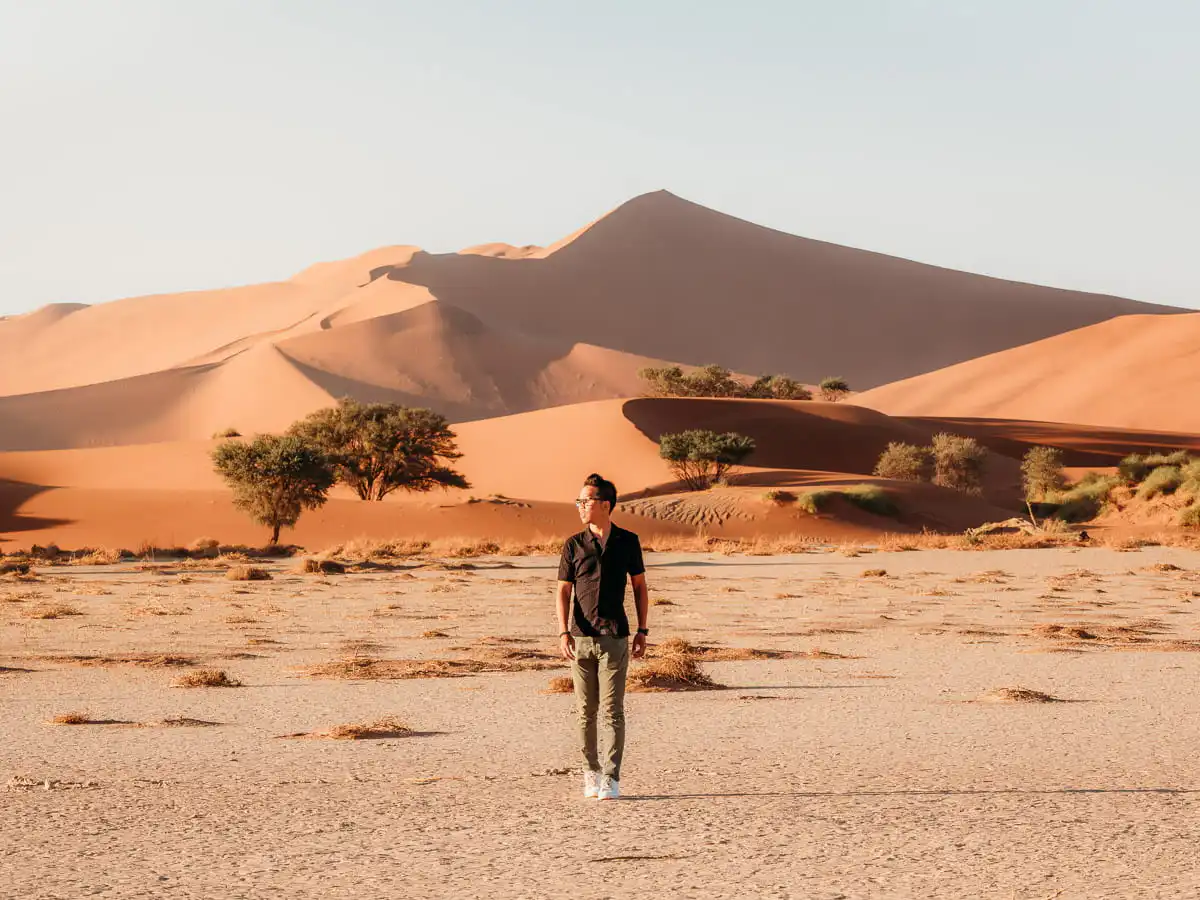
A Hat and Sunglasses for Sun Protection
A hat and sunglasses will be super important for the Sossusvlei portion of your Namibia trip. The sun gets super intense during the day. However, this will not be as useful for the Safari portion of your trip since most game drives are early in the morning or close to sunset. Also, it’s probably not a good idea to wear a hat during the game drives since it might get blown away by the wind, and you likely don’t want to get out of the vehicle to retrieve it!
Lip Balm with SPF
This is an essential not only for safaris but also for your entire Namibia road trip itinerary! The combination of a dry climate, intense desert sun, and constant wind during game drives can leave your skin extremely dry. Because of this, it’s important to not only apply sunscreen but also use a lip balm with SPF protection.
During our trip through Namibia, we were honestly surprised by how dry our skin became. We don’t think we’ve ever experienced this much dryness before, and at times our skin was peeling a lot from the harsh conditions.
High SPF Sunscreen
The Namib Desert sun is incredibly strong, especially when you’re climbing dunes in places like Sossusvlei or spending hours on game drives in Etosha. Make sure to pack a high SPF sunscreen and reapply frequently, especially during long outdoor days. This also makes your skin less prone to drying out in the desert heat.
Buff
A buff like this was another life-saver during our trip. Not only is it perfect to protect your face from the sand in the wind while climbing the sand dunes, but also perfect for protecting against the cold during game drives, and protecting your gear from the sand like previously mentioned.
Road Trip Essentials for Driving Around Namibia
In this section, we’ll cover all the things you’ll need to prepare for the driving and road trip aspects of your trip.

Offline Maps and GPS Apps
We recommend preparing a few version of offline maps for your Namibia Road Trip. There are several sections of the country where you will lose cellular reception so it’s important to have an offline version ready.
We personally prepared our offline maps on Google maps but also downloaded different backup versions on Maps.me.
Also, we recommend double checking the routes with the car rental company so they can verify if you are taking the best roads, since sometimes GPS navigation may lead you on off-road or there are occasional routes that may be flooded.
Portable Phone Charger/phone mount & adapter for the car plug
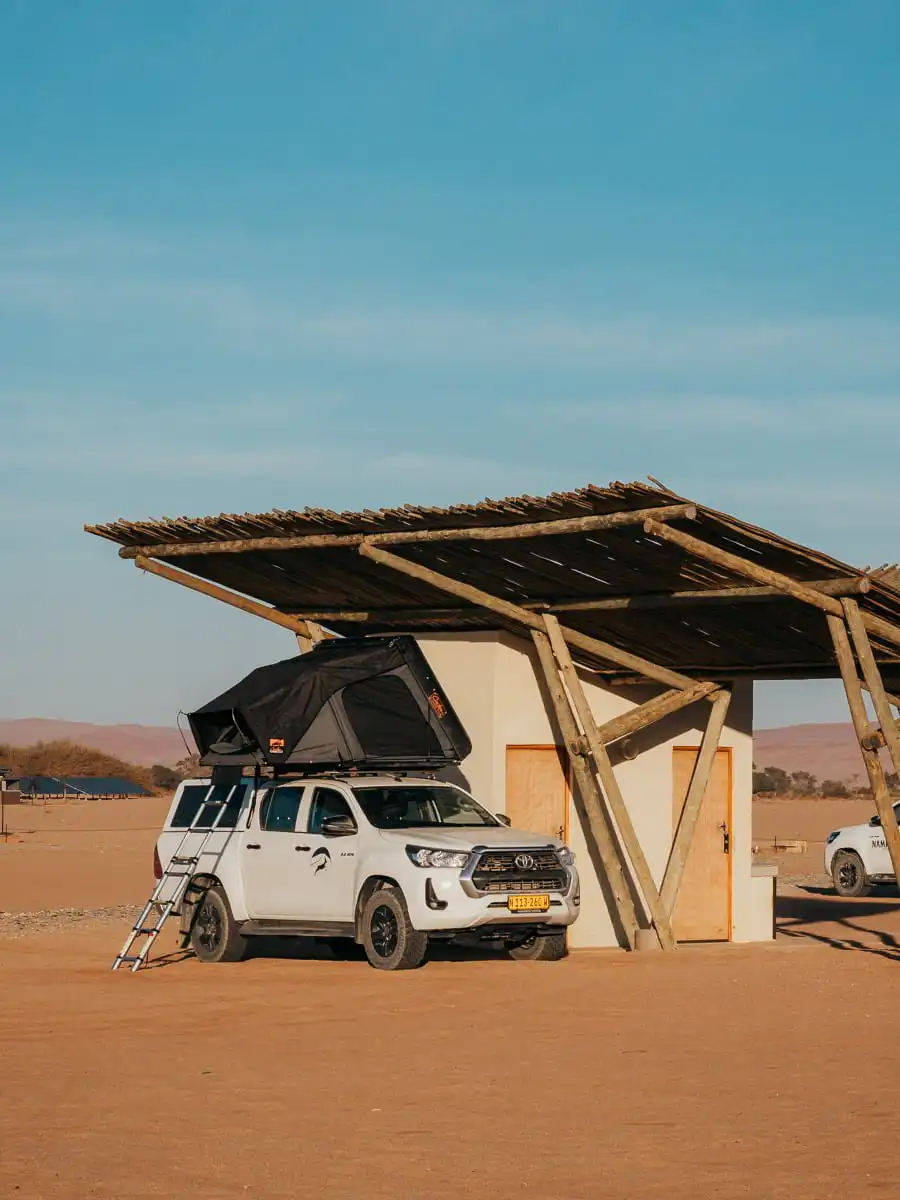
We rented a pretty new Toyota Hilux so it came will Apple Car play and USB plus but if you are renting a different vehicle, make sure to prepare a phone mount and car adapter.
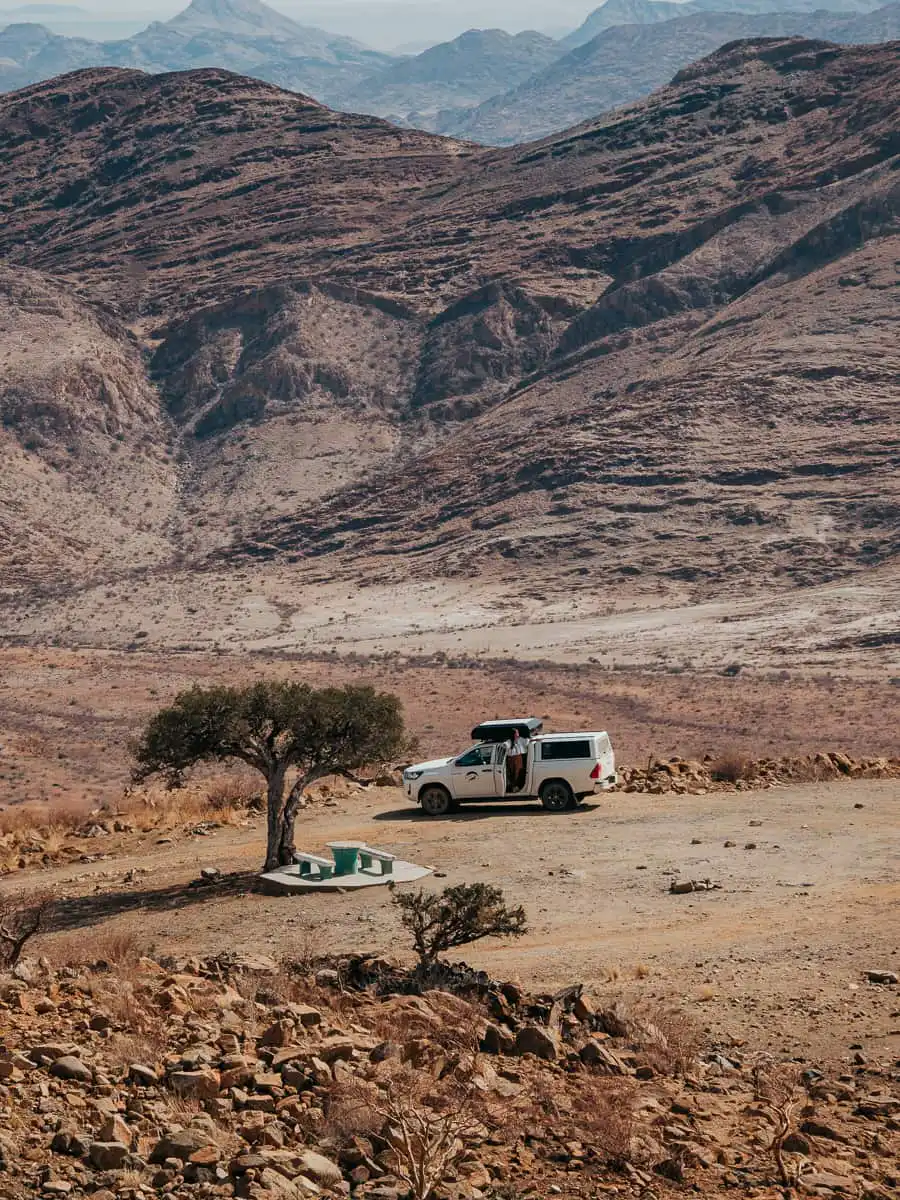
The driving distances are often quite long, some taking up to 6 hours, so it is important to be able to see your Phone GPS easily and keep your phone charged. The distances are particularly long when driving from Windhoek to Sossusvlei, from Spitzkoppe to Etosha, and Etosha back to Windhoek.
Power Bank
You’ll be on long game drives, sometimes for several hours, and likely filming and taking tons of photos of the animals. With usage like that, it can be easy to burn through your camera and cellphone battery quickly.
For this reason, we recommend bringing along a portable power bank. We use an Anker Power bank similar to this one and it was incredibly useful for charging our devices during game drives, at campsites that didn’t have immediate access to a plug, or during long day trips.
Get one with 6,000 to 10,000 mAh. It will be enough to charge your devices 1-2x before you can get back to a power outlet and it isn’t too heavy to bring.
Audiobooks, listening to Born a Crime
This is not essential but will make your road trip a lot more fun! We ended up downloading Born a Crime by Trevor Noah on Audible, and listening to his stories about growing up during Apartheid gave us fascinating insight into the history of South Africa.
It really enriched our road trip experience, and it even made our time traveling through Namibia more meaningful since we felt like we had a deeper understanding of the region’s culture and history.
Snacks for Long Drives, get Biltong!
This is theoretically not something you’ll pack from your country, but rather something you should purchase once you arrive in Windhoek.
Make sure to go to the grocery store in Windhoek and stock up on snacks for the long drives. We highly recommend getting some Biltong, which was our favourite camping/safari drive/road trip snack in Namibia!
Reusable Water Bottle
The dry desert climate can dehydrate you much faster than you would expect. Make sure to carry a reusable water bottle and keep it filled during long drives and when exploring the dunes.
We also love using our Zojirushi insulated water bottle to keep our water cold, which is perfect for staying refreshed during the hot days in Namibia. We’ve been using it for the past 2 years and it’s capable of keeping beverages hot or cold for between 8-12 hours! Then when we travel to colder climates, it’s amazing for keeping hot beverages like hot chocolate!
Camping Gear for a Namibia Self Drive Trip
If you will be doing a self-driving SUV camping road trip through Namibia like we did, this section is important for you!
These are the gear/equipment that you’ll need to bring for camping. Many of the rental companies will already provide the essential camping gear like tent, sleeping bag, mattress, pillow, cooking items, seating, etc… These are the items that are usually not provided, so you’ll want to make sure to bring them with you.
Headlamp or Flashlight
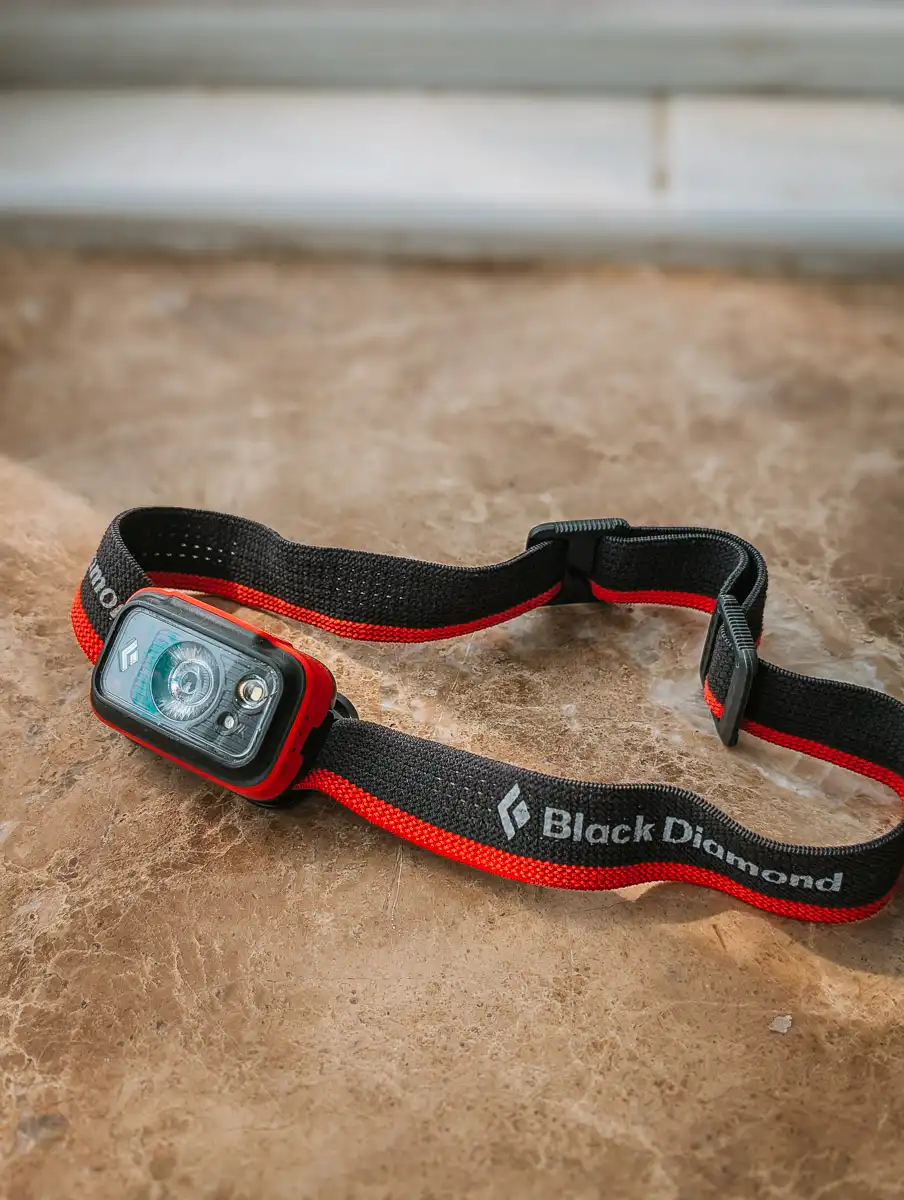
A headlamp/flashlight is easily one of the most important items to pack if you’re camping in Namibia. While most camper rental companies will provide some form of lighting, having your own flashlight or headlamp is essential for walking around the campsites after dark.
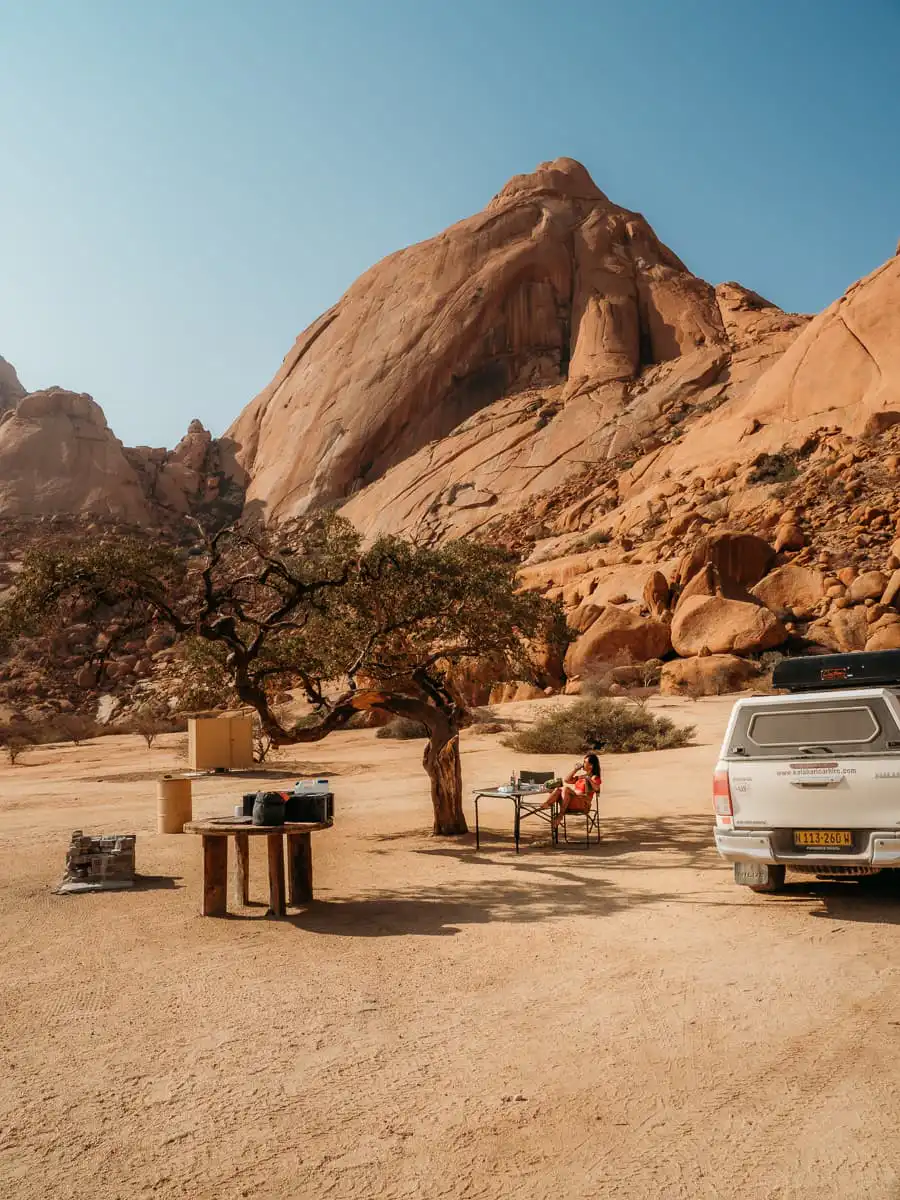
You’ll also likely be waking up before sunrise, and having a reliable light makes it much easier (and safer) to check your surroundings for any wildlife before stepping out of your tent. This was especially evident in remote places like our campsite in Spitzkoppe where no environmental lighting was provided.
We’ve been using this headlamp from Black Diamond (REI LINK) for years, and it has definitely been worth the investment. While there are plenty of cheaper or knockoff headlamps available, we prefer sticking with a reliable brand since we use it for long hikes and camping trips.
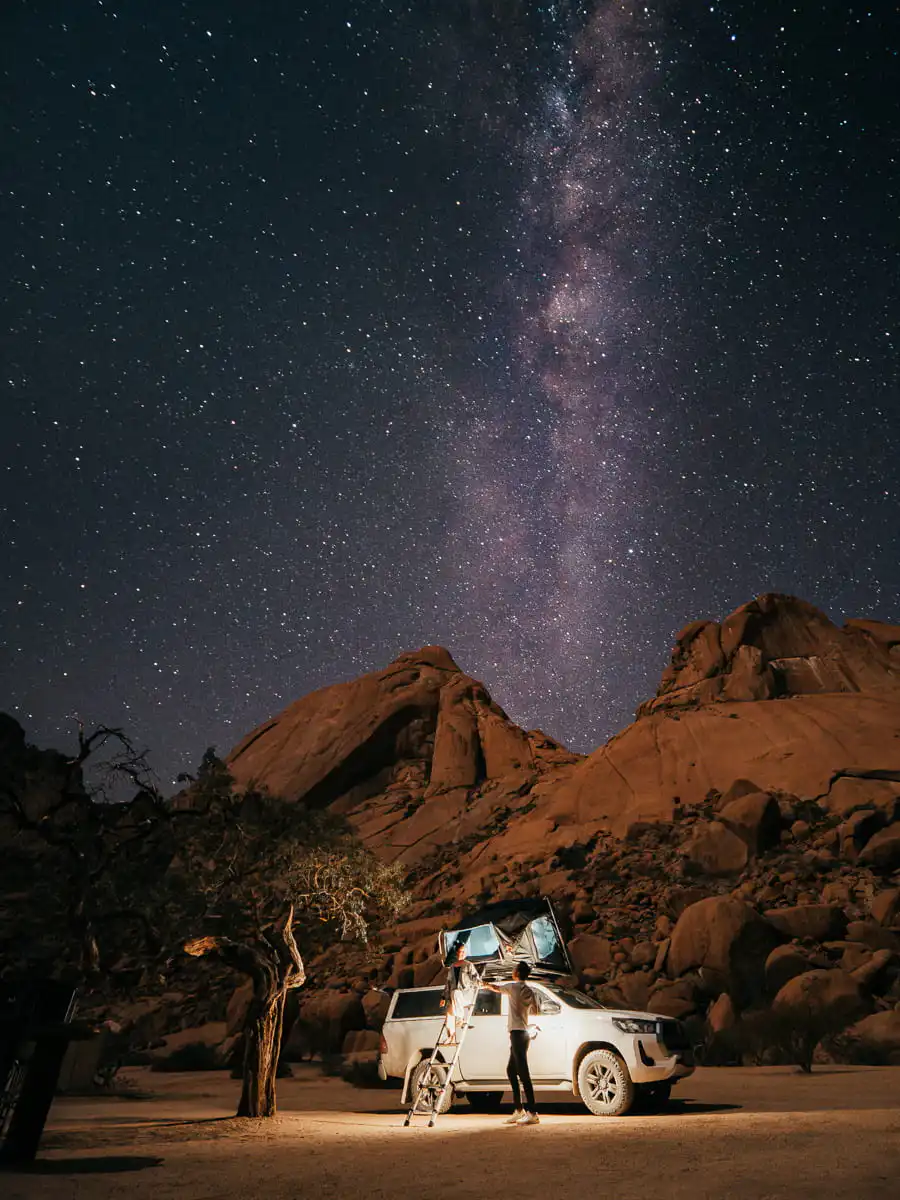
When we’re outdoors in the dark, especially in remote places like Patagonia, the Dolomites, or Colca Canyon in Peru, having a dependable headlamp is important, and the last thing you want is for it to fail when you need it most.
Converter/plug for Namibia
In Namibia, the power outlets use the large 3-pin Type M plug, which is surprisingly rare and often not included in most universal travel adapters. We brought a universal adapter similar to this one that has worked in most countries, but it didn’t include the Namibia plug type.
Because of this, you have two options. You can buy a Type M adapter before your trip, or simply pick one up after arriving. We actually found some at a good price at a SPAR grocery store in Windhoek, where you can also grab a power bar.
Having the right adapter (and ideally a small power bar) makes it much easier to charge all your electronics using the local outlets during your trip.
Backpack/Duffel Bag instead of rolling Suitcase
For camping in Namibia, it’s best to pack your clothes using a few packing cubes (these are the ones we use), along with a larger duffel bag or backpack to carry everything.
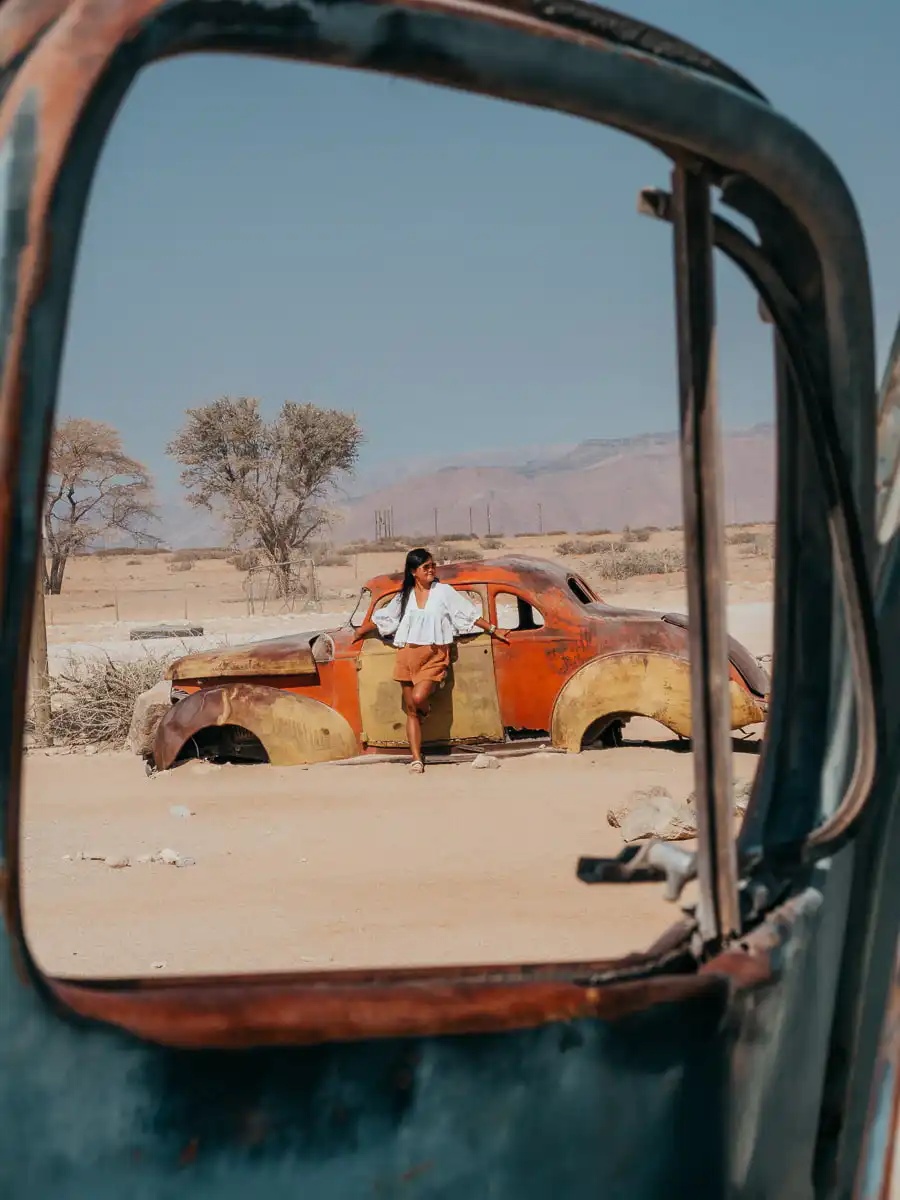
Since we’ve been traveling full time for the past two years, we were using the same large Samsonite suitcase (this one, which has surprisingly survived over 2 years of constant world travel), and honestly, it wasn’t ideal for Namibia. With sand everywhere, rolling luggage was very inefficient, and every time we opened the suitcase, we ended up exposing everything inside to dust/sand. To no surprise, sand ended up getting all over our clothes.
Instead, we recommend using a backpack or duffel bag that you can easily carry, especially over sandy or uneven terrain. It also makes accessing your clothes much easier without having to fully open your entire bag each time. We have been using the Osprey Farpoint 40 Backpack (Check it out at Backcountry) for the past 5 years and it has held up to all the rugged conditions!
 PGY Tech Camera Backpack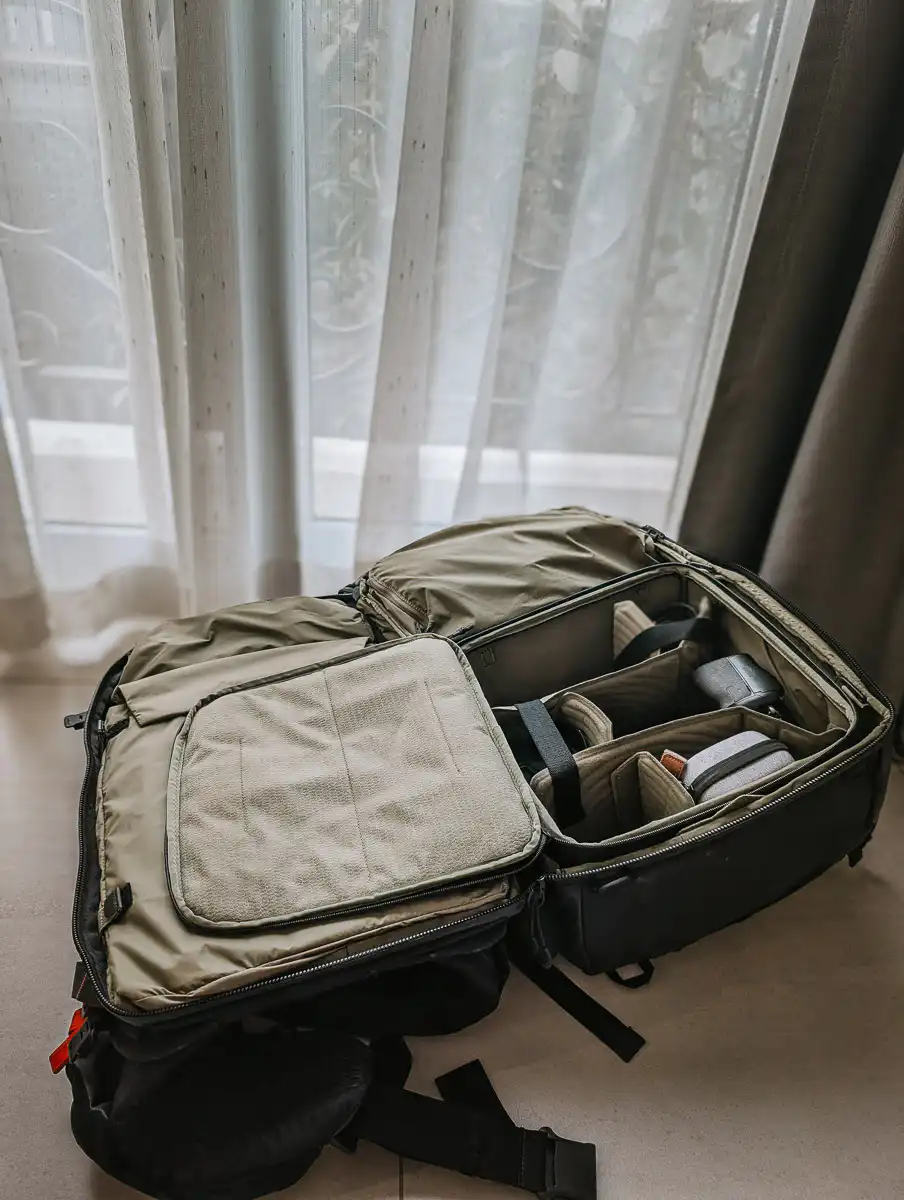
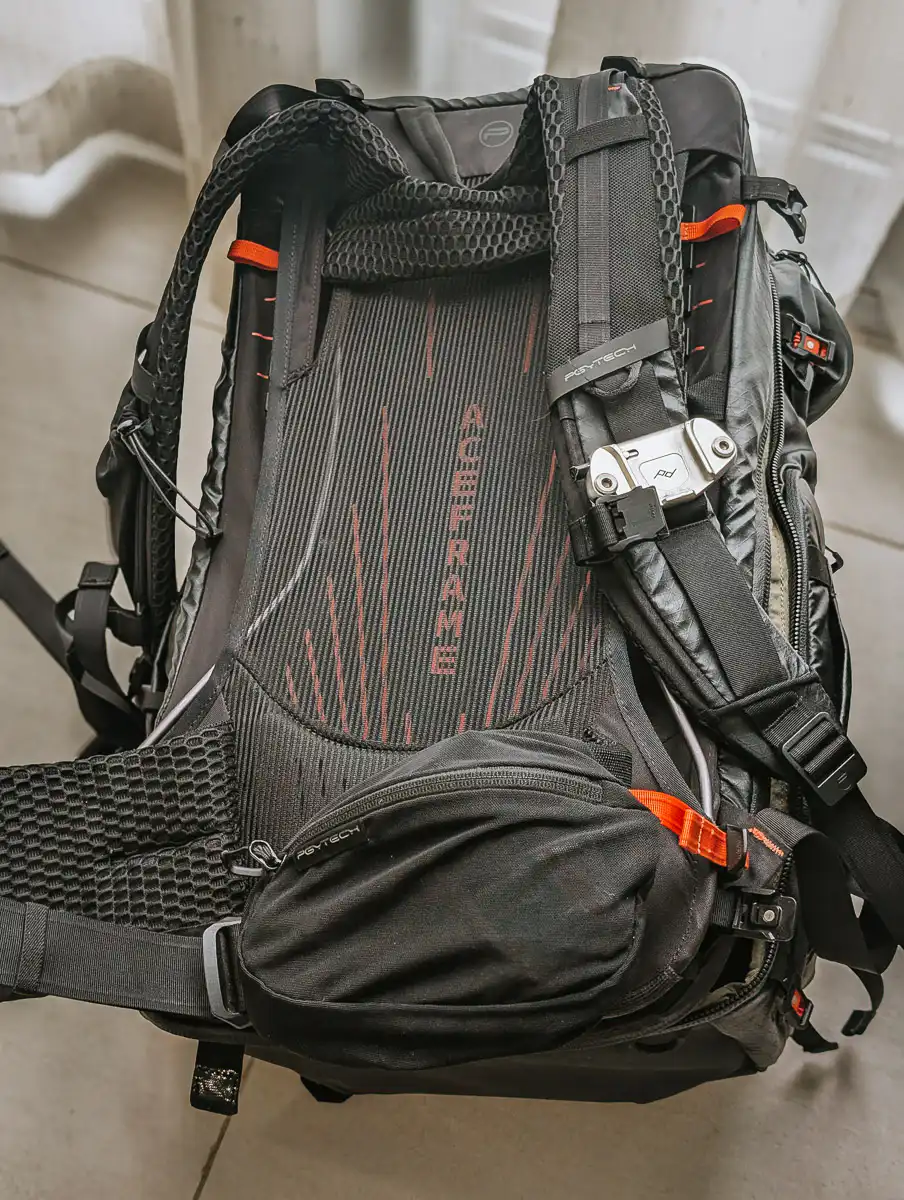
For dedicated photographers, we have been using the PGY Tech Camera Backpack and it has been fantastic. It keeps all of my camera gear organized and well protected, while also being designed with hiking in mind. The ergonomic support and technological design make it incredibly comfortable to wear, even during long days out exploring.
Food Storage Containers
Since this is often a camping style trip through Namibia, you’ll likely be preparing some of your own meals and packing lunches for long safari drives. Because of this, having a few food storage containers can be incredibly useful.
Most camping SUV rental companies will include these as part of their setup, but it’s still worth double checking in advance.
Even if you’re doing a more hotel based trip, it’s a good idea to bring a few reusable containers or bags so you can pack snacks or simple lunches for your game drives in places like Etosha National Park.
Flip Flops or Camp Shoes
Bring a pair of sandals or flip flops for walking around campsites in Namibia. After a long day, it feels great to get out of dusty shoes and into something more comfortable.
They’re also surprisingly useful when exploring the dunes in Sossusvlei. Climbing the dunes is often easier barefoot or in sandals, as sand quickly fills up closed shoes and can start to rub and become uncomfortable.
Camera Tripod
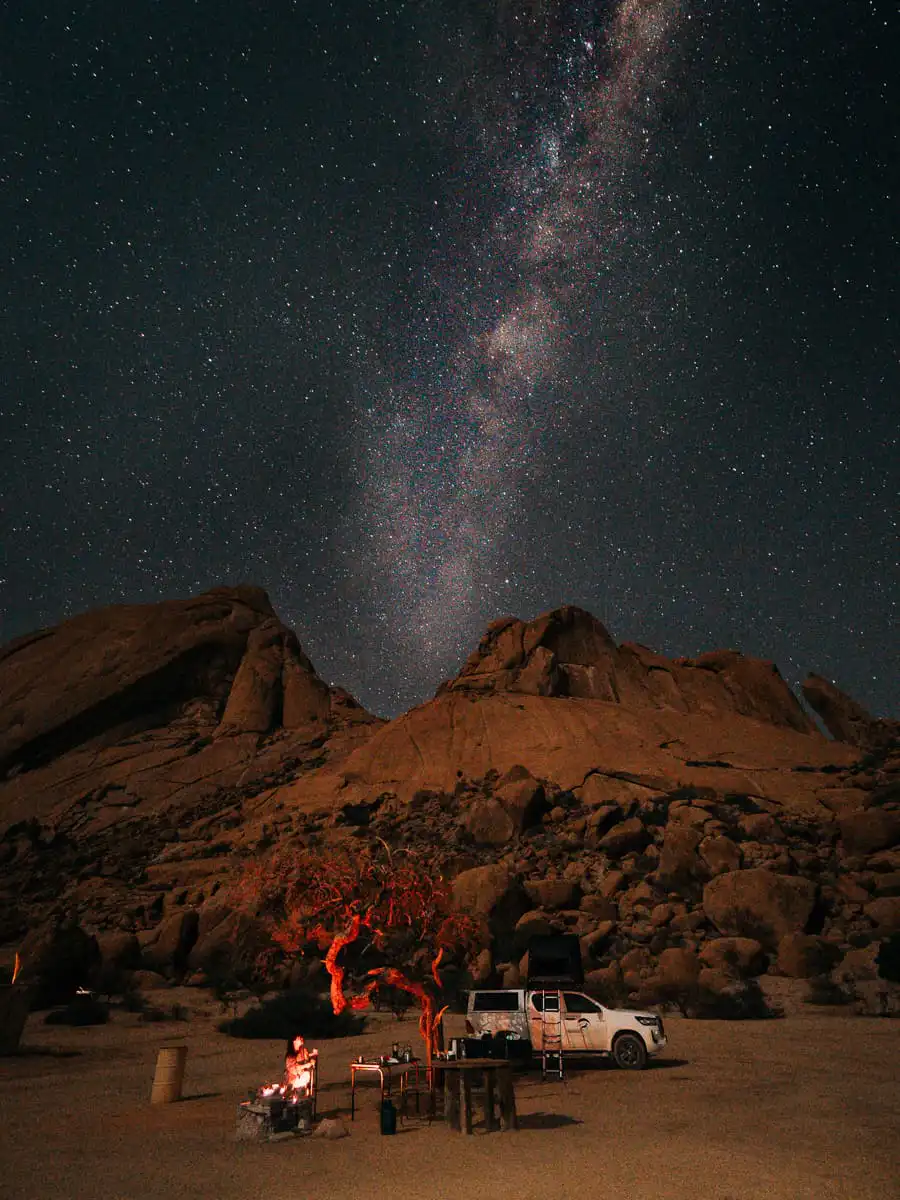
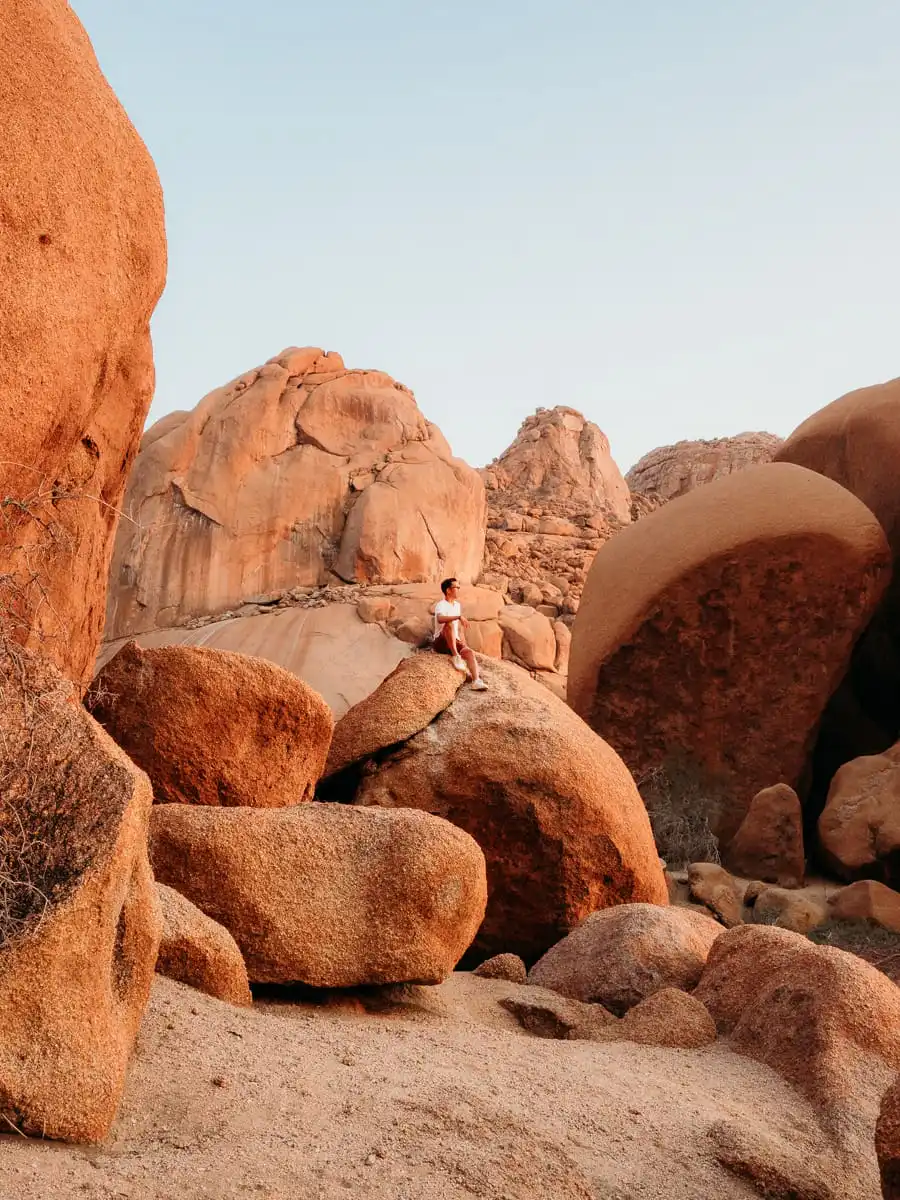
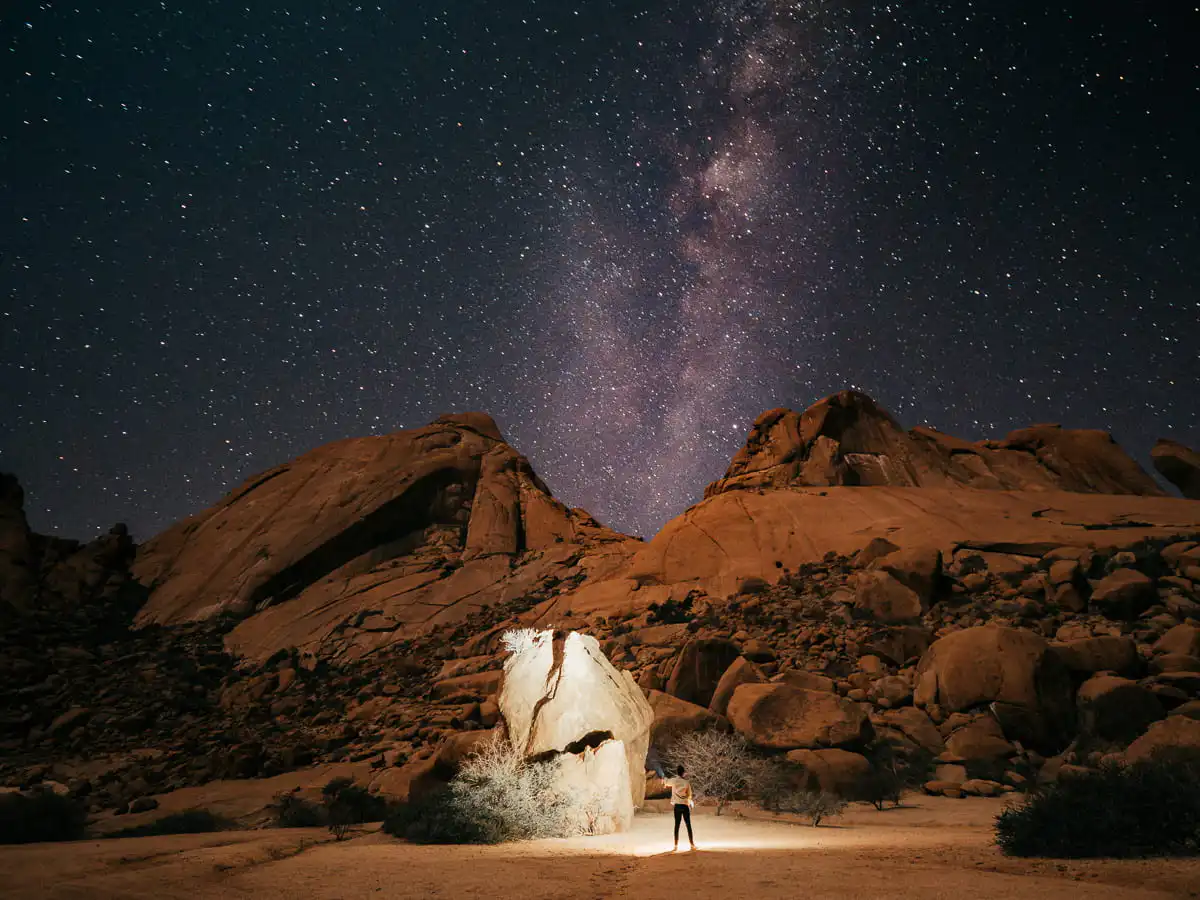
In Namibia, especially around Spitzkoppe, you’ll have the chance to witness some of the most incredible night skies, filled with stars and even visible galaxies. Namibia is known for having some of the darkest skies in the world, making it an amazing destination for stargazing.
If you’re into photography, this is the perfect opportunity to capture it. Just make sure to bring a tripod, as it’s essential for shooting long exposure photos of the night sky. As a reference, we use this tripod.
Wet Wipes
This is one item we hadn’t planned to bring, but luckily we picked up a few packs in Windhoek before starting our road trip through Namibia.
As mentioned earlier, dust and sand will get everywhere during this trip. Wet wipes will come in handy to wipe off your face after climbing a sand dune, cleaning your hands before eating, or wiping off the dust on your gear. They also came in handy on days when we didn’t have access to a proper shower, giving us a quick “wet wipe shower” to freshen up.
The wet wipes were a life-saver and really made our trip a lot more comfortable.
Things We Packed but Didn’t Use Much in Namibia
These are a few items we brought on our trip to Namibia but barely ended up using. We always find this kind of advice helpful when planning a trip, since learning from someone else’s packing mistakes can save you valuable luggage space for the things you’ll actually need on your trip! Essentially it’s a What not to pack for Namibia section!
Don’t Bring Too Many Clothes
In general, you’ll end up wearing very similar clothing for both safari drives and exploring the sand dunes in Sossusvlei and Deadvlei. Because of this, you don’t need to pack too many outfit options. Most days you’ll likely wear the same core clothing and simply add or remove layers depending on the temperature, especially during cold mornings and evenings.
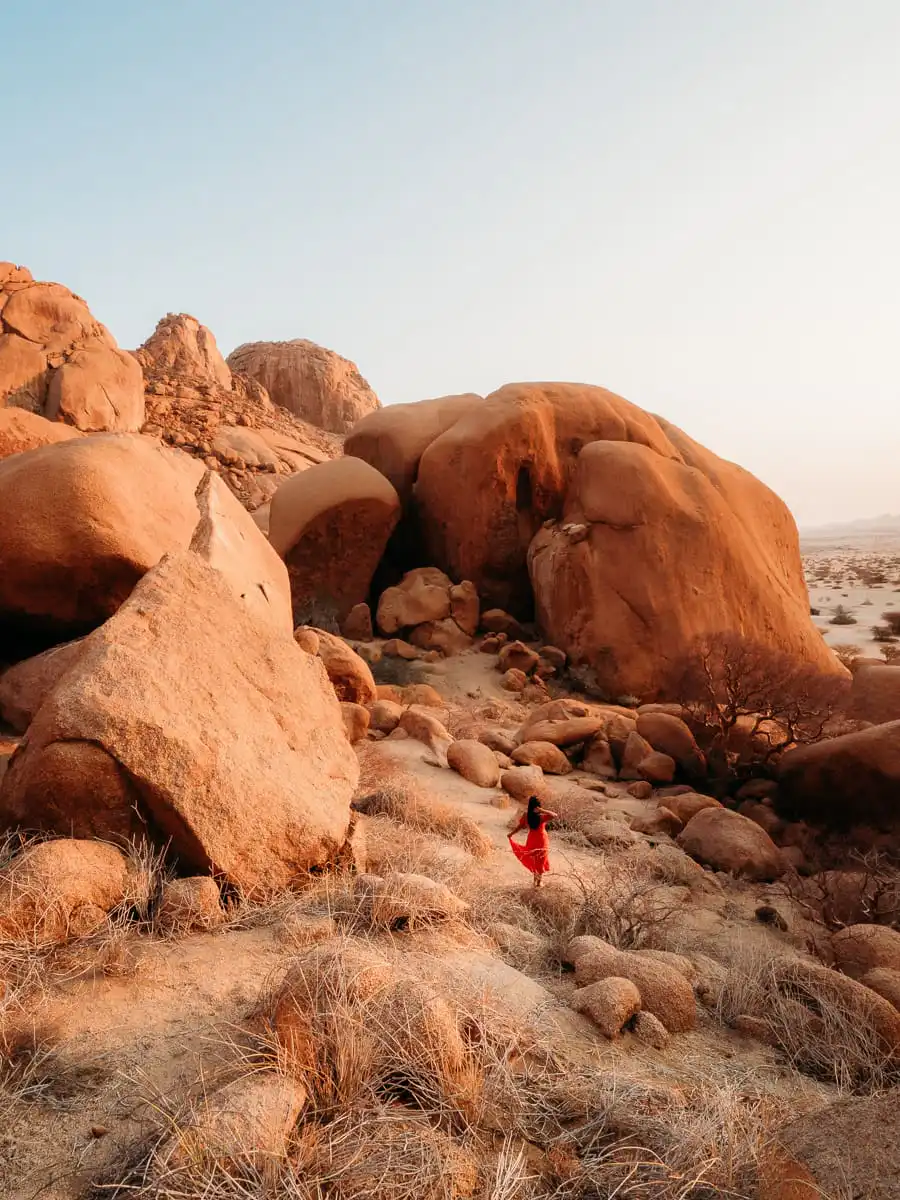
The only time we really switched things up was when we wanted nicer outfits for photos, particularly at places like Deadvlei and Sossusvlei.
Don’t Bring Hiking boots
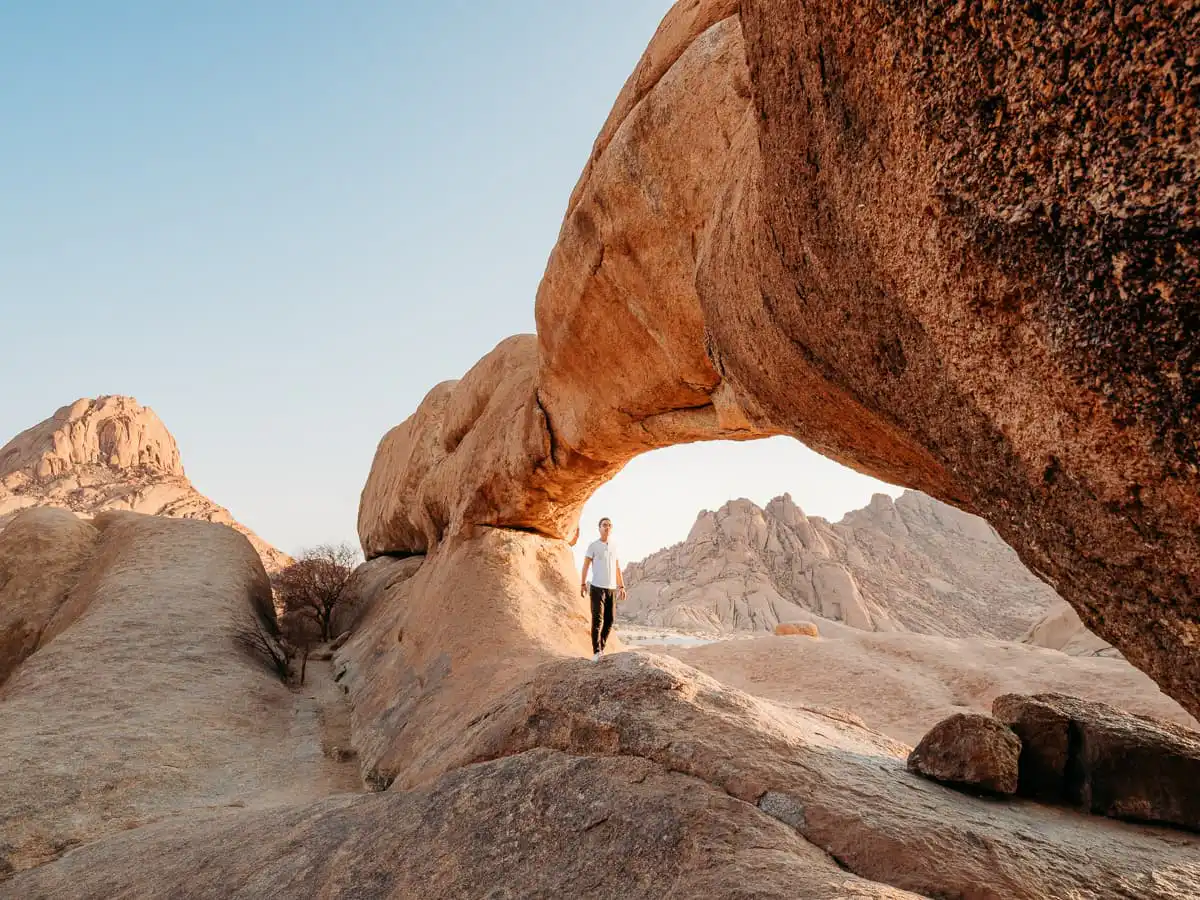
You definitely will not be needing hiking boots. For safaris, you can simply wear running shoes, and for the sand dunes, you can wear sandals or go barefoot. Hiking boots will be heavy, clunky, and easily fill up with sand making walking uncomfortable.
Don’t Bring Luggage suitcase – won’t roll on the sand
Avoid bringing a large rolling suitcase for your trip to Namibia. Many camps and lodges are located in sandy areas, which makes dragging wheeled luggage extremely difficult.
Instead, we recommend packing your belongings in a large backpack or duffel bag that you can easily carry over your shoulder. This type of bag is also much more convenient during the road trip, since you can access your gear without needing to fully open everything.
We actually brought a traditional rolling suitcase since we have been using the same luggage during our ongoing world travels, and we quickly saw the challenges of using it in Namibia.
Because the suitcase opens like a book, it takes up a lot of space and you have to unzip the entire suitcase just to reach something inside (which is almost impossible while the luggage is in the car trunk). Combined with all the sand around campsites that easy blew into our suitcase, it definitely wasn’t the most practical option.
Don’t Bring Jewelry
You definitely won’t need to bring any nice jewelry for a trip to Namibia. Not only are the conditions extremely sandy and dusty, but there’s also a real risk of losing small valuables in the sand.
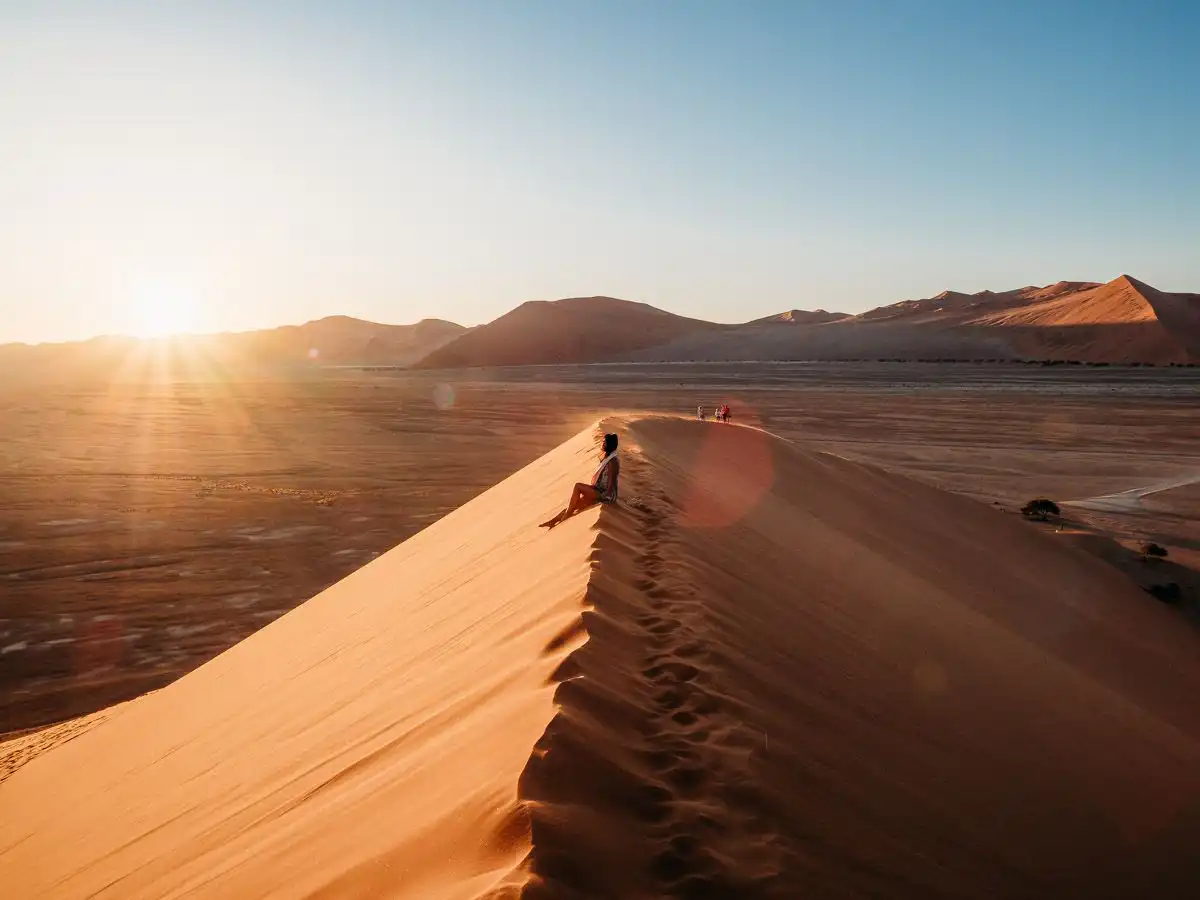
While climbing Dune 45 in Sossusvlei, we actually ran into a tour guide asking people if they had seen a cellphone on the dunes. One of his guests had accidentally left it behind while watching the sunset. He told us there was probably no chance of finding it, since the wind and shifting sand would likely bury it within minutes.
Things We Wish We Packed for Namibia
Same as the section above, sometimes the best travel tips come from learning from other people’s mistakes, like things they wish they had packed. These are a few things we wish we had packed or prepared better for our trip to Namibia. If there’s one section of this guide you shouldn’t skip, it’s this one, since these are the items most travelers don’t think about!
More Moisturizer and lip balm
This one was a big surprise for us. Yes, deserts are dry and we’ve visited quite a few during our travels, but never before had our skin become so dry that we actually needed moisturizer this badly.
The desert climate in Namibia can be extremely harsh on your skin, so bringing a good moisturizer is definitely recommended. It’s also important to pack a lip balm with SPF, as the dry air and strong sun can quickly dry out your lips and even cause the skin to crack, which can be quite painful.
Better Dust Protection for Cameras (Ziplock Bags Are a Lifesaver)
We highly recommend bringing plenty of ziplock bags/containers to help protect your gear and store food while traveling through Namibia. Dust and sand easily gets everywhere, so having simple sealed bags is an easy way to keep electronics, camera accessories, and snacks protected.
Ideally, you should also have a dedicated protective bag for your camera so sand does not get all over it. During our trip, we mostly used our WANDRD Rogue Sling on game drives and dune explorations, and we were lucky to also have a buff to wrap around some of our gear.
With that said, there were several moments where we wished we had brought ziplock bags or small containers to better compartmentalize and protect our gear and food from the constant dust.
wet Wipes
This was already mentioned earlier in the Camping Essentials section but it is worth mentioning again as it was one of the items we regret not better preparing.
They will come in super handy to wipe your face, clean your gear, wash your hands before eating during game drives, impromptu shower, and so much more!
Small Daypack
We mentioned before that we brought our favourite WANDRD Camera sling and a dedicated PGYTech camera backpack, but the one thing we forgot to bring was just a regular everyday use small backpack. Having a small daypack is helpful for carrying water, sunscreen, snacks, and extra layers of clothing during dune hikes or safari stops.
This post is part of our series about Namibia. If you want to learn more about Namibia, planning your trip, and some of the best experiences there, check out the guides below:
Namibia Packing FAQ
Do you need to wear neutral coloured clothing for safaris?
Yes, it’s best to wear neutral-coloured clothing so you blend in with the surrounding environment. This can help increase your chances of spotting wildlife during game drives in Etosha National Park and other safari areas in Namibia.
What should you wear on the Game drives in Etosha
Wear light, breathable clothing for the daytime, but make sure to pack several warmer layers for early morning and sunset game drives. Temperatures can feel quite cold when the vehicle is moving, especially since most safari vehicles are open air.
It’s also a good idea to bring a wind resistant jacket, as you’ll be exposed to constant wind while on safari game drives (unless you’re doing self-drive). For footwear, a simple pair of running shoes or comfortable sneakers will work perfectly fine.
Should you bring Cash to Namibia
Most campsites and lodges in Namibia accept credit cards, but it’s still a good idea to carry some cash as a backup. Cash can be especially useful when refueling, paying park entrance fees, leaving tips, or buying small items such as firewood along the way.
Do you need insect repellent
We personally didn’t experience many mosquitos during our trip, especially in the desert regions like Sossusvlei and Spitzkoppe. However, if you’re visiting northern Namibia or the Caprivi Strip, packing insect repellent is still a good precaution.
What to wear for Sossusvlei dunes
Sossusvlei is easily one of the most photogenic places in all of Namibia. If you’re simply planning to hike the dunes, wear light, breathable clothing that can handle the heat and won’t trap too much sand. For footwear, sandals or even going barefoot is often best, as it makes climbing the dunes much easier. I tried climbing the dunes with my sneakers but the sand quickly fills up your shoes, bunches up around your toes, which makes walking really uncomfortable.
But if you’re like us and hoping to capture some great photos, consider bringing along a nicer outfit as well. It’s the perfect opportunity to get that iconic shot among the dramatic landscapes of Deadvlei.
How to protect your camera gear from dust/sand
We brought a dedicated camera backpack from PGYTECH and a camera sling from WANDRD, and both worked perfectly for this kind of road trip safari through Namibia.
The PGYTECH backpack has a fully enclosed camera compartment that zips shut, which helped protect our gear from dust and sand. It also made it much easier to carry multiple lenses and swap them out in a more protected environment.
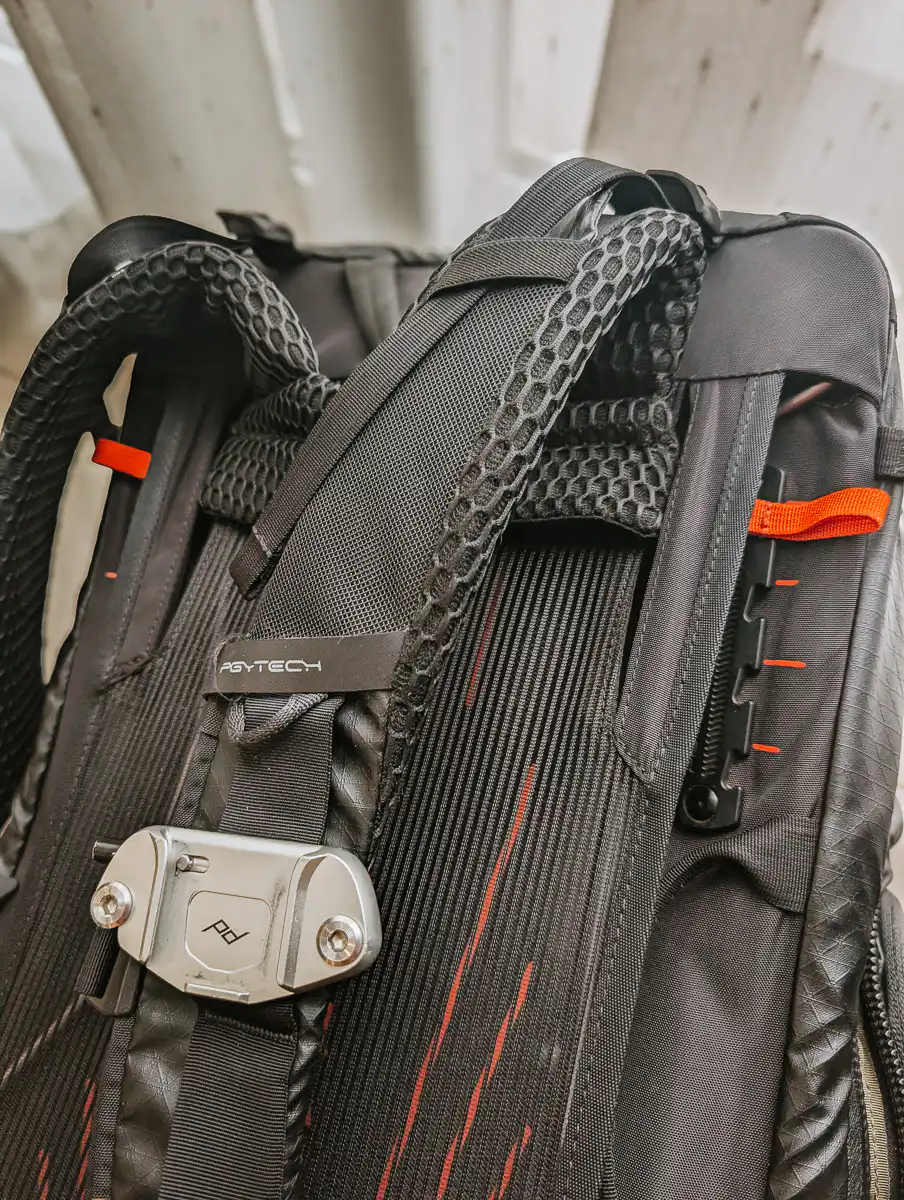
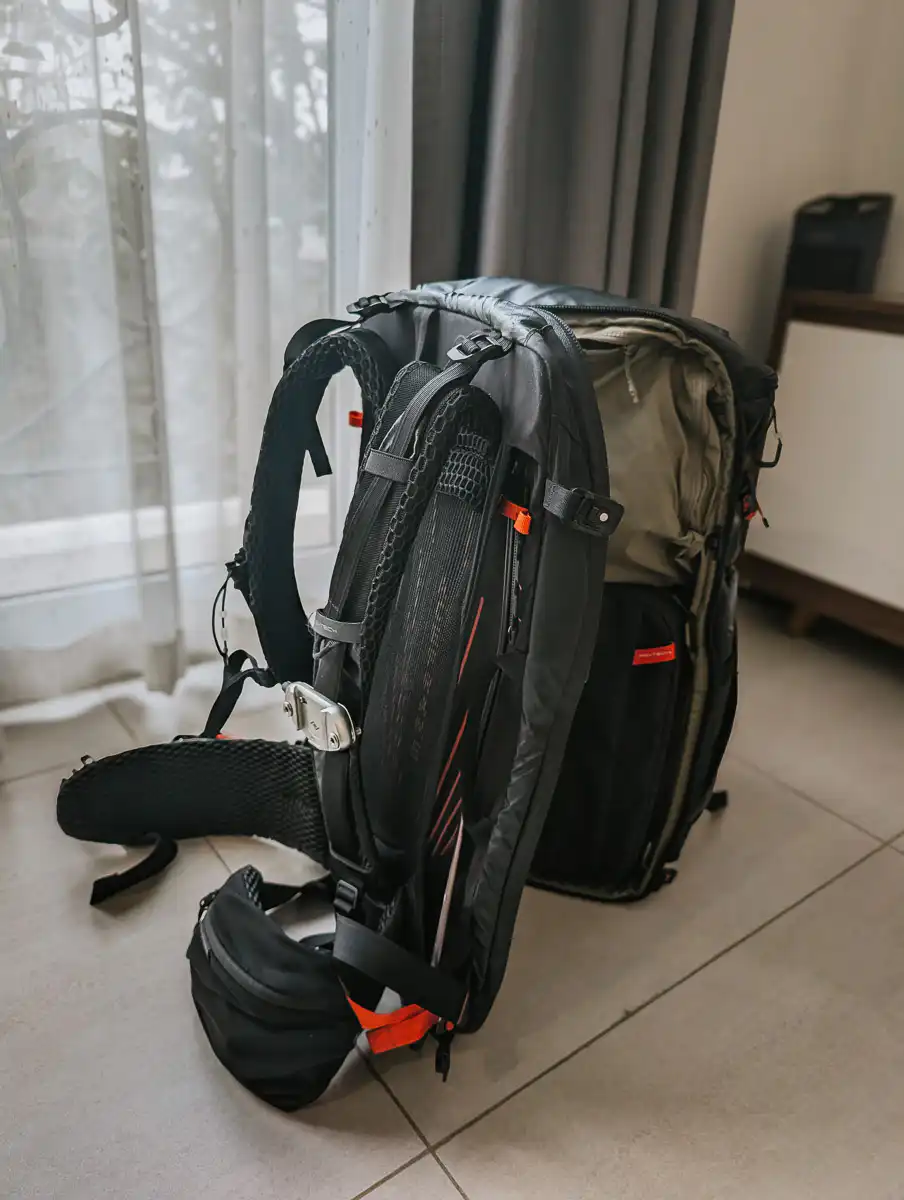
We also recommend bringing a small towel or buff to wrap around your camera whenever it’s sitting exposed in the vehicle. With all the dust on Namibia’s roads, that extra layer of protection can make a big difference.
Using WISE card in Namibia
When taking cash out of an ATM while abroad, you will most likely be charged both a foreign exchange fee and a foreign transaction fee by that country’s ATM. With my Canadian card, this can easily be 3-4$ + 2.75% + a markup on the exchange rate charged by my bank, and then another 3-5$ charged by the foreign ATM.

This can be really costly. For this reason, we recommend using WISE card which has only minimal fees and just about no foreign currency exchange markup. This helps me save at least 5-7$ every time I take out money from an ATM. If you want to see our full review of the card showing exactly how WISE can help you save, check out our WISE Travel card Review post.
Final Thoughts on Packing for Namibia
Packing for Namibia might seem complicated at first, but once you understand the conditions you’ll be facing, it becomes much easier to prepare. Between the dusty desert roads, chilly sunrise game drives, scorching daytime heat, and coastal humidity, having the right gear can make a huge difference in how comfortable your trip feels.
Hopefully this guide has helped you understand not just what to pack, but why certain items matter for a Namibia road trip. By learning from our experiences, including the things we forgot and the items we never used, you’ll be able to pack smarter and focus on enjoying the adventure.
And trust us, once you’re watching wildlife in Etosha National Park, climbing the towering dunes of Sossusvlei, or stargazing under the incredible night skies at Spitzkoppe, you’ll be very glad you came prepared!