Miyajima Day Trip Itinerary: Everything You Need to Know Before You Go


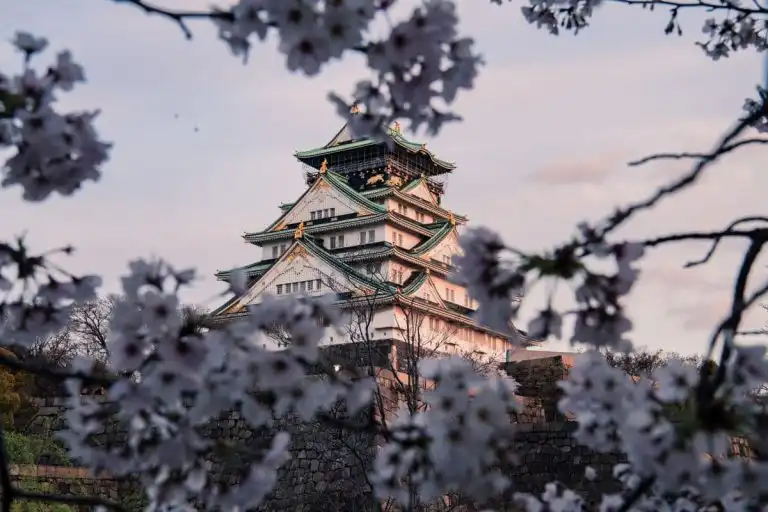
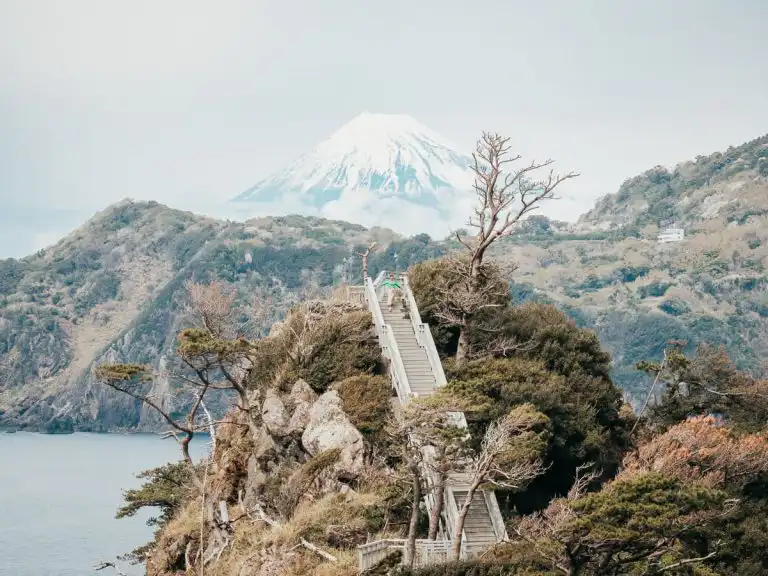
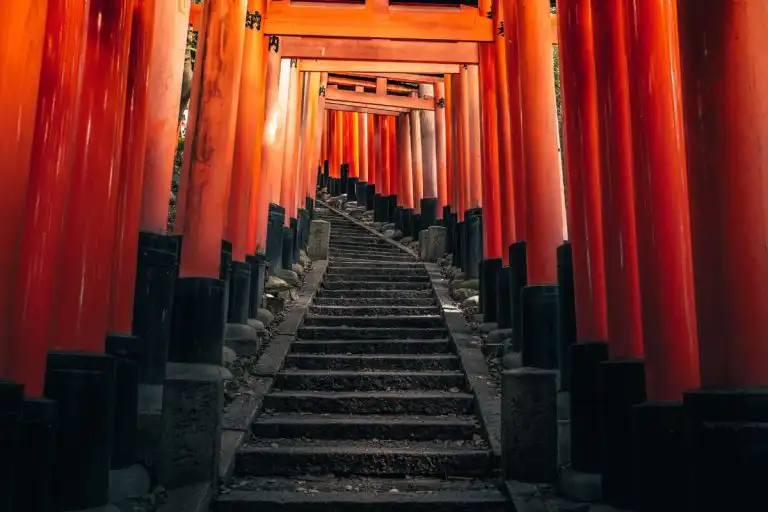
Alongside the red torii gates of Fushimi Inari, the view of Mount Fuji, and Kyoto’s traditional streets, the floating torii gate of Miyajima is one of the most iconic images of Japan. During our second trip to Japan, as we explored Kyushu and the Hiroshima region, we knew we had to set aside a day to visit this famous island.
But what was originally a simple stop just to check off one of Japan’s bucket-list sights ended up becoming one of our favourite day trips of the entire trip.
In this guide, we’ll share everything you need to know to plan the perfect Miyajima day trip, including how to get there, how much it costs, our recommended itinerary, and the experiences we think are truly worth your time. The Route we did and the way we explored the island seems to be different than the route most travellers take, so we’re excited to share exactly how we did it!
What makes Miyajima Special
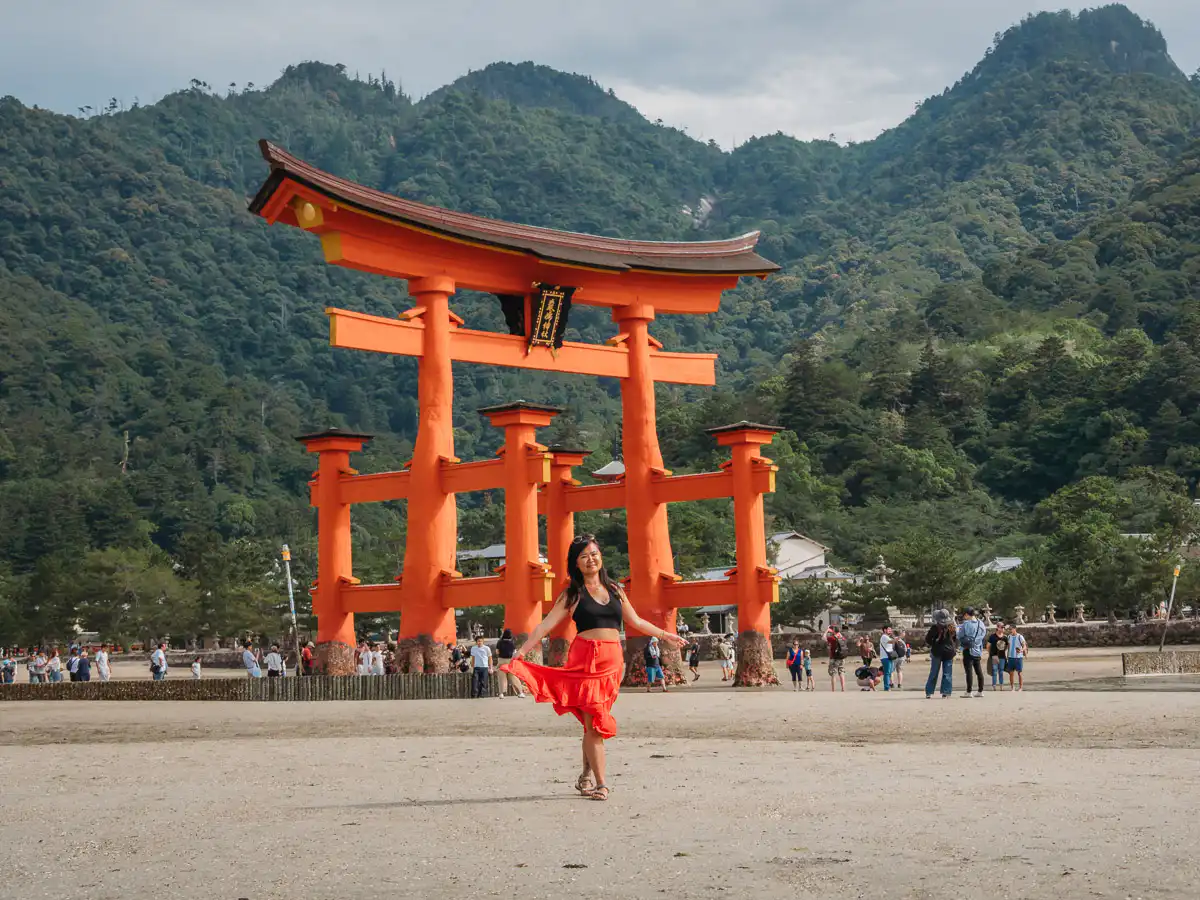
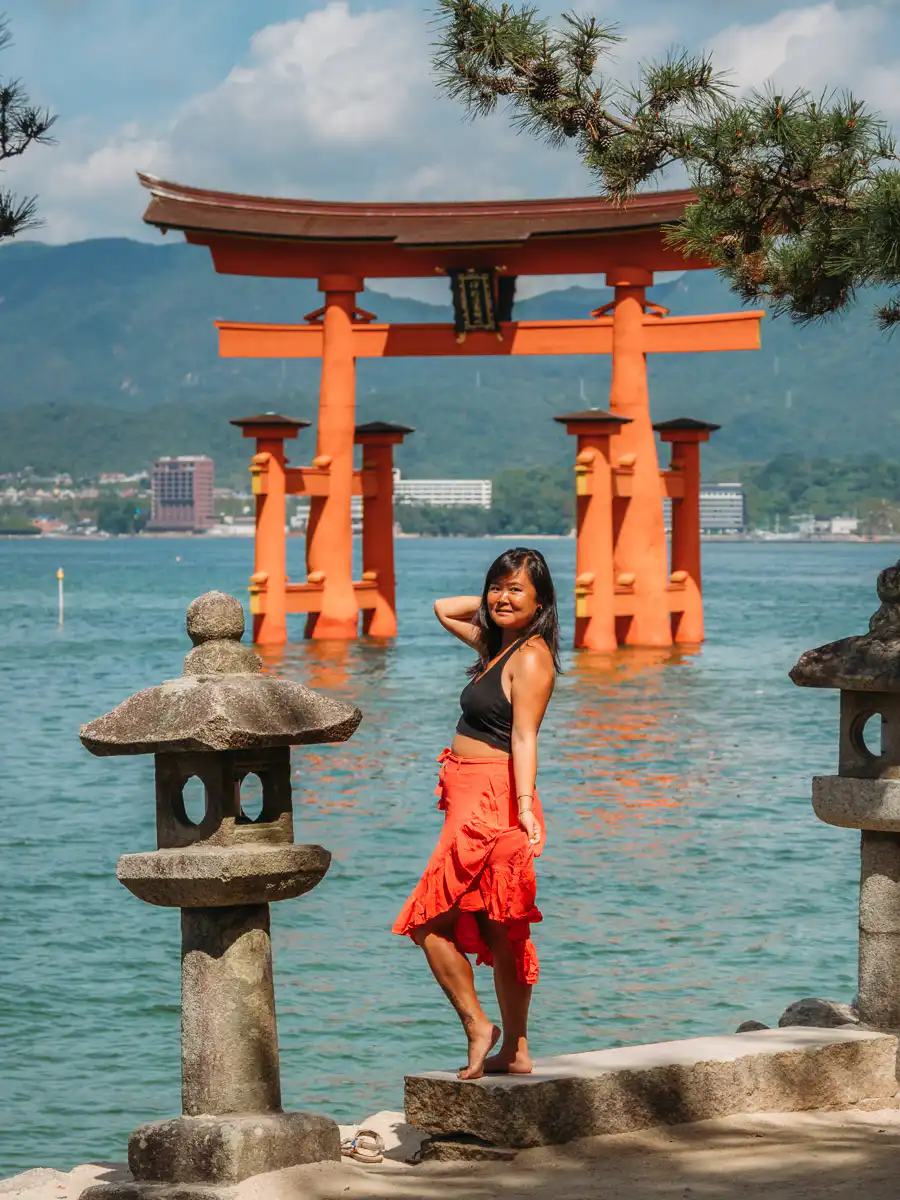
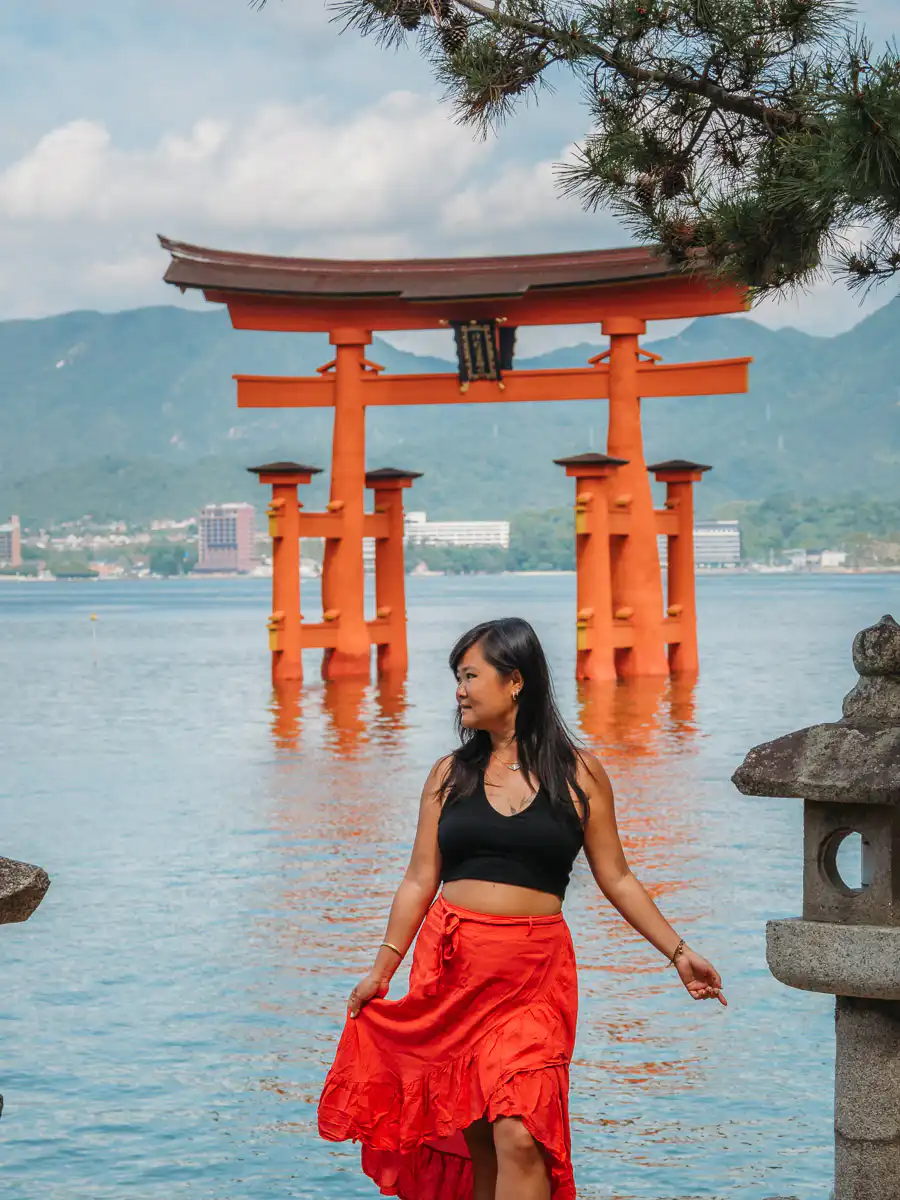
Itsukushima, or Miyajima Island as it’s more commonly known, is home to one of Japan’s most recognizable landmarks: the giant floating red torii gate. So it’s no surprise the island’s nickname, Miyajima, actually translates to “Shrine Island.”
But what made Miyajima so special for us went far beyond just the floating torii gate, but rather the entire atmosphere of the island. There was an undeniably serene vibe with the friendly deer roaming around, rhythmic chanting and drumming echoing from nearby temples, white sand beaches, and surrounding mountains dotted with beautiful temples.
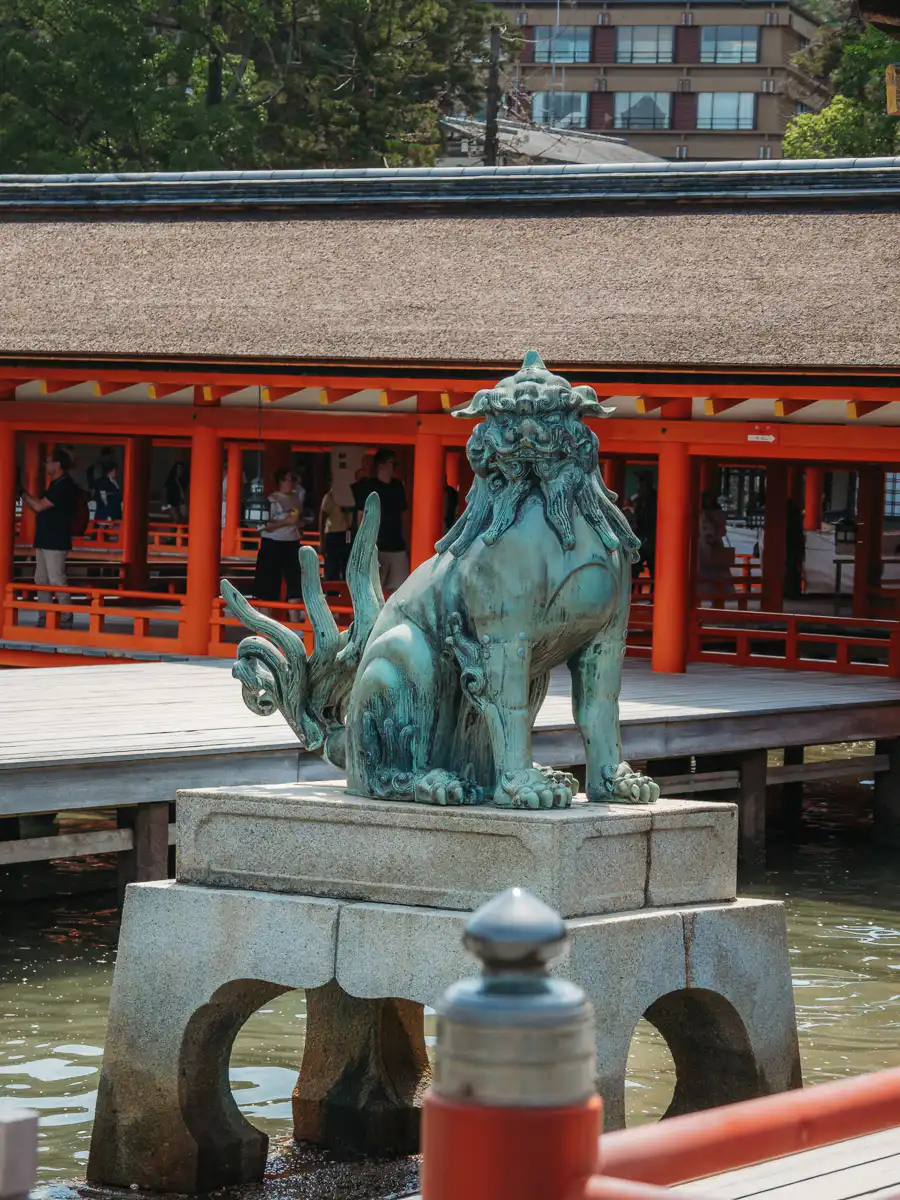
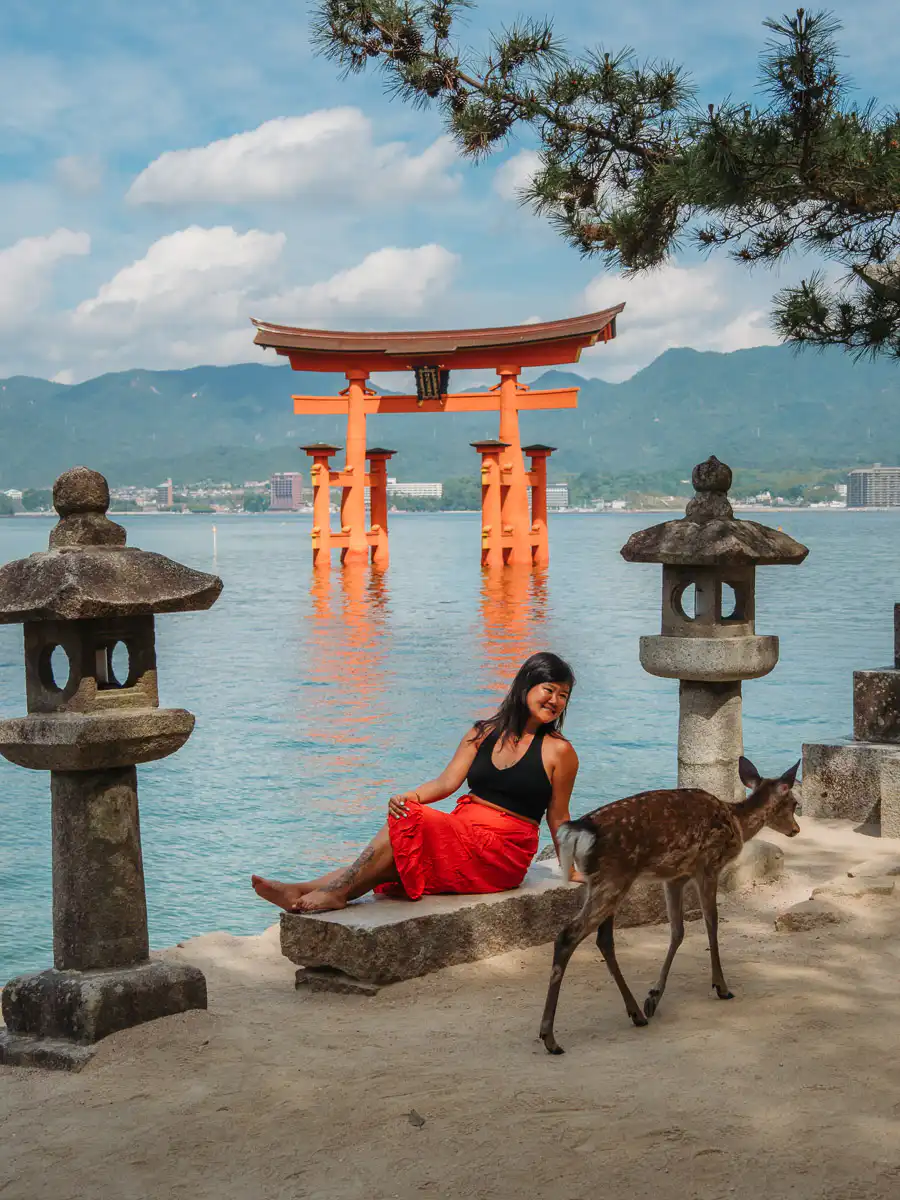
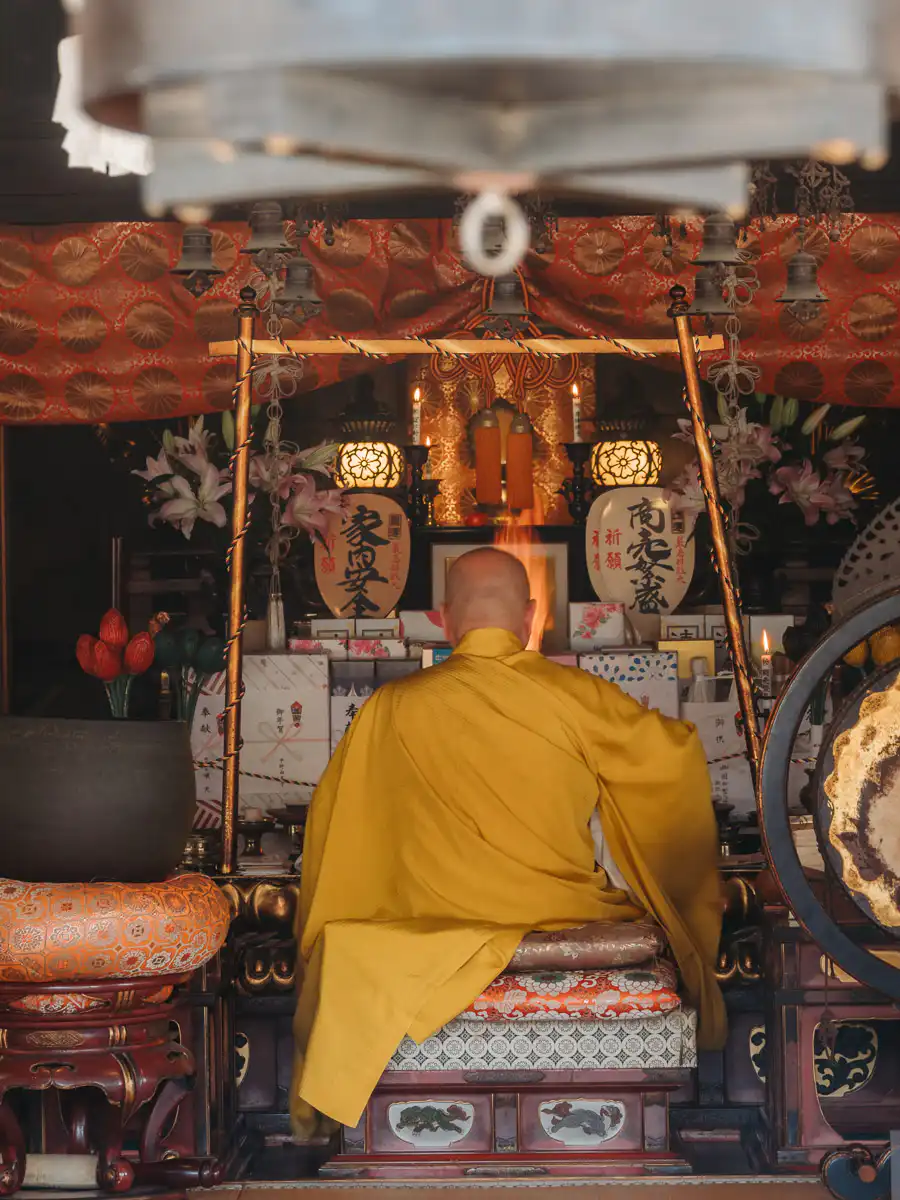
Sometimes it’s not the headline attraction that makes a place memorable, but simply the feeling of being there. And that’s exactly what Miyajima is all about. Yes, it’s one of Japan’s most popular tourist destinations, but somehow it has managed to hold onto its tranquil, spiritual charm.
For us, it was one of our most memorable day trips in Japan. The combination of ocean views, wildlife, spiritual culture, and natural beauty created an experience that places like Nara, or even Fushimi Inari, just couldn’t quite match.
How to Get to Miyajima
We’ll cover the two main ways to get to Miyajima from Hiroshima: the faster but more expensive option, and the slightly slower but much more budget-friendly route. You can also mix and match by taking one option on the way there and returning with the other.
Fastest route: Aquanet Ferry
Route: Peace Park – Miyajima Island
Departing from Motoyasu Pier right beside the Peace Park, the express boat run my Aquanet takes only 45 minutes to reach Miyajima island. This is called the World heritage Sea route and provides the most convenient way to directly reach Miyajima since the departure point is right in the most central and touristic area of Hiroshima. This means you can likely get to the boat on foot, and it will bring you right to the island.
- Hours of operation: First departure from Peace Park at 8:30am and arriving at 9:15am, final departure from Miyajima island at 5:30pm.
- Cost: One way ferry ticket for adults costing ¥2,400, roundtrip ticket costing ¥4,400
- Duration: Takes 45 minutes direct (Hiroshima to Miyajima)
- Tickets: You can purchase your tickets directly on the Aquanet Ferry Website. We recommend purchasing it at least 3-5 days in advance since they do tend to sell out.
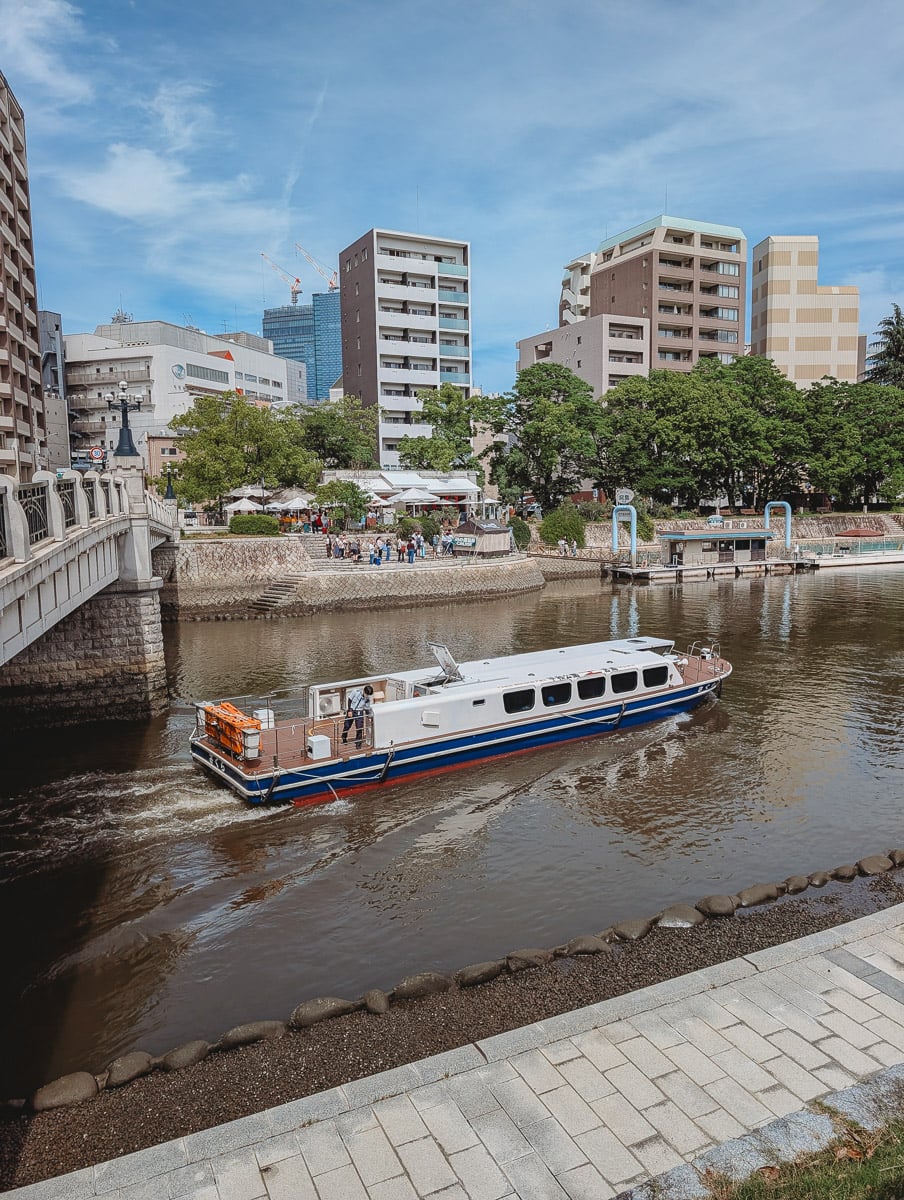
Economical route: Tram + short boat ride
Route: Downtown Hiroshima – Tram to Miyajimaguchi Station – Ferry across to Miyajima island
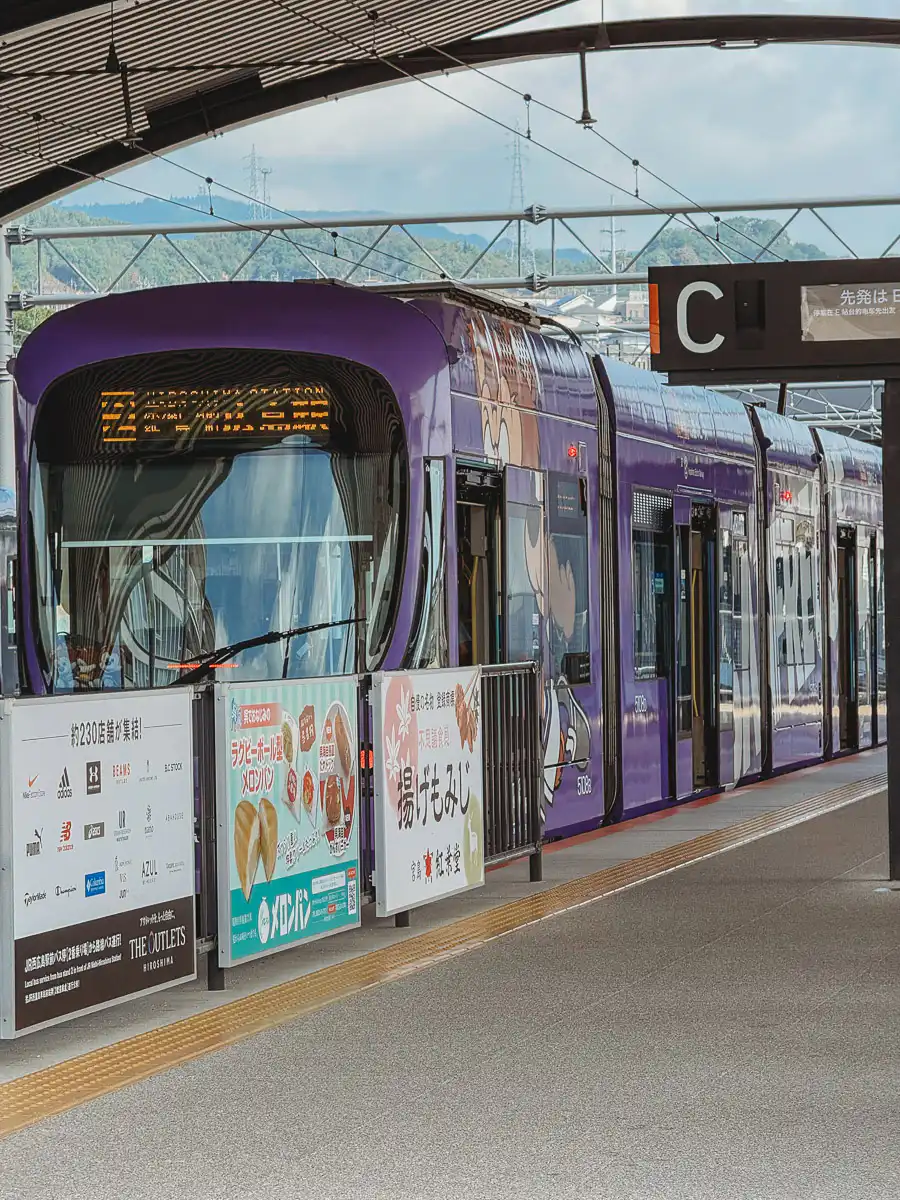
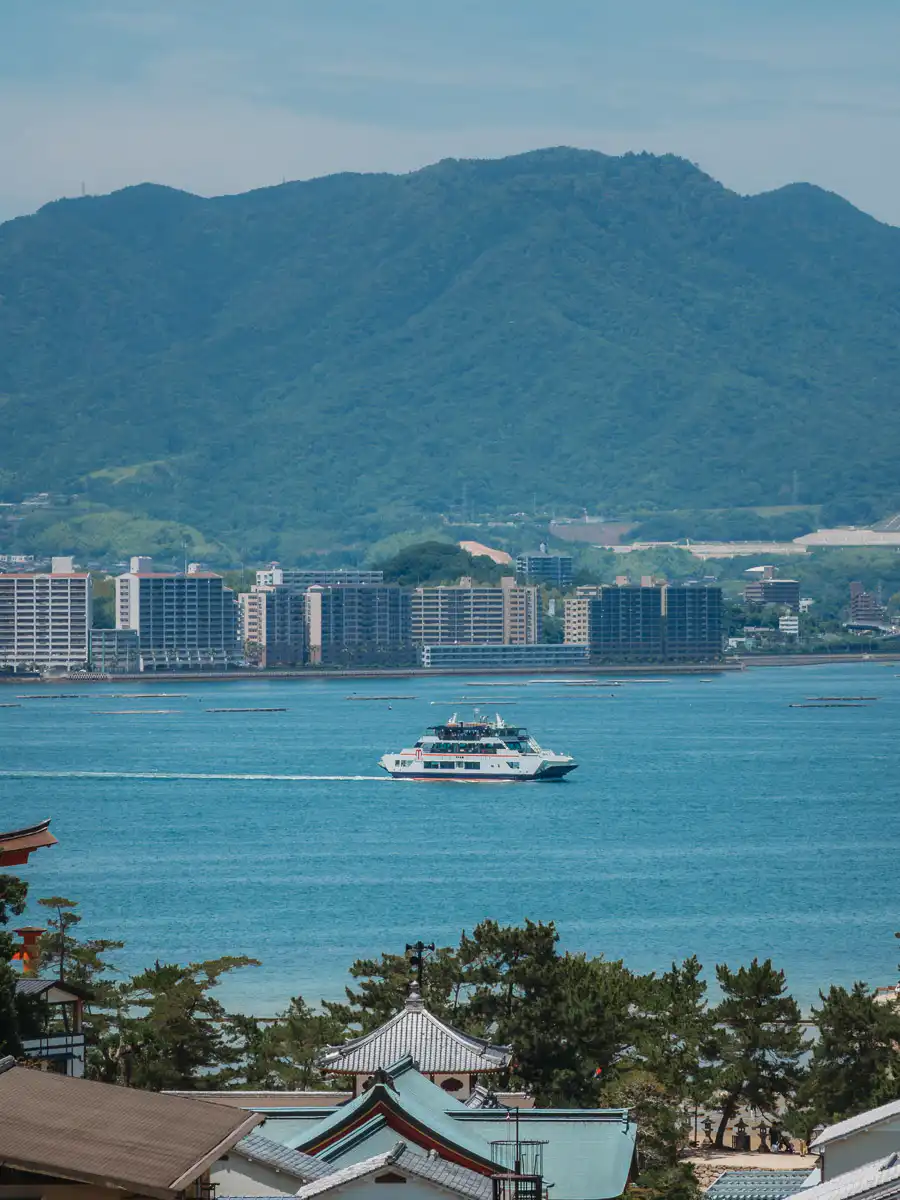
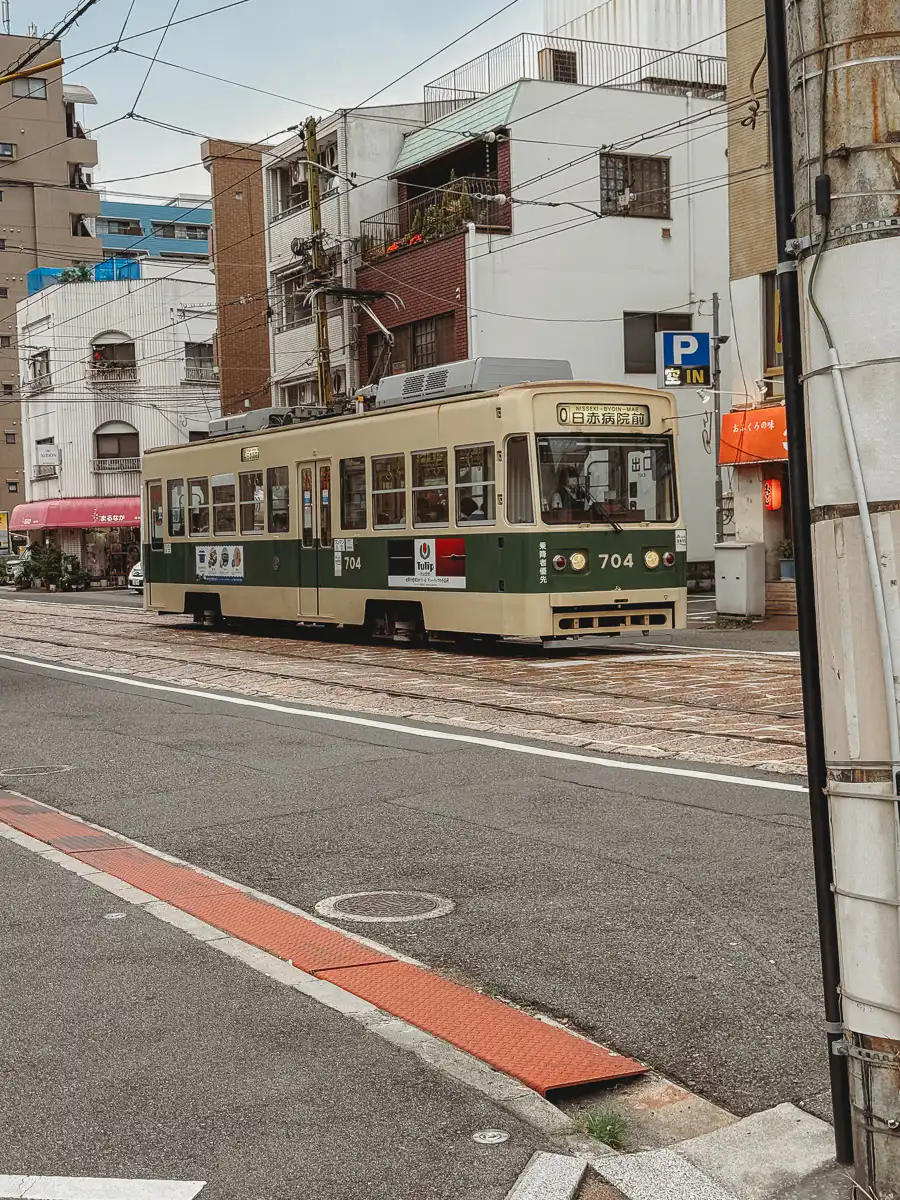
This slightly slower but more economical route involves two steps. First, take a tram to Miyajimaguchi station using the Hiroden Streetcar Route 3 or Hiroshima Dentetsu No.2 which conveniently passes right along the Main T-Bridge in central Hiroshima.
Then once at Miyajimaguchi station, walk for 2 minutes to get to the pier where you’ll be taking the quick 5 minute Miyajimaguchi-Miyajima Ferry. In the end, this is the route we opted for since it was only about 10-15 minutes slower, but less than half the price.
- Hours of operation: The first Miyajimaguchi-Miyajima ferry departs at 9:15am and arrives at 9:20am. Final Miyajima-Miyajimaguchi ferry is usually at 6:05pm.
- Cost: The Tram costs between ¥240-570 one way (can pay with IC Nimoca Card), and then the ferry tickets cost ¥400 one-way, and ¥800 roundtrip. Total round trip cost will be around ¥1,940.
- Duration: 45 minutes by train, 10 minutes waiting at pier, and 5 mins ferry ride, for a total of 60 minutes
- Tickets: The Tram can be paid for with your IC Card (Nimoca), but we recommend buying your outbound ferry ticket in advance, especially if you intend to catch the first ferry. The Return ferry trip can just be purchased in person at the Miyajima Pier.
Miyajima Day Tour Option
If you prefer a more convenient option and don’t want to worry about organizing the transportation and logistics yourself, you can also visit Miyajima as part of a guided day tour.
There are generally two main type of tours available:
- Combined Hiroshima + Miyajima Full Day Tour
- or a half-day tour focused solely on Miyajima.
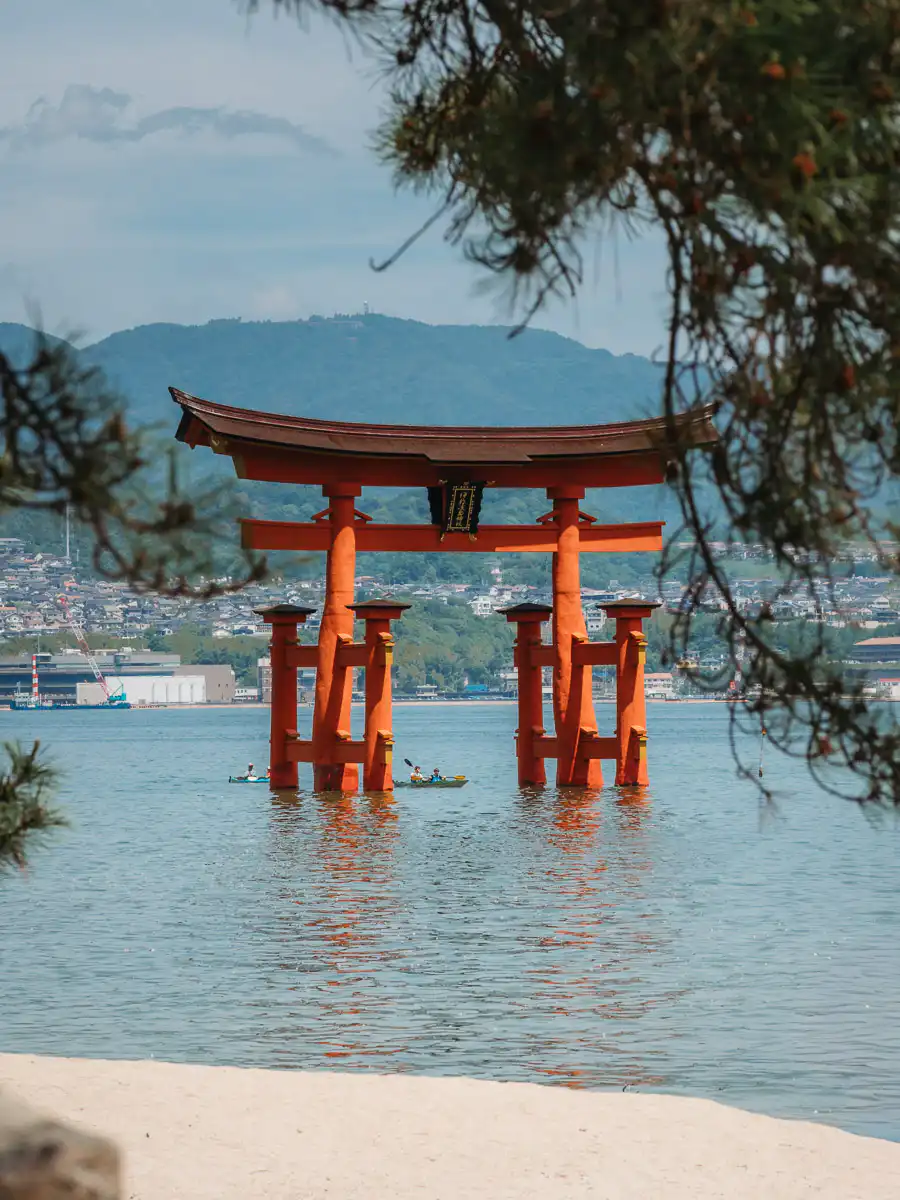
During our visit, we also noticed some travellers exploring the floating torii gate on Kayak, which is another really cool way of exploring the island and can be added on even if exploring independently.
Things to know before visiting Miyajima
Miyajima Vs. Itsukushima
This was one of our first points of confusion when researching the island. We kept seeing both names: Miyajima and Itsukushima, and weren’t sure if they referred to different places. Turns out, they’re actually the same island.
Itsukushima is the island’s official name, while Miyajima is the more commonly used name among tourists, largely because of the famous floating torii gate that has made the island so iconic.
Check the tide times
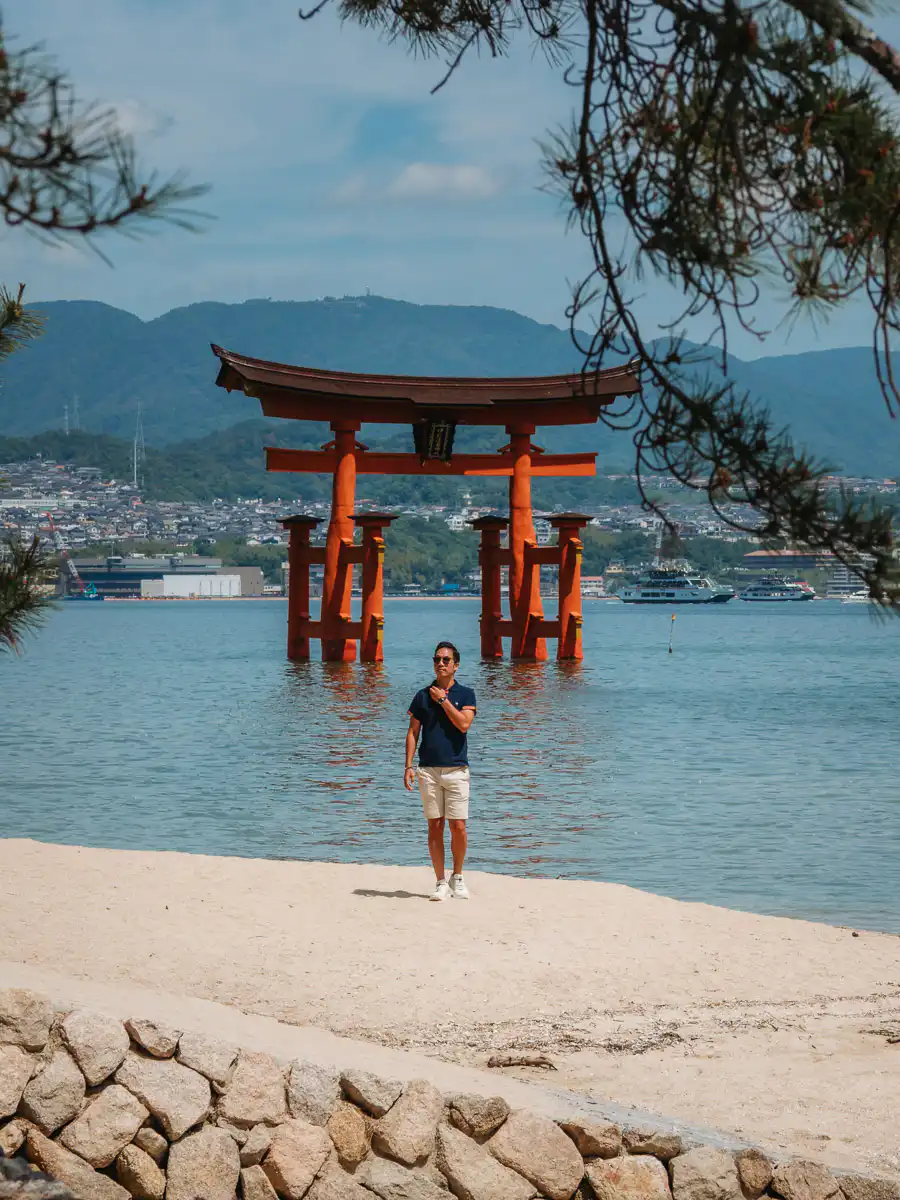
Before visiting Miyajima, make sure to check the tide schedule so you can plan your visit around high tide, when the famous torii gate appears to be floating on the water. When we visited, high tide was around 9am, while low tide was around 3pm. We made sure to time our visit perfectly so we could experience both sides of Miyajima. To check the tide times, you can click here.
buy your boat ticket in advance since they do sell out
The Aquanet Express boat from Hiroshima to Miyajima tends to sell out a few days in advance. If you are opting for this route, make sure to book ahead.
The Miyajimaguchi-Miyajima 5 minute ferry on the other hand, tends to have a lot more availability and can be booked on the spot. However, if you want to catch the first ferry, we would still recommend booking the outgoing ticket online.
Should you stay overnight on Miyajima
Most travellers visit Miyajima as a day trip from Hiroshima, and that’s exactly what we ended up doing. We had considered staying overnight but the accommodation cost on the island was quite elevated. We also felt that a full day would give us enough time to experience the places we were most interested in, which turned out to be true.
Another factor to consider is that dining options on the island are quite limited, especially outside of peak hours. We already had trouble finding open restaurants during lunchtime, so we could only imagine it becoming more challenging in the evening.
After reading through various travel forums, many travellers who stayed overnight mentioned that the island becomes very quiet after around 6pm, with most shops and restaurants closing for the day.
How much Time Do you need on Miyajima
We recommend spending around 6 hours on the island.
During our visit, we arrived around 9am and left at approximately 4pm (7 hours). Our longer stay was partly because we love photography and spent extra time capturing different viewpoints and moments throughout the day.
For most travellers, however, we think the highlights could comfortably be covered by around 2pm.
Should you take the Express boat or the Economical route
We contemplated this a lot before settling on the more economical train-ferry route. In the end, we chose that route since it was less than half the price of the express route, and only took about 10-15 minutes longer.
This route also arrives only a few minutes after the first Aquanet Express Boat, and the final departure time is about 40 minutes later.
Finally, the Train-ferry route also gave a lot more flexibility, since tickets do not have to be purchased in advance, which meant we had the freedom to stay as long as we wanted on the island.
Cost of Visiting Miyajima
The main expense to visiting Miyajima is the transportation cost. There is no entrance fee to the Miyajima island.
For the most economical route, it will cost you around ¥1,940 for a roundtrip from Hiroshima. If you choose to visit Itsukushima Jinja, the entrance fee is ¥500. Otherwise, visiting the rest of the sites and temples are free.
🇯🇵👨🏫 Want to uncover more hidden gem ideas for your Japan trip? Check out our guide on 32 unique things to do in Japan and our comprehensive 10+ day Japan Itinerary guide! And before you go, save yourself the stress and learn from our mistakes — read our 36 Essential tips for traveling in Japan: First time visitors guide.
Best Things to do in Miyajima
There are a ton of things you can do on Miyajima island, but for most travellers, they will want to focus on the main temple and gates closest to the town/pier. Here are some of the highlight experiences included in the itinerary, if we think it was worth it, and some bonus ones you can add in:
Things To Do on Miyajima | ||
Activity | Description | Worth it? |
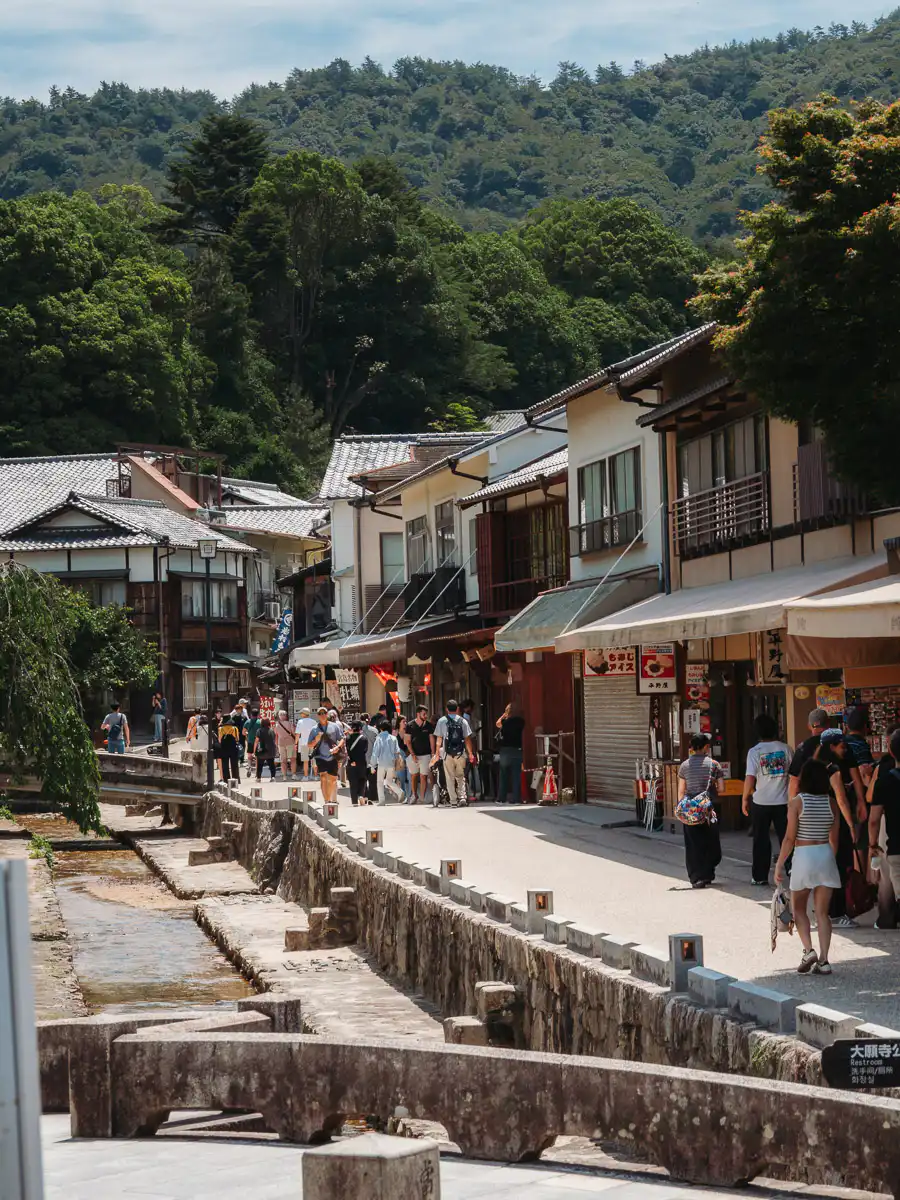
Photograph and view the Floating Torii Gate | This is the main reason why people come to Miyajima | 👍 |
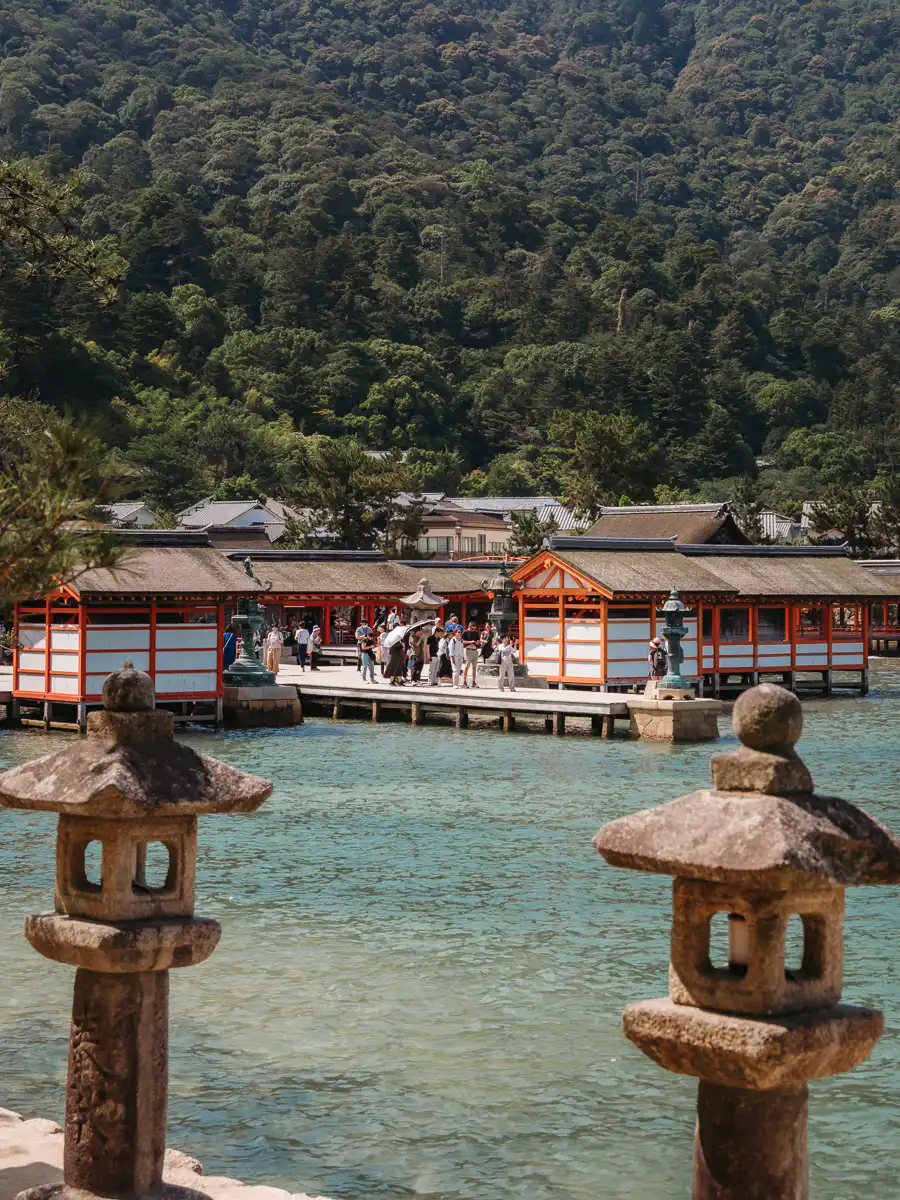
Explore Itsukushima Jinja Shrine | The shrine floats on water and is right in front of the floating Torii gate, making it one of the most scenic viewpoints | 👍 |
Shop on Miyajima Omotesando Street | They have some cute boutiques and a variety of Japanese confectionary like Momoji | Not Worth It, pretty generic souvenir shops |
Hike up or take cable car up Mount Misen | the hiking route takes around 3-4 hours roundtrip, whereas the ropeway is very quick! | Pretty views but takes 3-4 hours. We’d prioritize the more unique Daishoin Temple |
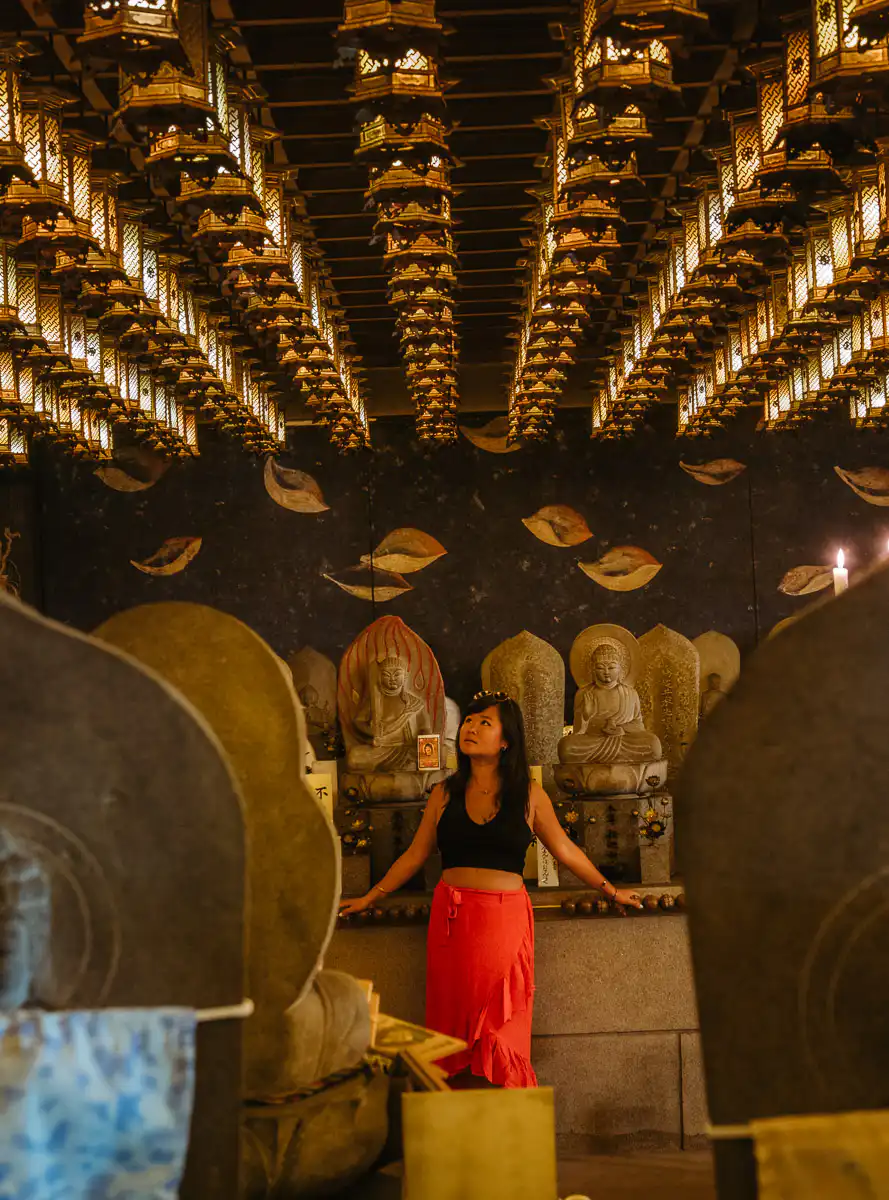
Henjo Cave and Daishoin Temple | This was one of our favourite experiences on Miyajima, especially the Henjo Cave! | 👍👍 |
Kayak all the way up to the Floating Torii Gate | 👍 | |
Small Aquarium on Miyajima Island | Not Worth it. There are far more impressive aquariums in Japan | |
Experience a Tea Ceremony dressed in a kimono in a traditional tea house | More expensive than in the main cities like Kyoto or Osaka | |
Check out our PDF guide that includes a summary of 36 essential tips for traveling to Japan! If you want to read about all these tips in detail, check out our Japan traveling tips guide!
How to Plan your Miyajima Day Trip Itinerary
Morning: Transportation to Miyajima Island
We recommend getting an early start to your day in Miyajima and checking the tide schedule in advance so you can experience the iconic torii gate surrounded by water at high tide.
To reach the island, you have two options (which were discussed in the section above): take the direct express ferry from Hiroshima Peace Memorial Park, which takes about 45 minutes, or take the tram followed by the local ferry, which takes just over an hour.
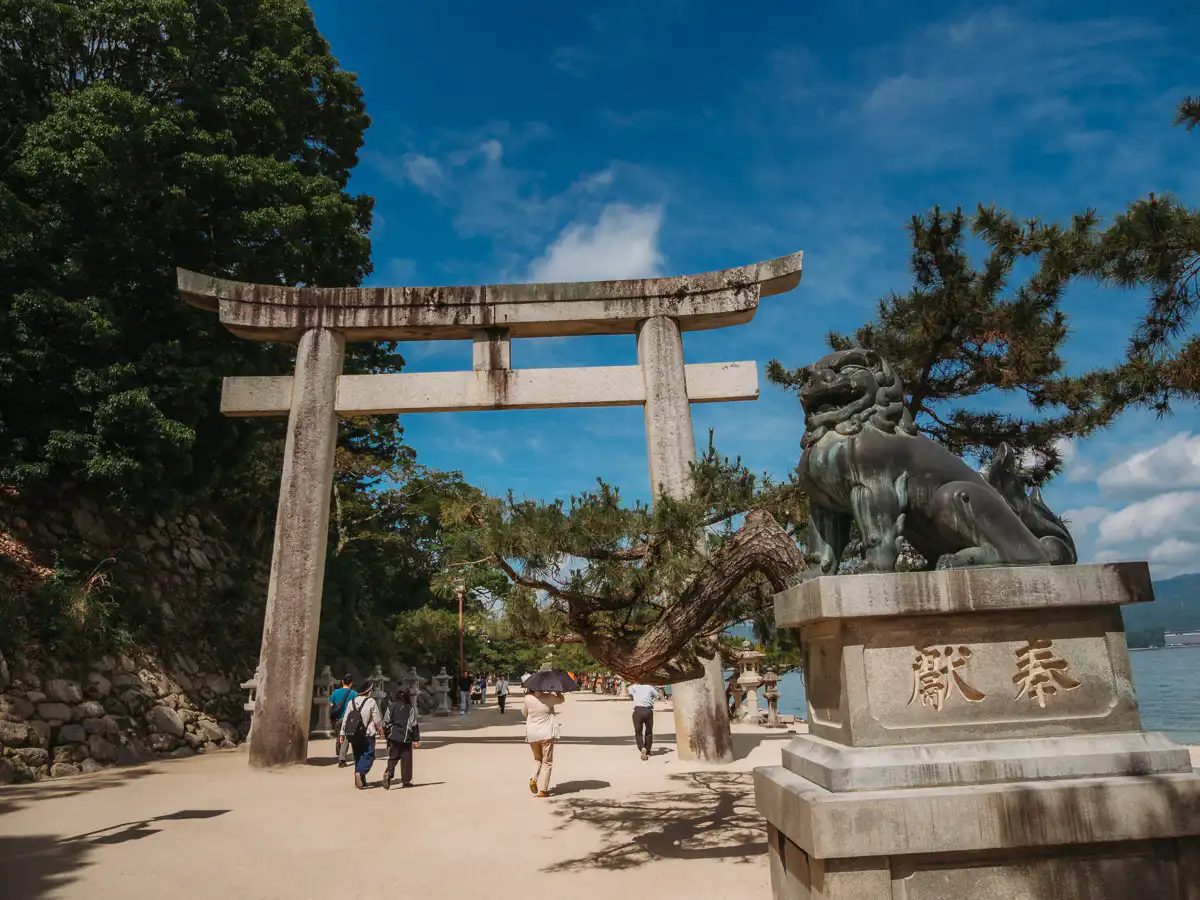
Head straight to the first scenic spot (10 minutes walk)
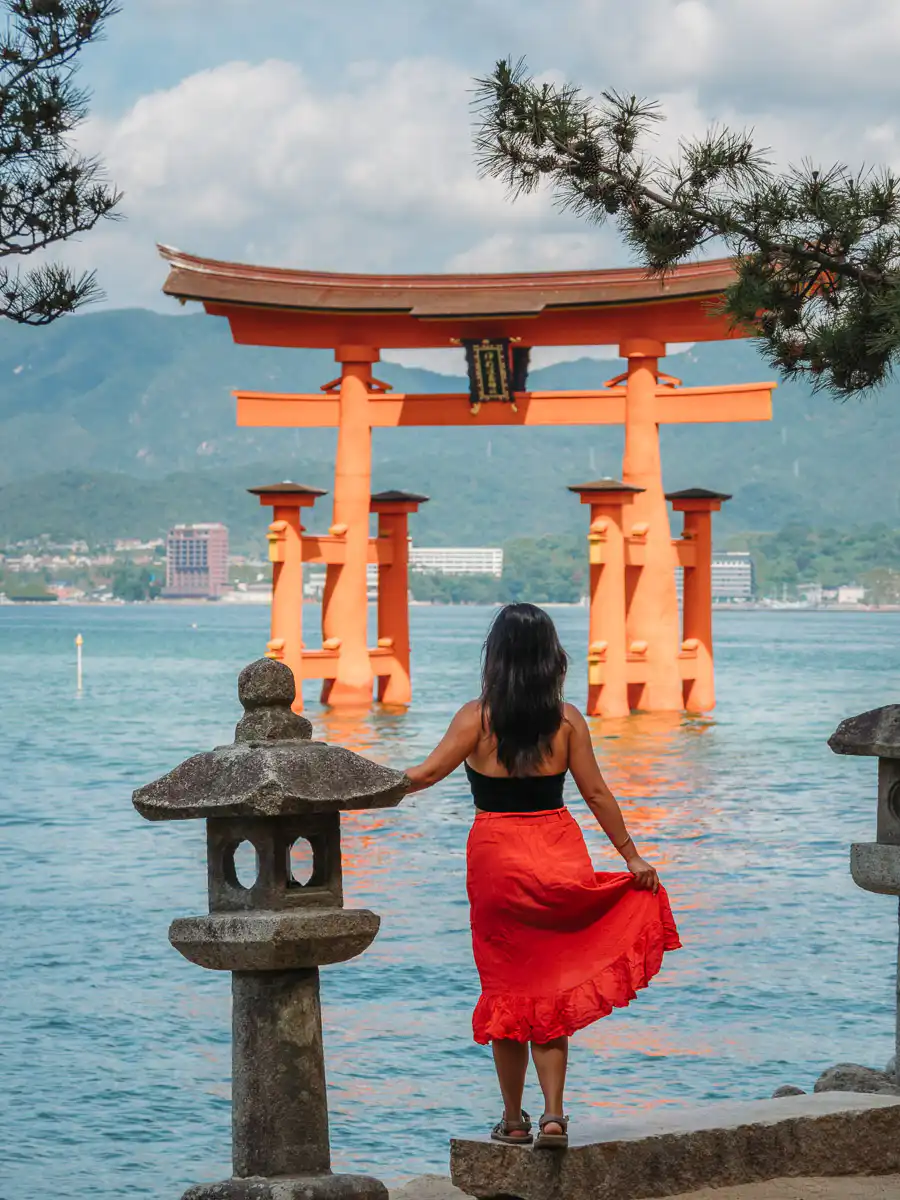
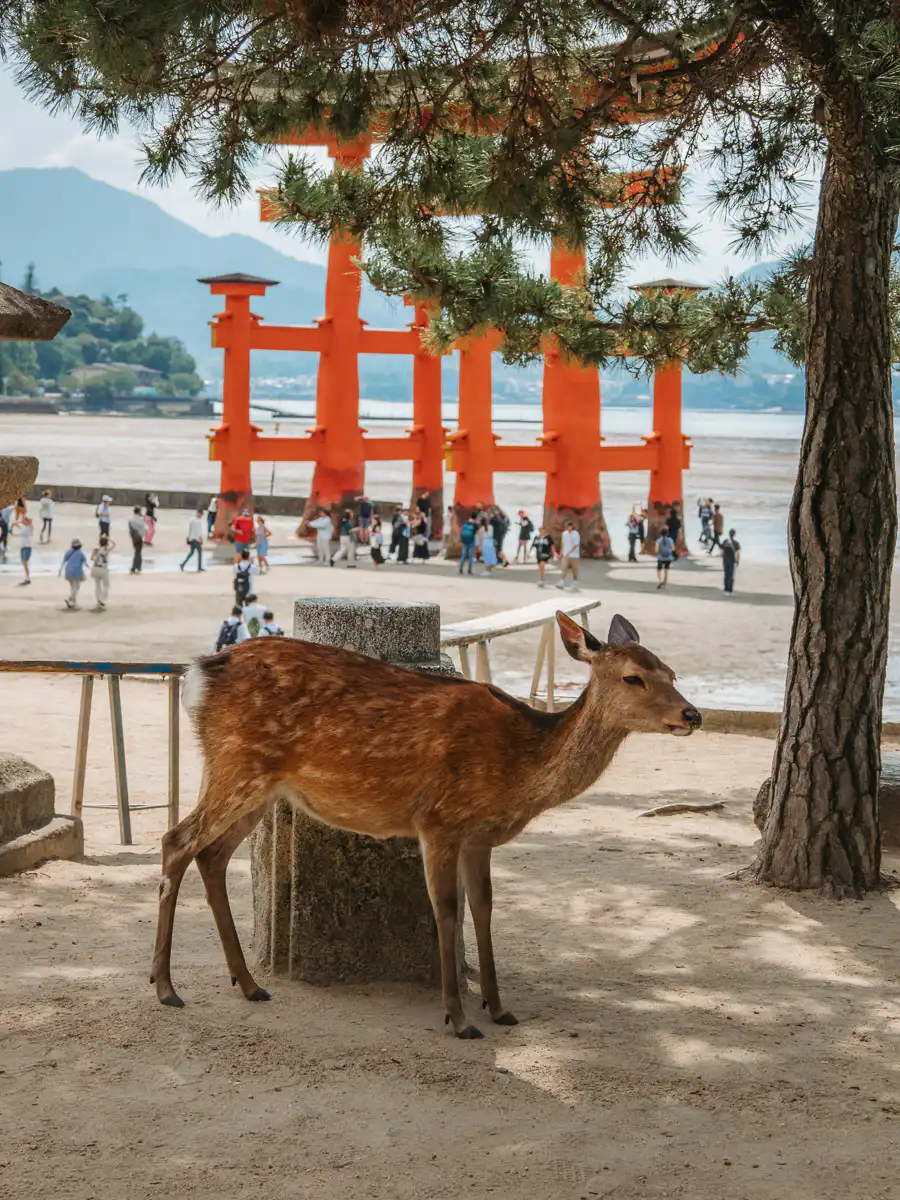
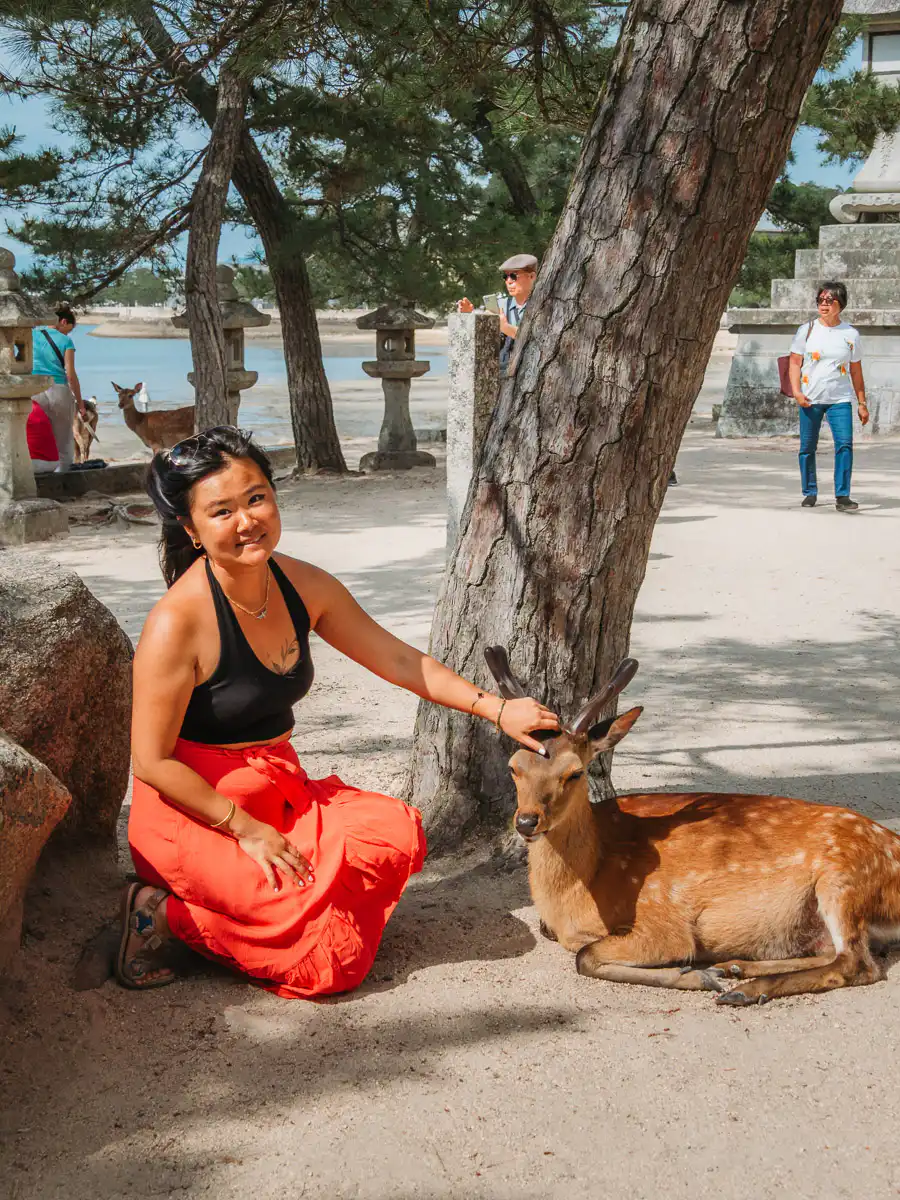
Once you arrive on the island, we recommend heading first to this scenic spot. It is along the way to the Torii Gate but was one of our favourite viewpoints. While we were here, we were also approached by a couple of friendly deer which made the experience even more special.
Pay Entrance fee to explore Itsukushima Jinja (5 minutes walk)
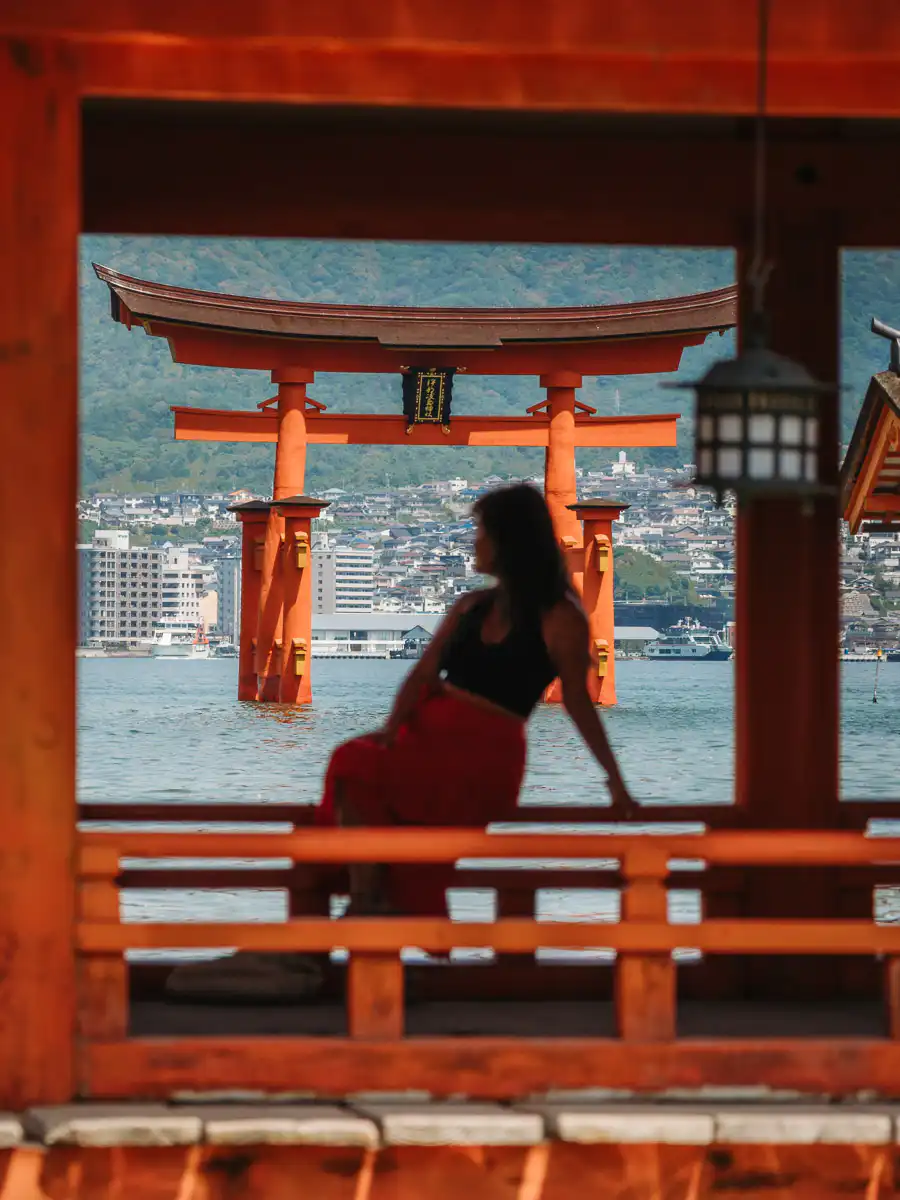
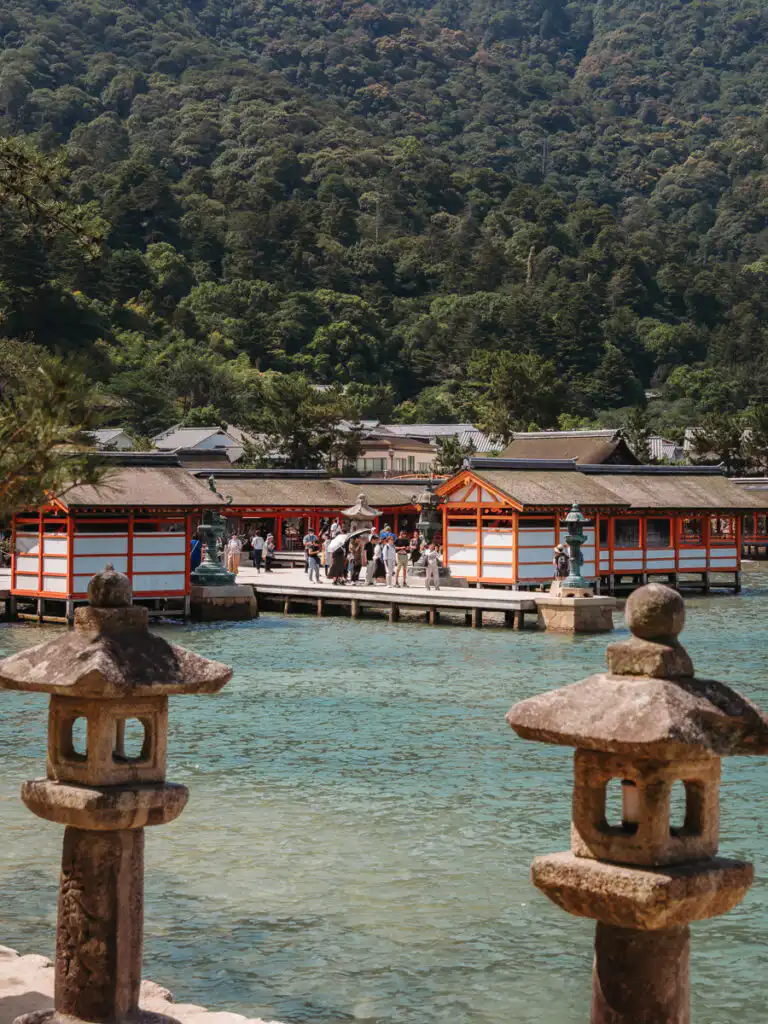
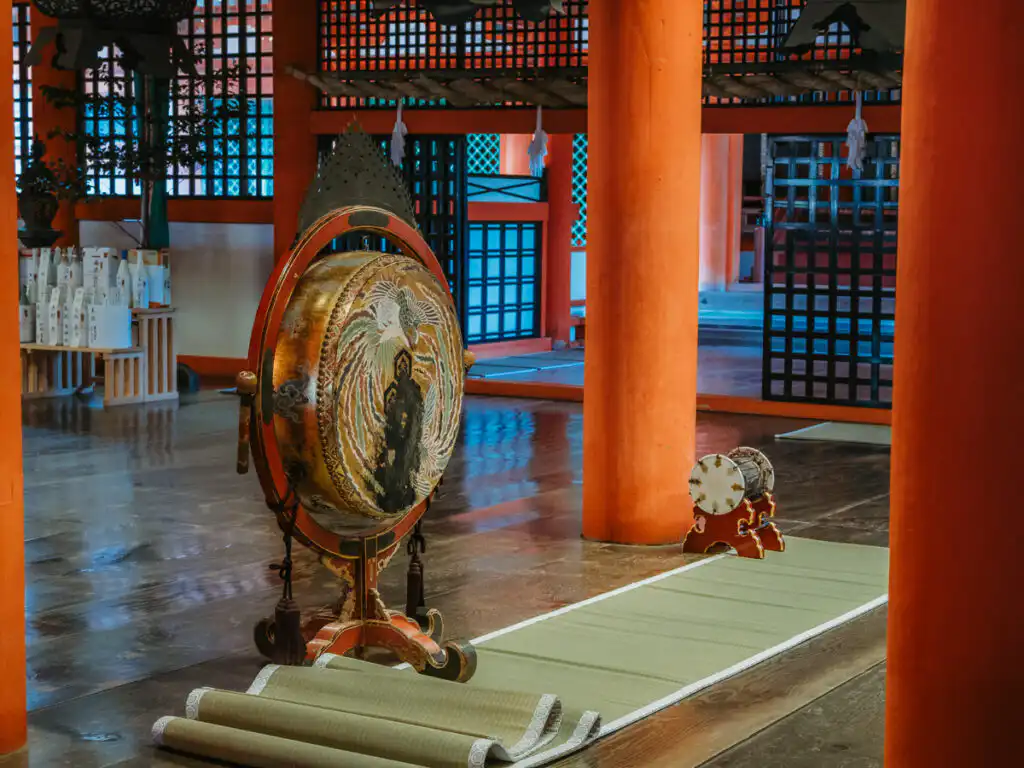
While this stop is completely optional, we definitely think it’s worth the small entrance fee. Located directly beside the famous Floating Torii Gate, Itsukushima Jinja is one of the most unique shrines we visited in Japan. Built on stilts over the water, the shrine features beautiful vermilion corridors and open wooden walkways that seem to float above the water at high tide.
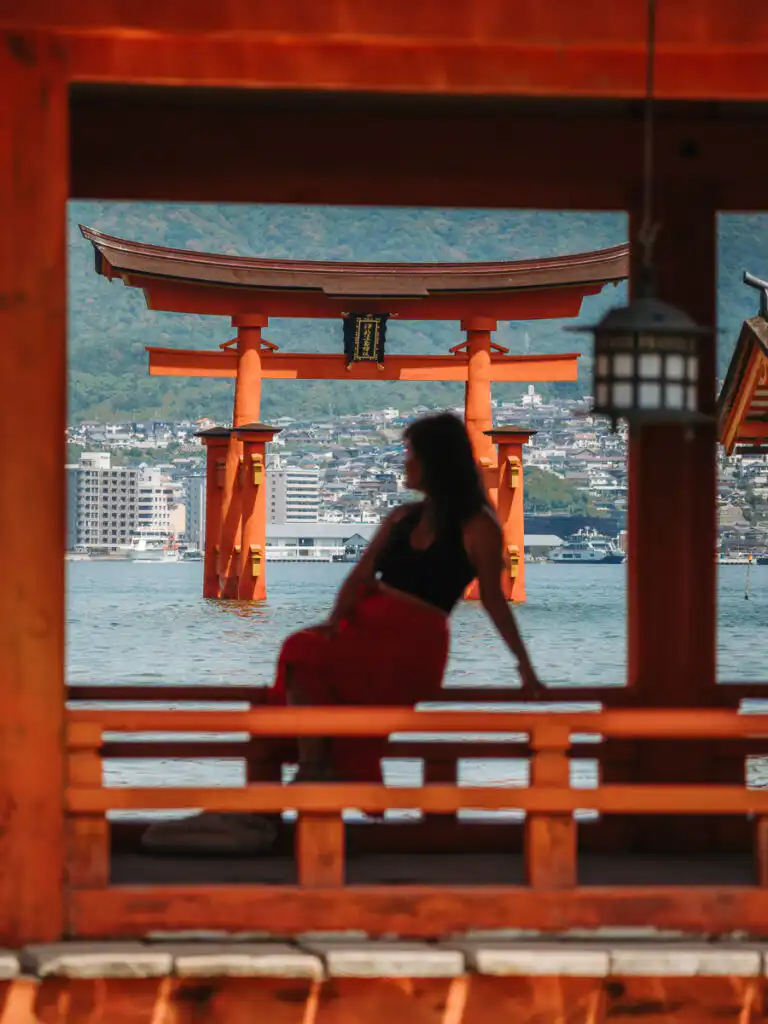
Also, walking through the shrine gives you a completely different perspective of both the torii gate and the surrounding bay, and makes for a very nice photo spot.
You will notice everyone lining up to take the photo on the dock leading towards the Torii gate, but try to explore around the corridors as they offer a more quiet and unique perspective. We also loved how peaceful it felt compared to the busy waterfront outside.
Admission costs just ¥500, and for us, it was well worth it. We recommend spending around 20-30 minutes here.
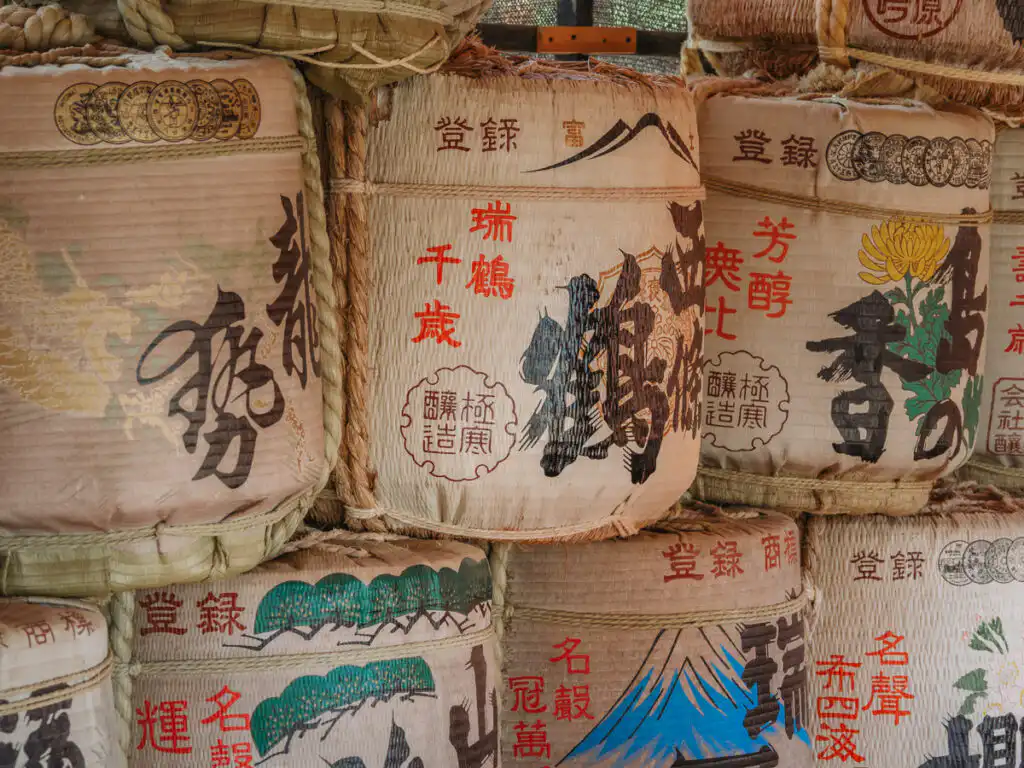
See secondary beach viewpoint at 松の並木と灯籠 (5 minutes walk)
This second beach viewpoint was actually one of our favourite spots on the island. While most visitors gather around the main waterfront, very few seem to actually make it here, so we had the beach almost entirely to ourselves.
We spent about 15 minutes relaxing on the sand, taking in the peaceful views of the Floating Torii Gate as the occasional kayaker or boat drifted by.
If you’re looking for an even more unique experience, this is also where the popular Miyajima Kayaking Tour departs, which gives you the chance to paddle right out to the Torii Gate.
Lunch on Miyajima: where to eat
After enjoying the beach, you should head back towards the main town to find a spot for lunch. For us, this was around 11am and we actually found it quite challenging to find a restaurant that was open. We searched on google maps and identified a few options but when we stopped by, they were surprisingly closed. One shop ended up being open, but when we tried to enter, they refused us.
We wanted to mention this so you can plan ahead. We recommend taking a few minutes to research and shortlist a couple of restaurants before arriving on the island. This way, if one is closed, you have a backup.
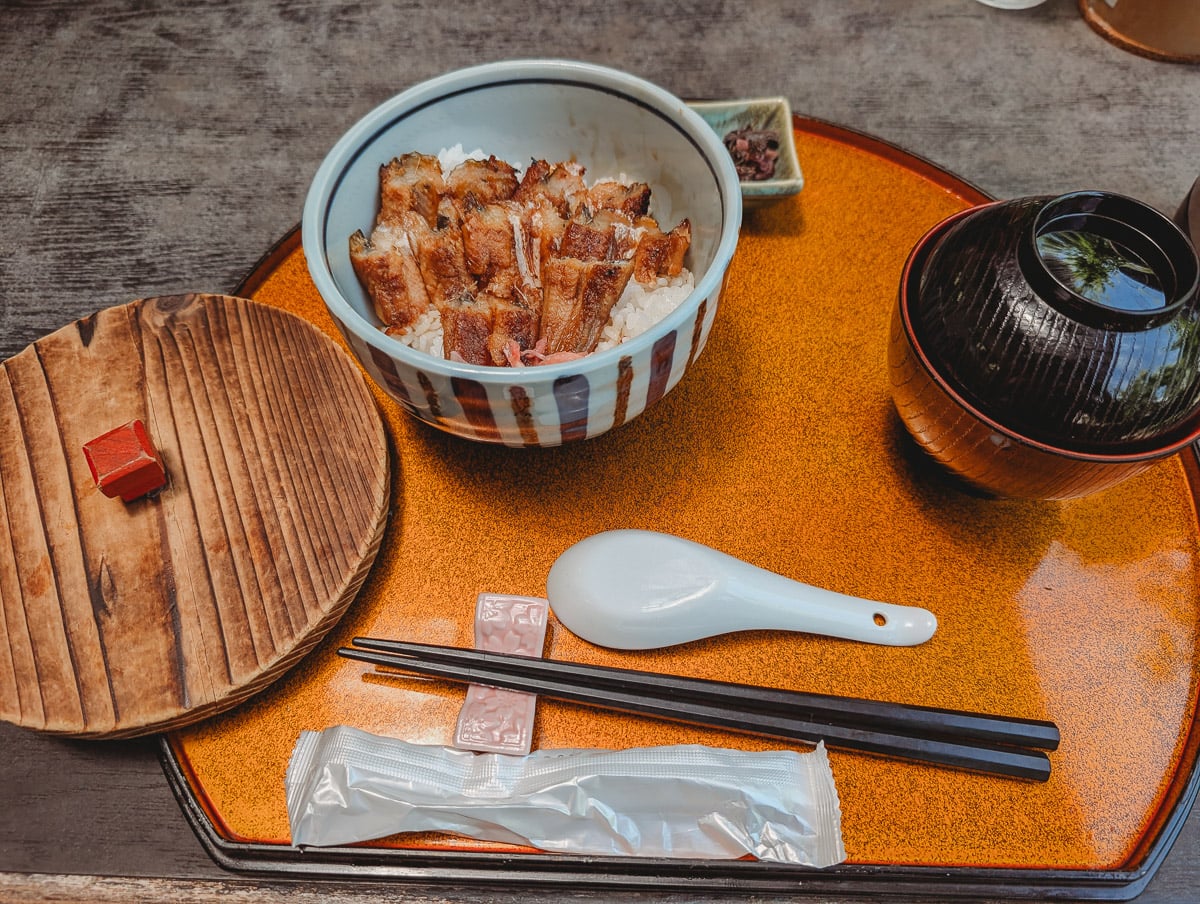
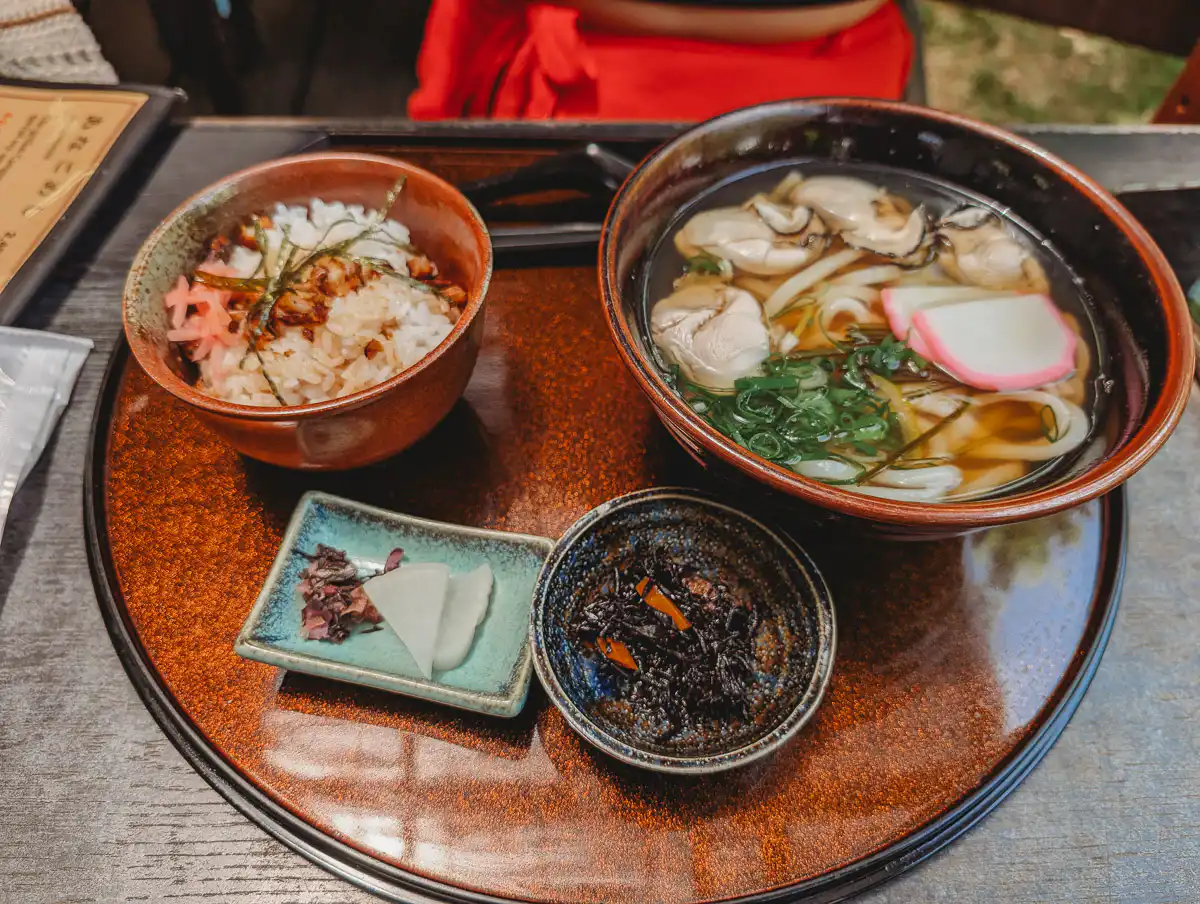
We ended up trying restaurant Ruuju where we ordered their eel rice set meal and noodle soup, but compared to the other fantastic meals we had in Japan, this one was pretty underwhelming. A couple of other restaurants that looked promising but were unfortunately closed when we visited were Yamatoya and Yamane, so they may be worth considering.
Afternoon: Visit Daishoin Buddhist Temple + Henjo Cave (15 mins walk uphill)
Originally, we had our minds set on hiking up Mount Misen, which takes around 3–4 hours roundtrip. But after visiting Daishoin Temple, we completely changed our plans. We were so fascinated by the atmosphere and details of this temple that we decided to skip the hike and spend more time exploring here instead.
Daishoin Temple
Located high in the mountains of Miyajima, Daishoin is one of the most beautiful and spiritual temples we visited in Japan. What really stood out to us was the atmosphere, where you could hear the monks chanting and praying, accompanied by the rhythmic sound of drums, while surrounded by towering trees and peaceful mountain scenery.
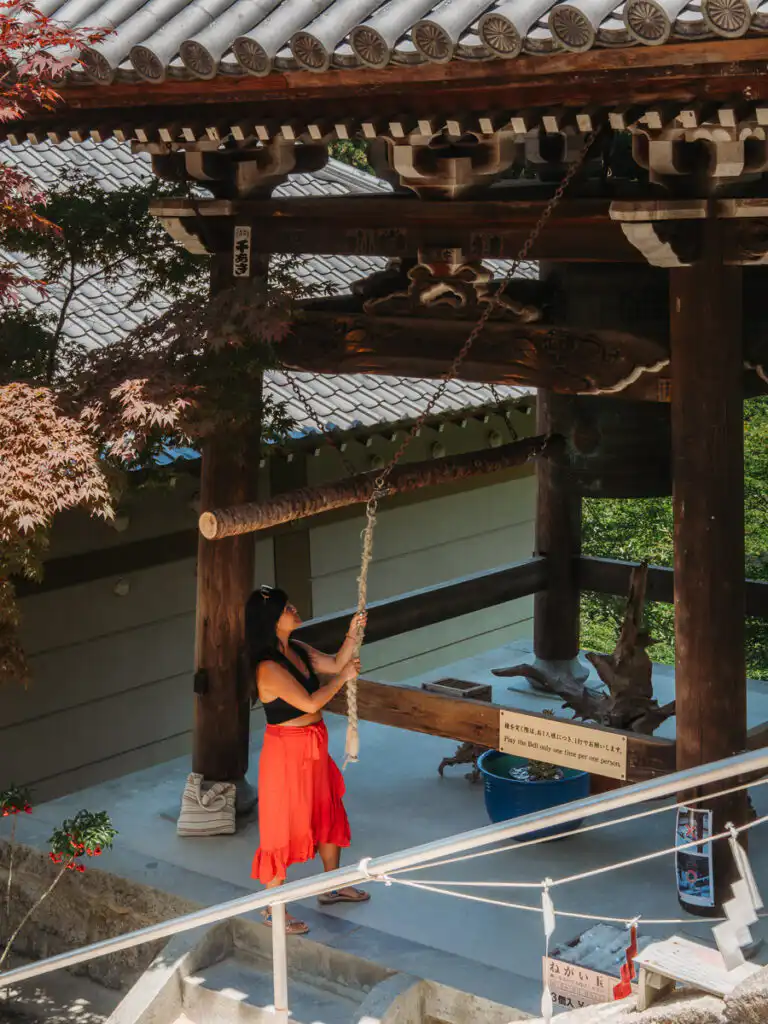
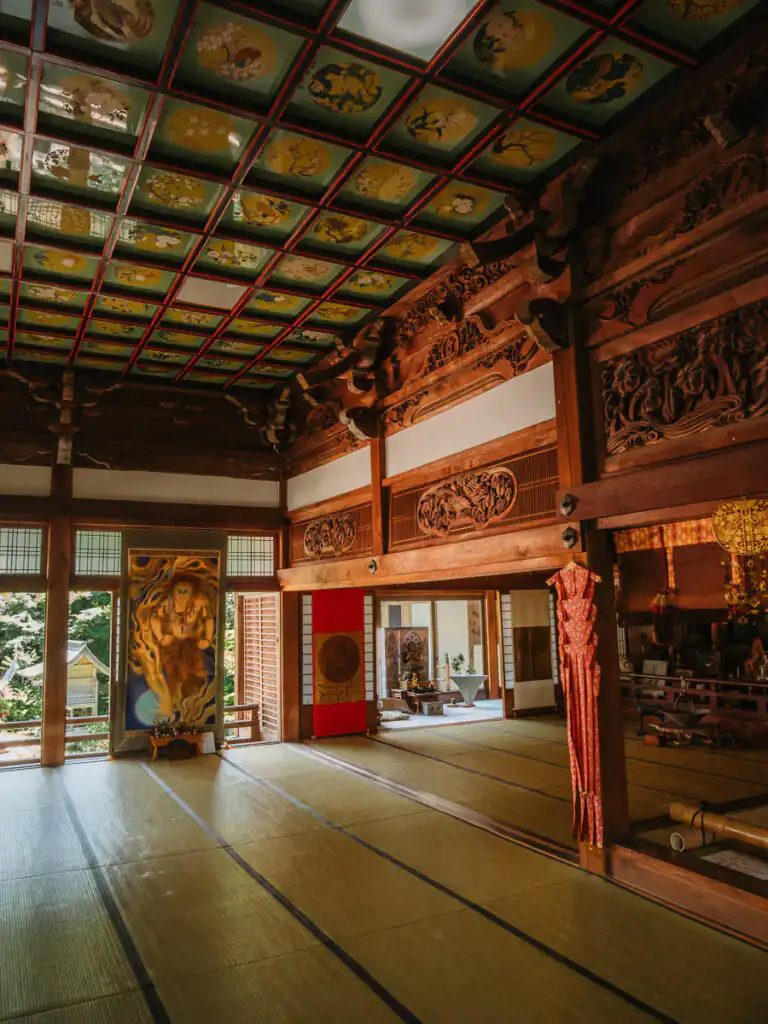
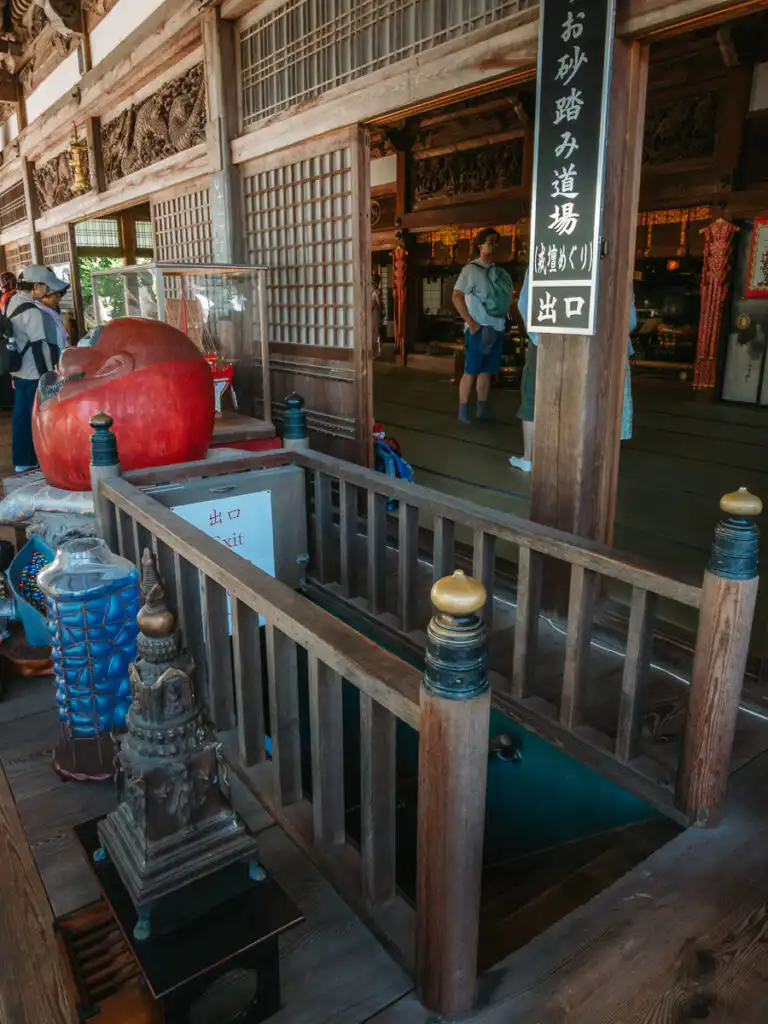
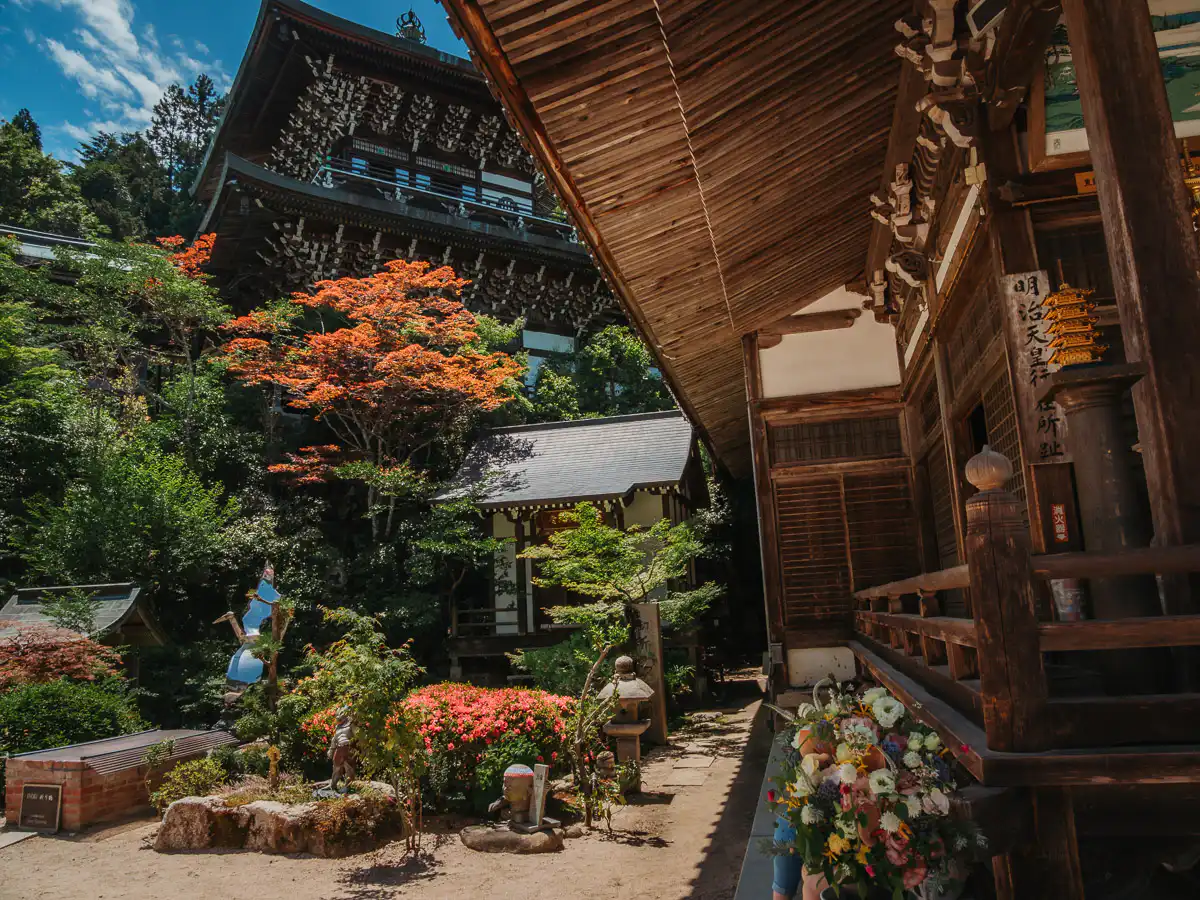
Inside the main temple, there is also a hidden underground pathway where you can walk through a series of corridors in complete darkness before coming face-to-face with several Buddhist statues. It is believed that walking through this underground passage represents a journey through the womb of Buddha, and emerging from the darkness symbolizes being reborn.
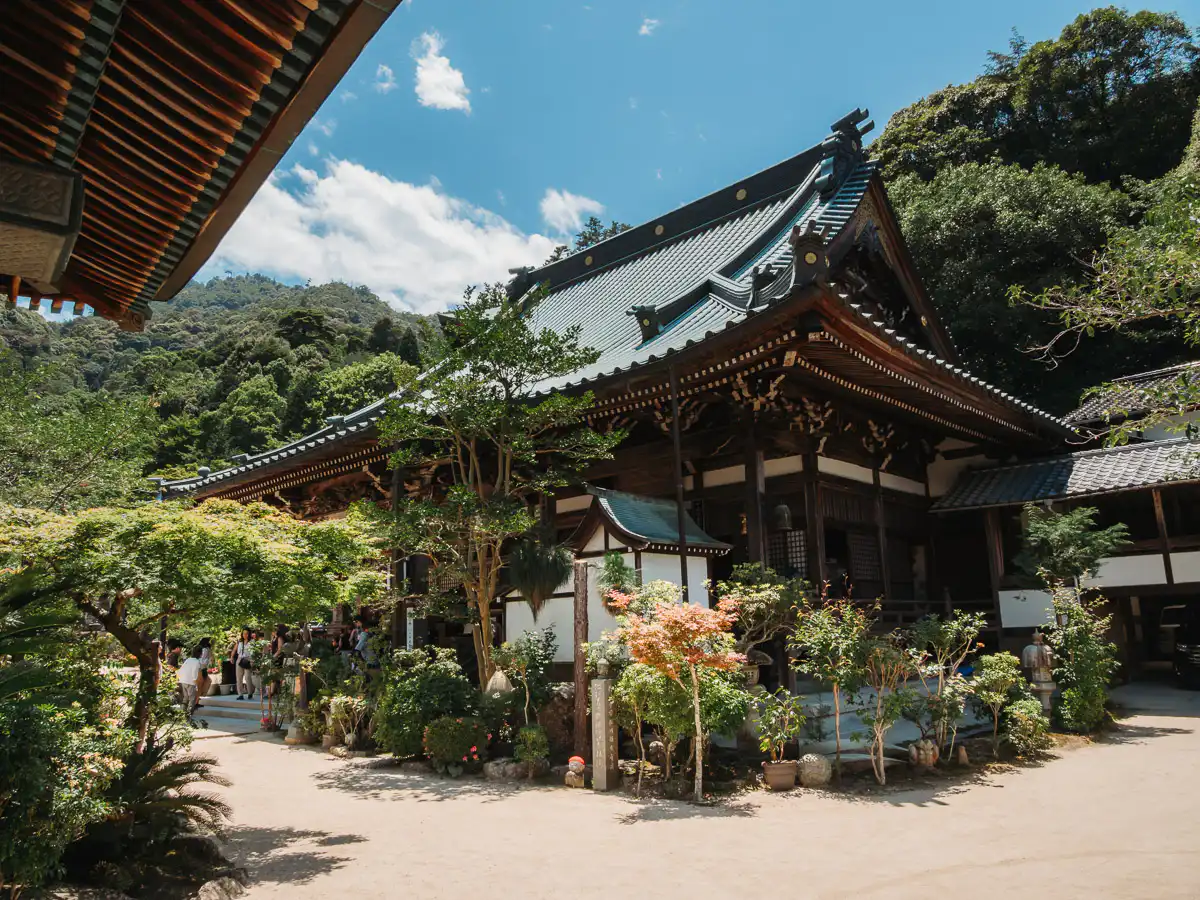
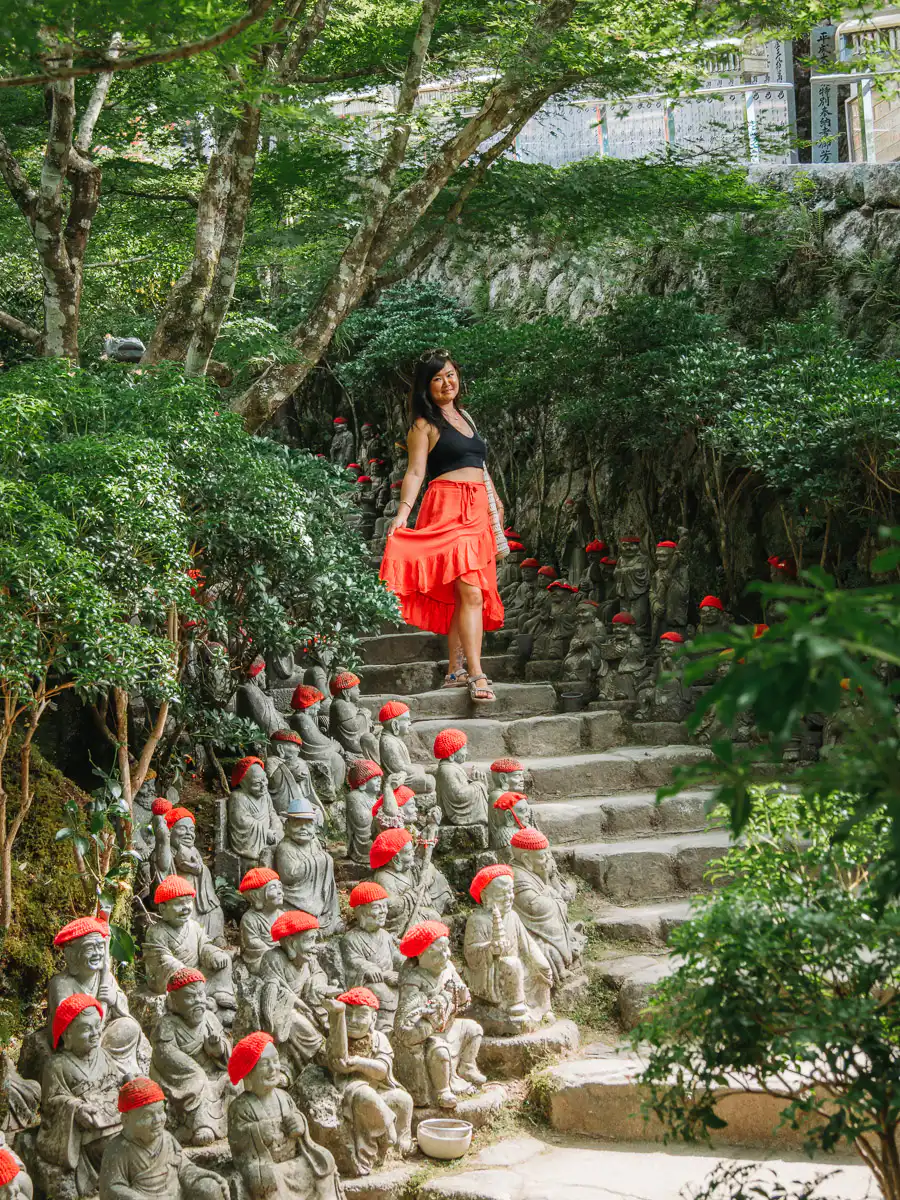
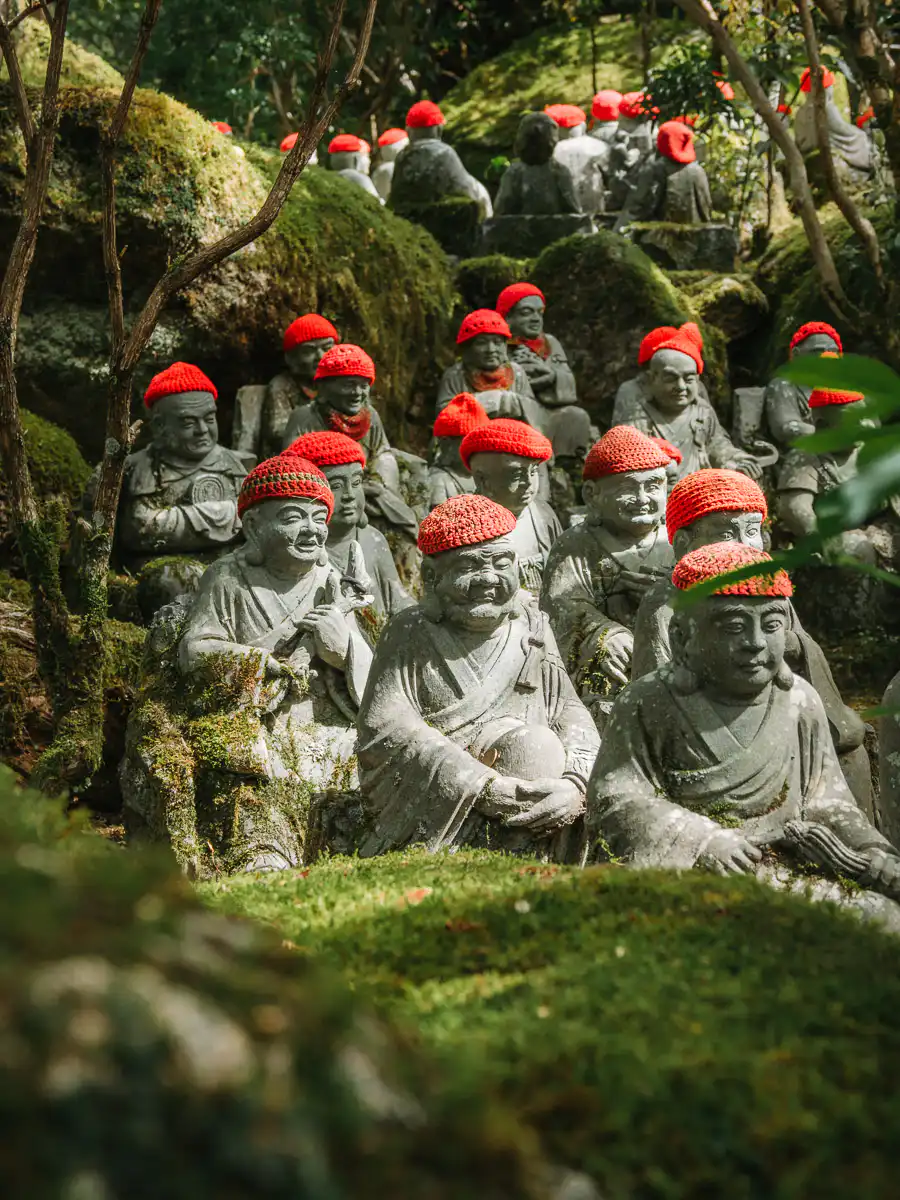
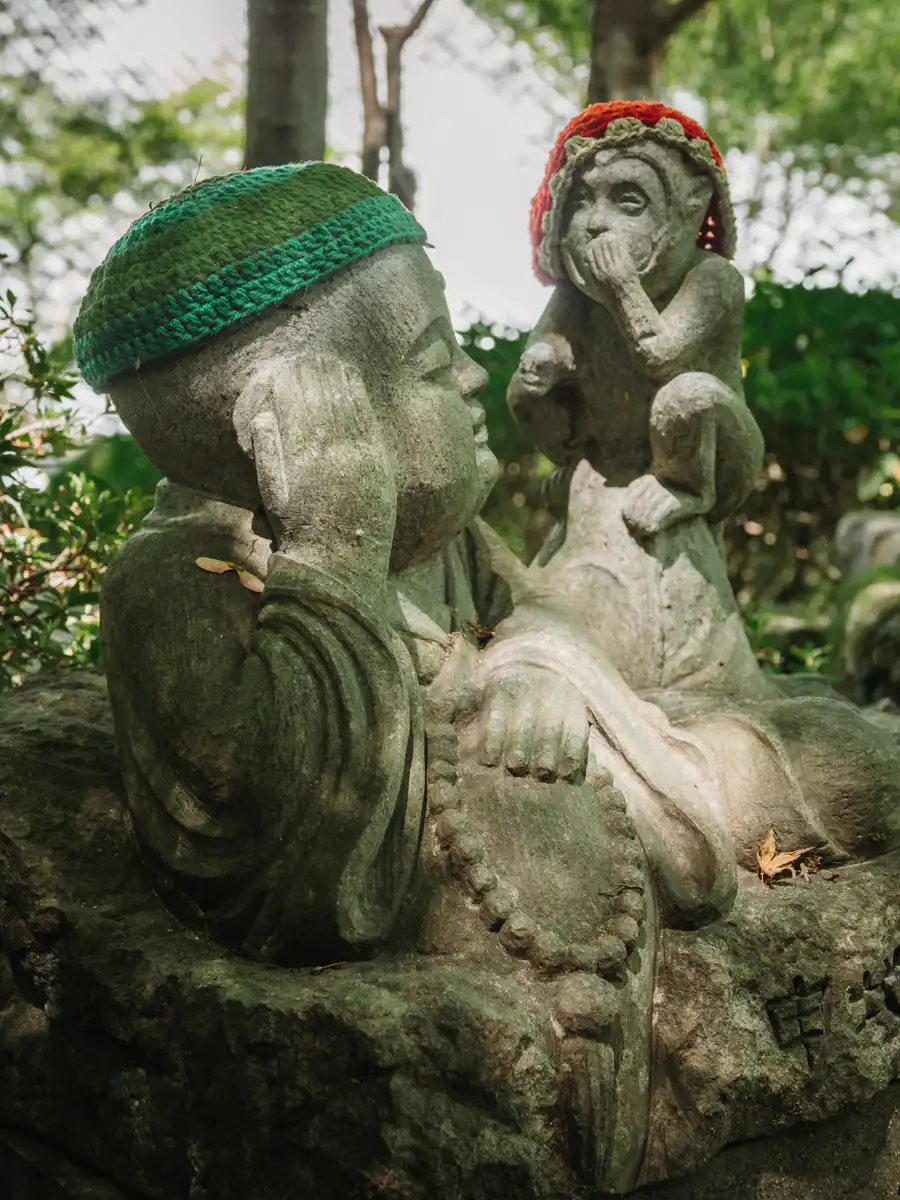
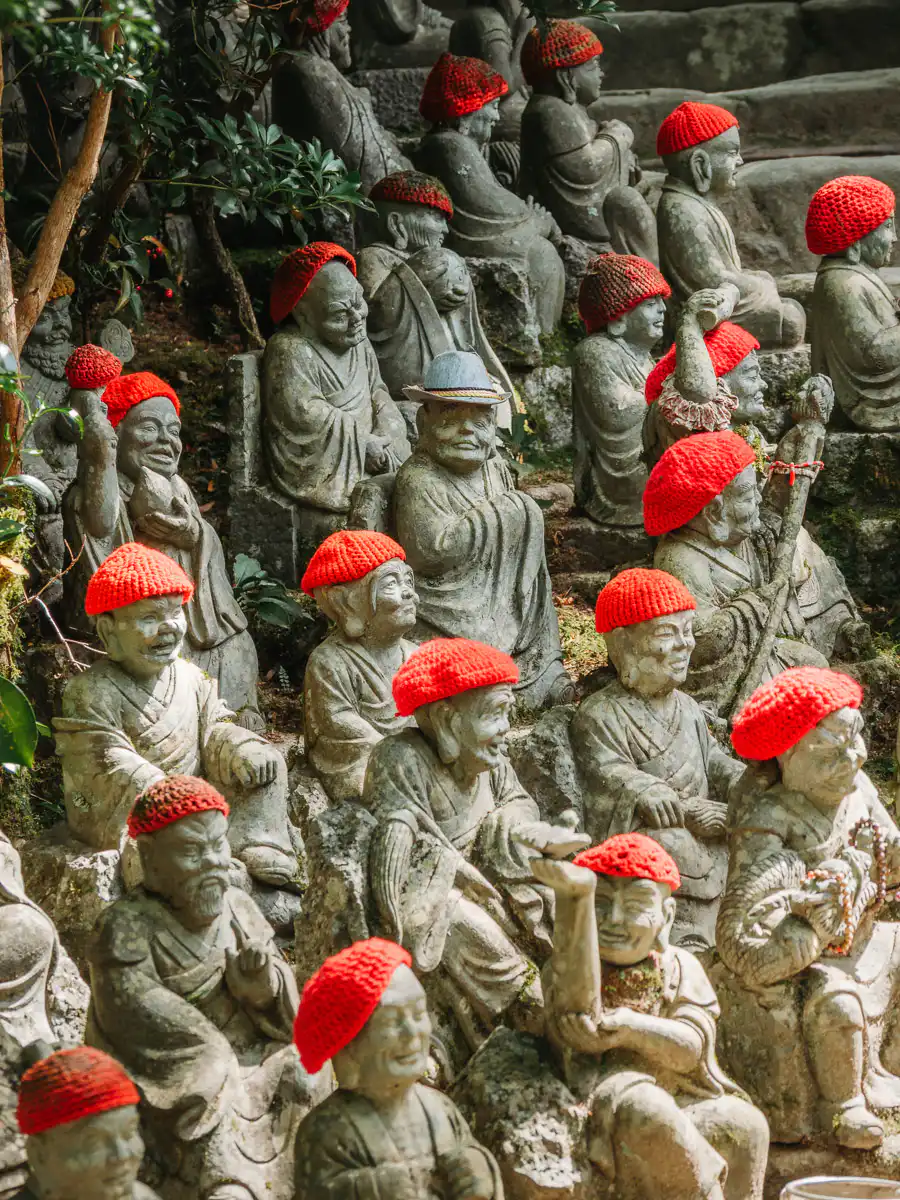
While many tourists turn back from this temple, we recommend continuing ahead because that’s where the best part is. You’ll walk through a forest filled with the small buddhas with the red hats, then end up at one of the most unique caves.
Henjo Cave
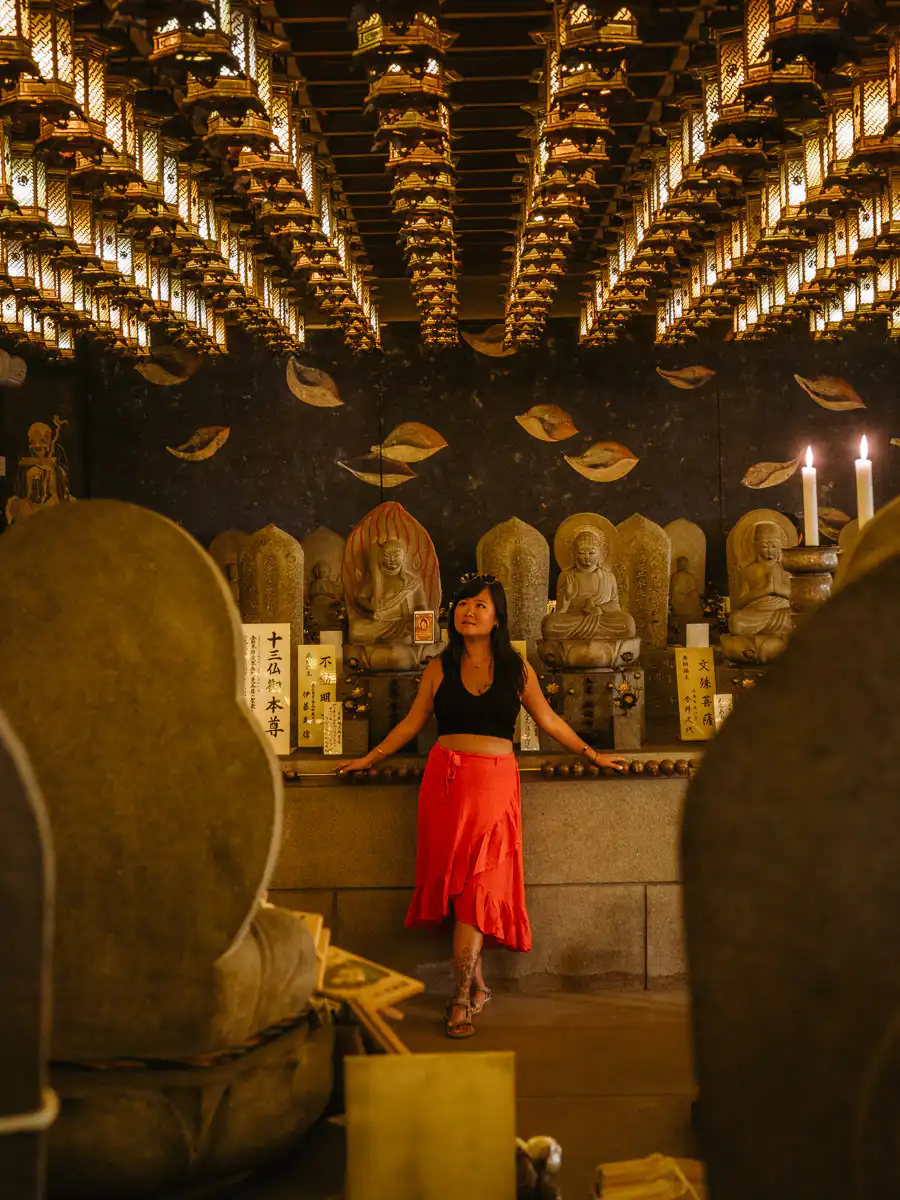
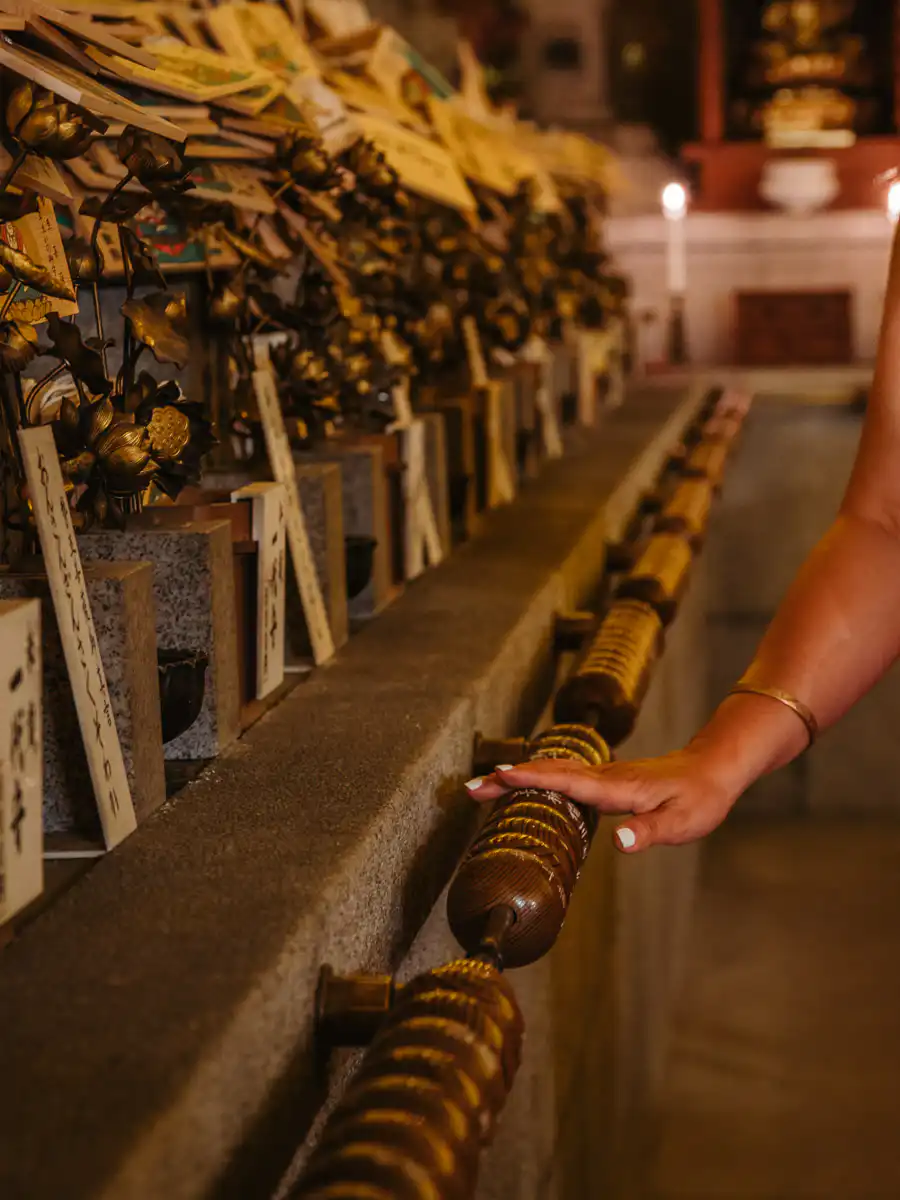
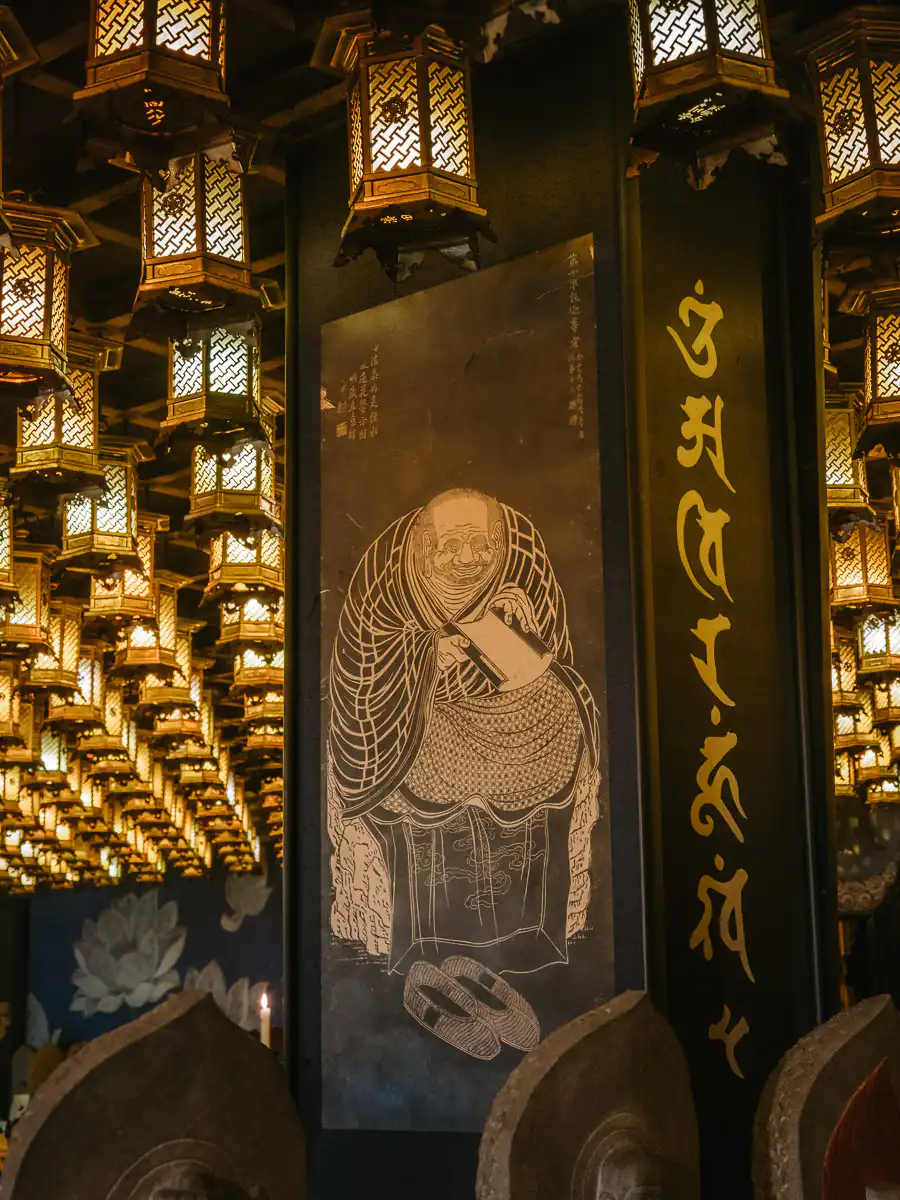
As soon as you enter Henjo cave, you’ll notice the ceiling covered with small lanterns, creating a warm and almost magical glow. Inside are statues representing the various Buddhist temples and deities from across Japan. The idea behind the cave was to allow pilgrims who could not complete the long journey across Japan to still pay their respects to these sacred sites all in one place. We thought this was such a unique concept and made a visit to this temple that much more special.
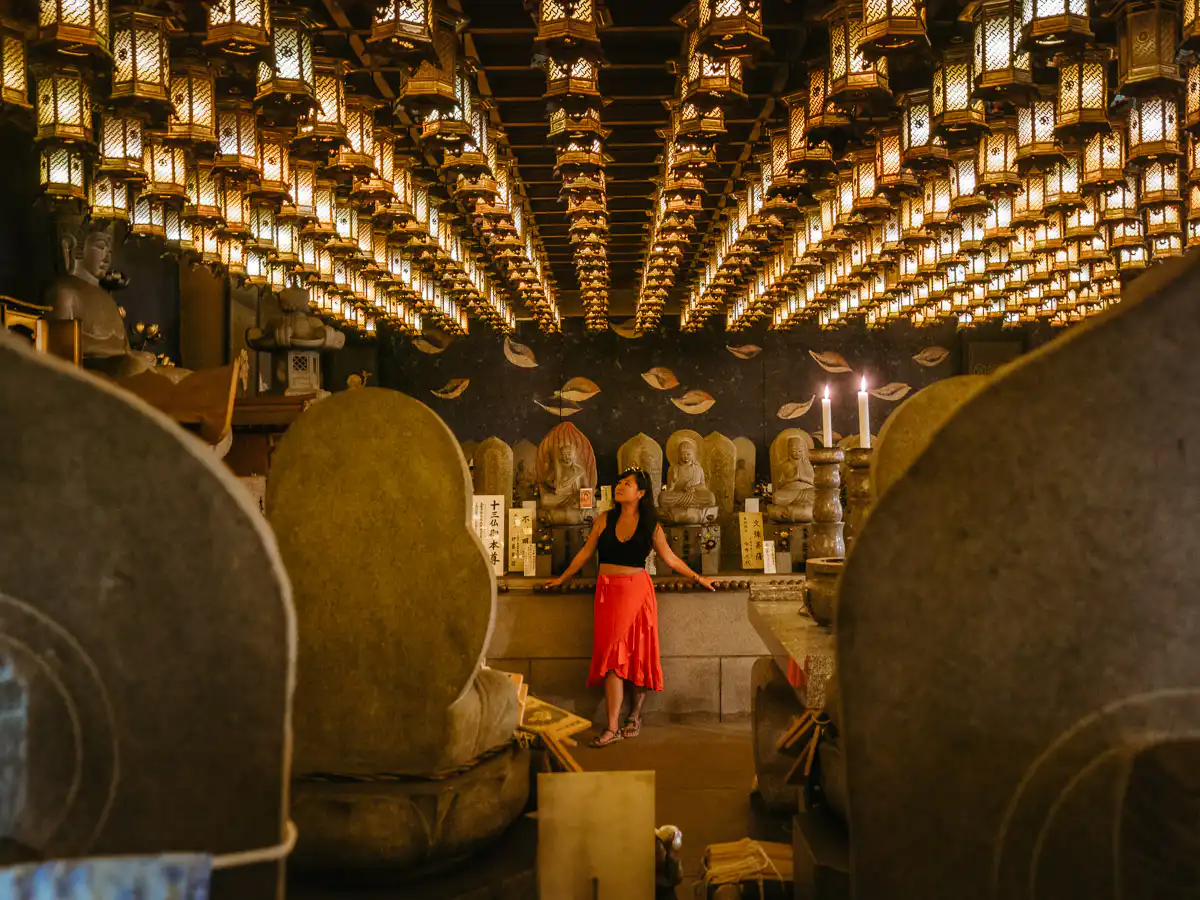
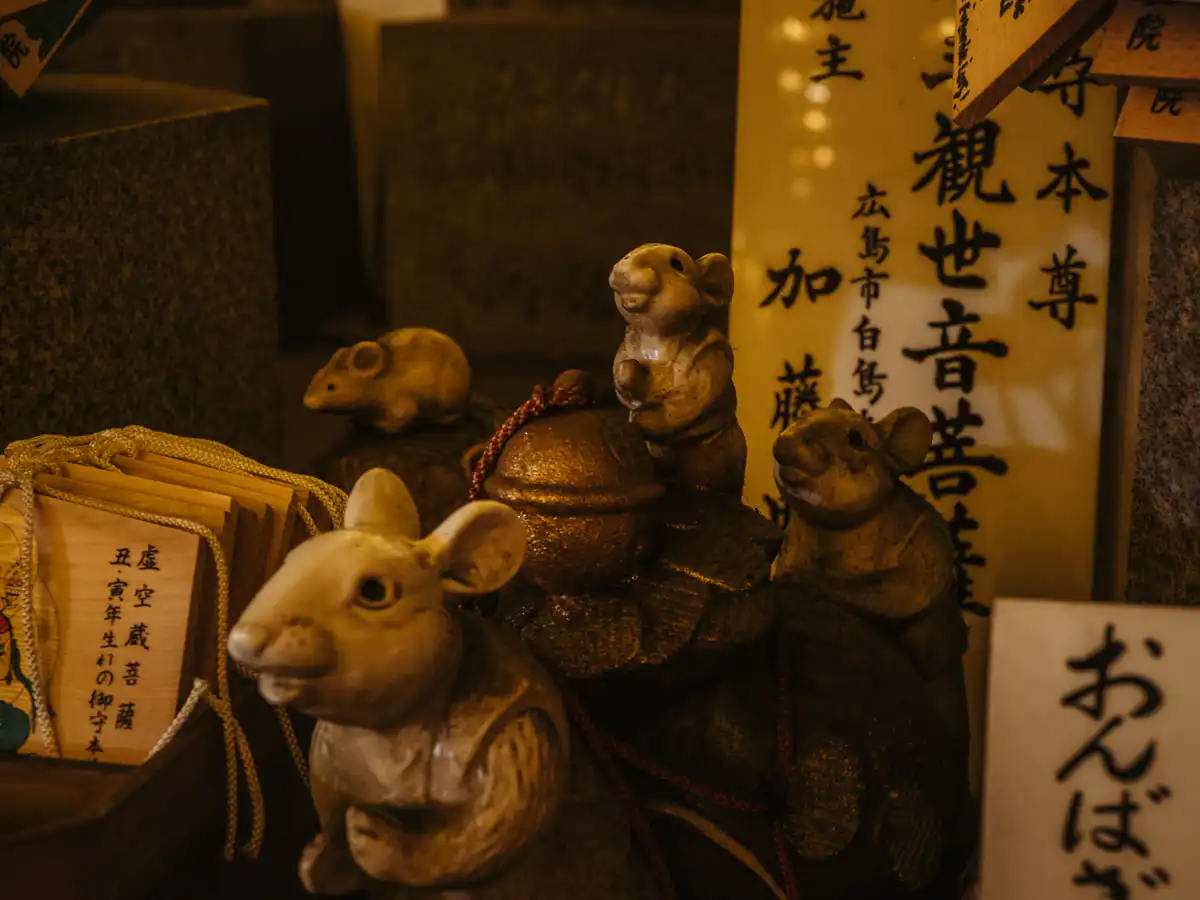
We ended up sitting inside the cave for over 20 minutes, just soaking in the atmosphere and listening to the rhythmic chants. All in all, we recommend dedicating around 1-2 hours for the temple and cave.
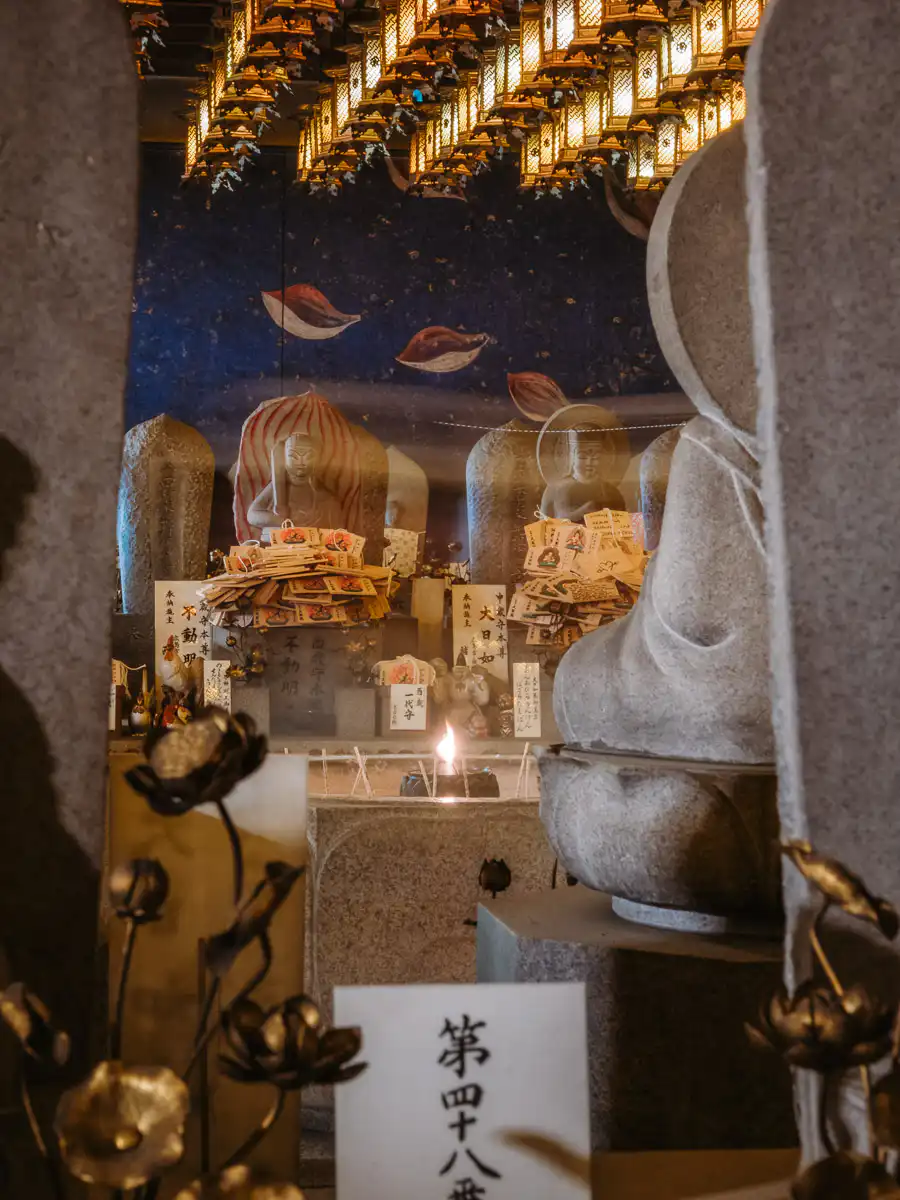
Optional: Mount Misen Hike or take cable car up (3-4 hour hike)
By the time we finished exploring Daishoin Temple and Henjo Cave, it was almost 2-3pm so we decided to skip the hike and just return to the Torii Gate during low tide.
If you decide to do the hike, the trailhead is right next to Daishoin Temple. The full hike takes about 3-4 hours roundtrip, or you can reach the summit via the Cable Car.
The Cable car is in operation from 9:00AM-4:00PM, and a roundtrip ticket costs ¥2,000 (one-way costs ¥1,100). You will need to head over to Momijidani Station where you’ll take the 10 minute ropeway up to Kayatani Station before switching to the Funicular which takes 4 minutes to reach the Shishiiwa Station at the summit.
There is also a shuttle bus from Momijidani Park Entrance, just behind Itsukushima Shrine, which comes at 20 minute intervals to bring you directly to the cable car station from the town. For more details including the timetable and map of where the shuttle bus is, you can check out the Miyajima Ropeway Website.
Revisit the Floating torii gates at Low Tide
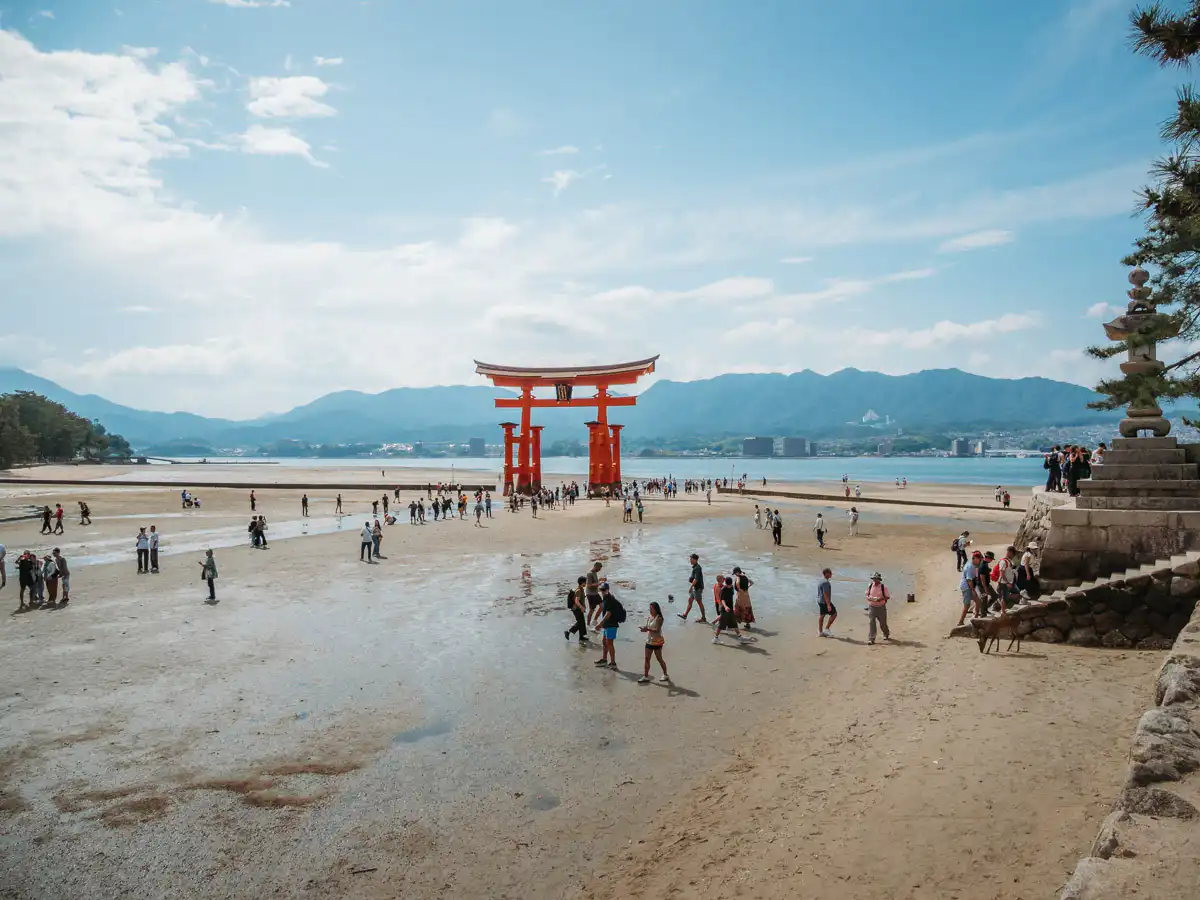
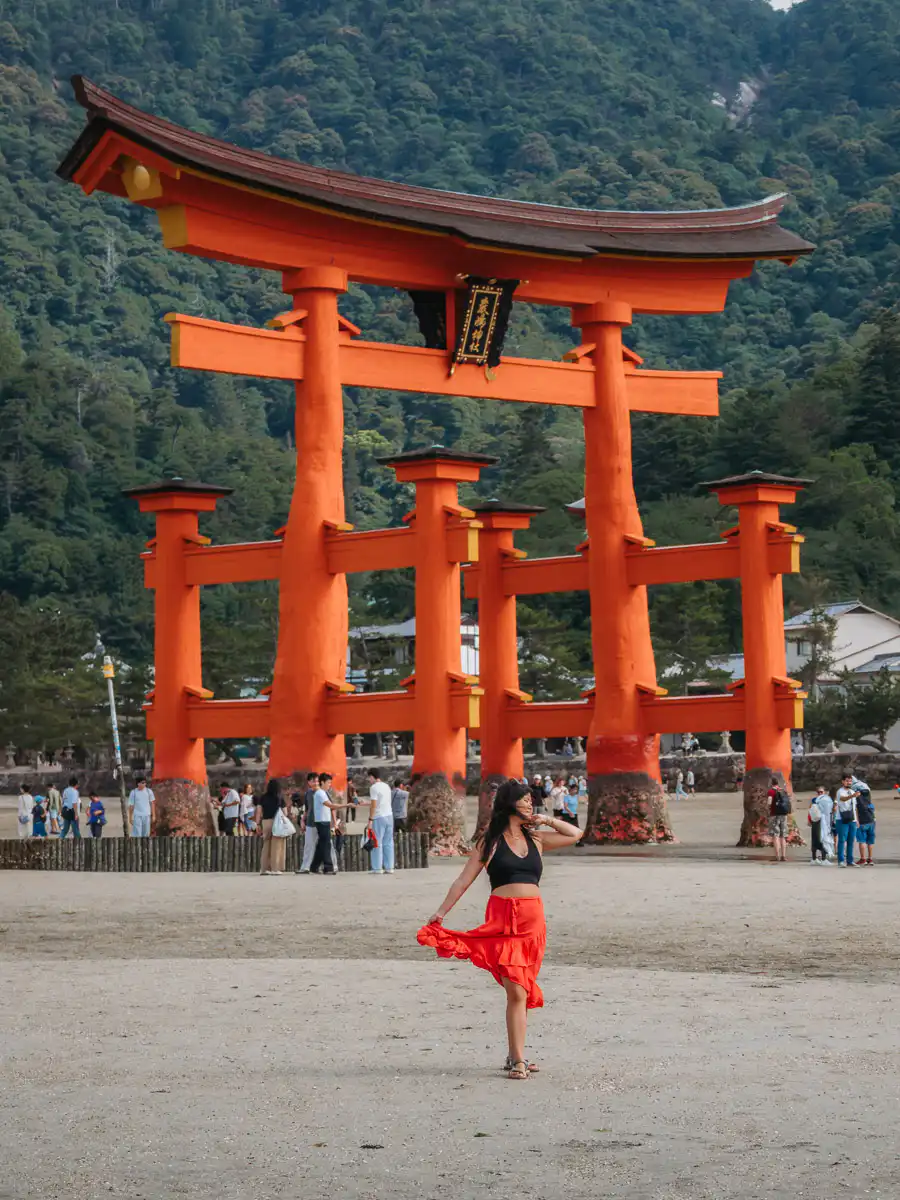
When we visited Miyajima, high tide was around 9:00 AM and low tide was around 3:00 PM. After spending time exploring Daishoin Temple and Henjo Cave, we decided to skip the Mount Misen hike and instead make our way back to the famous torii gate to experience it from a completely different perspective, at low tide.
There was something truly special about seeing the torii gate at low tide where rather than admiring it from a distance, you can walk right up to it and really appreciate its massive scale. Standing at the base of this towering structure really puts into perspective just how impressive it is.
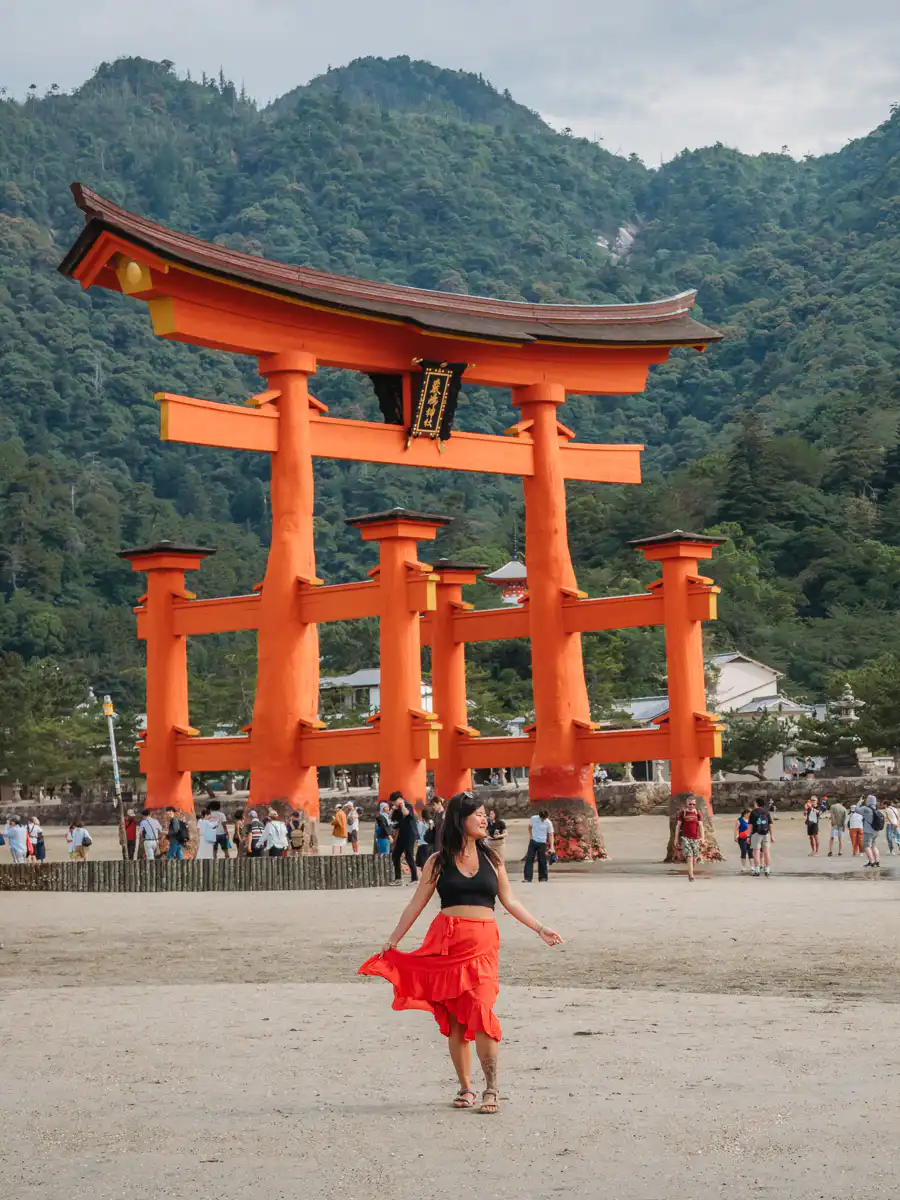
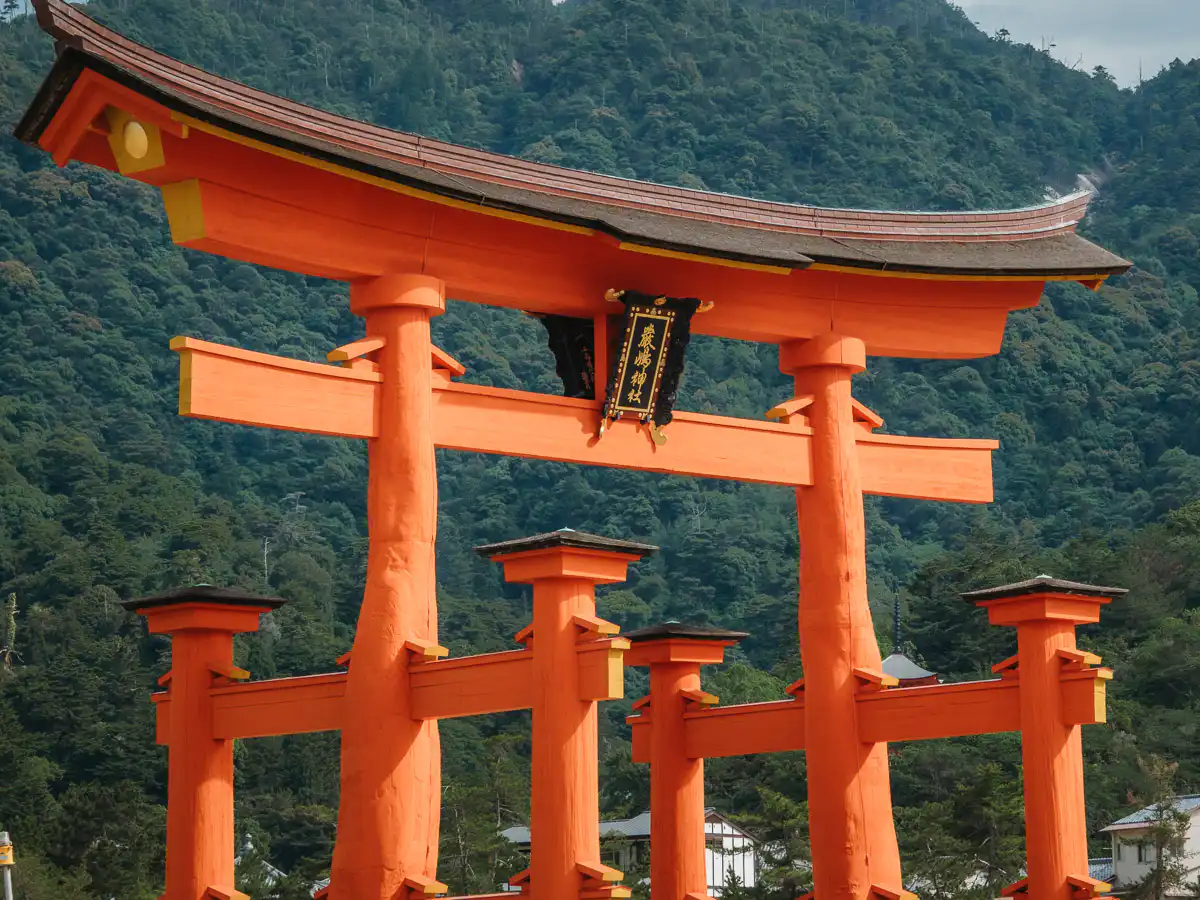
We were even able to walk around the sandbank surrounding the gate, getting views and angles that were impossible during high tide.
Last minute shopping and Momijido Main Store
Before leaving the island, make sure to do some quick shopping at Miyajima Omotesando shopping street and then stop by Momijido Main store to pickup one of Miyakima’s famous local sweets! a Momiji is a small sponge cake shaped like a Japanese Maple leaf which is a symbol of Miyajima. Traditionally, they are filled with sweet red bean paste but you’ll also find other varieties including custard, chocolate, matcha, cheese, lemon and more!
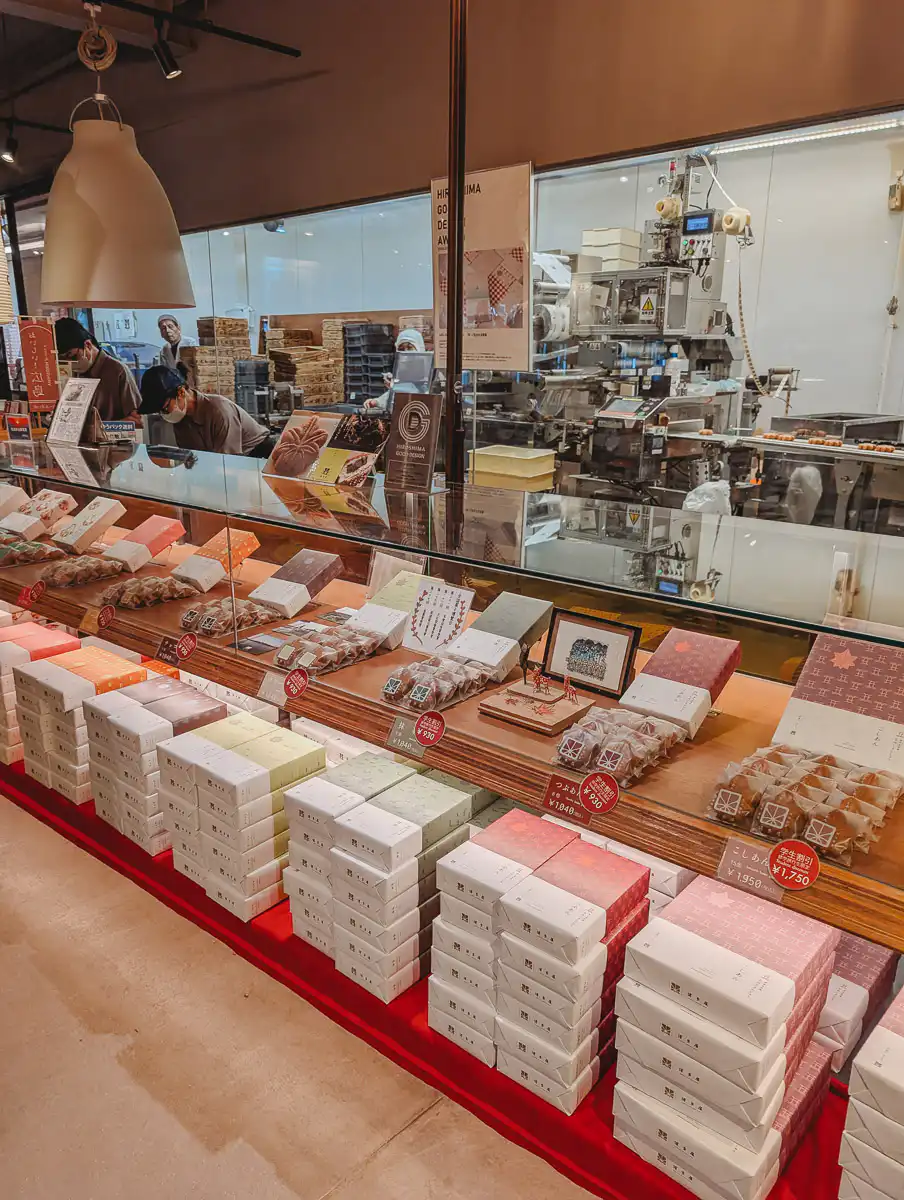
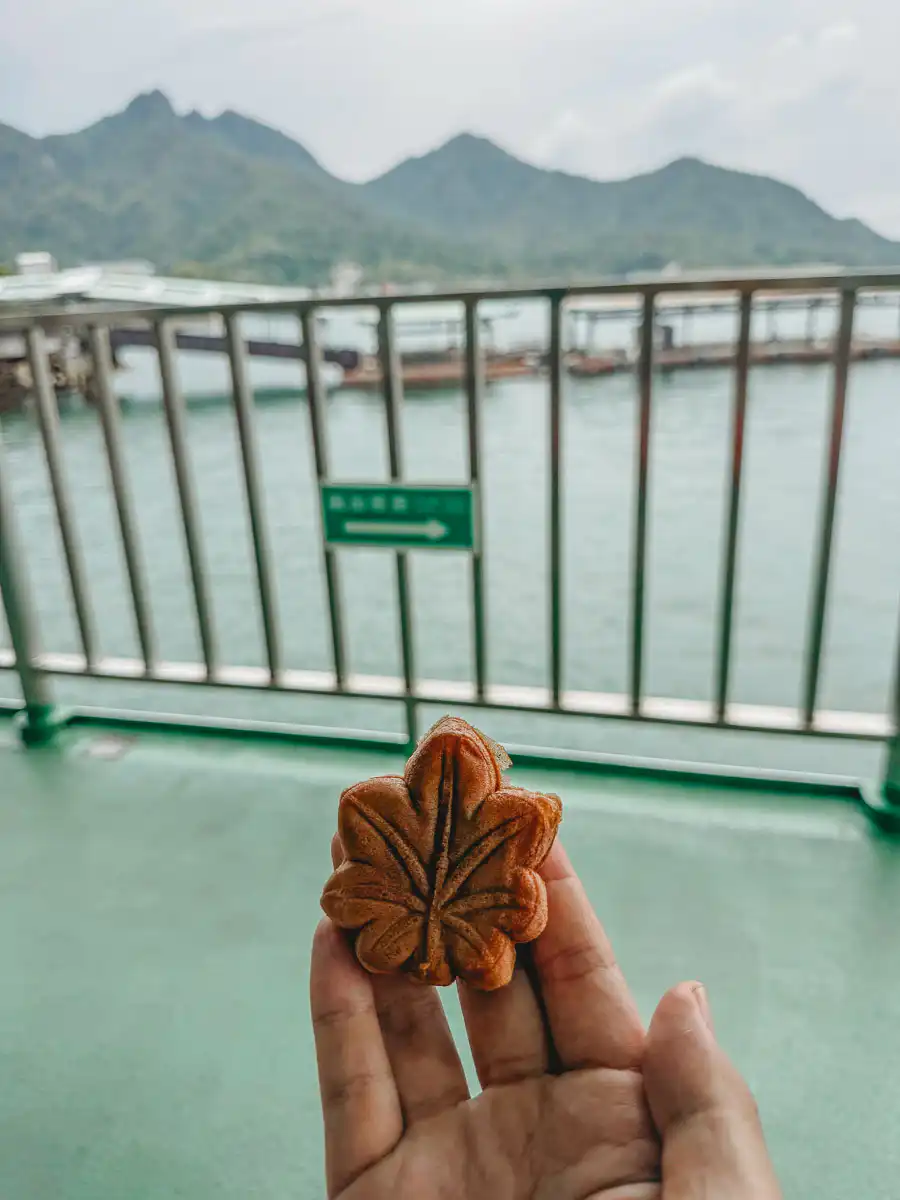
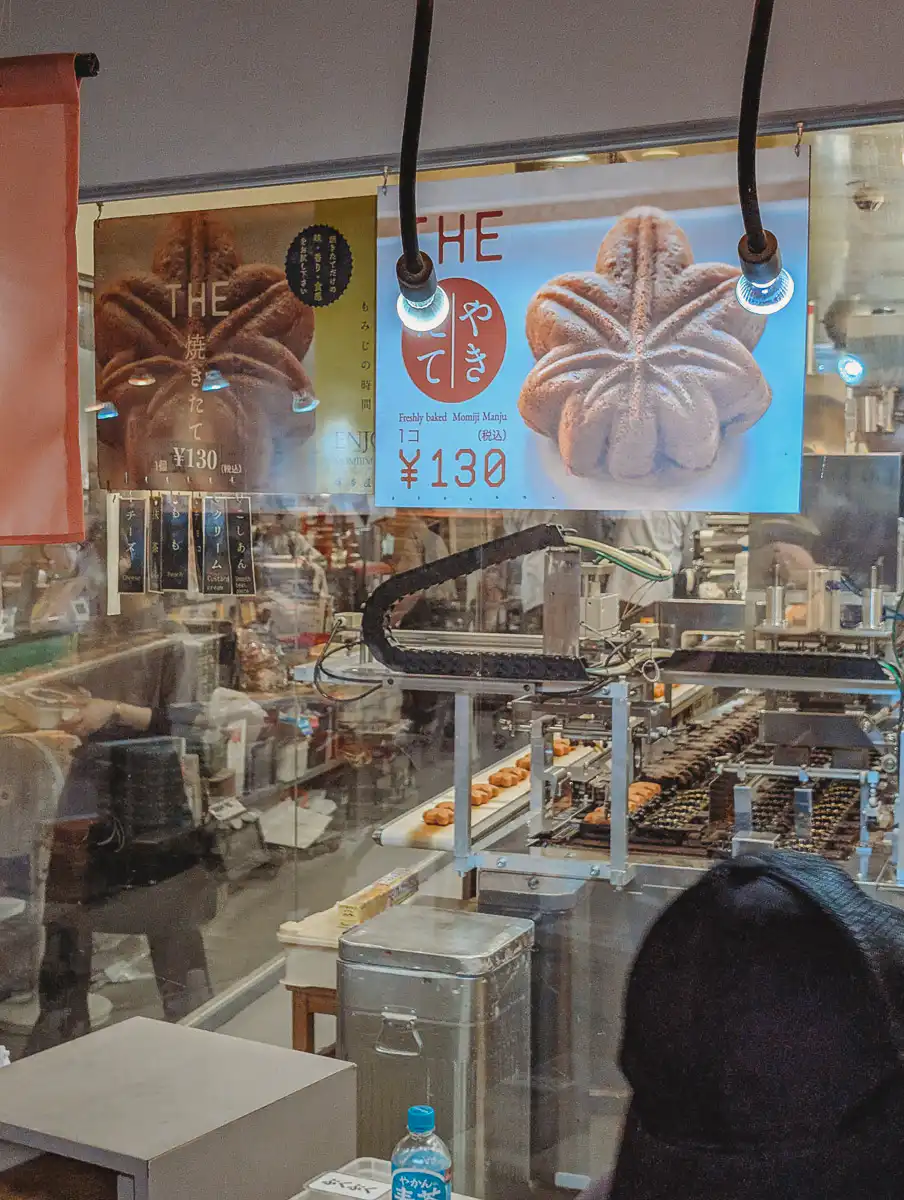
At the Momijido store, you have the option of the baked version or the deep fried version. We picked a few up to go and enjoyed it on the ferry back to mainland.
Return to Hiroshima
After crossing back to the mainland, walk over to the main train station to catch the tram back to Hiroshima downtown.
You may be interested in reading – We have a full guide on the best things to do in Hiroshima and how we spent 6 days exploring Hiroshima.
This post is part of our series about Japan. If you want to learn more about Japan, planning your trip, and some of the best experiences there, check out the guides below:
Common Mistakes when Visiting Miyajima
- Arriving at the wrong Tide Times: We saw people arriving at around 2pm, which means they missed the high tide and would only be able to see the Torii Gate at low tide.
- Following the crowds: Try not to follow the crowds and explore beyond where everyone seems to go. We found the second beach viewpoint at 松の並木と灯籠 and had the place all to ourselves!
- Arriving too late: The best time to experience Miyajima is with the first ferry. At that time, the site is still not crowded but around an hour later, we started seeing the tour buses arrive.
- Experience the Torii Gate at both high and low tide
- Skipping Dashoin Temple and Henjo Cave: They were some of the most unique temples we’ve seen in all of Japan, and we were really glad to have prioritized this over the 3 hour Mount Misen Hike
- Cramming too much in your itinerary: we’ve seen some tours that combine a visit to Hiroshima and its peace memorial park and museum with a visit to Miyajima. Although ‘efficient’, the experience is too crammed and you likely won’t remember much of it!
Where to Stay on Miyajima
If you decide to spend the night on Miyajima, here are a few excellent accommodation options for different budgets. During our research, we generally found better prices on Trip.com as compared to Booking.com, but the availability of hotels also varied depending on the platform. So it’s definitely worth checking on multiple booking platforms. You can use the hotel links below to compare prices and find the best available rate for each property.
$: Mizuhasou or Kikunoya
If you’re after an authentic Japanese tatami-style stay without spending a fortune, these would be our top recommendations: Mizuhasou and Kikunoya. They’re some of the most affordable places to stay on Miyajima, yet still have an impressive 9.3/10 rating, and has a small indoor onsen.
$$: Hotel Miyajima Villa
This was our favourite middle-ground option, offering the perfect balance between comfort and traditional Japanese charm. Hotel Miyajima Villa even has its own indoor onsen with massive windows overlooking the bay. But what surprised us most was the price. It was comparable to the ryokans we stayed at in Beppu and the Izu Peninsula, yet you’re staying on one of Japan’s most popular islands.
$$$: Miyajima Grand Hotel Arimoto
If you’re looking to splurge on one unforgettable night in Miyajima, Miyajima Grand Hotel Arimoto is the place we’d choose. It offers the full luxury ryokan experience with beautiful Japanese-style rooms, huge kaiseki meals, and quality service, all in a peaceful location. Many rooms even have their own private outdoor onsen surrounded by the forest!
How to Combine Miyajima in your Japan Itinerary
A day trip or overnight stay in Miyajima naturally fits into your visit to Hiroshima. Many of the travelers we met chose to include Hiroshima as part of Japan’s Golden Route (Tokyo, Osaka, and Kyoto). We had considered doing the same on our first trip to Japan, but it felt a little too rushed, especially since Hiroshima is another 1.5-hour Shinkansen ride even further west from Osaka.
Many travelers also try to squeeze both Hiroshima and Miyajima into just two days, which we think is a huge mistake. We absolutely fell in love with Hiroshima and could have easily spent even longer than the five days we stayed there.
For this reason, we suggest visiting Miyajima and Hiroshima either as part of the Golden Route itinerary, but dedicating a minimum of 4 days there, or as an extension of a Kyushu Itinerary, which combines Fukuoka with the volcanic region of Aso and Beppu, like we did!
Using WISE card in Japan
When taking cash out of an ATM while abroad, you will most likely be charged both a foreign exchange fee and a foreign transaction fee by that country’s ATM. With my Canadian card, this can easily be 3-4$ + 2.75% + a markup on the exchange rate charged by my bank, and then another 3-5$ charged by the foreign ATM.

This can be really costly. For this reason, we recommend using WISE card which has only minimal fees and just about no foreign currency exchange markup. This helps me save at least 5-7$ every time I take out money from an ATM. If you want to see our full review of the card showing exactly how WISE can help you save, check out our WISE Travel card Review post.
Recap: Miyajima Day Trip Itinerary
Our day trip to Miyajima ended up highlighting everything we love about Japan: iconic red torii gates, spiritual temples, adorable deer roaming freely, and an atmosphere that somehow feels both lively and incredibly zen.
We honestly expected it to be an overrated, overcrowded tourist hotspot, but it completely exceeded our expectations. It felt like the perfect blend of Nara’s friendly deer, the spiritual atmosphere of Fushimi Inari, and the laid-back coastal charm of Fukuoka, all wrapped into one unforgettable island.