Hidden Fushimi Inari Route: How to Explore Without the Crowds


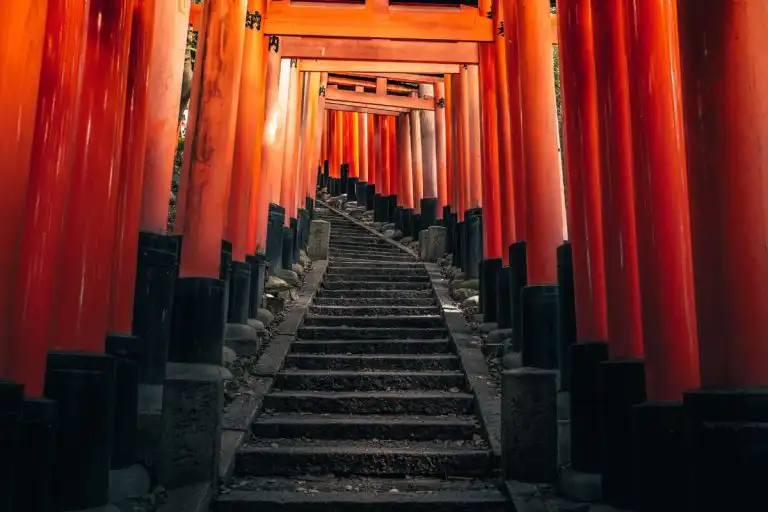
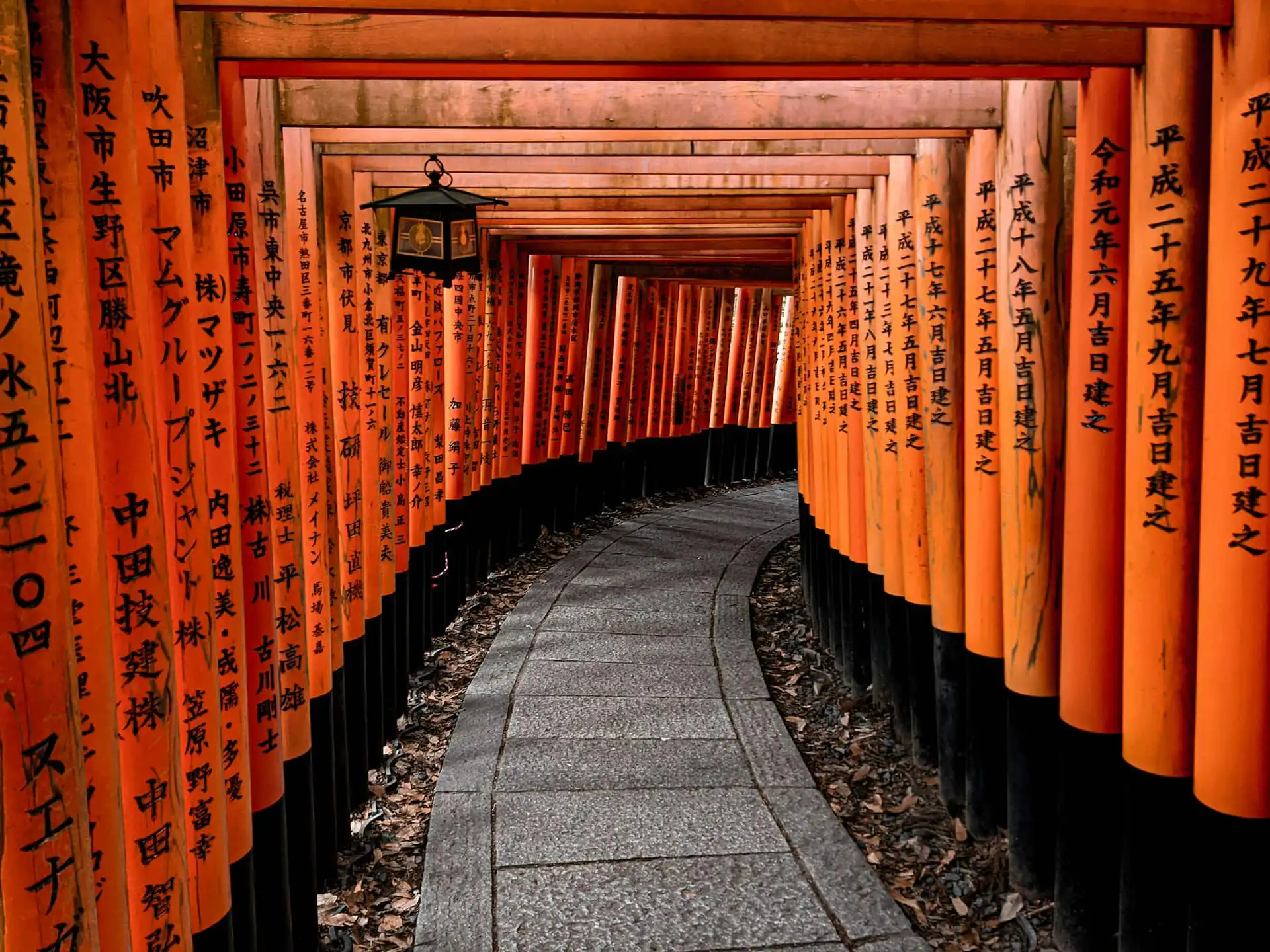
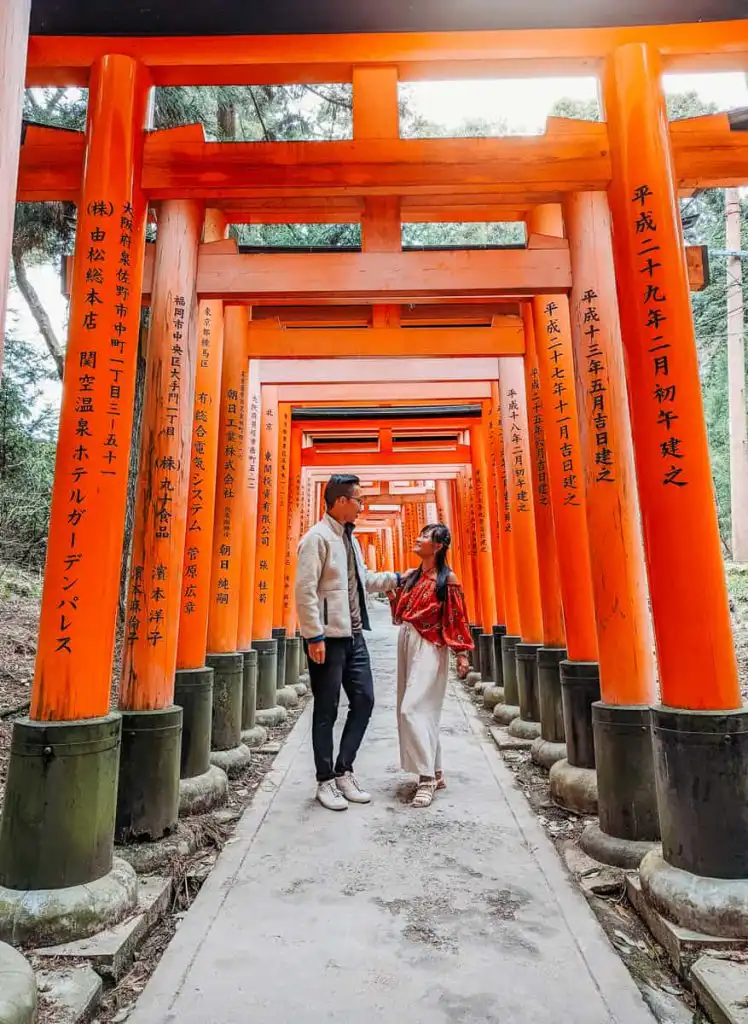
When you search for images of Kyoto, one of the most iconic sights you’ll encounter is the breathtaking scene of a thousand vibrant red torii gates winding up a mountain pathway (another is the famous floating Torii gates of Miyajima!). This place is called Fushimi Inari, one of Kyoto’s most famous Shinto shrines and a stop that seems to make it onto nearly every first time Japan visitor’s itinerary.
This also means it’s no secret anymore. The reality now is that visiting Fushimi Inari means dealing with a lot of crowds, making it almost impossible to get that iconic photo or even fully experiencing this spiritual site. Looking online, we saw suggestions of arriving right at sunrise, racing to the top of the mountain before others arrive, or even taking a taxi there to get a head start. We searched relentlessly to find a way to experience Fushimi Inari without the massive tourist crowds, but only saw the same suggestions repeated.
That’s when we reached out to a local friend and learned that there is an alternative route through Fushimi Inari where you can experience the true essence of the torii gates, without the crowds, and almost nobody knows about it. Now, having visited and experienced it first hand, we can honestly say this is the route we would 100% recommend to friends who want to experience the authentic, untouched side of Fushimi Inari. And now we’re excited to share this information with you!
Alternative Fushimi Inari Route: Quick Overview
Starting Point: Tofukuji station
Ending Point: Inari Station
Location of Trailhead: Trailhead to Hidden Trail of Fushimi Inari
Time Required: 4 Hours
Difficulty: Easy
Cost: Free
Highlights: See a side of Fushimi Inari that most tourists miss, away from the crowds, a more authentic and spiritual side, and then reconnect back on the Classic Trail after visiting the summit
⛩️ Tour Option to Discover the Hidden Side of Fushimi Inari
Why Visit the Off-the-beaten Path Route of Fushimi Inari
Fushimi Inari is an active Shinto shrine that has been in use for over 1,300 years. Dedicated to Inari Ōkami, the Shinto deity associated with rice, agriculture, prosperity, and business success, it remains today a deeply spiritual place for locals, where people come to pray, make offerings, and give thanks. Unfortunately, with the huge rise in tourism, the experience along the classic route can feel less like a place of spiritual reflection and more like navigating a busy attraction, bumping shoulder to shoulder with other visitors.
Having experienced both the Classic and Alternative Routes at Fushimi Inari, we can honestly say this off-the-beaten path Route allows you to truly experience the essence of the torii gates. On this side, there are almost no other tourists, and you’re fully immersed in the forest and shrine atmosphere, experiencing Fushimi Inari as it once felt before mass tourism. The atmosphere here is peaceful and almost mystical, which is striking different to the more polished version seen on the Classic Route. This route is perfect for travelers looking for something quieter and more authentic, and somewhere where you can really soak in the ambiance in tranquility.
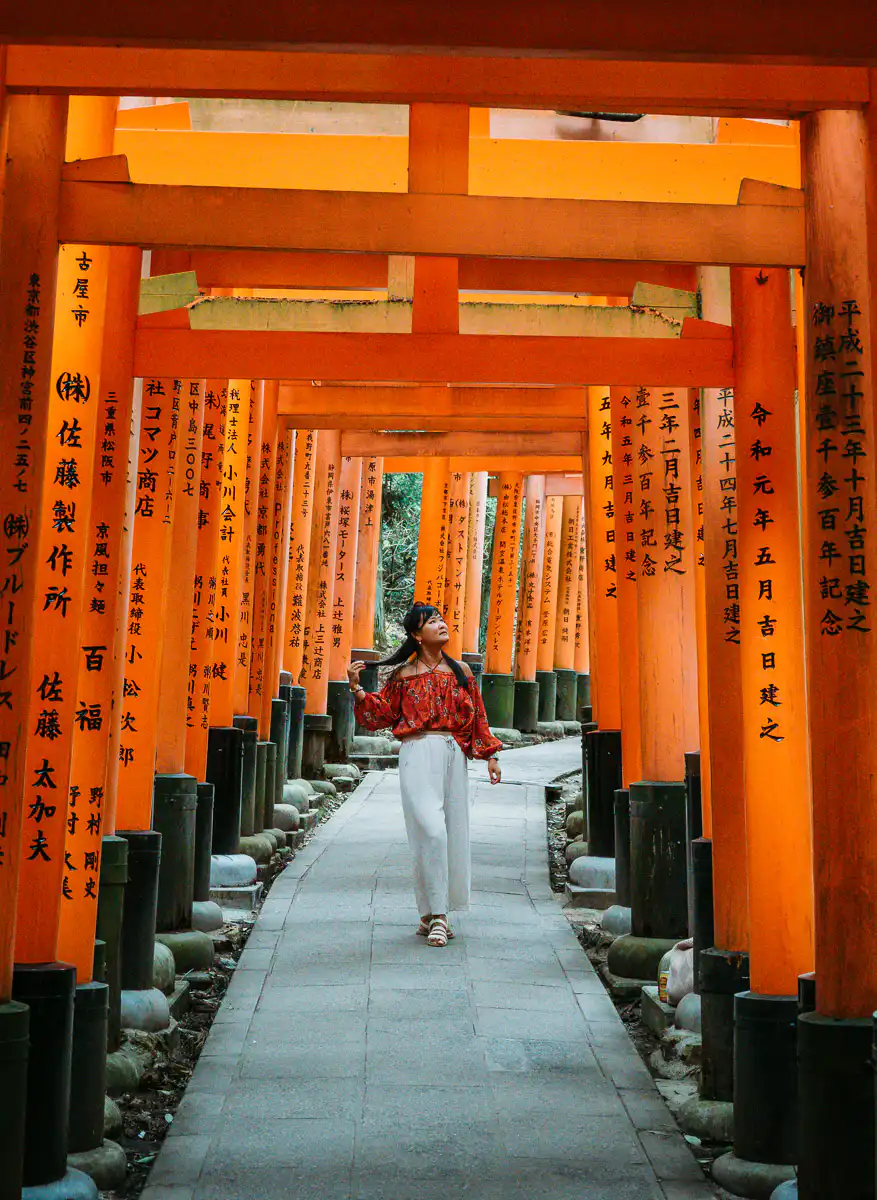
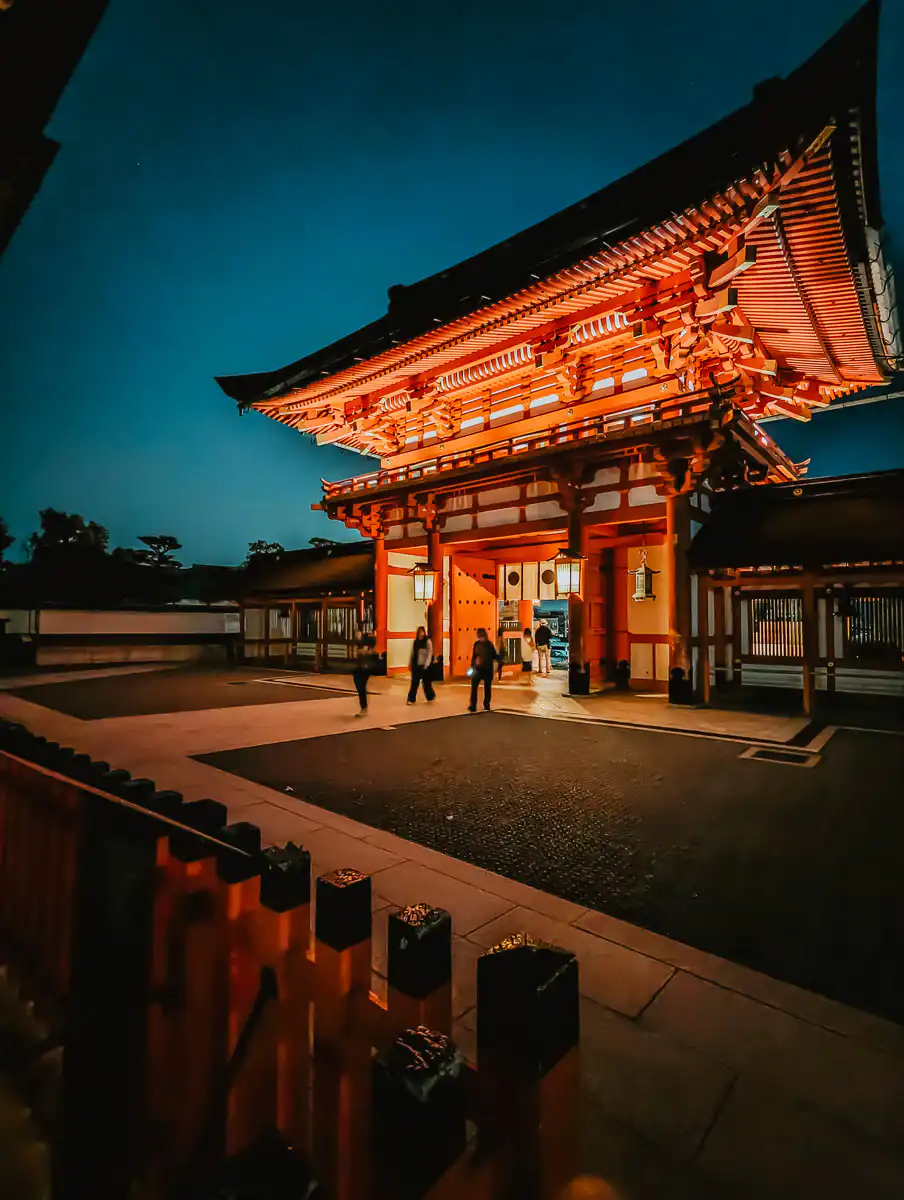
What’s great about this alternate route is that you get to experience all this, but without missing out on the classic Fushimi Inari path. Once you have reached the top of Mount Inari, you can explore the summit loop, then head back down following the main torii gate route that most visitors take. Up along the Secret Route, and then down along the Classic Route. Best of both worlds!
What You’ll See on This Route
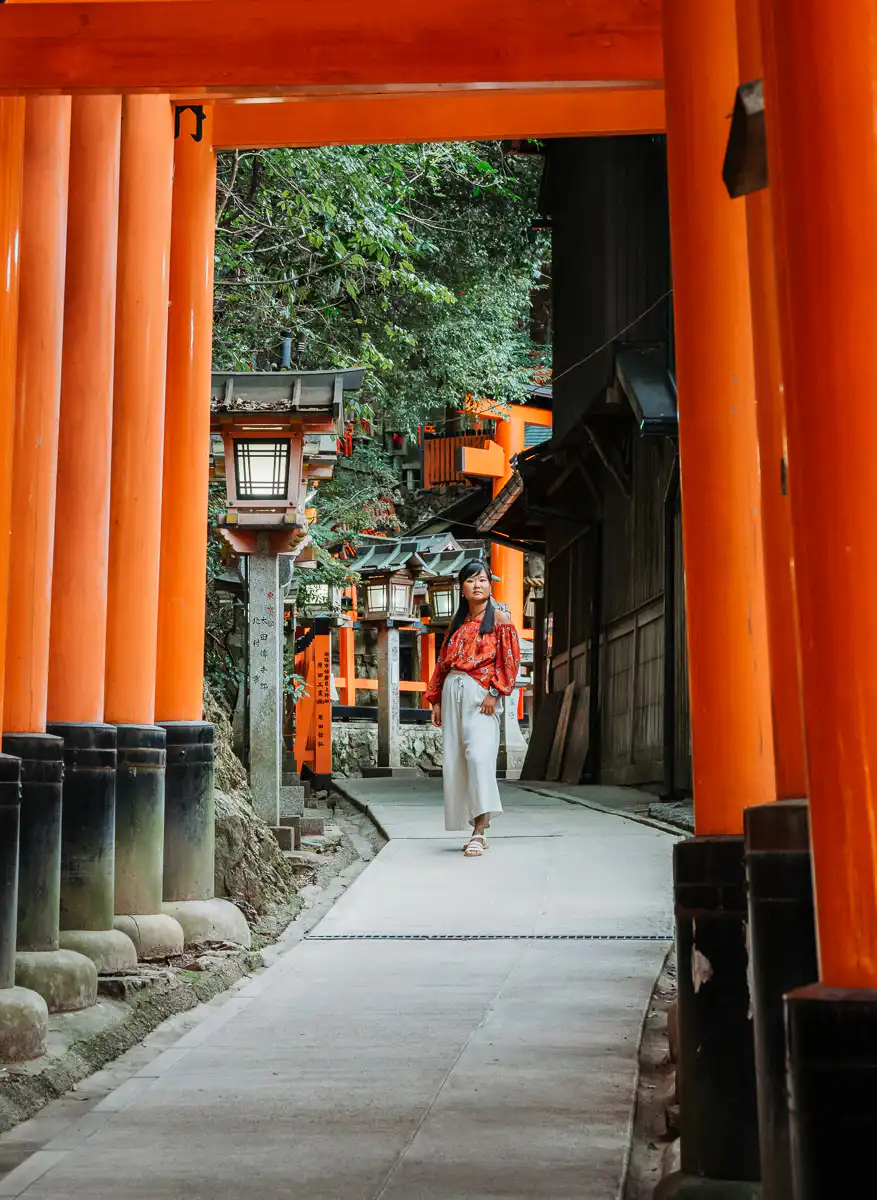
By following this route, you’ll see everything you would on the classic tourist path, and more. On the hidden side of Fushimi Inari, you’ll come across ancient shrines, torii gates, and temples in almost full tranquility When we visited, we only crossed paths with two other people over the course of two hours, one of whom was a local stopping to pray.
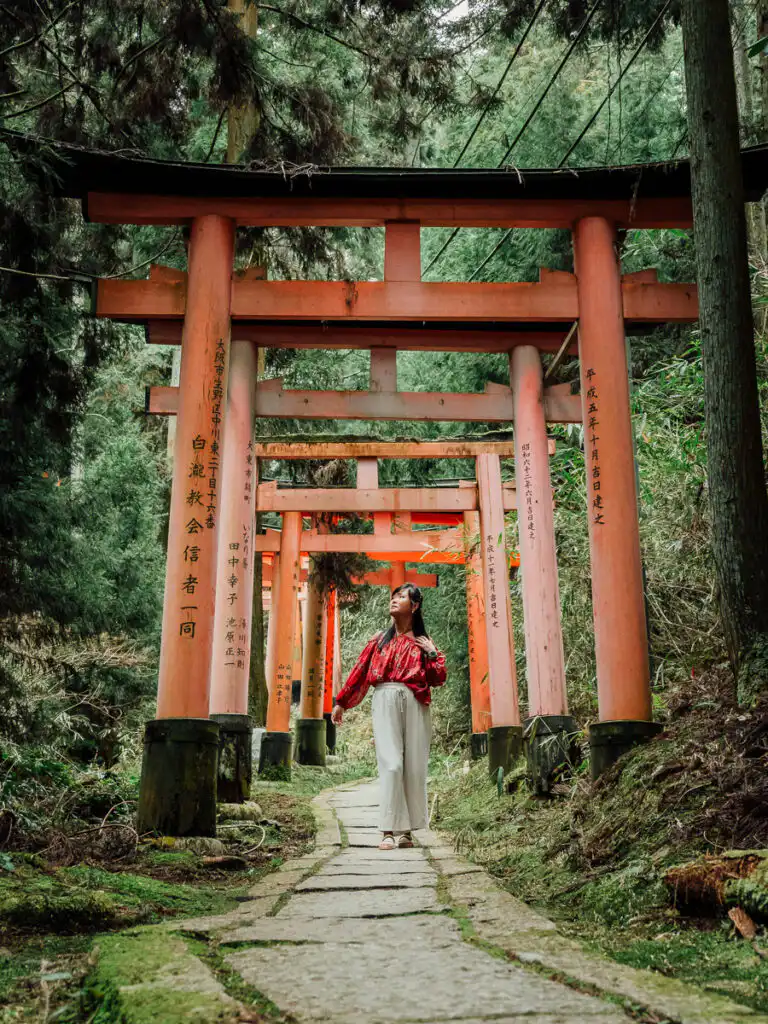
The feeling there was noticeably different from the Classic side. Wandering past shrines and moss covered torii gates, it almost felt mystical at times. Unlike the picture perfect gates along the main route, these felt raw and untouched, as if nature was reclaiming them. You’ll also get to walk along several pathways winding through the towering trees of the forest, where the forest is totally quiet except for the sound of birds singing.
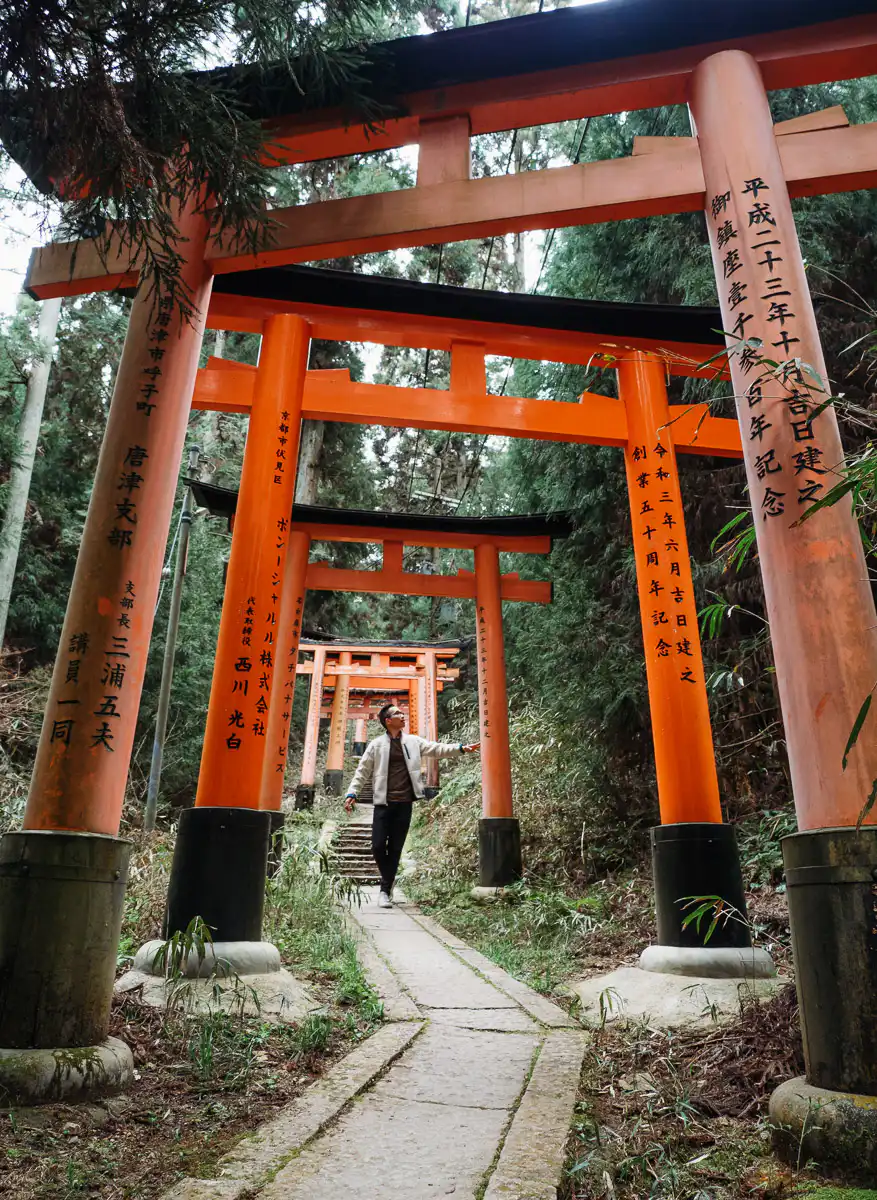
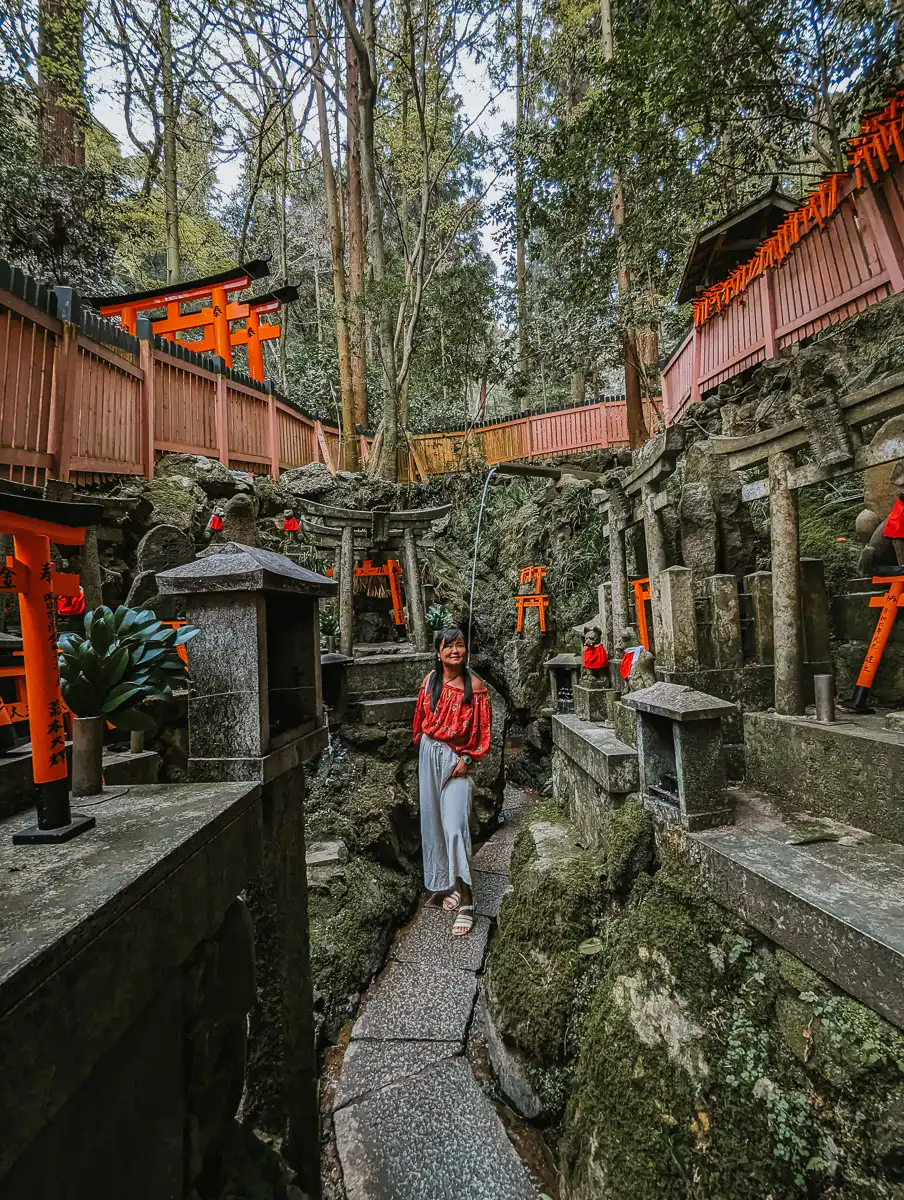
The real charm of this side is seeing the torii gates and shrines as they were meant to be experienced, far from crowds, and not as a backdrop for tourist photos, but as a spiritual place for worship and reflection.
How to Get to Fushimi Inari’s Alternative Trail
To reach the alternative route for Fushimi Inari, you will need to make your way to either Tofukuji Station or Tobakaido Station. We recommend going to Tofukuji station since it is part of the JR train lines and better connected to Kyoto. Do not get off at Inari station which will bring you to the busier classic route.
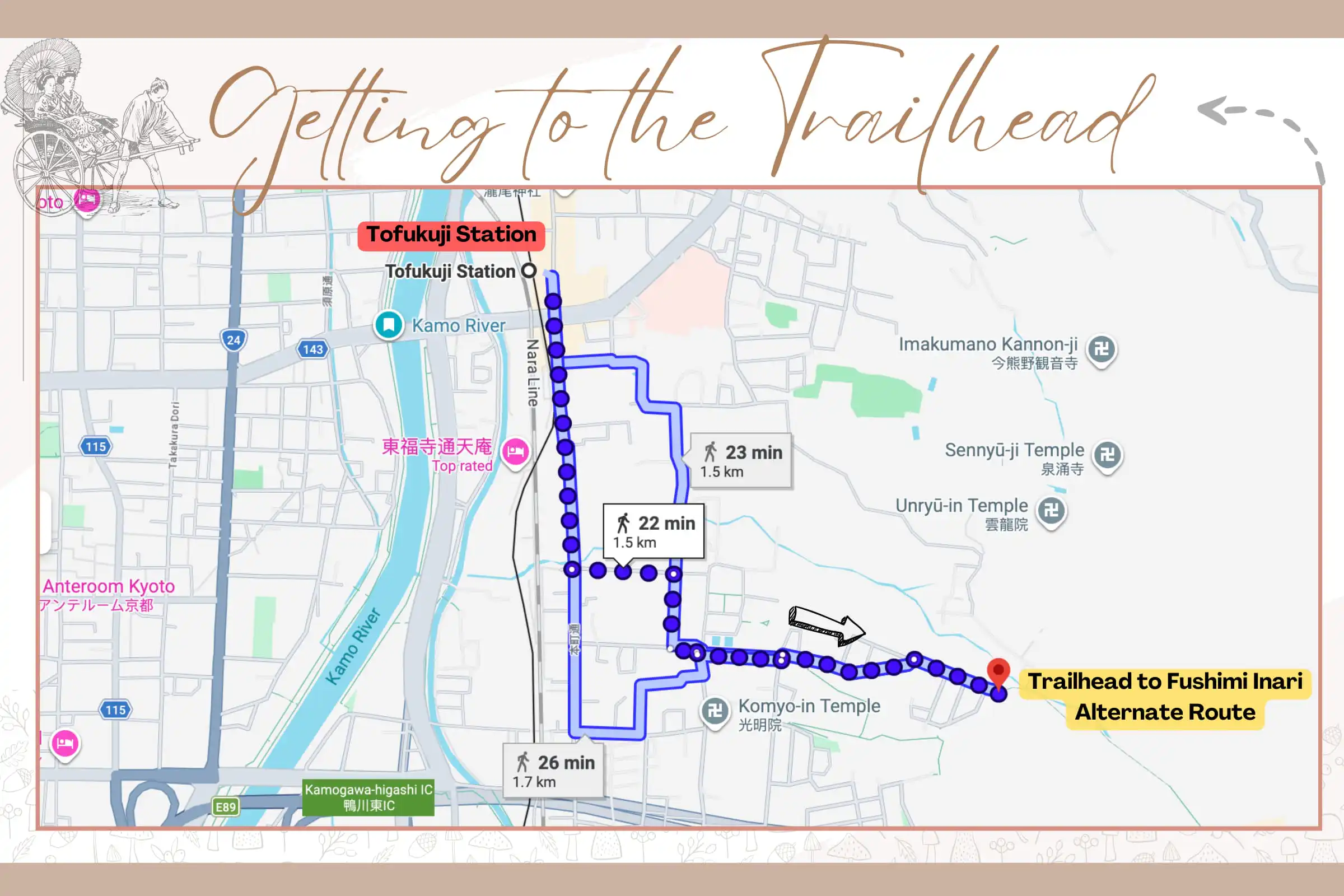
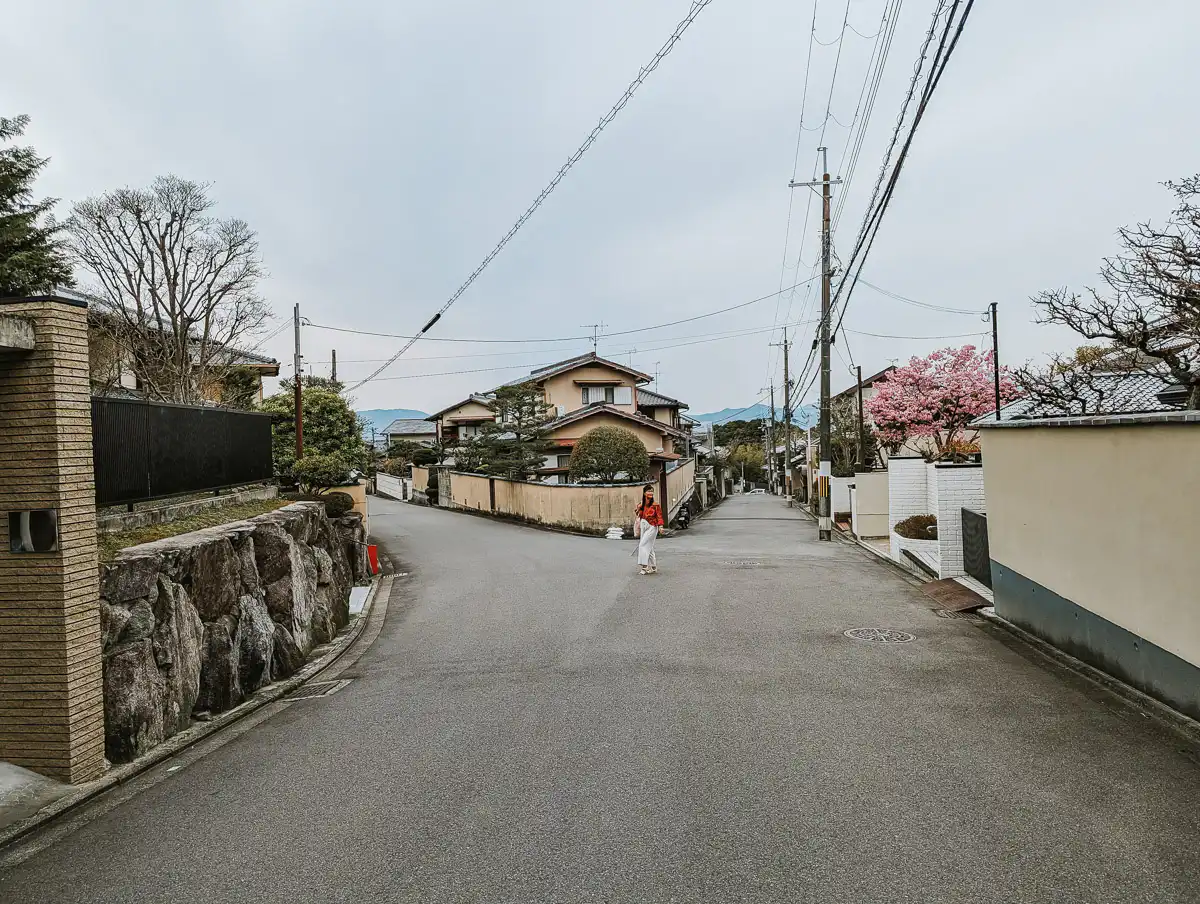
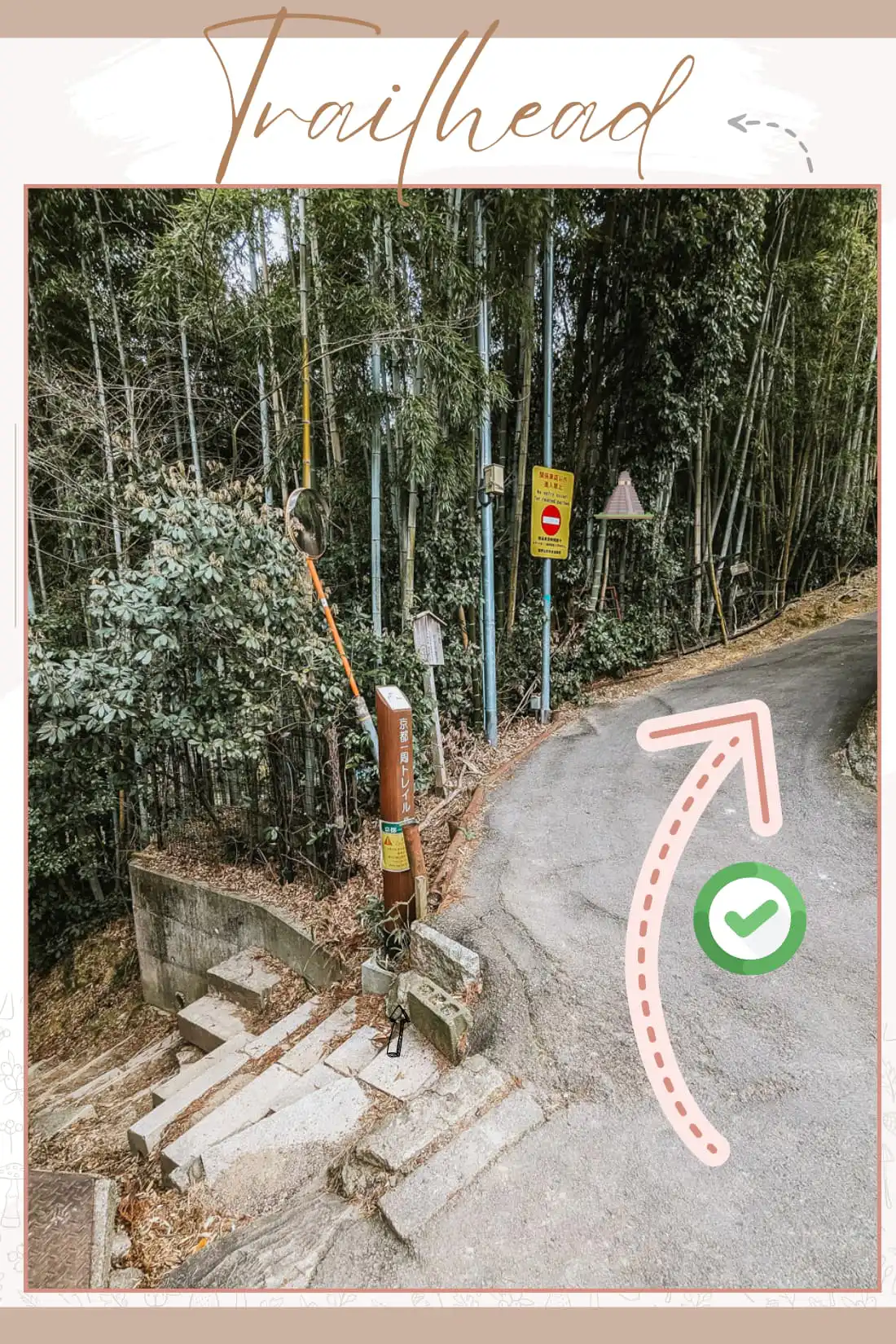
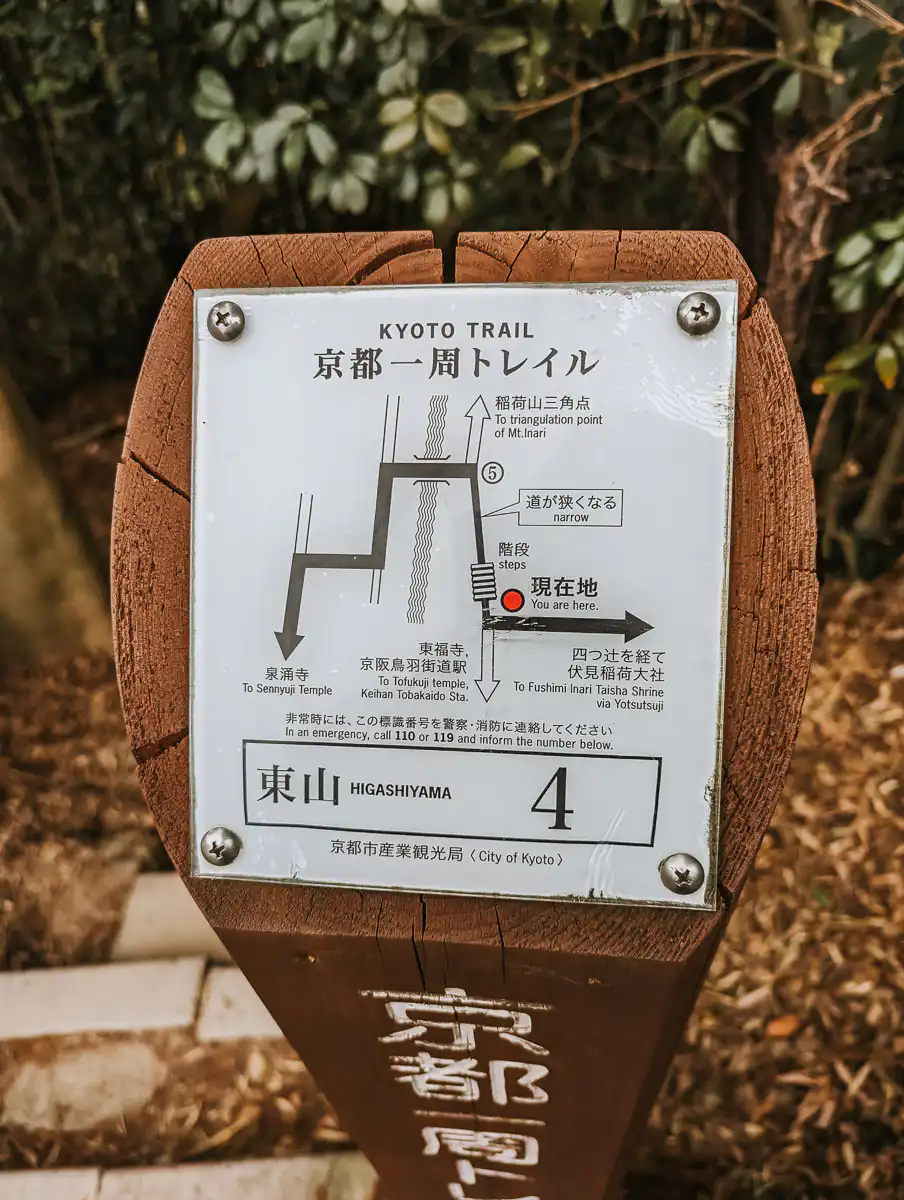
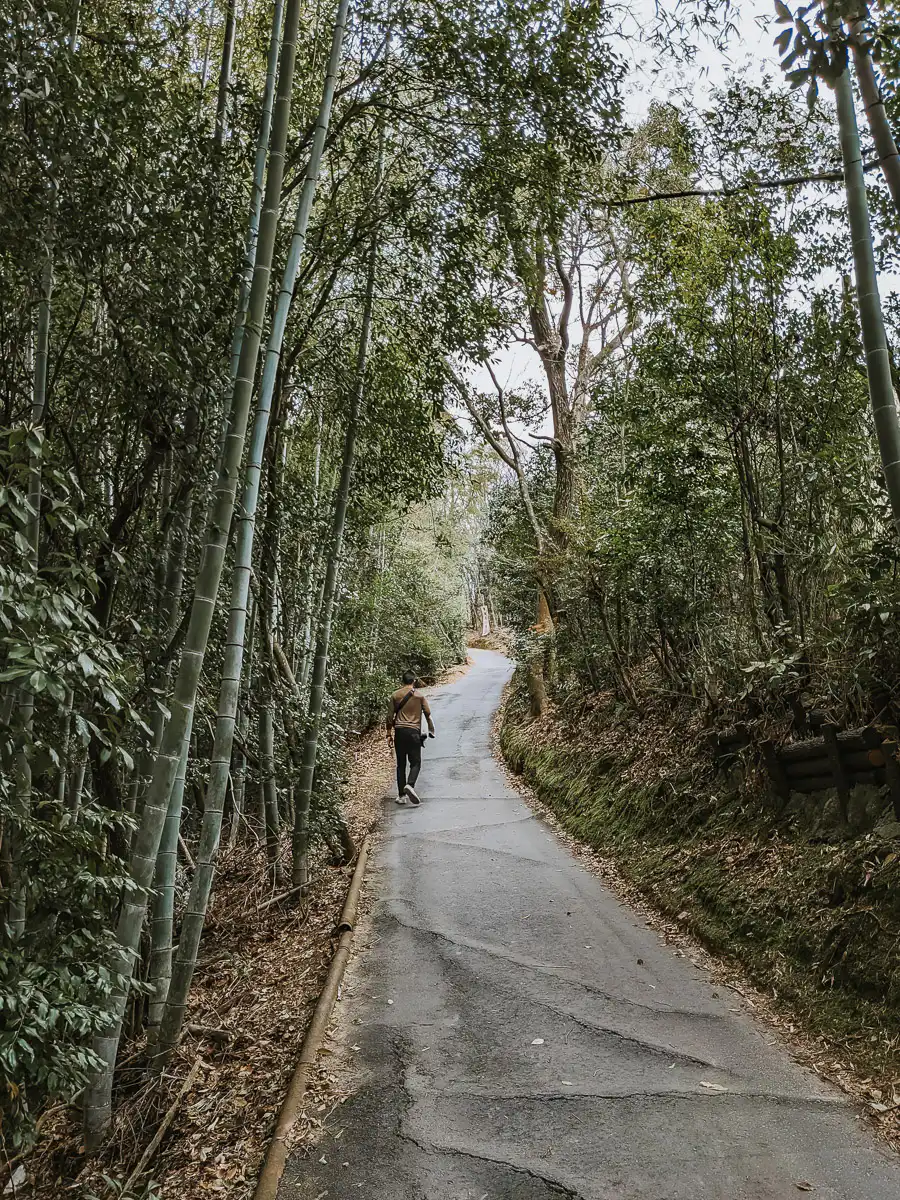
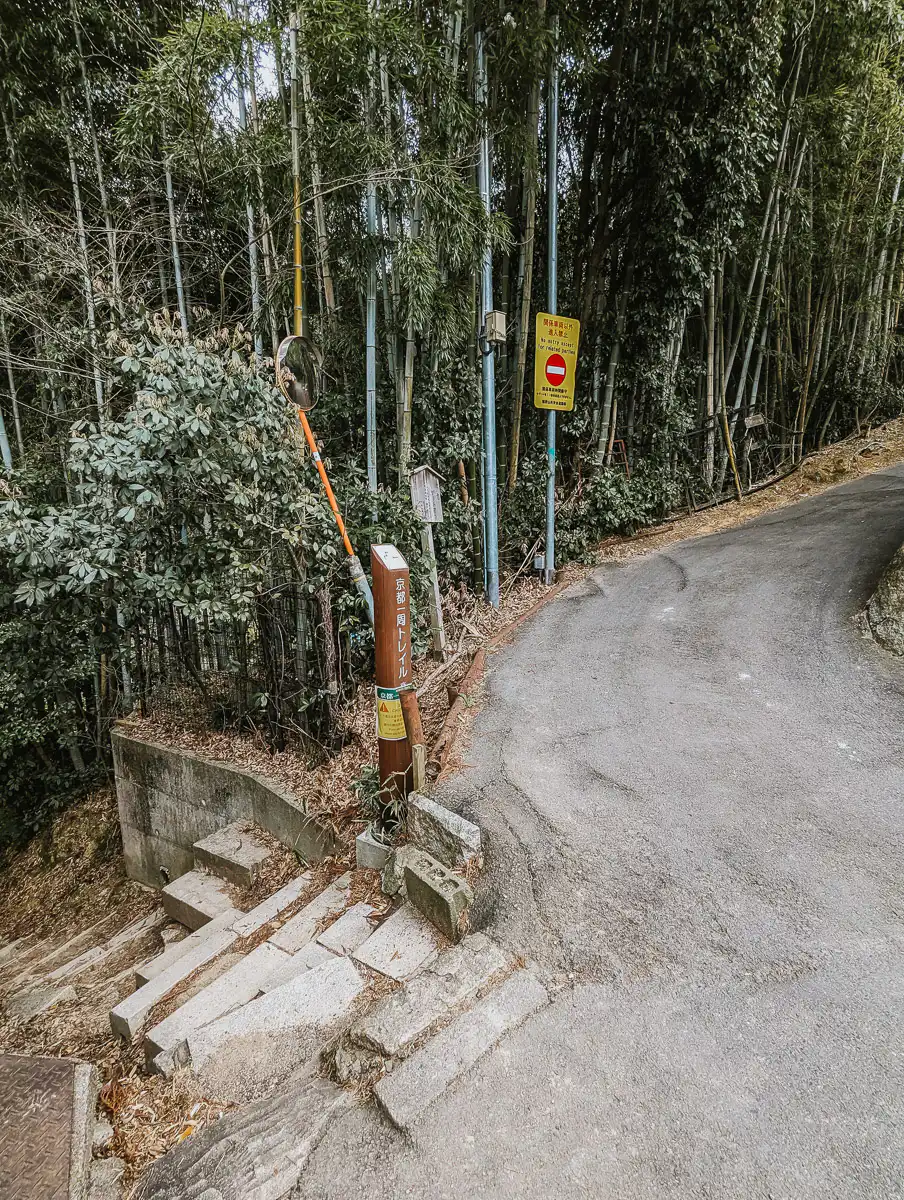
From there, it is about a pleasant 20 minute walk to the trailhead. The route takes you through a quiet residential neighbourhood before you reach the start of the trail. You will know you have arrived when you spot a steep forest path heading uphill, along with a sign marking the trail entrance.
Make sure to take the steeper uphill trail on the right instead of the stairs going down.
Alternative Fushimi Inari Route Explained (Step by Step)
In this section, we will show you exactly how to explore the Hidden Trail of Fushimi Inari before reconnecting with the classic trail so you can still see all the highlights. We will also break down what you can expect to see along the way so you know what is coming.
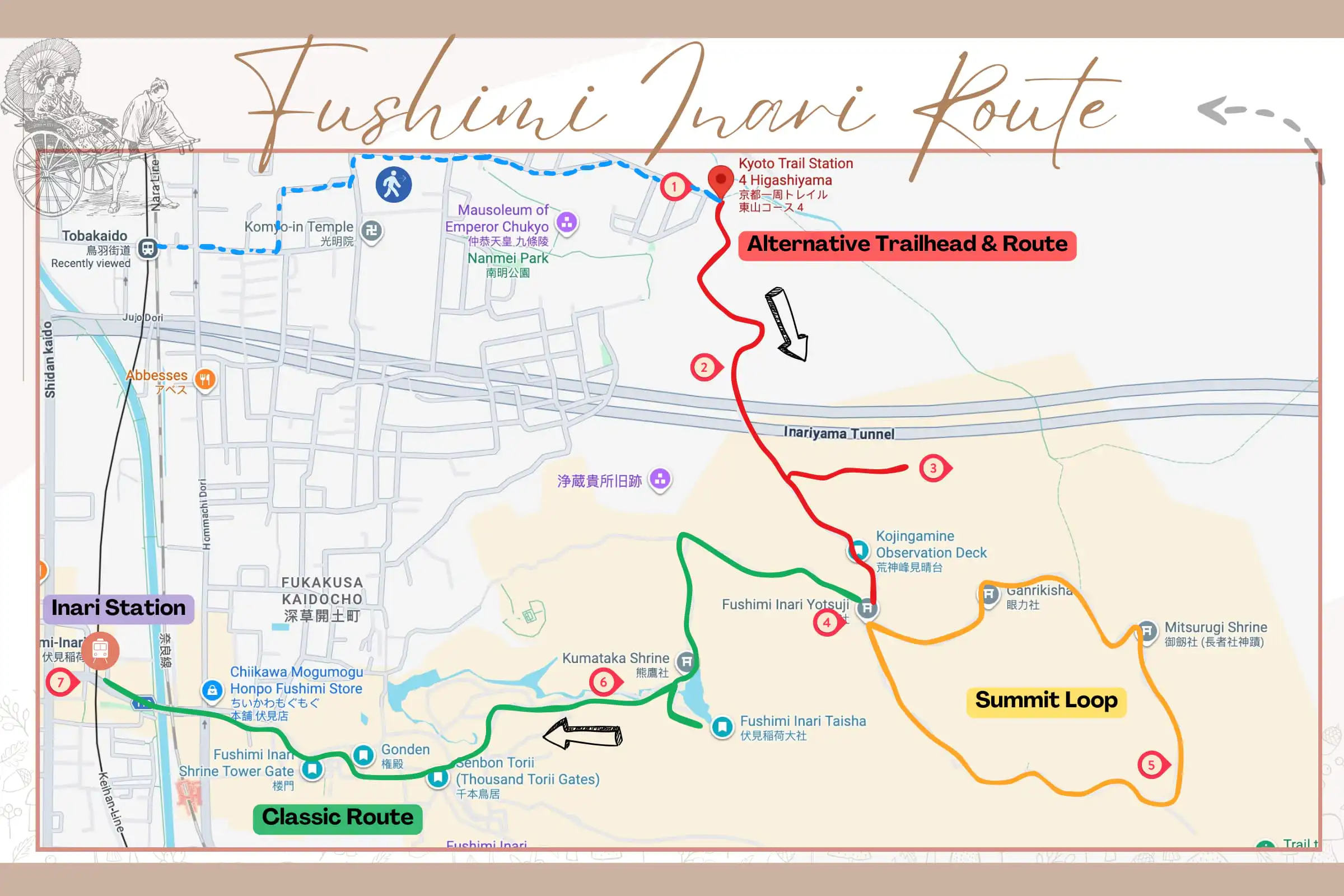
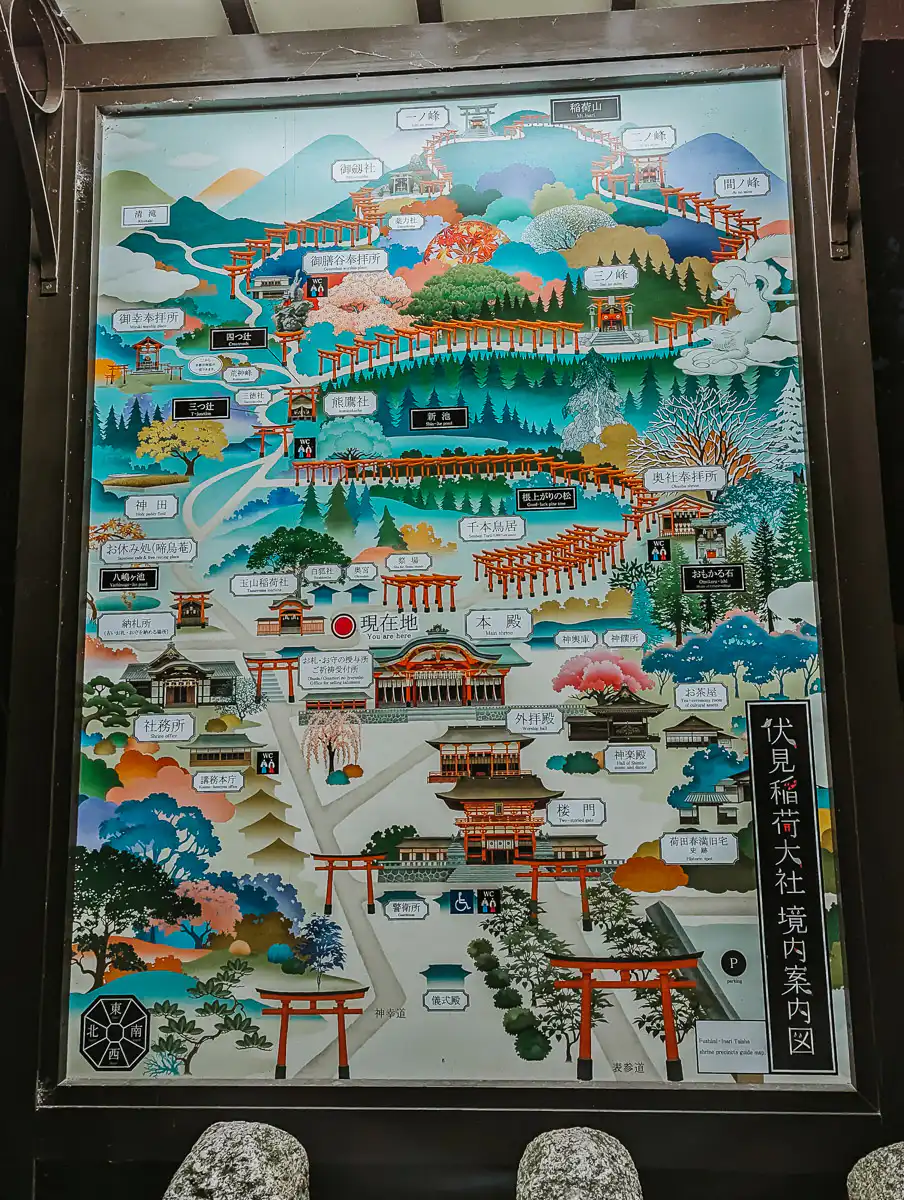
Initial forest path (1-2)
Once you reach the trailhead, turn right and start making your way uphill. This first section is pretty straightforward and does not have too much to see just yet, but it slowly leads you toward the first group of shrines. Expect the walk to take about 20 minutes.
First complex of shrines (2)
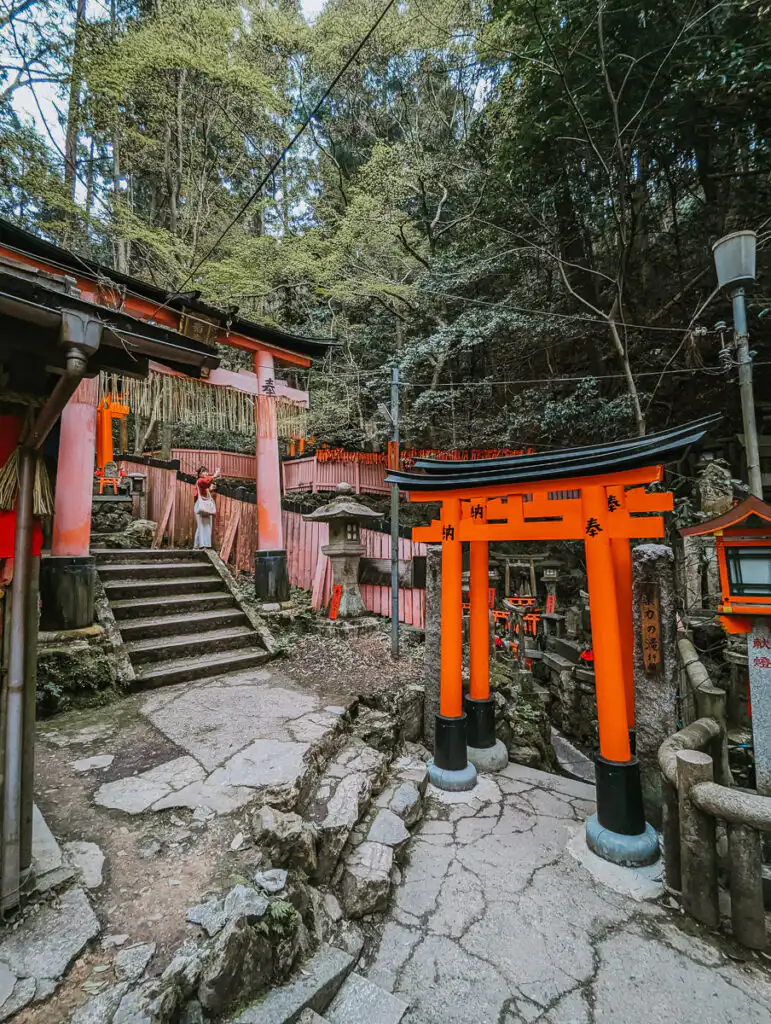
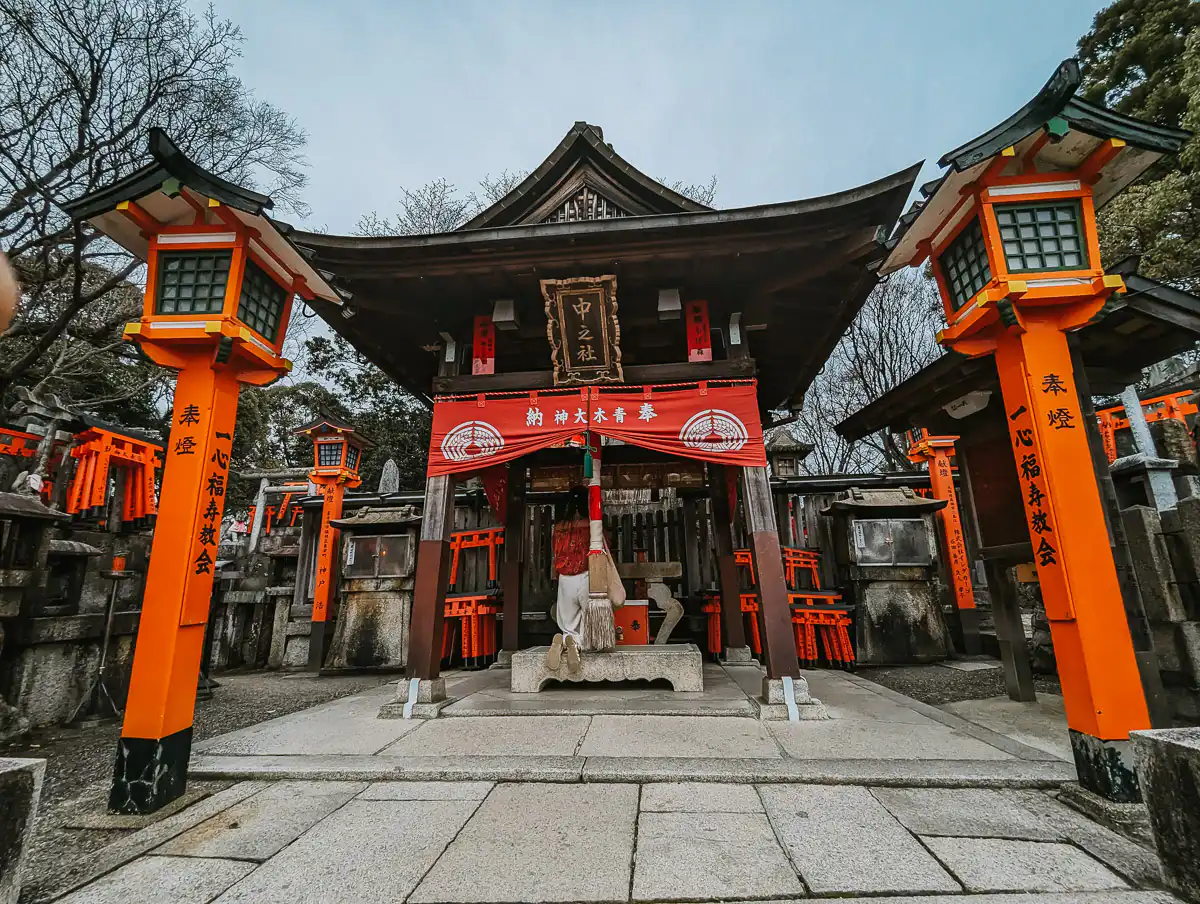
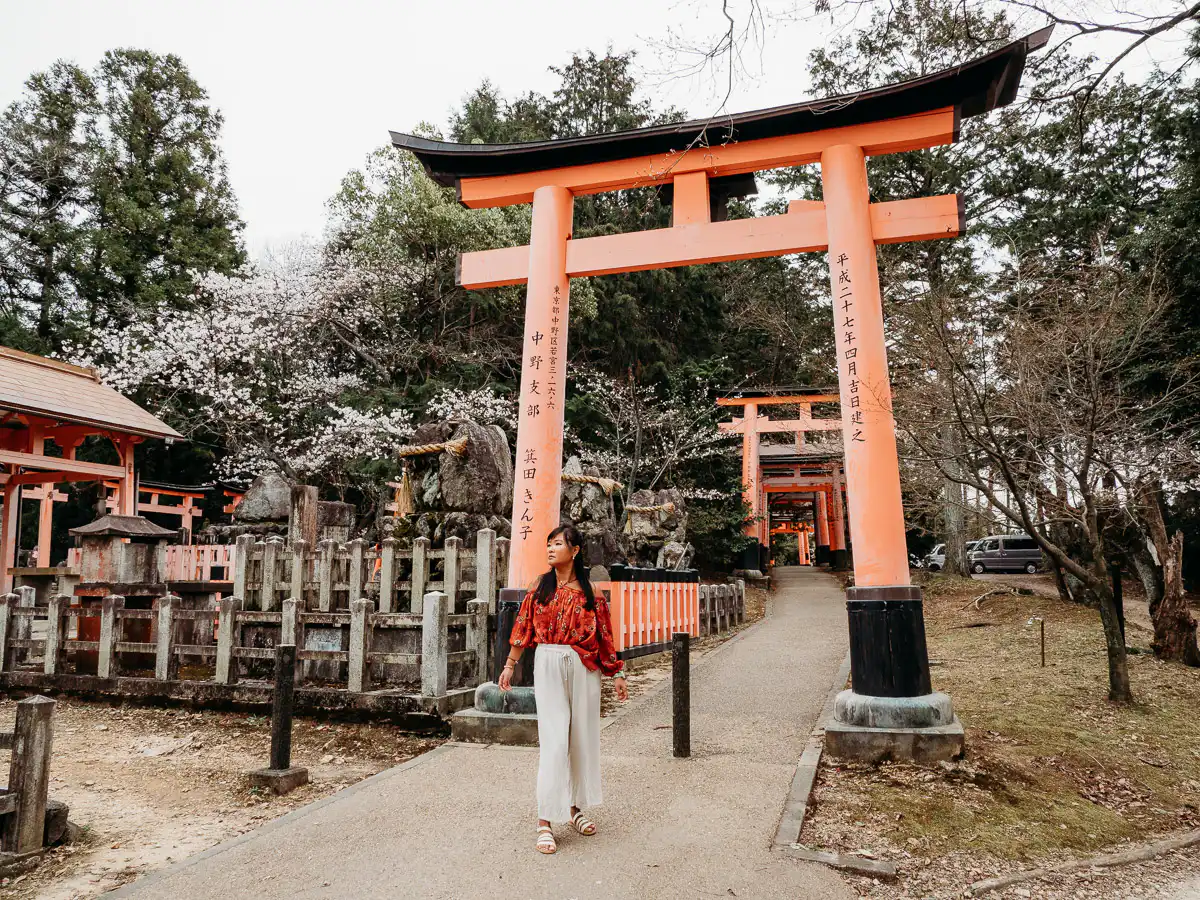
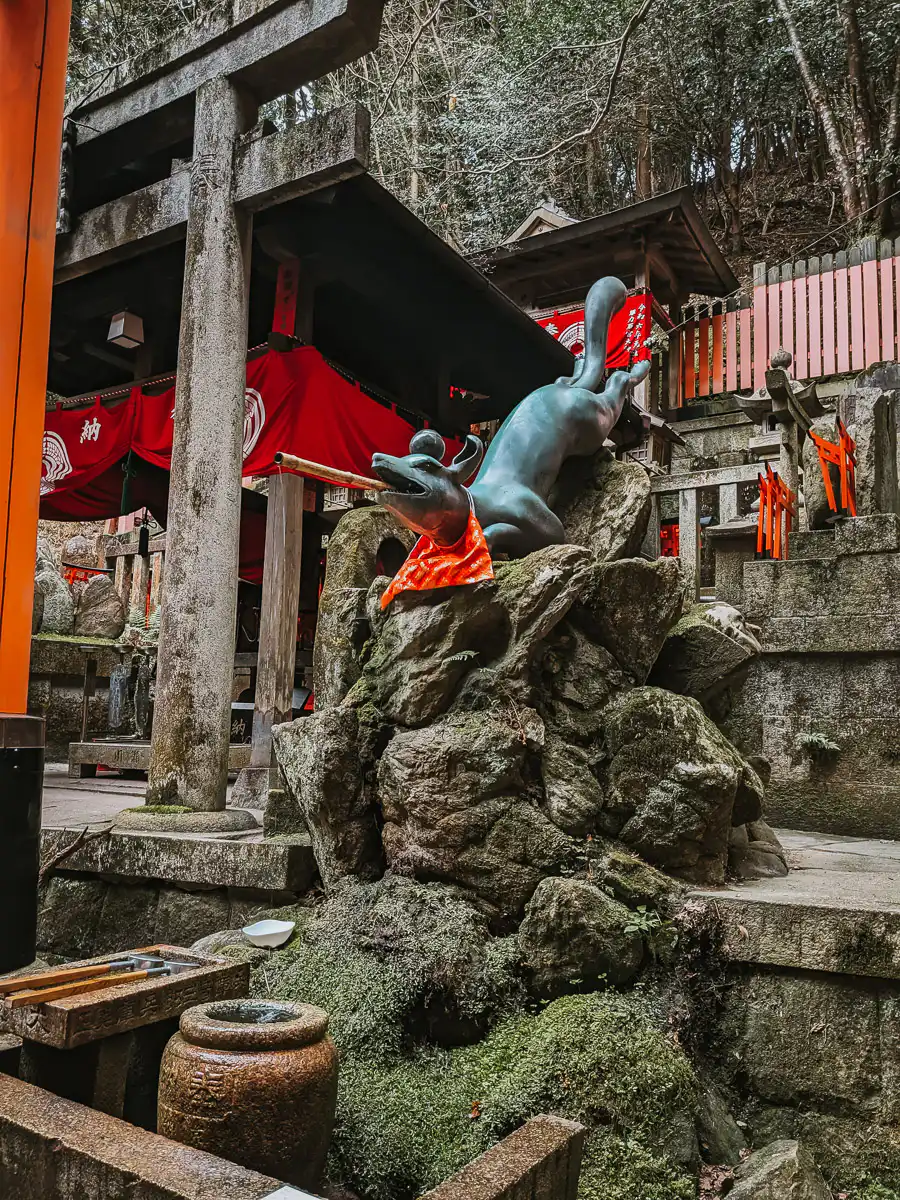
Here you’ll get to see your first set of Tori gates, shrines and tombs. When we visited, there were a few locals who seemed to be paying their respects to deceased family members. The place is very quiet and showcases the more religious and spiritual meaning of these gates.
This was one section where we really wished we had a guide to help us better understand the significance of the shrines and the fox statues dressed in red bibs that we noticed throughout the complex. Later, we learned that they represent the sacred messengers of Inari.
Fork in the Road and the Mystical Section (3)
Once you’ve finished exploring the first shrines, continue along the pathway as it gradually climbs further uphill. Eventually, you’ll reach a junction where you can either head left down a set of stairs, continue straight uphill, or take the pathway to the right.
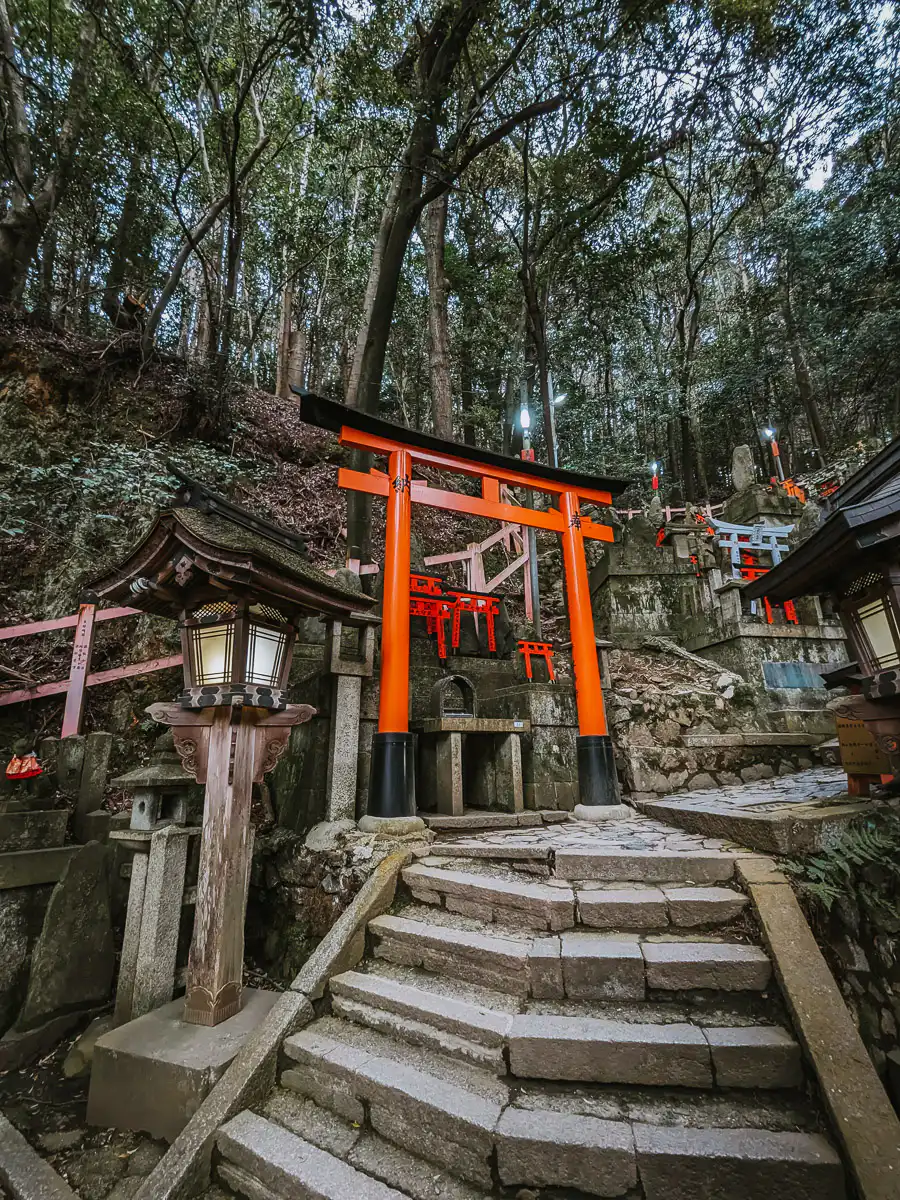
We recommend taking the pathway to the left as it leads to one of the most beautiful sections of the Shinto shrines. Along this stretch, you will walk beneath towering trees and pass through shrines that have slowly been reclaimed by nature.
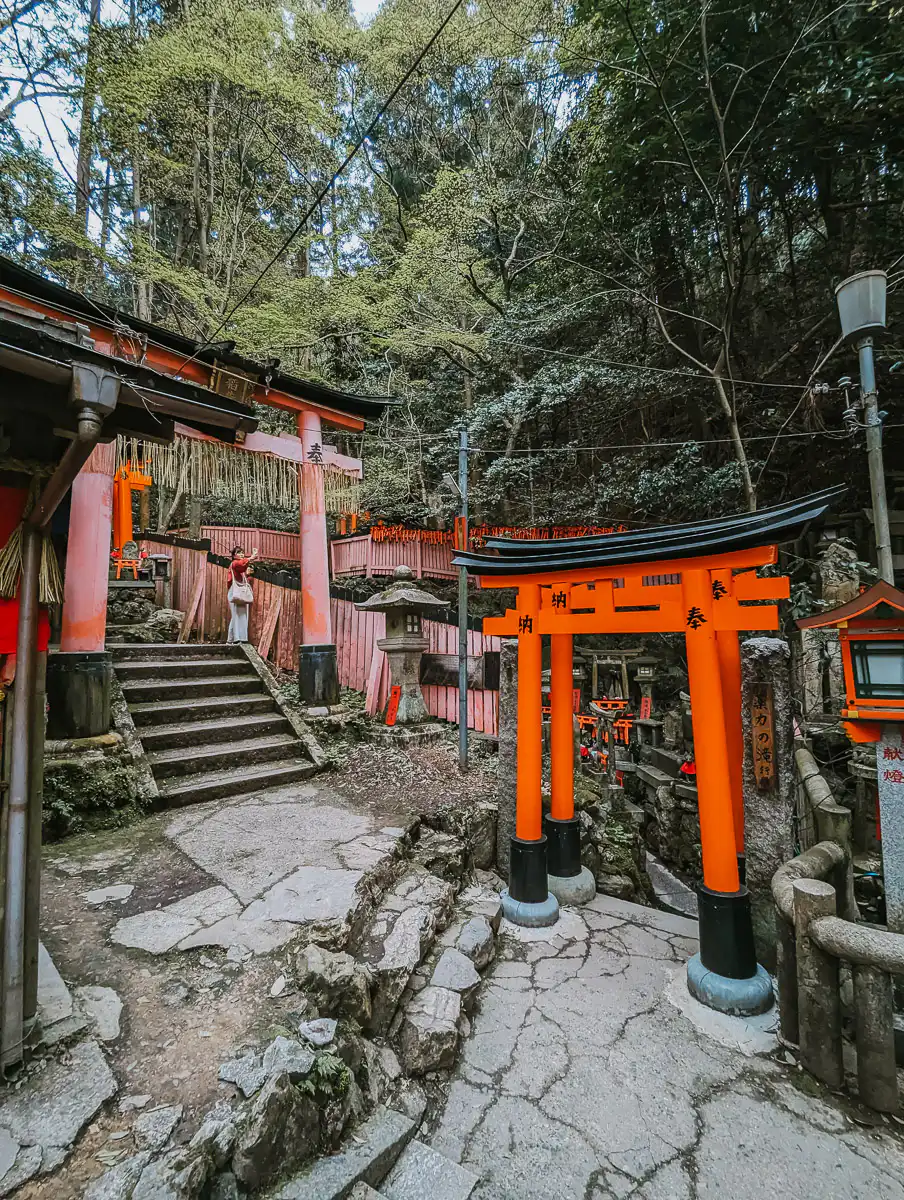
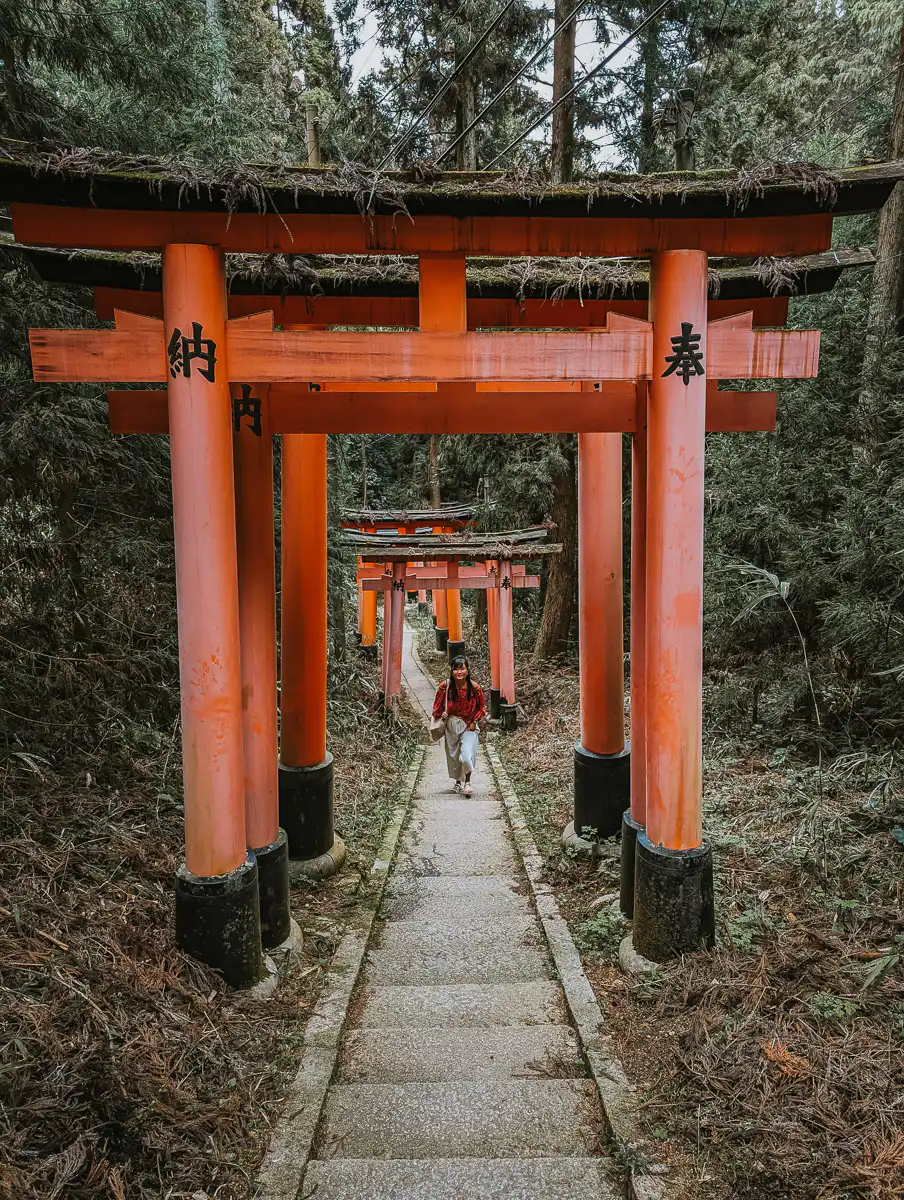
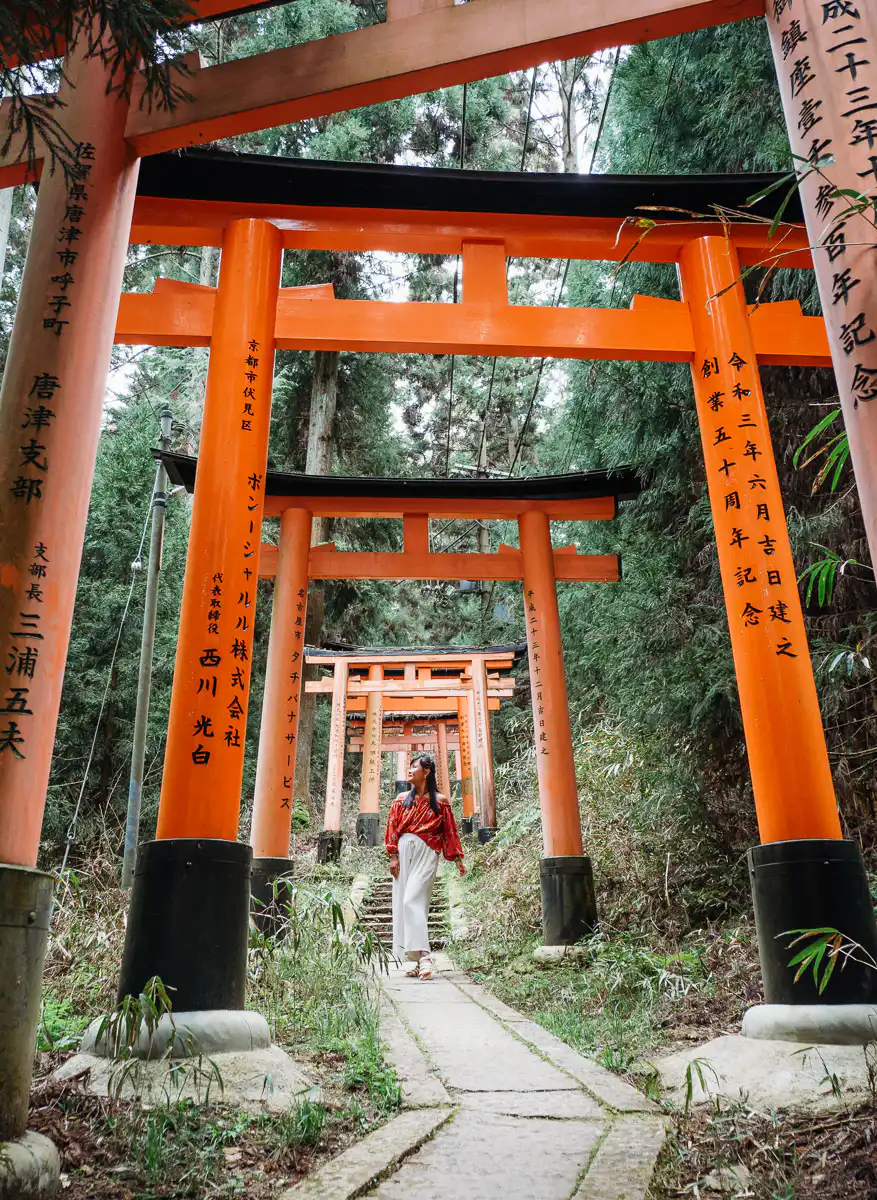
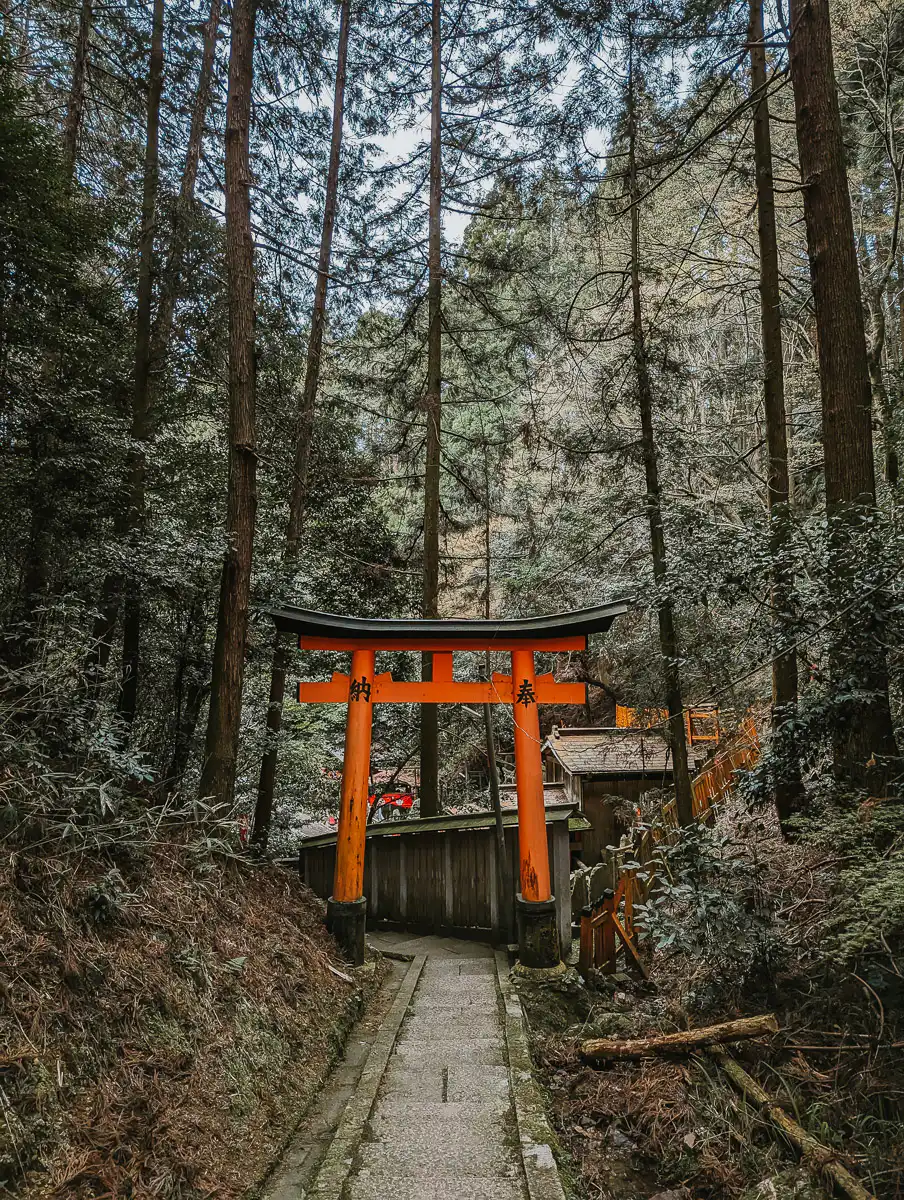
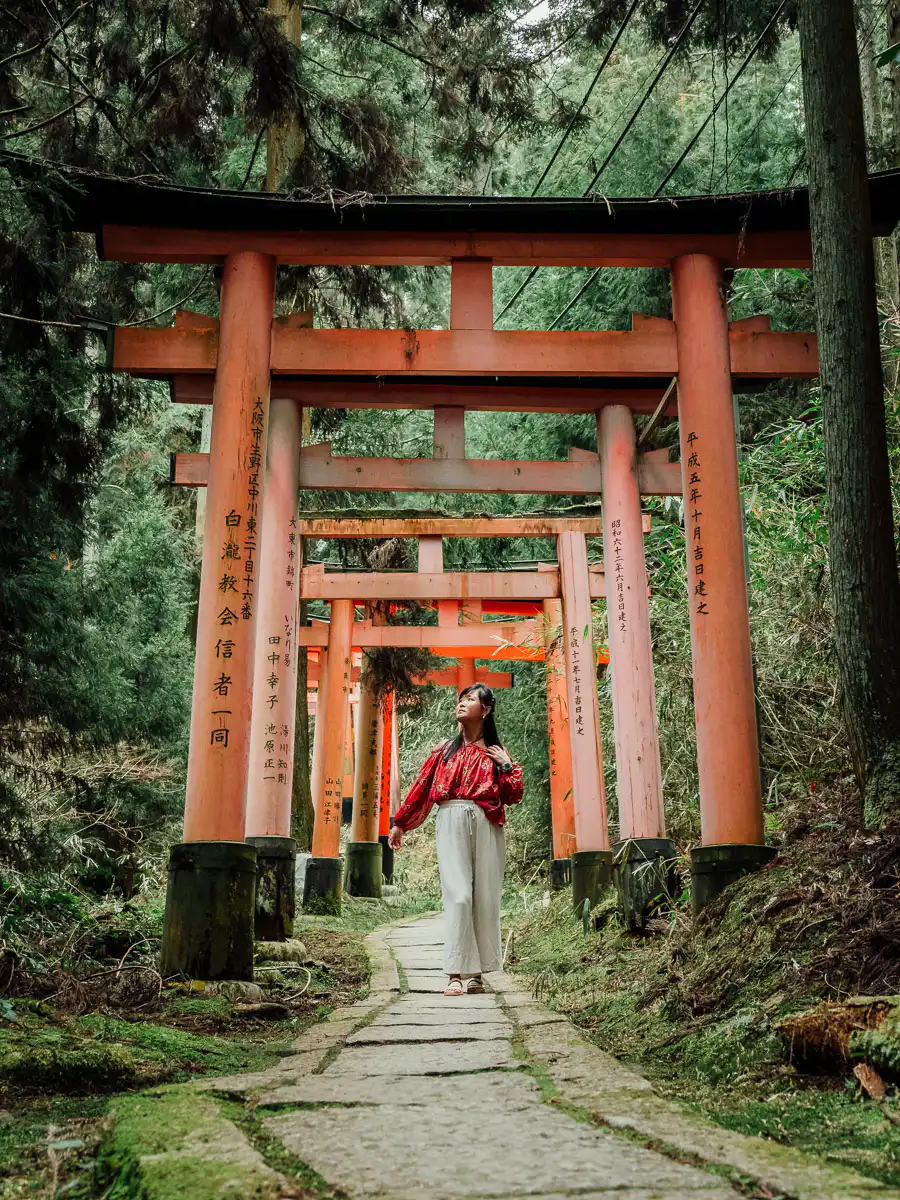
It feels like you are fully immersed in the forest, with moss covering parts of the structures and near complete silence broken only by the singing of birds. The torii gates here look noticeably different from those on the main tourist trail. Instead of appearing perfectly polished, they show signs of age and history, some bowing from the weight of time. That is exactly what made this section feel so special to us. It almost felt like stepping back in time and experiencing the shrines as they were originally meant to be.
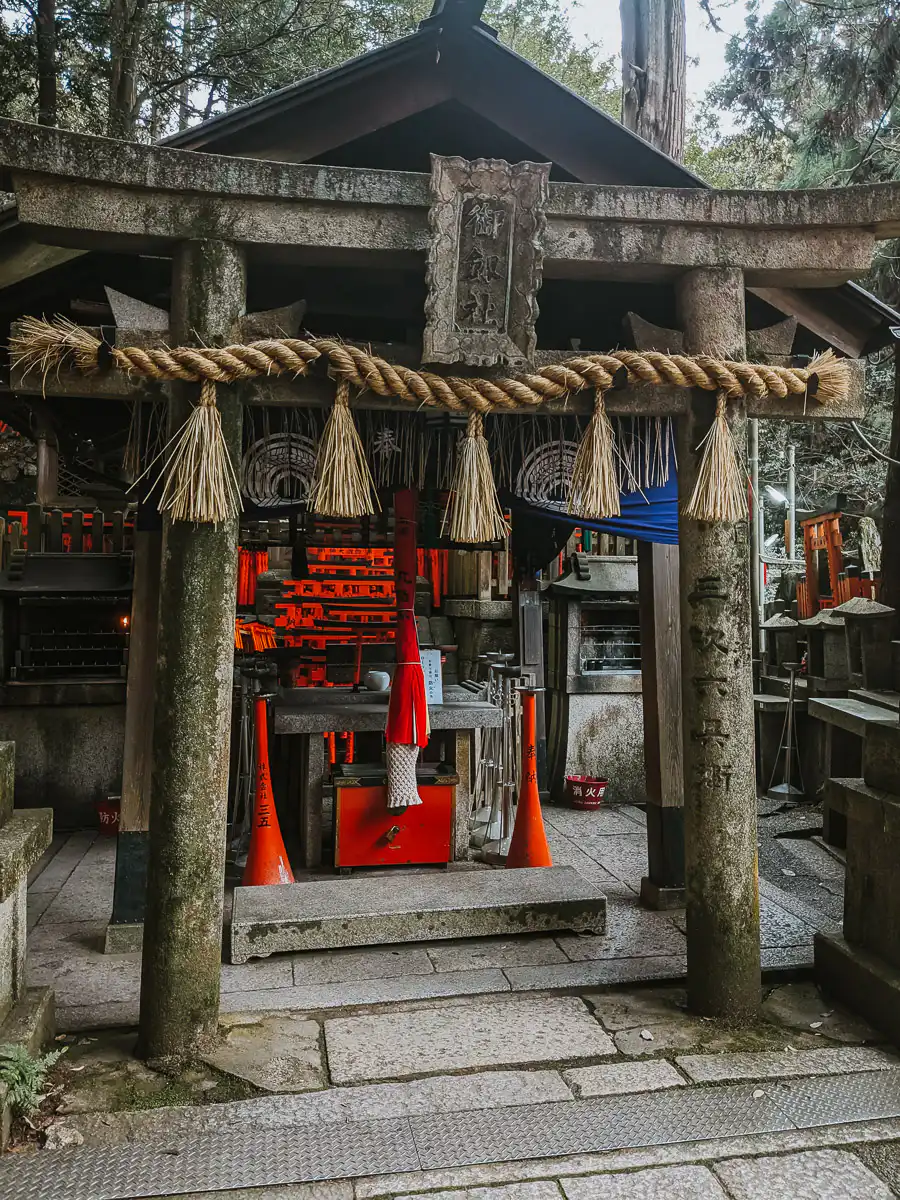
We spent about 30 minutes exploring this area and honestly would have loved to stay longer, but eventually had to continue on the trail.
Continue towards the summit (3-4)
Once you’ve finished exploring that section, double back and return to the junction in the road. Then turn left to take the pathway of staircase that leading to the summit of Mount Inari. It should take you another 20 minutes or so before you reach the Yotsutsuji intersection.
Panoramic View at the Yotsutsuji intersection (4)
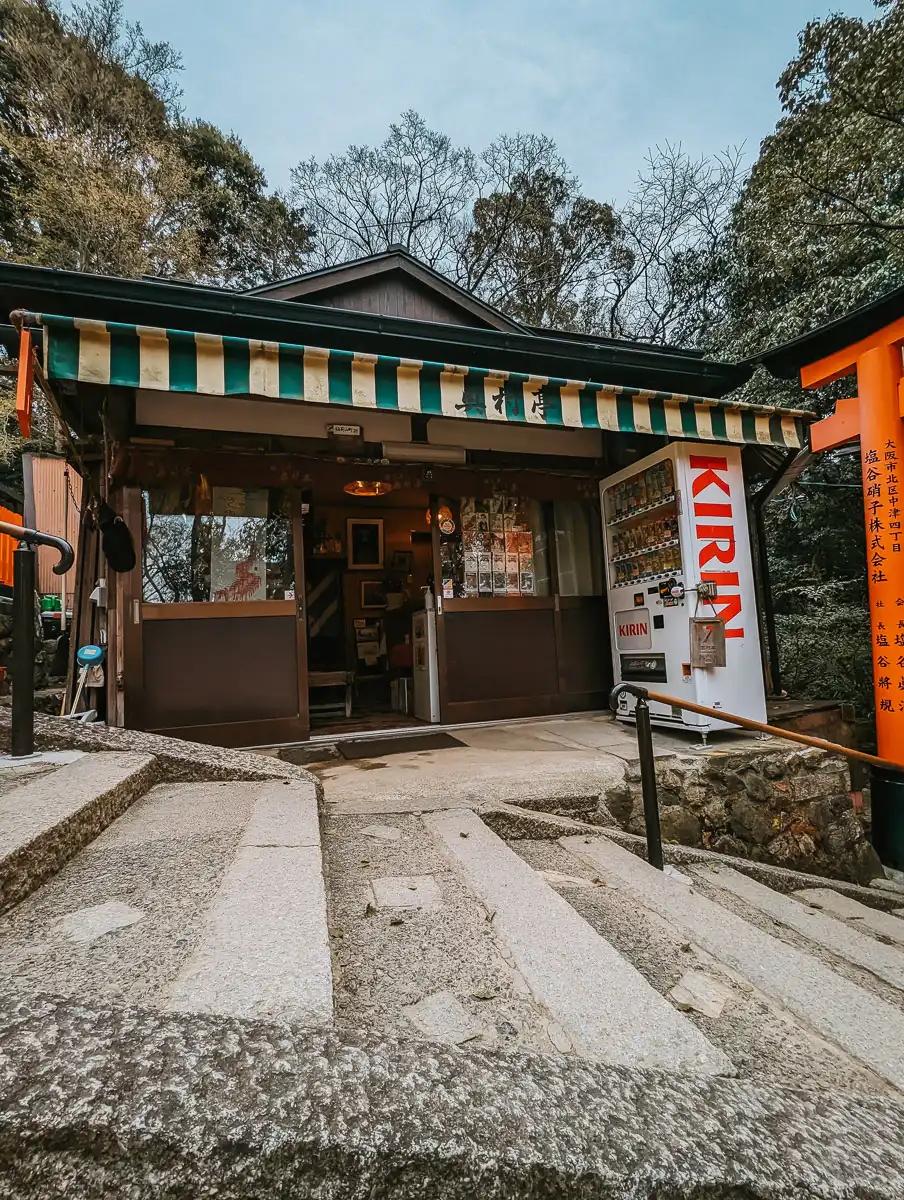
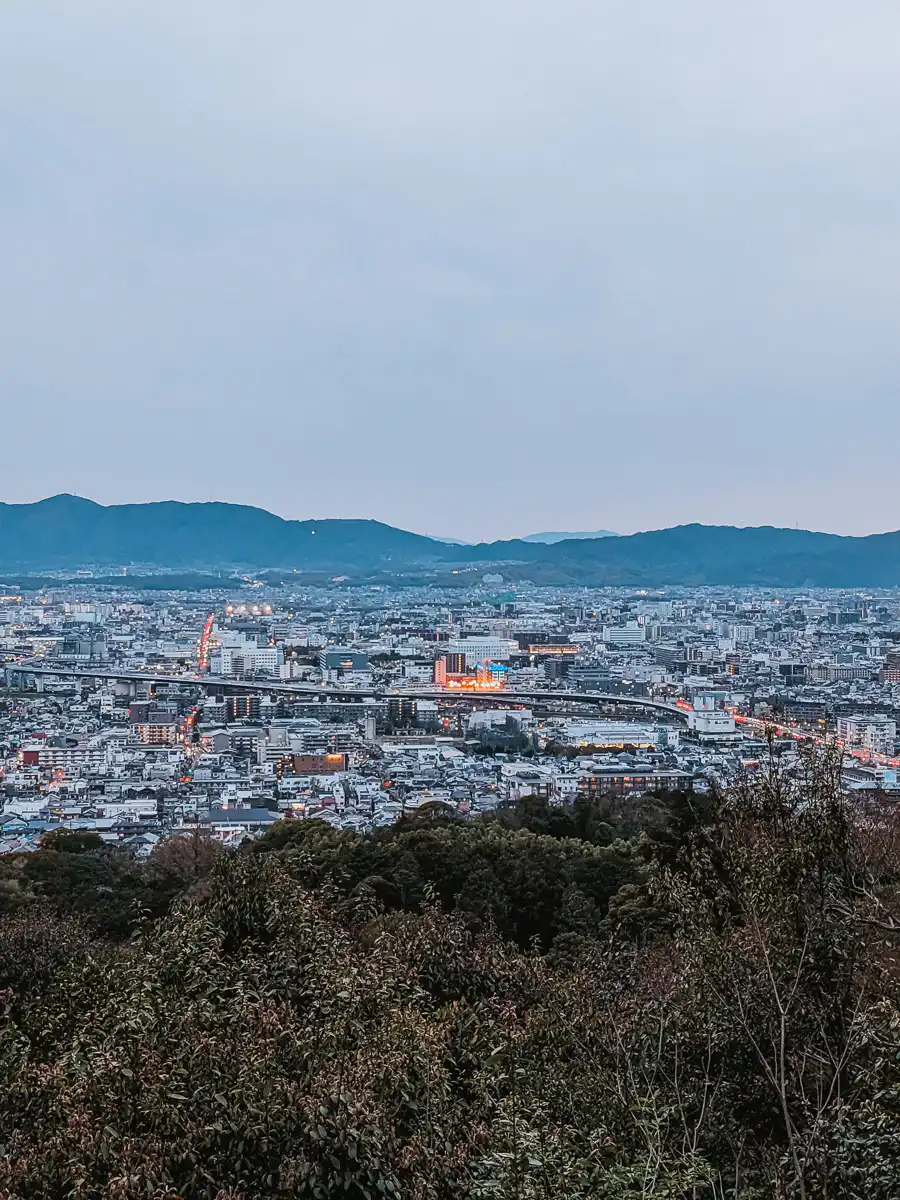
Once at the Yotsutsuji intersection, you will get a beautiful open panoramic view of the city. It’s also where you’ll reconnect with the main tourist route, which becomes obvious as the number of visitors suddenly increases. If you need a quick break, there’s a small gift shop offering souvenirs and snacks, as well as vending machines for drinks.
Summit Loop Trail (best spot to take photos) (5)
After taking a break and enjoying the views, make sure to continue slightly uphill to complete the summit loop trail. Surprisingly, many tourists skip this section after the long climb, but it’s actually one of the best places to capture that iconic row of torii gates photo.
The loop takes about 40 minutes to complete and is a very pleasant walk, bringing you past more gates, Shinto shrines, and charming temples with small flowing water fountains.
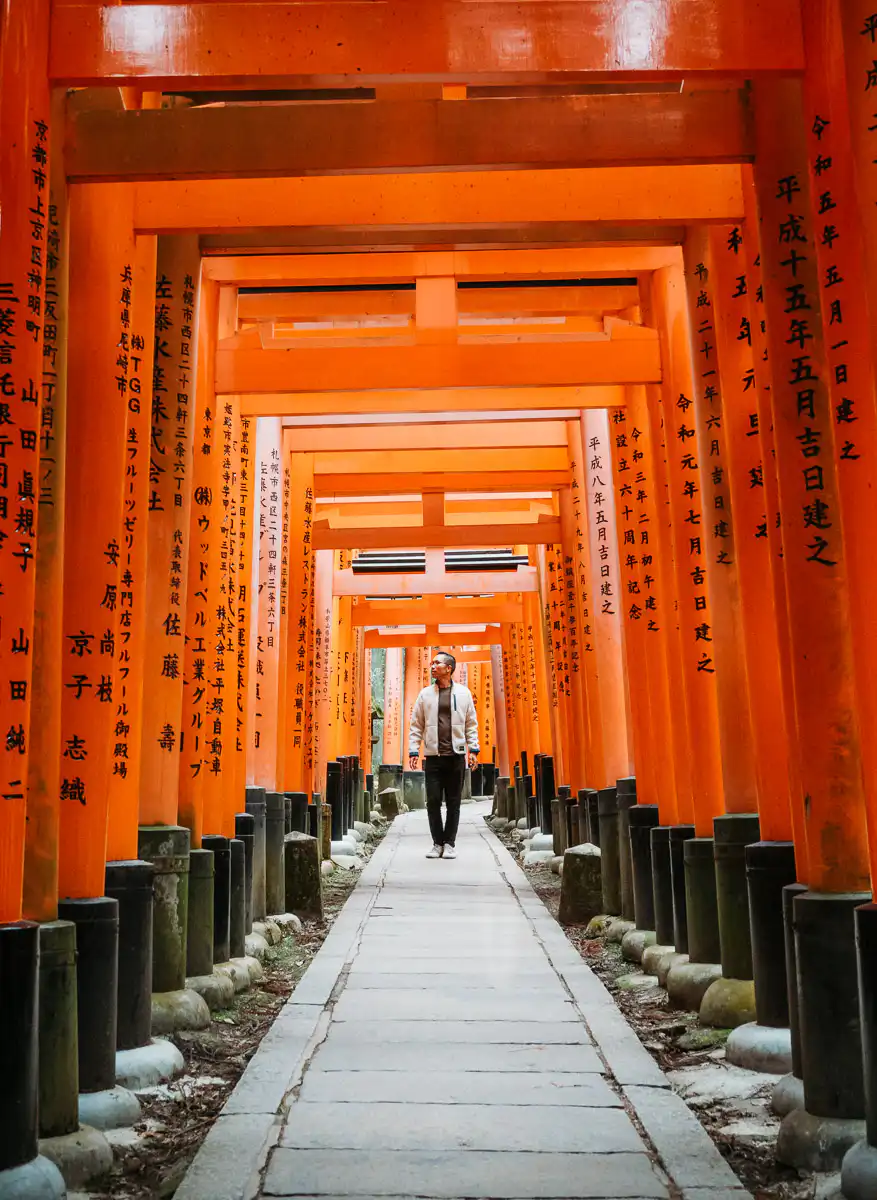
Descending the Classic Route (6)
After finishing the summit loop trail, you can begin heading down the staircase that overlooks the panoramic viewpoint. This is where you will rejoin the classic Fushimi Inari route.
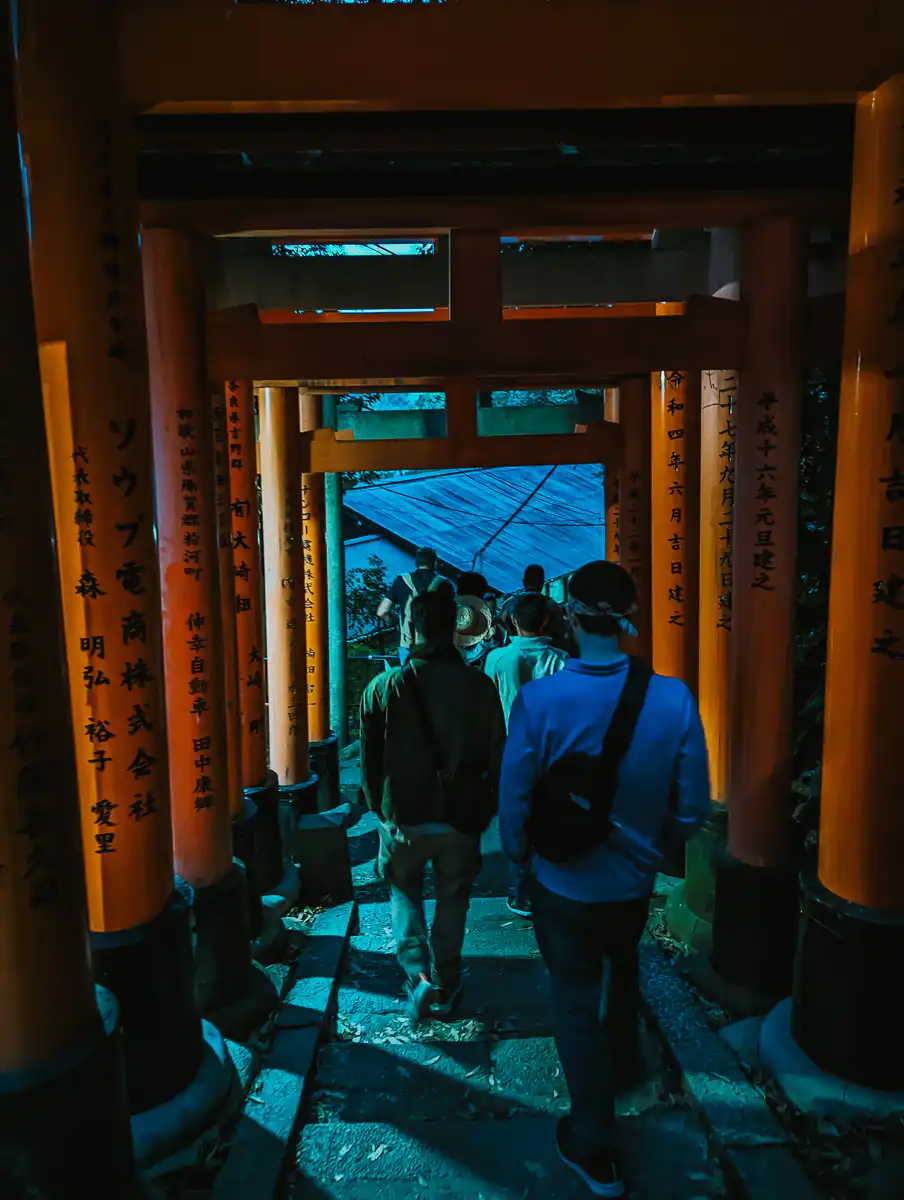
The descent takes about 30 to 40 minutes and leads you through even more rows of stunning red torii gates. Even though we were descending after dark, the trail was still jam packed with tourists, which would have made fully enjoying the experience and taking photos pretty challenging.
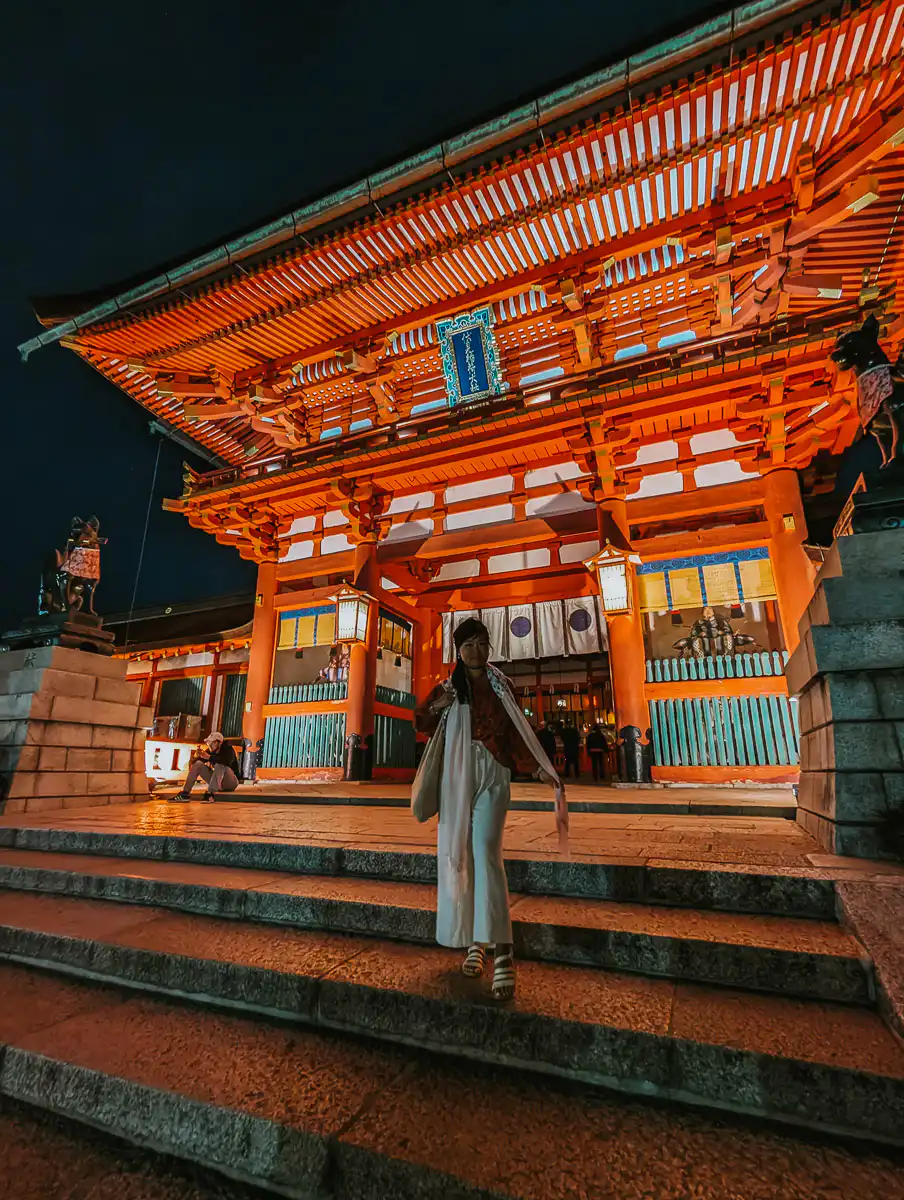
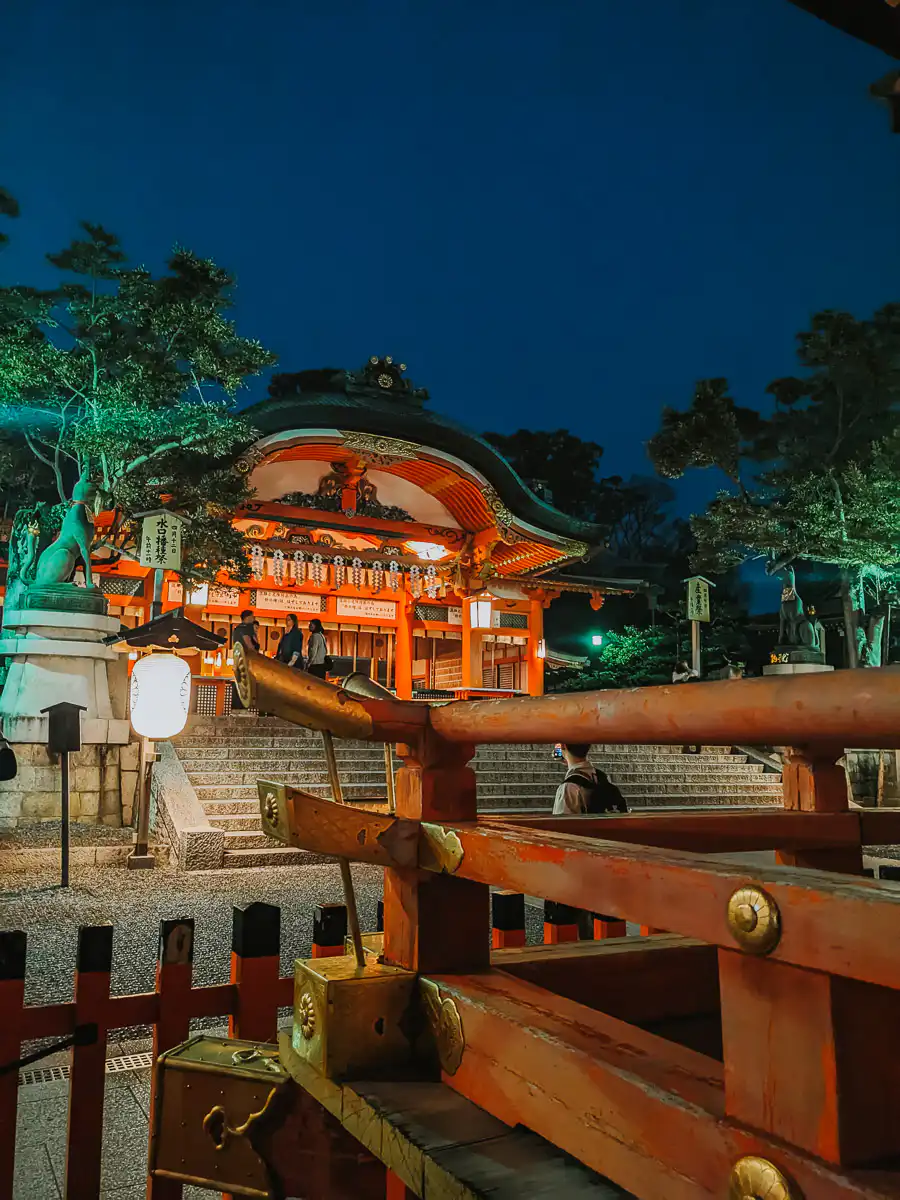
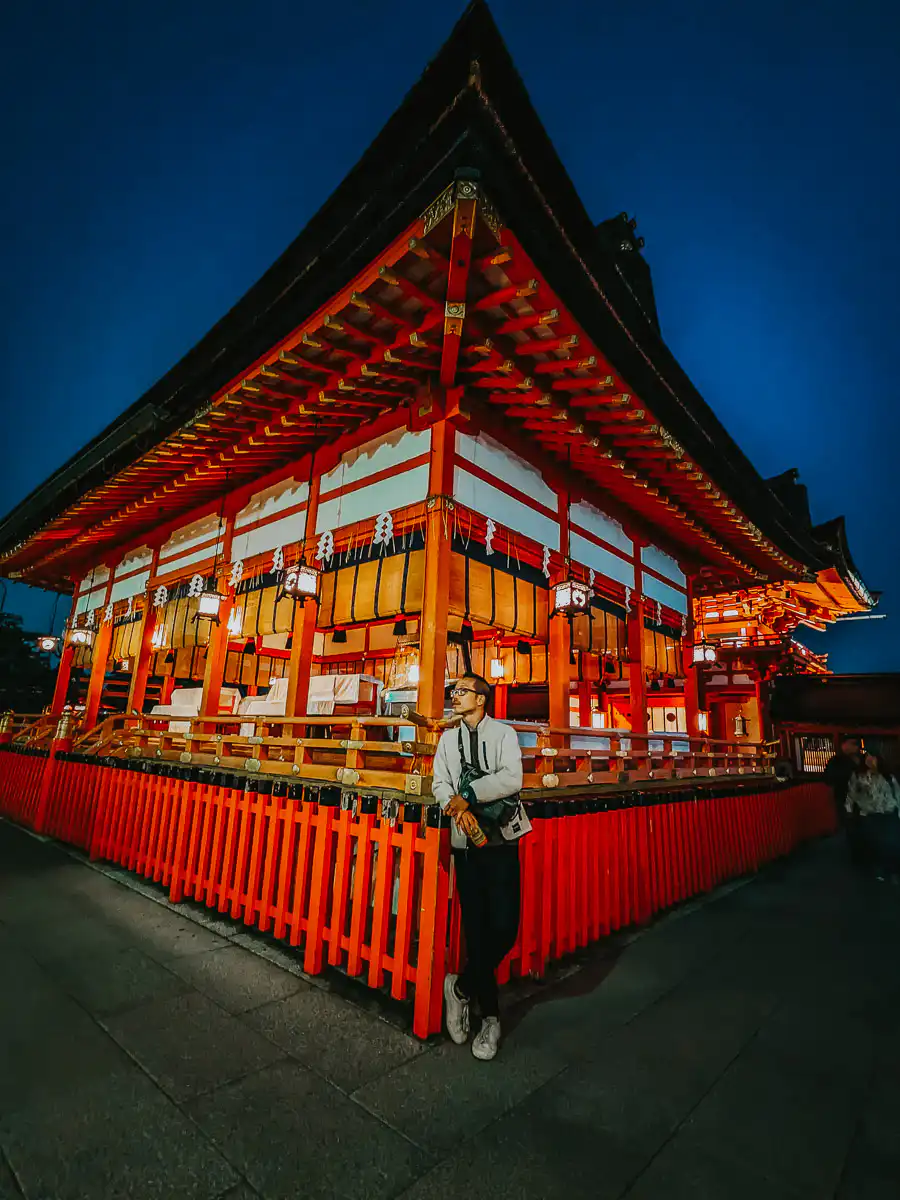
Near the bottom, you will also pass a few additional Shinto shrine complexes that are worth visiting. With that said, we had already spent around 4 hours exploring Fushimi Inari, and with hunger kicking in and the evening settling in, we decided it was time to head out and find dinner.
Leaving Fushimi Inari (7)
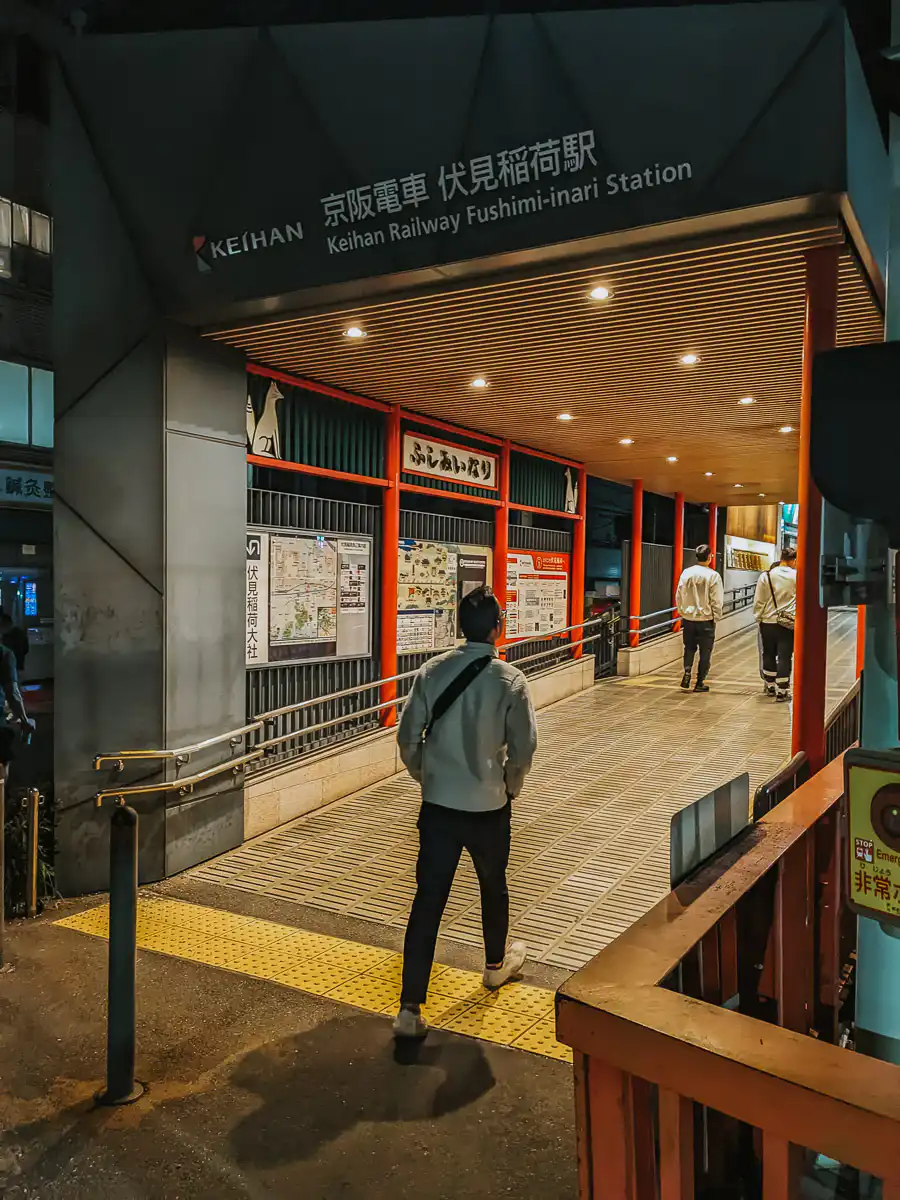
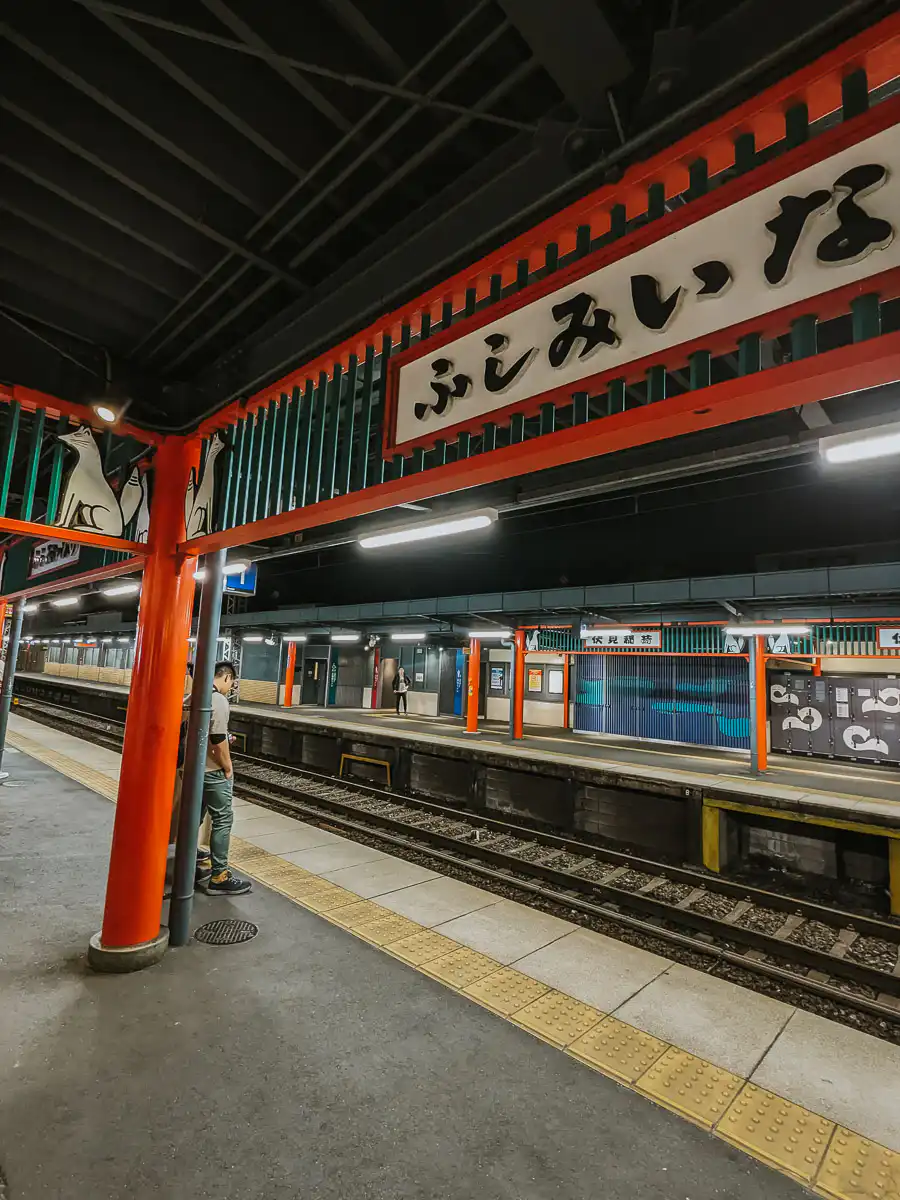
To leave Fushimi Inari and return to Kyoto/Osaka, head over to Inari Station which is part of the JR line. From there, it is just a quick 5 min train ride to Kyoto Station, or 50 minutes to Osaka Station.
This post is part of our series about Japan. If you want to learn more about Japan, planning your trip, and some of the best experiences there, check out the guides below:
Difficulty level of this Fushimi Inari Route
The route to the hidden side of Fushimi Inari is beginner-friendly and follows paved pathways and staircases the entire way. That said, it still takes around 1 to 1.5 hours to reach the summit, so you should be comfortable with a steady uphill walk.
Overall, we would still consider this route suitable for most travelers, including families with kids, as the climb is gradual rather than overly steep. Just take your time, enjoy the scenery, and treat it as more of a scenic walk than an intense hike.
Tour Option to Hidden Side of Fushimi Inari
We personally love the adventure of exploring hidden areas and figuring out the logistics as we go. For some people that might feel stressful, but for us, it is part of the fun and excitement of travel. If you want to discover this hidden side of Fushimi Inari without the stress, while also learning more about the cultural and spiritual significance of the site, we would recommend joining this Hidden Fushimi Inari Hiking Tour.
This follows the same route that we took, so you’ll get to experience a side of Fushimi Inari that most tourists never see, while also having the added benefit of learning from a professional guide, which is honestly something we wish we had.
Alternatively, if you want to experience Fushimi Inari in a completely different atmosphere, you can join this Fushimi Inari Night Walking Tour. It is a great way to avoid the crowds while seeing the shrines in a whole new light as they glow after dark.
FAQ
Is the Alternative Route to Fushimi Inari Worth It?
The Alternative Route to Fushimi Inari is absolutely worth it. You’ll experience a much quieter and more authentic side of this spiritual site, while still seeing the iconic highlights of the Classic route since the route eventually reconnects with that trail.
Opening Hours of Fushimi Inari
The site is open 24 hours a day, 7 days a week, with no admission fee.
Best place to get the classic Tori Gates Photo?
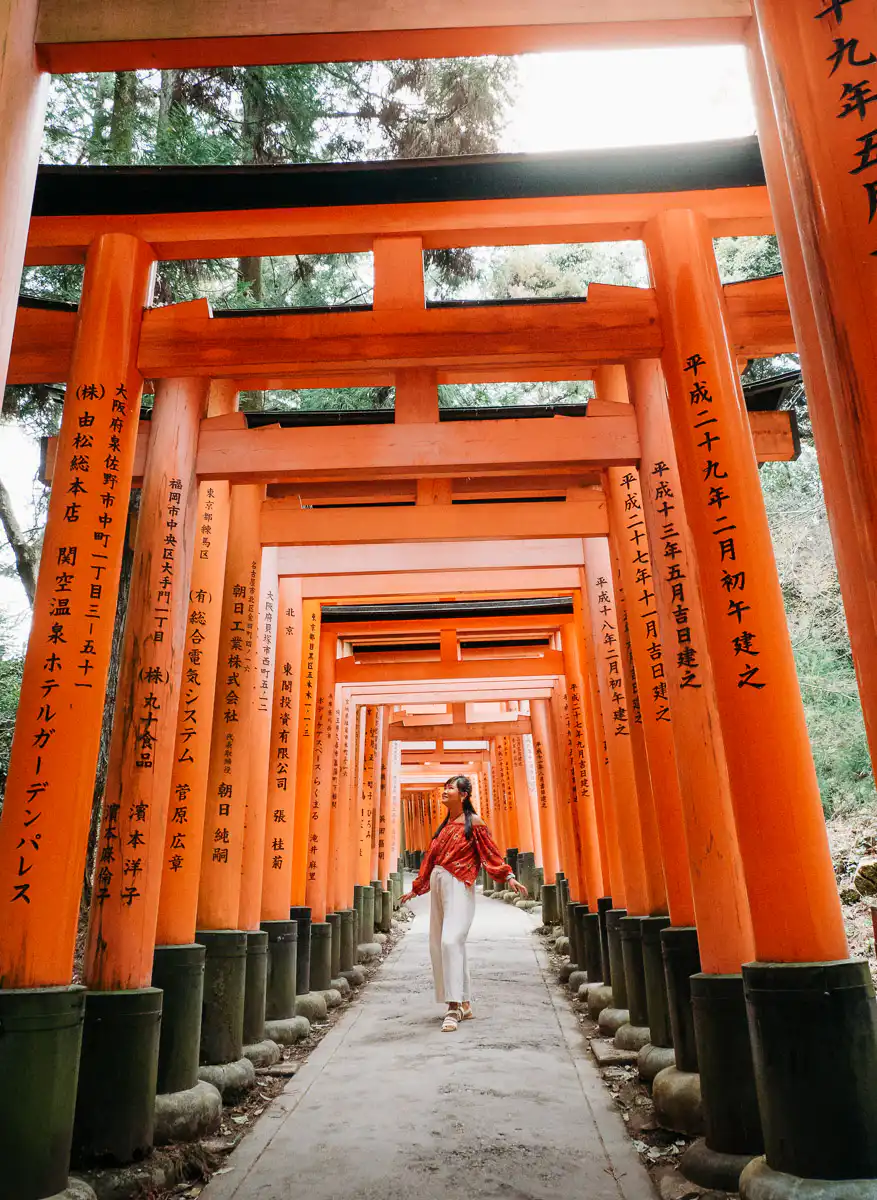
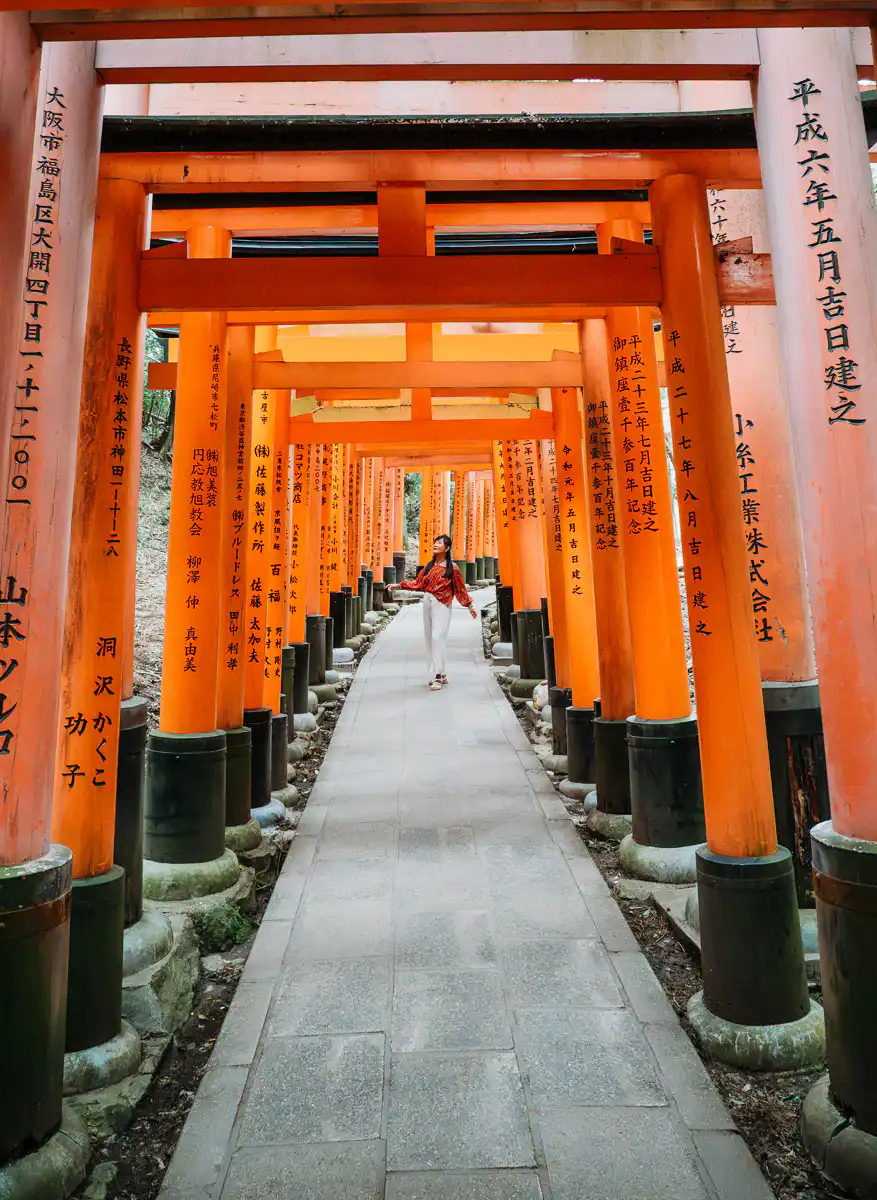
It really depends on the atmosphere you’re hoping for in the photo. For the classic rows of bright red torii gates, we recommend heading to the summit loop. Many visitors seem to skip this section, making it much easier to capture photos without crowds photobombing in the background.
Alternatively, if you want to capture a more mystical, time worn look of the torii gates, we recommend visiting the mystical section along the alternative route.
Best Time of Day to Visit the Hidden Route to Fushimi Inari
Heading there early in the morning is definitely the best way to experience Fushimi Inari. That is when the crowds are at their lowest and the lighting is ideal for photos. With that said, we actually visited around 3 pm and still had a fantastic experience. Along the secret route, we were almost completely alone, which allowed us to enjoy a peaceful and quieter side of Fushimi Inari despite visiting later in the afternoon.
How Long does this route take
We ended up spending around 4-5 hours exploring Fushimi Inari. The climb to the top takes a bit of time, and once you’re there, you still have the summit loop to explore before making your way back down. You’ll also want to factor in time for photos because, trust us, you’ll be stopping a lot. We started around 2-3 pm and didn’t make it back down until after sunset, so overall, visiting Fushimi Inari is best planned as a half day trip.
Is this Route less crowded
Yes! While exploring the alternative route, we only crossed paths with two other people, and one of them was a local. So for roughly two hours, it genuinely felt like we had the entire place to ourselves.
Is the hidden route still part of Fushimi Inari Shrine?
Yes, this off-the-beaten path Fushimi Inari route is still part of Fushimi Inari Shrine. It is simply a different side of the mountain where the shrines are far more local. Nonetheless, after reaching the summit, you will then descend down the classic route.
Do you still see torii gates on the alternative route?
Yes, you still do, but the experience feels quite different. Instead of the iconic, perfectly polished rows of bright red torii gates along the classic route, the gates here are more spaced out, zigzagging through the forest, with many showing signs of nature slowly reclaiming them. For us, seeing both versions of the torii gates was what made the experience so special.
Is the alternative route free?
Yes it is free!
Is the route safe to do alone?
Overall, this route is safe to hike, but we wouldn’t recommend doing it completely alone. The first section of the trail is very quiet and deep in the forest. We also noticed some signs warning that wild boars sometimes pass through the area, advising visitors not to approach them. Because of this, it’s better to go with at least one other person, or join a small group like this Hidden Fushimi Inari Tour.
Using WISE card in Japan
When taking cash out of an ATM while abroad, you will most likely be charged both a foreign exchange fee and a foreign transaction fee by that country’s ATM. With my Canadian card, this can easily be 3-4$ + 2.75% + a markup on the exchange rate charged by my bank, and then another 3-5$ charged by the foreign ATM.

This can be really costly. For this reason, we recommend using WISE card which has only minimal fees and just about no foreign currency exchange markup. This helps me save at least 5-7$ every time I take out money from an ATM. If you want to see our full review of the card showing exactly how WISE can help you save, check out our WISE Travel card Review post.
More Helpful Guides on Japan
Japan is filled with so many incredible experiences! If you need help getting an overall idea of how to travel through the country, check out our 10 days Japan travel Itinerary Guide! And if you’re really into temples like Fushimi Inari, then we would also recommend checking out Dazaifu Temple and Yutoku Inari Shrine near Fukuoka.
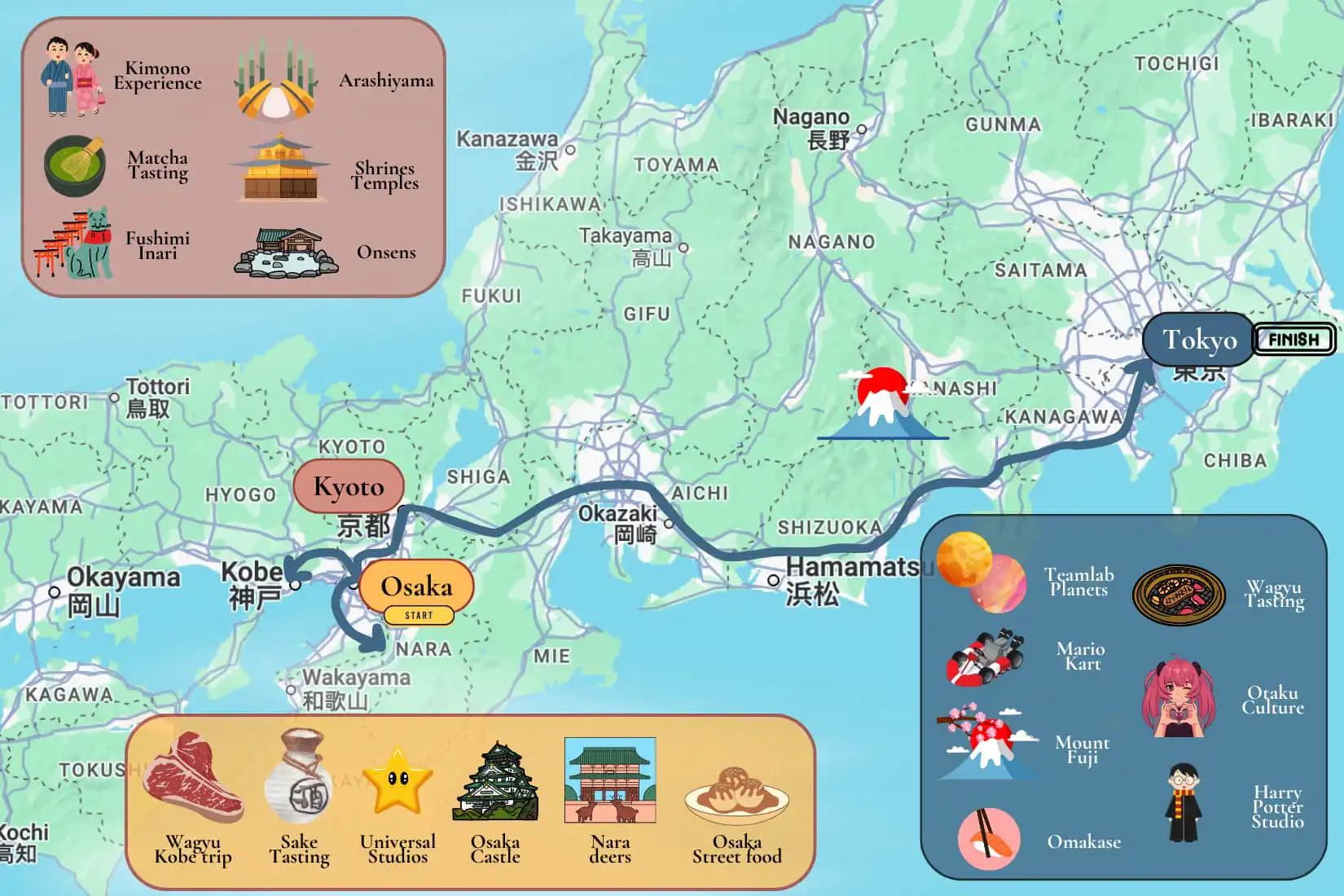
There we delve into some of the highlight spots of Japan including exploring Kyoto, day trip to Nara, experiencing the best that Osaka has to offer, indulging in matcha desserts in Uji, going off-the-beaten path road tripping through the Izu Peninsula and seeing some of the most amazing coastal views and having Ryokan experiences, and much more in-between before finally arriving in Tokyo!
Also, don’t forget to check out our essential travel tips in Japan so you can make sure your trip goes as smoothly as possible!
Final Thoughts: Seeing Fushimi Inari Without the Crowds
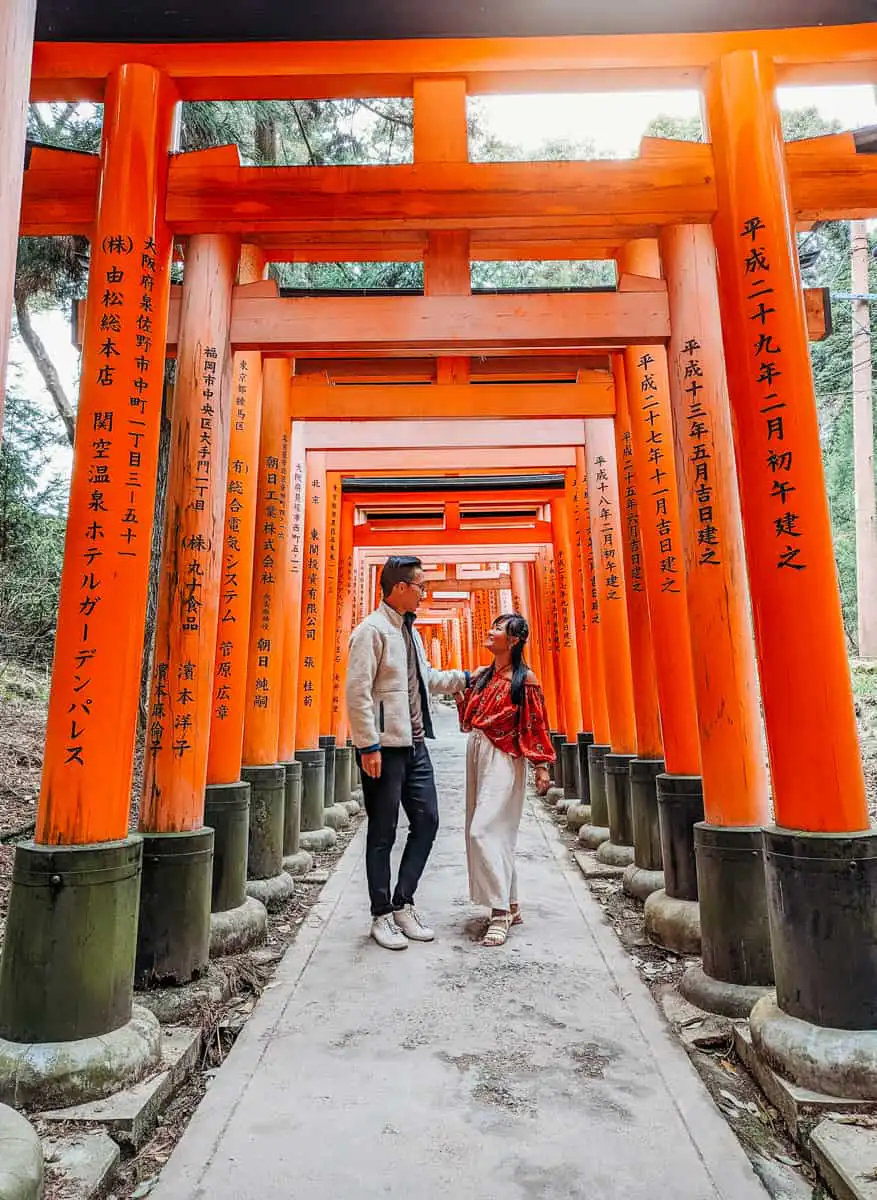
In the end, discovering this hidden side of Fushimi Inari without the crowds ended up being one of our favourite day trips from Osaka and Kyoto. By venturing beyond the classic trail, we experienced a version of the torii gates and Shinto shrines that felt far more spiritual and meaningful, rather than just another tourist hotspot. If you are planning to visit during your time in Kyoto, we highly recommend following this route or joining the Hidden Fushimi Inari Tour.
 Cherry Blossoms near the
Looking for more travel inspiration?
Incredible volcanoes and ancient Mayan civilizations: Tikal and Antigua in Guatemala.
Hiking in the Andes and discovering Machu Picchu: Travel itinerary in Peru, hiking to Machu Picchu
Exploring ancient cave dwellings and riding hot air balloons in Cappadocia
Exploring and sailing on the Turkish Coast
Hiking in one of the US’s best national parks and road tripping through Utah
Discover Vietnam and the exciting northern Ha Giang Loop, as well as the Unesco city of Hoi An.